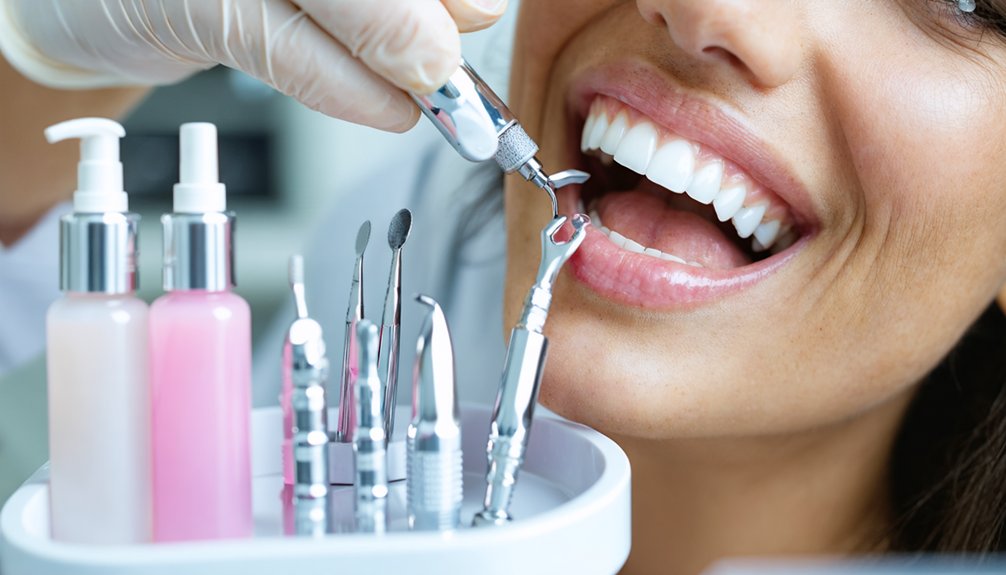
To manage teeth sensitivity during whitening, switch to a lower-concentration formula and space sessions 48–72 hours apart. Start desensitizing toothpaste with potassium nitrate one to two weeks before treatment, and use fluoride toothpaste and mouthwash consistently between sessions. After whitening, avoid hot, cold, and acidic foods for 24–48 hours and brush gently with a soft-bristled toothbrush. Know when persistent or sharp pain signals it’s time to stop. Each strategy covered below gets more specific.
Key Takeaways
- Use desensitizing toothpaste with potassium nitrate 1–2 weeks before whitening and continue throughout treatment to reduce nerve sensitivity.
- Switch to lower-strength whitening formulas and space sessions 48–72 hours apart to allow enamel recovery.
- Apply fluoride toothpaste and mouthwash regularly to strengthen enamel and promote remineralization between whitening sessions.
- Avoid hot, cold, and acidic foods and drinks for 24–48 hours after each whitening treatment.
- Discontinue whitening and consult a dentist if sensitivity persists beyond 48 hours or gum irritation develops.
Switch to a Lower Whitening Concentration for Sensitive Teeth
Whitening products with higher peroxide concentrations are more likely to trigger sensitivity, so switching to a lower-strength formula is one of the most effective ways to reduce discomfort. If your current product is causing pain, step down to a milder concentration and accept a slower whitening timeline in exchange for better tolerability.
Alternative whitening methods, such as lower-dose strips or diluted gel formulations, give you more control over how much peroxide contacts your enamel.
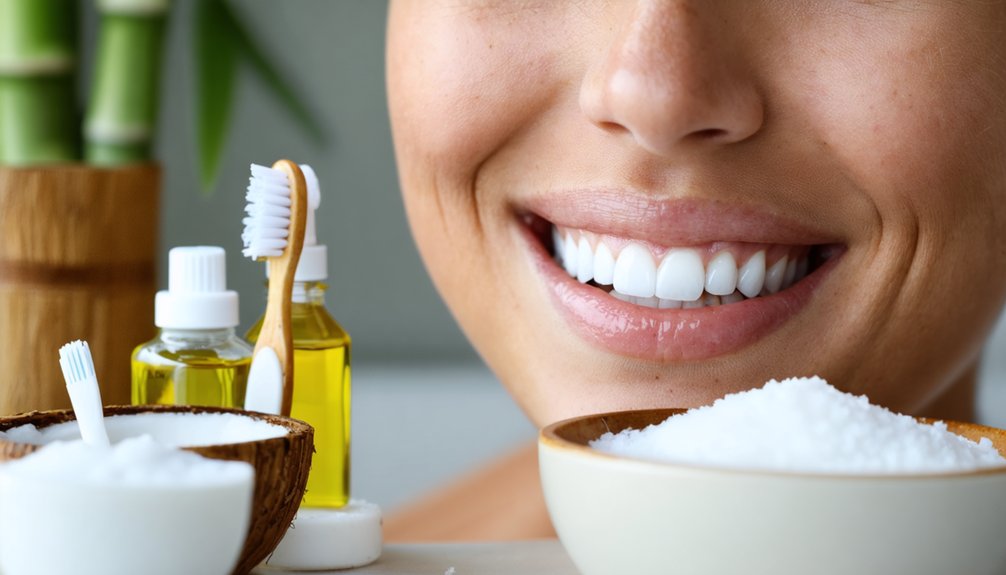
Natural remedies like baking soda-based toothpaste can complement a reduced-strength regimen without adding irritation.
A dentist can match whitening strength precisely to your sensitivity threshold and treatment goals, which removes guesswork.
Don’t push through discomfort with a stronger product when a lower concentration can deliver results with considerably less risk.
Cut Back on How Often You Whiten
If you’re whitening too often, you’re not giving your teeth enough time to recover between sessions, which worsens sensitivity over time.
Space out your treatments and take a break if discomfort appears until it fully resolves.
You should also shorten each session’s exposure time when sensitivity flares, since leaving whitening agents on longer than directed increases irritation without improving results.
Space Out Your Sessions
One of the simplest adjustments you can make is cutting back on how often you whiten. Overusing teeth whitening treatments directly increases sensitivity and delays recovery. Spacing out sessions gives your enamel time to recover and reduces cumulative nerve irritation.
Follow these sensitivity reduction guidelines:
- Wait 48–72 hours between whitening sessions to allow enamel recovery.
- Shorten exposure time if sensitivity appears mid-treatment rather than pushing through.
- Pause treatment entirely until discomfort resolves before resuming your schedule.
- Limit weekly sessions to the minimum needed to achieve your target shade.
You control the pace. Rushing the process won’t improve results—it’ll only increase irritation. Treat spacing as a non-negotiable part of your protocol, not an optional step.
Shorten Exposure Time
Spacing out your sessions addresses frequency—but how long you leave the whitening agent on your teeth matters just as much. Exceeding the recommended exposure time doesn’t accelerate results—that’s one of the more persistent teeth whitening myths. It increases nerve irritation without improving safety or outcome.
If sensitivity appears mid-treatment, remove the product early. You’re in control of the timeline. Shortening each session by 10 to 15 minutes can meaningfully reduce discomfort while still progressing toward your goal.
Don’t rely on natural remedies to offset damage caused by overexposure—they can’t reverse irritation triggered by prolonged peroxide contact. Follow manufacturer guidelines precisely.
When sensitivity signals appear, treat them as data, not inconvenience. Adjust exposure time immediately rather than pushing through the discomfort.
Avoid Hot, Cold, and Acidic Foods Right After Whitening
After whitening, your teeth are most vulnerable to sensitivity triggers in the first 24 to 48 hours. So avoid hot, cold, and acidic foods and drinks during this window.
Citrus fruits, soda, coffee, and ice water can intensify nerve irritation and slow your recovery.
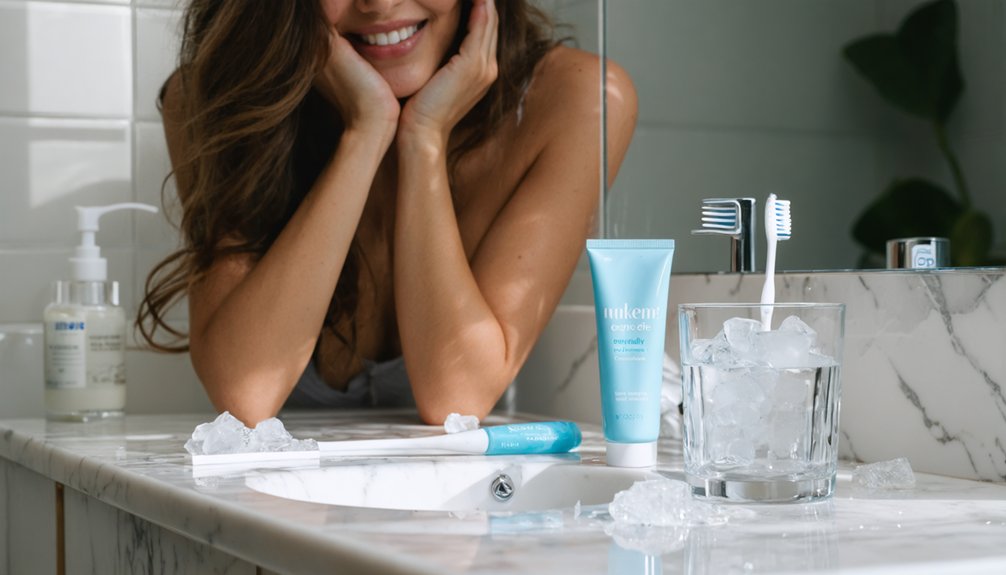
Stick to room-temperature foods, and use a straw when drinking anything cold or acidic to minimize direct tooth contact.
Hot And Cold Triggers
Why does sensitivity spike after whitening? Whitening temporarily opens dentinal tubules, making teeth highly reactive to temperature sensitivity and acidic triggers. You need to control your environment carefully for 24–48 hours post-treatment.
Avoid these four triggers immediately after whitening:
- Hot beverages – Coffee, tea, and soup amplify nerve responses in exposed tubules.
- Cold beverages and foods – Ice water and frozen treats trigger sharp, immediate pain.
- Acidic drinks – Soda, citrus juice, and wine erode already-vulnerable enamel.
- Citrus fruits – Direct acid contact intensifies post-whitening irritation markedly.
When you must drink cold or acidic liquids, use a straw to minimize direct tooth contact. Choose room-temperature or lukewarm options until sensitivity subsides.
Controlling these inputs directly controls your discomfort.
Acidic Foods To Avoid
Six specific foods and drinks can set back your whitening results and worsen sensitivity if you consume them too soon after treatment. Citrus fruits, sodas, vinegar-based dressings, wine, tomato-based sauces, and sports drinks are the primary acidic offenders.
Each one lowers oral pH, which temporarily softens enamel and amplifies nerve exposure after whitening.
You don’t need elaborate natural remedies or alternative treatments to manage this—simple avoidance works. Skip these items for at least 24 to 48 hours post-treatment.
Use a straw when drinking anything mildly acidic to reduce direct tooth contact. Choose water, milk, or lukewarm herbal tea instead.
This window of avoidance is short but critical. Protecting your enamel during this period directly controls how much sensitivity you’ll experience.
Eating And Drinking Tips
What you eat and drink in the hours following whitening directly affects how much sensitivity you’ll experience. Control your exposure by following these four practical steps:
- Drink lukewarm water instead of cold or hot beverages to avoid triggering nerve responses.
- Use a straw when consuming liquids to minimize direct tooth contact, regardless of your flavor preferences.
- Choose soft, non-acidic foods at room temperature during the first 24 to 48 hours post-treatment.
- Delay flossing aggressively—your dental floss choices matter here; opt for softer floss or a water flosser to reduce gum irritation.
These adjustments aren’t permanent restrictions. They’re short-term, targeted decisions that protect your results and reduce discomfort during your teeth’s most vulnerable recovery window.
Start Using Desensitizing Toothpaste Before You Whiten
Before your first whitening session, start using a desensitizing toothpaste containing potassium nitrate to build up nerve protection in advance. Begin at least one to two weeks early to allow the active ingredients to penetrate and calm nerve pathways before peroxide exposure begins.
Continue using it throughout your whitening treatment and after each session. Apply it directly to sensitive areas with a soft-bristled brush, using gentle strokes to protect enamel without added irritation. You can also load it into your whitening tray for direct contact with teeth.
Pairing this step with proper oral hygiene and mindful dietary restrictions—avoiding acidic and temperature-extreme foods—compounds its protective effect.
Consistency before, during, and after whitening gives you the greatest control over sensitivity outcomes.
Use Fluoride to Strengthen Enamel Between Sessions
Fluoride gives your enamel two advantages during whitening: it reinforces mineral structure and reduces nerve-triggered sensitivity between sessions. For consistent enamel reinforcement, apply fluoride strategically throughout your treatment.
- Use fluoride toothpaste daily — brush twice per day to maintain baseline mineral support.
- Add fluoride mouthwash — rinse after brushing to extend fluoride contact time with enamel.
- Pair fluoride with desensitizing toothpaste — combining both products targets sensitivity more effectively than either alone.
- Request fluoride varnish — if sensitivity is significant, your dentist can apply professional-grade fluoride varnish directly to vulnerable surfaces.
Prioritize fluoride use during the 24–48 hours following each whitening session, when enamel is most reactive.
Consistent application keeps remineralization ahead of sensitivity progression.
Use a Soft Toothbrush and Brush Gently After Whitening
After whitening, your enamel is temporarily more porous and your gums more reactive, making brushing technique a direct factor in how much sensitivity you experience.
Switch to a soft-bristled toothbrush if you haven’t already—medium or hard bristles increase gum irritation and can abrade vulnerable enamel surfaces.
Apply light pressure only, using small circular strokes rather than aggressive horizontal scrubbing.
Avoid tooth polish products with coarse abrasives immediately after whitening, as they compound surface disruption during this recovery window.
Rinse with lukewarm water instead of cold, which can trigger sharp nerve responses.
Brush twice daily, but keep sessions controlled and deliberate.
If gum irritation persists beyond 48 hours post-treatment, pause whitening and consult your dentist before continuing.
Know When to Stop Whitening and See a Dentist
Gentle brushing and careful oral care carry you only so far when sensitivity crosses from manageable discomfort into a warning sign. Stop using whitening gel and contact your dentist if you notice:
- Pain that persists beyond 48 hours after your last session
- Sharp, spontaneous sensitivity unrelated to temperature or touch
- Visible gum irritation, recession, or white patches near the gumline
- Dental discoloration that worsens or shifts to an uneven, patchy appearance
These signals indicate your enamel or nerves need professional evaluation before treatment continues. Your dentist can assess damage, recommend a lower-concentration protocol, or identify underlying conditions amplifying sensitivity.
Pushing through severe discomfort doesn’t accelerate results — it increases risk. Take control by recognizing when professional intervention is the most precise next step.
Frequently Asked Questions
Can Whitening Sensitivity Cause Permanent Damage to My Teeth or Nerves?
Imagine overusing whitening strips weekly — your tooth enamel thins, nerve sensitivity spikes, but permanent damage rarely results. If you manage frequency and concentration carefully, you’ll typically avoid lasting harm to teeth or nerves.
Is Teeth Whitening Safe to Do While Pregnant or Breastfeeding?
You should avoid whitening during pregnancy or breastfeeding. Pregnancy safety concerns stem from unverified fetal risk, and breastfeeding considerations include unknown transfer of peroxide compounds. Consult your dentist to schedule whitening after this period ends.
Are Some People Naturally More Prone to Whitening Sensitivity Than Others?
Like a thinner shield, your enamel thickness and genetic predisposition directly influence your sensitivity risk. If you’ve naturally thinner enamel, you’ll experience heightened reactions to whitening agents, requiring lower concentrations and reduced treatment frequency for safer results.
Does Whitening Sensitivity Feel Different From a Cavity or Tooth Infection?
Yes, they differ. Whitening sensitivity triggers a temporary nerve response when tooth enamel is exposed to peroxide, causing sharp, fleeting zings. A cavity or infection produces persistent, localized, or throbbing pain that doesn’t resolve between whitening sessions.
Can I Whiten My Teeth if I Have Crowns, Veneers, or Fillings?
crowns, veneers, and fillings won’t whiten. You’ll risk uneven results. Factor dental insurance exclusions and cost of whitening carefully before proceeding—consult your dentist to align restorations with your natural tooth shade strategically.
References
- https://www.goodrx.com/conditions/dental-care/sensitive-teeth-after-whitening
- https://www.scottgreenhalghdds.com/blog/10-tips-for-dealing-with-sensitivity-after-teeth-whitening
- https://www.youtube.com/watch?v=E1ln0LeqNnU
- https://www.sensodyne.com/en-us/oral-health-tips/whitening-sensitive-teeth/how-to-help-sensitive-teeth-after-whitening/
- https://www.natrusmile.com/blogs/news/how-to-reduce-tooth-sensitivity
- https://www.mynorthbethesdadentist.com/blog/?p=121
- https://www.360dentalgroup.com/2021/06/25/strategies-to-cope-with-teeth-whitening-pain/
- https://www.youtube.com/watch?v=x72eB80_1vg
- https://mypremiumdental.com/how-to-avoid-sensitivity-during-teeth-whitening-treatments/
- https://theglendental.com/blog/8-ways-to-manage-tooth-sensitivity-after-whitening/