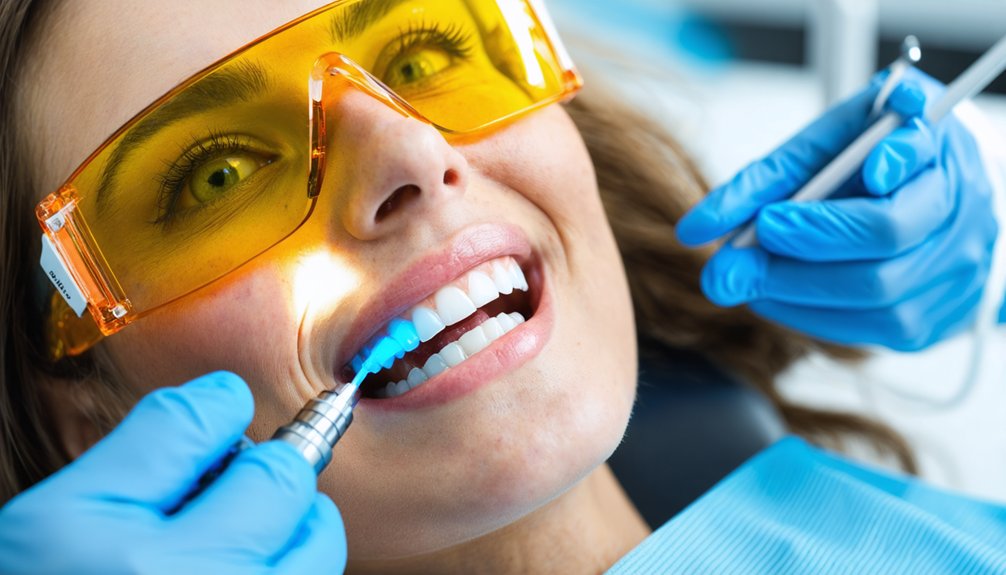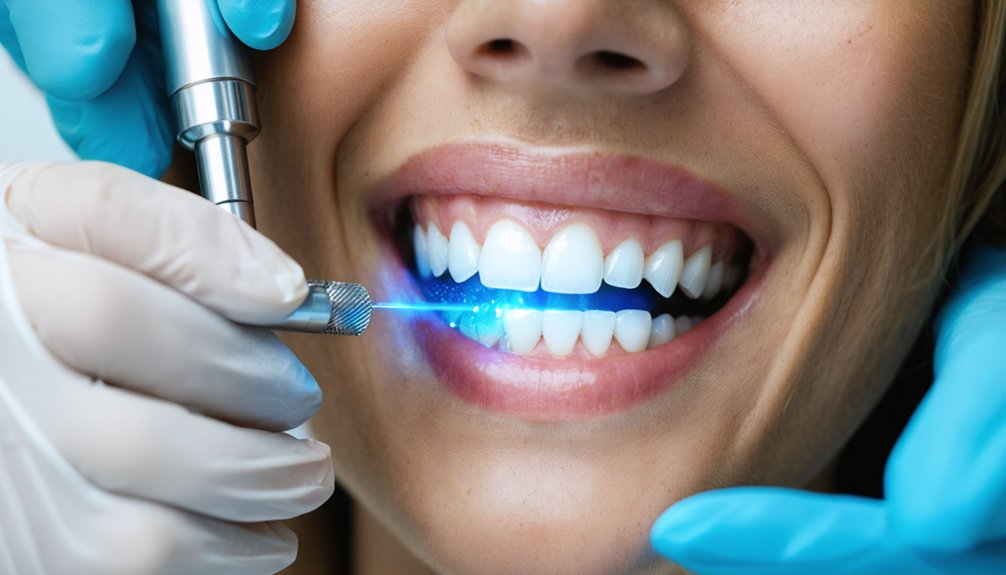
Laser teeth whitening is the smartest choice for wedding prep because it delivers up to 8 shades brighter results in a single session. It targets both surface and deep intrinsic stains more effectively than at-home kits, with results lasting up to two years. You’ll feel more confident, smile more naturally, and look polished in every photograph. Everything you need to plan your whitening timeline and maximize your results is covered ahead.
Key Takeaways
- Laser whitening brightens teeth by 5 to 8 shades in one session, delivering fast, dramatic results ideal for wedding timelines.
- Scheduling treatment 2 to 4 weeks before the wedding allows sensitivity to resolve and permits follow-up sessions if needed.
- A single supervised session eliminates uneven results and prolonged timelines associated with at-home whitening kits.
- Brighter teeth enhance photography by contrasting against white dresses and producing more defined, polished appearances under lighting.
- A confident, brighter smile reduces self-consciousness, encouraging spontaneous, genuine expressions throughout the wedding day.
How Far in Advance Should You Get Laser Whitening Before Your Wedding?
Timing your laser whitening appointment correctly can make a significant difference in how your smile looks on your wedding day. Most dental professionals recommend scheduling your session two to four weeks before the ceremony.
Timing your laser whitening session two to four weeks before your wedding ensures a brilliant, photo-ready smile.
This window allows any minor sensitivity to resolve while giving you time to assess the results and schedule a follow-up if needed.
Prioritize your oral health before booking — cavities, gum inflammation, or existing sensitivity can affect both treatment eligibility and outcomes.
Your dentist may also recommend diet restrictions following the procedure, specifically avoiding coffee, tea, wine, and pigmented foods for 24 to 48 hours.
Planning your appointment in advance gives you full control over the process, ensuring your smile is at peak brightness precisely when it matters most.
How Much Whiter Can Laser Whitening Make Your Teeth?
Laser whitening can brighten your teeth by approximately 5 to 8 shades in a single in-office session, making it one of the most impactful cosmetic options available before your wedding.
The treatment responds well to common stains caused by coffee, tea, wine, tobacco, and nicotine. It can also address gray or yellow tones linked to genetics or medication use.
Deeper discoloration that resists over-the-counter products often responds more effectively to the activated whitening gel used in laser systems.
Shades Gained Per Session
When it comes to measurable results, laser teeth whitening can brighten your smile by approximately 5 to 8 shades in a single in-office session. That level of improvement is difficult to replicate with strips or trays, which typically require weeks of consistent use.
The high-concentration whitening gel, activated by laser light, penetrates both surface and deeper stains from coffee, wine, and tobacco more effectively than consumer-grade products.
Keep in mind that most dental insurance plans classify whitening as cosmetic, meaning you’ll likely pay out of pocket.
Post-treatment diet restrictions—avoiding dark beverages and staining foods for 24 to 48 hours—help lock in those gains.
Understanding these factors lets you plan your session strategically and maintain precise control over your results before the wedding.
Stain Types That Respond
Not all stains respond equally to laser whitening, so knowing which types you’re dealing with helps set realistic expectations. Laser treatment performs strongly against extrinsic stains caused by coffee, tea, red wine, tobacco, and nicotine—exactly the discoloration that builds up through daily habits.
Diet modifications before and after treatment help preserve those results longer.
Age-related changes also respond well. As enamel thins over time, underlying dentin darkens and creates yellow or gray tones that over-the-counter products rarely address effectively. Laser-activated whitening gel penetrates deeper, targeting that intrinsic discoloration more precisely.
Medication-related staining and inherited discoloration may respond partially, though results vary. Discussing your specific stain history with your dentist beforehand lets you set accurate expectations and determine whether one session or a follow-up approach best fits your timeline.
Which Stains Does Laser Whitening Actually Fix?
Before committing to laser whitening, it helps to understand which stain types actually respond to the treatment. Laser systems perform strongest on extrinsic stains caused by coffee, tea, red wine, tobacco, and nicotine. These surface-level discolorations are highly receptive to the activated whitening gel, making stain removal efficient and predictable.
Yellow tones and mild gray discoloration also respond well, particularly when they stem from aging or early dietary habits. However, stains caused by tetracycline use, fluorosis, or deep structural damage are harder to correct and may require alternative cosmetic solutions.
Your dental hygiene history also matters. Cleaner enamel absorbs treatment more evenly, producing consistent results. Consulting your dentist before your appointment confirms whether your specific stain type makes you a strong candidate.
Why Laser Whitening Beats At-Home Kits for Wedding Prep
Why settle for slow, unpredictable results when your wedding date is fixed? In any techniques comparison, laser whitening outperforms strips, trays, and LED kits on every practical metric. A single in-office session delivers supervised, controlled treatment that targets both surface and deeper stains simultaneously—something consumer-grade products simply can’t replicate reliably.
At-home kits frequently produce uneven results, wasted product, and prolonged timelines. Laser whitening eliminates those variables.
At-home whitening kits mean uneven results, wasted product, and lost time. Laser treatment eliminates every variable.
Yes, cost considerations matter—professional treatment runs higher upfront—but you’re paying for precision, dental oversight, and results that hold for six months to two years.
When you’re managing final wedding-week logistics, you can’t afford a whitening method that underdelivers. One focused appointment replaces weeks of inconsistent home use, giving you full control over your outcome.
How Long Do Laser Whitening Results Last?
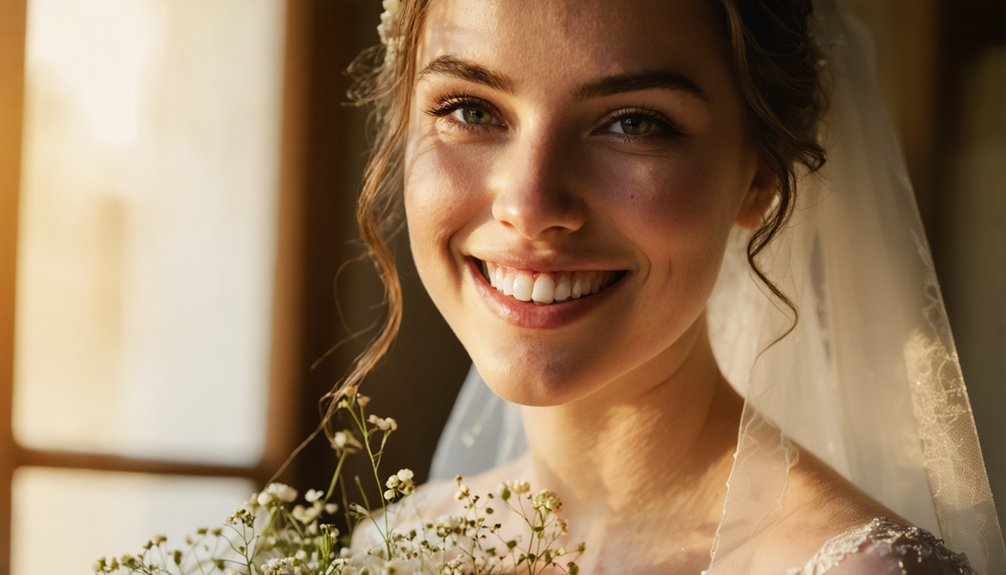
Results from a single laser whitening session typically last 6 months to 2 years, with some patients maintaining brightness for up to 3 years through consistent aftercare.
Unlike dental insurance, which rarely covers cosmetic procedures, this investment holds long-term value when you manage post-treatment habits carefully. A cost comparison with repeated at-home kit purchases often favors professional whitening over time.
To maximize your results, control these three factors:
- Limit dark beverages — coffee, tea, and red wine accelerate restaining on enamel surfaces.
- Maintain strict oral hygiene — brushing and flossing daily preserves the whitened surface layer.
- Schedule periodic touch-ups — a brief follow-up session resets brightness before it noticeably fades.
Your results are only as durable as your aftercare discipline.
Why a Brighter Smile Changes How You Feel on the Day
When you walk into your ceremony with a visibly brighter smile, your confidence shifts in ways that show up in your posture, your expressions, and your willingness to engage naturally with guests and cameras.
A professionally whitened smile reduces the self-consciousness that often makes people hold back or force an unnatural grin, so your smiles throughout the day feel spontaneous rather than staged.
That level of polish also ties your overall appearance together, complementing your attire and ensuring that every close-up, whether candid or posed, reflects a finished, intentional look.
Confidence Transforms Your Presence
A brighter smile directly affects how confident you feel walking into your ceremony, and that shift in confidence changes how you carry yourself throughout the entire day. When your oral hygiene supports a polished appearance, you project assurance rather than self-consciousness. Even if dental insurance doesn’t cover cosmetic whitening, the return in presence and poise is measurable.
That confidence shows up in three specific ways:
- You smile openly during portraits instead of holding back, giving photographers more natural, usable shots.
- You engage guests without distraction, maintaining eye contact and full presence.
- You move through the reception relaxed, not fixated on how your smile looks up close.
Controlling how you appear starts with controlling how you prepare.
Smiling Feels More Natural
Confidence built in preparation translates directly into how naturally you smile once the day arrives. When you’ve completed professional whitening, you’re no longer self-conscious about discoloration during ceremonies, portraits, or receptions. That psychological shift produces genuine, unguarded expressions that cameras capture clearly.
Dental consultations help you understand exactly what results to expect, removing uncertainty before the event. You’ll know your smile is optimized, so you stop holding back in group photos or close-up portraits.
Diet restrictions in the days following treatment protect your investment and reinforce the discipline you’ve already committed to. That same mindset carries forward on your wedding day—you arrive prepared, not second-guessing your appearance.
The result is a smile that feels effortless because the groundwork was already completed with precision.
Polish Completes Your Look
Every element of your wedding look works together, and a noticeably brighter smile ties the entire presentation together in photographs and in person. Laser whitening delivers up to 8 shades of improvement, creating a polished finish that pairs precisely with formal attire. Since dental insurance rarely covers cosmetic procedures, you’ll want treatment costs to produce maximum visible return.
Three ways a brighter smile completes your look:
- White dress contrast — bright teeth sharpen the visual distinction between your smile and formal attire in high-resolution portraits.
- Skin tone enhancement — whiter teeth make your complexion appear cleaner and more defined under wedding lighting.
- Close-up readiness — professional results eliminate uneven discoloration that becomes amplified in macro-lens photography.
You control every detail of your wedding aesthetic — your smile should match that standard.
Frequently Asked Questions
Is Laser Teeth Whitening Painful or Uncomfortable During the Procedure?
You might experience minor tooth sensitivity, but it’s generally manageable. Dentists use protective buffering gels for effective pain management, keeping discomfort minimal so you’ll stay comfortable and in control throughout the entire laser whitening procedure.
How Much Does Laser Teeth Whitening Typically Cost for Weddings?
Like an investment that pays dividends, laser teeth whitening typically costs $300–$1,500. You’ll find cost comparison helps justify the price over at-home kits. Explore affordability options like dental payment plans to control your wedding budget effectively.
Can Laser Whitening Work on Dental Crowns, Veneers, or Implants?
Laser whitening won’t alter dental crown compatibility or veneer stain resistance—these materials don’t respond to bleaching agents. You’ll want to match your natural teeth’s brightness to existing restorations before your wedding for a seamless, consistent smile.
How Many Laser Whitening Sessions Are Needed for Best Results?
Like a precision tool, one session typically delivers your best results. You’ll gain dramatic whitening with strong longevity and maintenance benefits, making the cost comparison with multiple at-home treatments clearly favorable for your wedding prep timeline.
Are There Any Foods to Avoid Immediately After Laser Whitening Treatment?
Yes, you’ll want to follow strict food restrictions during post-treatment care. Avoid dark beverages, coffee, tea, red wine, and pigmented foods for at least 48 hours to protect your results and maintain the best whitening outcomes.
References
- https://drcfamilydentistry.com/teeth-whitening-for-brides-and-grooms-to-be/
- https://www.semideydental.com/the-best-way-to-whiten-before-your-wedding-day/
- https://www.gurneedds.com/when-to-get-your-teeth-whitened-before-a-wedding
- https://www.yourdentistryguide.com/wedding/
- https://www.emergencydentallondon.co.uk/blog/bright-smiles-for-brides-and-grooms-in-london/
- https://www.chelseadentalaesthetics.com/blog/get-your-smile-wedding-ready-with-laser-teeth-whitening
- https://www.dsdental.ca/burlington/teeth-whitening-wedding/
- https://deandentalsolutions.com/discover-if-laser-teeth-whitening-is-right-for-you/
- https://ddtadental.com.au/about-laser-teeth-whitening/