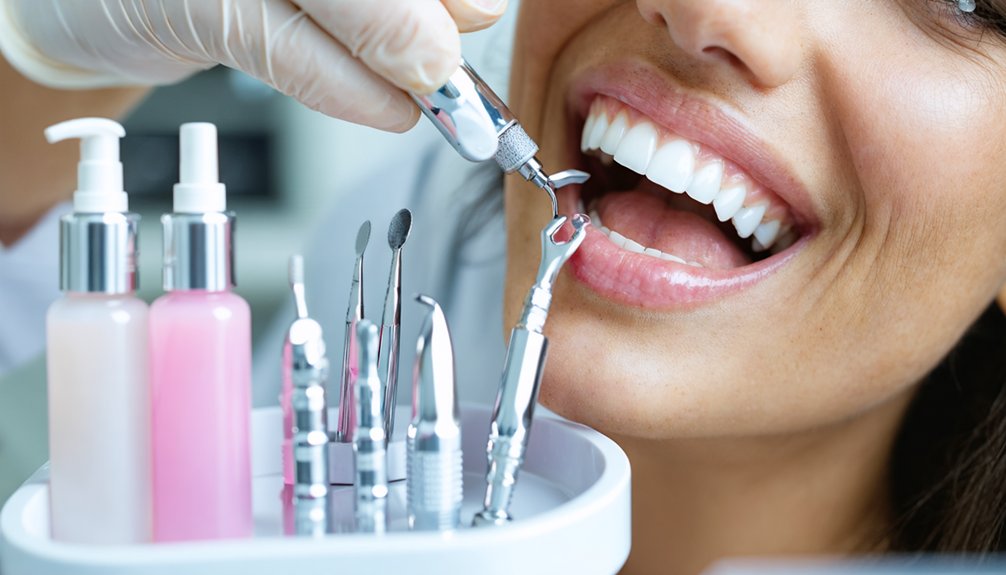
You can’t deduct teeth whitening because the IRS classifies it as cosmetic, not medically necessary. However, you can still maximize your dental deductions by focusing on qualifying expenses like cleanings, fillings, and orthodontic work. These must exceed 7.5% of your adjusted gross income before they become deductible. Keep whitening bills completely separate from qualifying treatments and track every unreimbursed cost carefully. There’s a strategic approach to making these deductions work in your favor.
Key Takeaways
- Teeth whitening is classified as cosmetic by the IRS and cannot be deducted, regardless of documentation or billing strategies used.
- Only dental expenses that treat, prevent, or alleviate disease qualify for deductions under IRS guidelines.
- Qualifying expenses must exceed 7.5% of your AGI before any deduction becomes applicable on Schedule A.
- Request itemized invoices separating cosmetic and medically necessary treatments to accurately calculate your deductible total.
- Itemizing only benefits you when total qualifying, unreimbursed medical expenses exceed both the AGI threshold and standard deduction.
Is Teeth Whitening Tax Deductible?
Many taxpayers assume teeth whitening qualifies as a deductible dental expense, but the IRS explicitly excludes it. The agency classifies whitening as a cosmetic procedure, not medically necessary treatment. That distinction matters for your tax planning.
To deduct dental expenses, they must treat, prevent, or alleviate disease. Whitening meets none of those criteria. It improves appearance, not health, so no documentation or invoice framing changes its status.
You can only deduct unreimbursed qualifying expenses exceeding 7.5% of your adjusted gross income on Schedule A. Whitening doesn’t enter that calculation at all.
If you’re combining dental visits with whitening services, separate those invoices immediately. Mixing cosmetic and qualifying costs creates reporting risk.
Know the boundary, and plan your deductions accordingly.
Why the IRS Treats Teeth Whitening as Cosmetic
The IRS draws a clear line between medical necessity and cosmetic preference, and teeth whitening falls firmly on the cosmetic side. The agency defines deductible dental care as treatment that diagnoses, cures, mitigates, treats, or prevents disease. Whitening doesn’t meet that standard because it improves appearance rather than addressing a dental condition.
Cosmetic procedures are explicitly excluded from medical expense deductions, regardless of where you receive them or how you pay. Even if you combine whitening with qualifying dental work in a single visit, the IRS requires you to separate the costs. Only the medically necessary portion counts toward your deduction.
You can’t reframe whitening as therapeutic through documentation or billing strategy. The cosmetic classification is fixed, and no recordkeeping approach changes that outcome.
Dental Expenses That Qualify Instead of Whitening
While teeth whitening doesn’t qualify as a deductible expense, many other dental costs can reduce your tax burden when they exceed 7.5% of your AGI.
Preventive and therapeutic treatments—such as cleanings, X-rays, fillings, and orthodontic work—meet the IRS standard for medically necessary dental care.
Separating these qualifying expenses from cosmetic procedures lets you build a defensible deduction and avoid reporting errors.
Qualifying Preventive Dental Care
Although teeth whitening doesn’t qualify as a deductible expense, several common dental treatments do—and understanding the distinction can help you identify real tax savings. The IRS draws a clear line between cosmetic procedures and treatments meeting medical necessity standards.
Preventive care that qualifies includes cleanings, fluoride treatments, sealants, and X-rays—each directly tied to preventing or treating dental disease. Fillings, extractions, and prescribed orthodontic work also meet the threshold.
These expenses must be unreimbursed and properly documented to count toward your deduction. To benefit, your total qualifying medical and dental costs must exceed 7.5% of your adjusted gross income.
Keeping invoices that separate preventive treatments from cosmetic work ensures accuracy and assures your deduction if questioned.
Treatments That Reduce Tax Burden
Since teeth whitening doesn’t qualify for a tax deduction, redirecting your focus to treatments that do can meaningfully reduce your tax burden. Unlike cosmetic procedures, medically necessary dental care clears the IRS threshold for deductibility.
Qualifying treatments include fillings, extractions, X-rays, cleanings, braces, fluoride applications, and dentures. These expenses treat, prevent, or mitigate dental disease — the standard the IRS requires.
Strategic tax planning means grouping these legitimate dental costs with other unreimbursed medical expenses. Once your total exceeds 7.5% of your adjusted gross income, the amount above that floor becomes deductible on Schedule A.
Separate your invoices carefully. Mixing cosmetic procedures with qualifying care creates reporting risk. Precision in documentation protects your deduction and keeps your tax position defensible.
Deductible Versus Cosmetic Expenses
The IRS draws a clear line between cosmetic and medically necessary dental care, and that distinction determines what you can deduct. Teeth whitening falls under cosmetic procedures, making it non-deductible regardless of cost or circumstance.
Expenses tied to medical necessity, however, qualify. These include cleanings, X-rays, fillings, extractions, fluoride treatments, sealants, braces, and dentures. Each addresses the prevention or treatment of dental disease, meeting the IRS standard for deductible care.
To benefit, you must itemize deductions and guarantee your total unreimbursed medical and dental expenses exceed 7.5% of your adjusted gross income.
Separate your invoices carefully—cosmetic work must never be grouped with qualifying treatment. Precise recordkeeping protects your deduction and keeps your return defensible.
How the 7.5% AGI Threshold Applies to Dental Costs

Once you’ve identified qualifying dental expenses, you need to understand the AGI floor before calculating any deduction.
The IRS allows you to deduct only the unreimbursed medical and dental costs that exceed 7.5% of your adjusted gross income, so if your AGI is $50,000, expenses below $3,750 produce no deduction.
You must also itemize on Schedule A, meaning you’ll add your qualifying dental costs to other eligible medical expenses to test whether the threshold is cleared.
Understanding the AGI Floor
Even if you’ve accumulated legitimate dental expenses throughout the year, you can’t deduct a single dollar until your total unreimbursed medical and dental costs exceed 7.5% of your adjusted gross income (AGI). This threshold demands strategic planning.
Consider this framework:
- Calculate your AGI first — your floor is exactly 7.5% of that figure.
- Only expenses tied to medical necessity qualify toward the threshold.
- Cosmetic procedures, including teeth whitening, don’t count toward crossing it.
- Only unreimbursed amounts apply — insurance payouts reduce your eligible total.
If your AGI is $60,000, you must exceed $4,500 before deducting anything. Every cosmetic dollar you attempt to include weakens your position.
Track qualifying expenses meticulously, separate them from cosmetic costs, and build toward that threshold with documented, medically necessary care.
Calculating Your Deduction Threshold
Calculating your deduction threshold starts with one number: your AGI. Multiply it by 7.5%, and you’ve identified your floor. Only unreimbursed qualifying dental expenses exceeding that figure are deductible.
Here’s how it works: if your AGI is $60,000, your floor is $4,500. If you’ve paid $5,200 in qualifying dental costs, you can deduct $700. Any reimbursement from dental insurance reduces your qualifying total before you apply the floor.
One critical distinction: cosmetic procedures, including teeth whitening, don’t count toward that threshold. Adding them to your calculation won’t hold up under scrutiny.
Focus strictly on medically necessary dental care — cleanings, fillings, extractions — to build a legitimate, defensible number that clears the 7.5% floor.
Itemizing Qualifying Dental Costs
Knowing your floor is only half the work — now you need to identify which dental costs actually count toward clearing it. The IRS permits only medically necessary treatments, not cosmetic procedures like teeth whitening. Subtract any dental insurance reimbursements first — only unreimbursed amounts qualify.
Deductible dental expenses typically include:
- Cleanings, X-rays, and fillings — preventive and restorative care the IRS recognizes
- Braces, extractions, and dentures — treatment addressing functional dental conditions
- Fluoride treatments and sealants — qualified preventive interventions
- Unreimbursed costs after dental insurance — only your out-of-pocket remainder counts
Cosmetic procedures are excluded entirely — no documentation converts them into qualifying expenses. Separate your invoices carefully, stack only legitimate costs, and measure them against your calculated floor before claiming anything.
Stack Qualifying Dental Expenses to Clear the Floor

Since teeth whitening doesn’t qualify as a deductible expense, your strategy shifts to identifying and stacking the dental costs that do.
Focus on unreimbursed amounts your dental insurance didn’t cover—fillings, extractions, X-rays, cleanings, and orthodontic work all count. Cosmetic procedures like whitening stay off your list entirely.
Your target is clearing the 7.5% AGI floor. If your AGI is $60,000, you need $4,500 in qualifying medical and dental expenses before any deduction applies.
Every legitimate, unreimbursed dental cost moves you closer to that threshold.
Keep invoices organized and separate cosmetic procedures from medically necessary care. Accurate recordkeeping prevents reporting errors and ensures every eligible dollar is counted.
Stack strategically, document precisely, and itemize only what qualifies.
What Insurance Reimbursements Take Off Your Deduction
Every dollar your insurance reimburses reduces your deductible dental expense dollar for dollar.
Dental insurance typically covers medically necessary care, not cosmetic procedures like whitening.
Only your unreimbursed balance counts toward the 7.5% AGI threshold.
Track reimbursements carefully by reviewing these four categories:
- Covered treatments: Insurance payments for fillings, extractions, or cleanings directly reduce your deductible amount
- Partial reimbursements: If dental insurance covers 80% of a qualifying procedure, only your remaining 20% qualifies
- Cosmetic procedures: Whitening and similar work receives no insurance offset because it’s already non-deductible
- Explanation of Benefits (EOB): Use this document to confirm exact reimbursed amounts before calculating your deduction
Separate your reimbursed amounts from unreimbursed costs before totaling your medical expenses on Schedule A.
Keep Whitening Bills Separate From Deductible Dental Care

Mixing whitening invoices with deductible dental bills creates reporting errors that can misrepresent your legitimate medical expense total. The IRS explicitly excludes teeth bleaching from deductible medical expenses, so keeping those costs in a separate file protects the accuracy of your Schedule A figures.
Cosmetic dentistry charges, including whitening and veneers, belong in their own category entirely. When you bundle them with cleanings, fillings, or fluoride treatments, you risk inflating your reported expenses and triggering scrutiny you don’t need.
Maintain distinct folders—physical or digital—for cosmetic versus qualifying dental costs. Request itemized invoices from your provider so each service is clearly labeled. That separation lets you calculate your deductible total precisely and apply the 7.5% AGI threshold with confidence.
When Itemizing Beats the Standard Deduction for Dental Costs
Once your dental costs are cleanly separated, the next question is whether itemizing actually puts more money in your pocket than taking the standard deduction. Itemizing wins only when your total qualifying expenses exceed both the standard deduction and the 7.5% AGI floor.
Consider these conditions before committing:
- Your unreimbursed dental insurance out-of-pocket costs are substantial
- Medically necessary procedures pushed total medical expenses past 7.5% of your AGI
- Cosmetic procedures are already excluded and won’t inflate your qualifying total
- Combined medical, dental, and other deductible expenses exceed your standard deduction amount
Run the numbers precisely. If qualifying dental costs fall short of the threshold, the standard deduction delivers more value. Don’t itemize based on assumption—calculate first, then decide.
How to Maximize Dental Deductions Without Whitening
Since teeth whitening isn’t deductible, your strategy should shift entirely toward qualifying dental expenses that can meaningfully reduce your tax burden. Separate cosmetic invoices from medically necessary care immediately — documentation errors can compromise otherwise legitimate deductions.
Don’t let dental myths mislead you. Cleanings, X-rays, fillings, extractions, fluoride treatments, and orthodontics all support oral health and qualify as deductible expenses. These costs accumulate faster than most taxpayers realize.
Your goal is deliberate: group qualifying dental expenses with broader unreimbursed medical costs to clear the 7.5% AGI threshold required for itemizing. Every dollar of eligible oral health spending counts toward that floor.
Track receipts, separate reimbursed amounts, and itemize only verified expenses. Precision here protects your deduction and keeps your return defensible.
Frequently Asked Questions
Can an FSA or HSA Pay for Teeth Whitening Tax-Free?
Though dental insurance often covers preventive care, it won’t help here. You can’t use your FSA or HSA for teeth whitening because the IRS classifies cosmetic procedures as non-qualifying medical expenses.
Does Teeth Whitening Qualify as a Deductible Business Expense for Actors?
You can’t deduct teeth whitening as a business expense, even as an actor. The IRS classifies it under cosmetic procedures, not medical necessity—and dental insurance coverage doesn’t change that determination.
Can a Dentist’s Letter Make Whitening Medically Necessary for Deductions?
No, a dentist’s letter won’t make whitening deductible. The IRS classifies it as a cosmetic enhancement regardless of documentation. Even if dental insurance excludes it, you can’t reclassify cosmetic procedures as medically necessary expenses.
Are State Tax Deductions for Dental Expenses Different From Federal Rules?
State regulations vary, so your state’s dental expense deduction rules may differ from federal guidelines. Check your state’s specific thresholds and dental insurance reimbursement rules carefully, as some states don’t conform to federal tax code.
Does Teeth Whitening Affect Deductions if Combined With Medically Necessary Veneers?
Over 90% of cosmetic dentistry costs aren’t deductible. Even combined with medically necessary veneers, you can’t deduct teeth whitening—the IRS splits costs by purpose. Check your insurance coverage; only qualifying treatment counts.
References
- https://www.irs.gov/publications/p502
- https://www.sycamorehillsdentistry.com/blog/deductible-dental-expenses/
- https://www.goodrx.com/insurance/taxes/are-dental-expenses-tax-deductible
- https://www.hrblock.com/tax-center/filing/adjustments-and-deductions/claiming-dental-expenses/
- https://www.irs.gov/taxtopics/tc502
- https://www.ato.gov.au/tax-and-super-professionals/for-tax-professionals/tax-professionals-newsroom/dental-expenses-are-private-expenses
- https://www.ato.gov.au/individuals-and-families/income-deductions-offsets-and-records/deductions-you-can-claim/work-related-deductions/personal-grooming-health-and-fitness/medical-and-dental-expenses-vaccinations-and-covid-19-tests
- https://www.jacksonhewitt.com/tax-help/tax-tips-topics/personal-finance-savings/deducting-medical-and-dental-expenses-on-your-taxes/