Aging teeth are harder to whiten because thinning enamel exposes darker dentin and deepens intrinsic stains. Your best options include in-office laser or Zoom whitening for fast, dramatic results, or dentist-supervised take-home trays using low-concentration peroxide for a gentler approach. Over-the-counter ADA-approved strips and baking soda-based pastes offer safer maintenance without accelerating enamel wear. The right procedure depends on your sensitivity level and stain severity — and there’s more to weigh before choosing.
Key Takeaways
- In-office treatments like laser whitening and Zoom technology deliver fast, dramatic results for age-related yellowing within one hour.
- Chair-side bleaching uses protective barriers to shield receding gums from concentrated peroxide during 30–60 minute sessions.
- Dentist-supervised take-home trays with low-concentration peroxide gels provide a gentler, gradual whitening approach for sensitive aging teeth.
- ADA-approved OTC strips and baking soda-based pastes offer low-abrasive options that protect thinning enamel effectively.
- Regular touch-ups every 2–3 months using low-peroxide products help maintain whitening results on aging teeth longer.
Why Aging Teeth Are Harder to Whiten
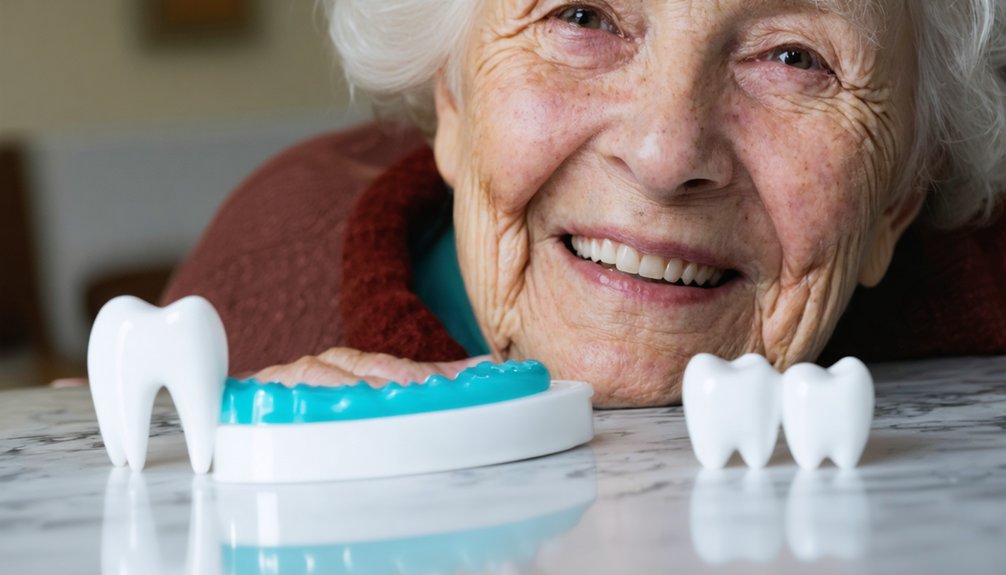
As you age, your teeth become considerably harder to whiten due to structural changes that accumulate over decades. Tooth enamel gradually thins, exposing the darker dentin layer beneath and making discoloration more visible.
Simultaneously, secondary dentin continues forming inside your teeth, deepening intrinsic stains that surface-level treatments simply can’t penetrate effectively.
Receding gums compound the challenge by exposing sensitive root surfaces that lack protective enamel entirely. These structural vulnerabilities mean standard whitening concentrations that work on younger teeth can trigger significant sensitivity or chemical burns on yours.
Intrinsic stains from medications, natural aging, and dietary habits embed deep within compromised tooth enamel, requiring specialized clinical approaches rather than basic over-the-counter solutions.
Understanding these distinctions helps you pursue whitening strategies that actually deliver measurable, lasting results.
Which In-Office Whitening Treatments Work Best for Seniors?
When your teeth need serious intervention, in-office whitening treatments deliver results that no at-home product can match. Chair-side bleaching completes treatment in a single 30- to 60-minute visit, while laser whitening activates peroxide-based gel for dramatic brightening within one hour.
Zoom technology remains the leading choice for seniors battling age-related yellowing, offering fast, controlled results.
Before committing, your dentist must rule out cavities, gum disease, or advanced enamel thinning. If enamel strengthening isn’t achievable through remineralizing protocols, dental veneer options may better address severe intrinsic staining.
Standard in-office bleaching averages $600, while laser procedures reach $1,000.
Your dentist applies protective barriers to shield receding gums, ensuring concentrated hydrogen peroxide targets stains without causing chemical burns on vulnerable tissue.
Are Take-Home Trays a Safe Whitening Option for Aging Teeth?
For seniors who prefer a gentler, more gradual approach than in-office procedures, dentist-supervised take-home trays offer a clinically sound alternative. Unlike natural remedies or herbal extracts, custom-fitted trays paired with low-concentration peroxide gels deliver measurable, controlled results while protecting sensitive aging enamel and receding gums.
Consider these three clinical advantages:
- Concentration control — 10% carbamide peroxide or 3% hydrogen peroxide minimizes sensitivity without compromising efficacy.
- Precision fit — Custom-molded trays prevent gum irritation and ensure uniform whitening across all surfaces.
- Session management — Limiting applications to 10–30 minutes reduces enamel over-exposure risks common in older adults.
You’ll achieve gradual stain reduction from foods, medications, and natural wear while maintaining full control over your whitening timeline and comfort levels.
Over-the-Counter Whitening Products That Protect Thin Enamel
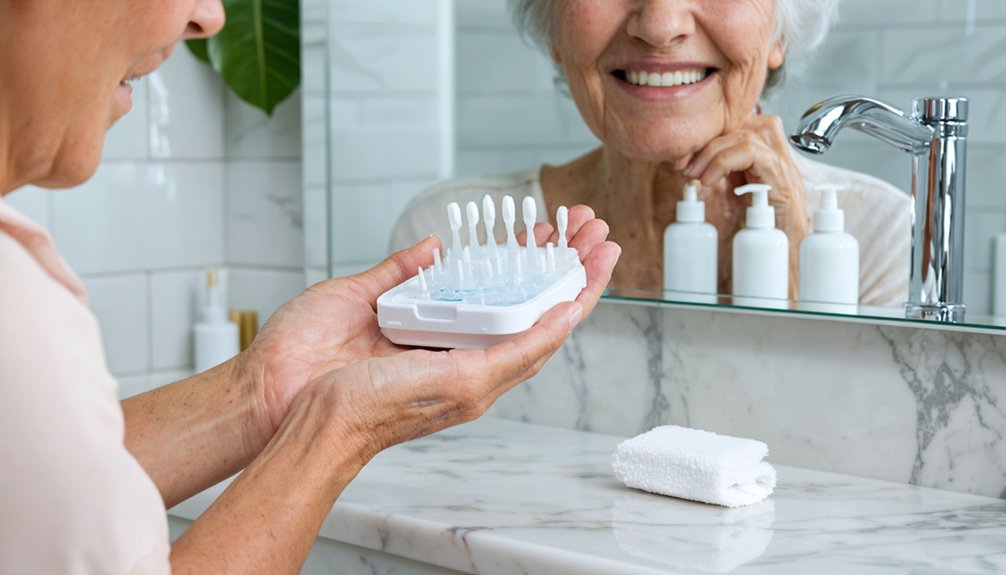
While professional treatments deliver superior results, over-the-counter whitening products can still protect thin enamel and maintain brightness when you select the right formulations. ADA-approved strips, gels, and baking soda toothpastes offer low-abrasive options that remove surface stains without accelerating enamel wear.
Baking soda formulations outperform many conventional whitening pastes in both effectiveness and gentleness. Whitening rinses with minimal peroxide concentrations help you sustain results when swished for 60 seconds daily.
Pair these products strategically with natural remedies like oil pulling and dietary changes that eliminate stain-causing foods such as coffee, wine, and tobacco.
How Long Results Last and When Seniors Need Touch-Ups
Once you’ve selected the right over-the-counter products to protect aging enamel, understanding how long your results will last helps you plan an effective maintenance schedule.
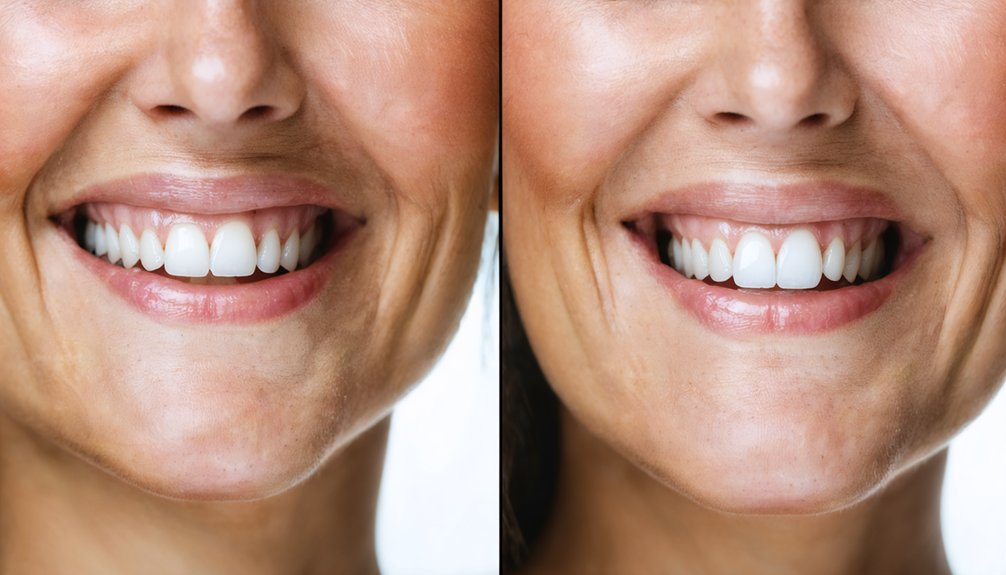
Whitening results typically last 6 months to 3 years, but aging dental enamel loses brightness faster due to secondary dentin buildup and dietary staining. You’ll need strategic touch-ups to maintain control over your results.
- Schedule touch-ups every 2–3 months using low-concentration peroxide products to prevent deep stain re-accumulation.
- Use desensitizing toothpaste containing potassium nitrate or stannous fluoride to manage tooth sensitivity before and after each maintenance session.
- Limit sessions to 10–30 minutes to protect thinning enamel from chemical overexposure during frequent reapplication cycles.
Consistent maintenance keeps your results predictable and your dental enamel structurally sound.
Frequently Asked Questions
Can Antioxidant Supplements Actually Reduce Sensitivity During Tooth Whitening Treatments?
Yes, antioxidant supplements like vitamin C, CoQ10, and lycopene can actively reduce whitening sensitivity. Their antioxidant effects help protect your tooth tissue during treatment, making your whitening experience noticeably more comfortable and controlled.
Will Whitening Treatments Cause Mismatched Color Between Natural Teeth and Dental Restorations?
Yes, whitening treatments will cause mismatched dental shade matching issues. Your natural teeth brighten, but crowns, fillings, and veneers won’t respond to peroxide, destroying restoration color consistency and leaving you with visibly uneven, mismatched results.
Which Specific Ingredients Should Seniors Look for in Remineralizing Dental Products?
For dental remineralization, you’ll want potassium nitrate or stannous fluoride in your toothpaste, mouthwash, and gels. These ingredients actively drive tooth mineralization, strengthening weakened enamel by replenishing lost minerals and protecting your aging teeth effectively.
Are There Dietary Changes Seniors Can Make to Slow Stain Recurrence?
You are what you eat—your dietary habits directly impact stain prevention. Limit coffee, tea, and red wine. Favor crunchy vegetables, water, and dairy to neutralize acids, reducing stain recurrence and protecting your whitening results longer.
Can Seniors With Receding Gums Safely Use Standard Whitening Trays at Home?
You shouldn’t use standard whitening trays if you’ve got receding gums. Instead, choose custom-fitted dentist-supervised trays with low-concentration peroxide to protect gum health, minimize teeth sensitivity, and guarantee controlled, safe whitening results tailored precisely to your needs.
References
- https://www.aarp.org/health/conditions-treatments/teeth-whitening/
- https://www.ada.org/resources/ada-library/oral-health-topics/whitening
- https://gorgeoussmilesdental.com/blog/best-teeth-whitening-treatments-recommended-by-dentists/
- https://www.trysnow.com/blogs/news/teeth-whitening-for-seniors-safer-brighter-smiles-after-60
- https://www.goodrx.com/conditions/dental-care/is-teeth-whitening-safe
- https://www.cda-adc.ca/en/oral_health/procedures/teeth_whitening/index.asp
- https://www.cdhp.org/is-it-harder-to-whiten-teeth-as-you-age/