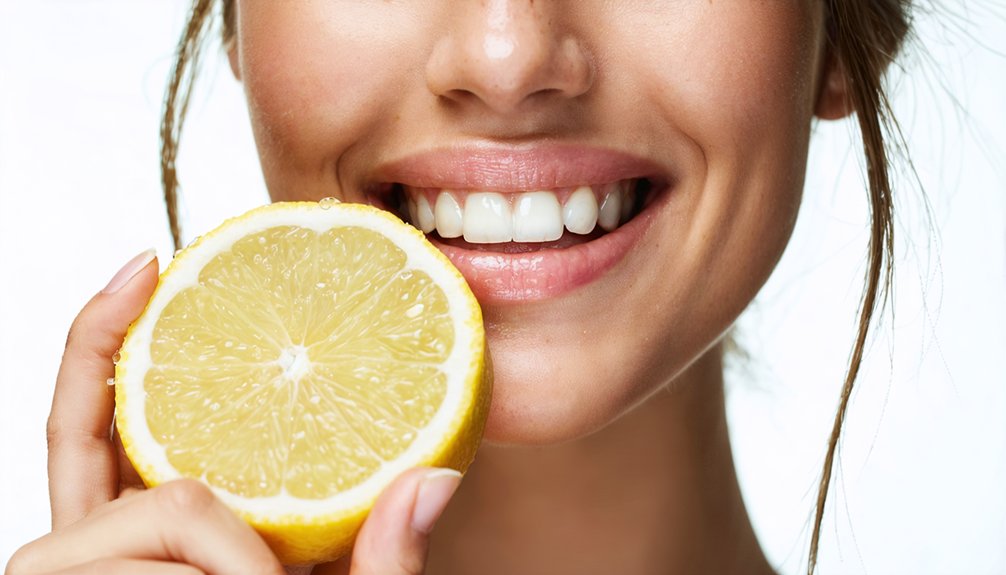
Lemon juice is quietly destroying your smile one sip at a time. With a pH between 2 and 3, it sits far below the 5.5 threshold at which enamel begins dissolving. Each exposure strips away your enamel’s protective mineral structure permanently — it doesn’t grow back. Over time, you’ll notice sensitivity, yellowing, and structural changes that signal irreversible damage. The full picture of what’s happening to your teeth is more serious than you might expect.
Key Takeaways
- Lemon juice is highly acidic, with a pH of 2–3, which dissolves enamel and permanently damages your smile over time.
- Daily lemon water causes cumulative enamel erosion, increasing tooth sensitivity, yellowing, and cavity risk with each exposure.
- Eroded enamel exposes dentin, causing visible yellowing and heightened sensitivity to hot, cold, and sweet stimuli.
- Enamel cannot regenerate once lost, making repeated lemon juice exposure permanently harmful to your smile’s structure.
- Using a straw, diluting lemon juice, and rinsing with water afterward can minimize but not eliminate enamel damage.
How Lemon Juice Erodes Your Tooth Enamel
Lemon juice carries a pH between 2 and 3, making it far more acidic than the 5.5 threshold at which your enamel begins to dissolve. Each exposure strips away your enamel’s protective mineral structure, and since enamel doesn’t regenerate, you can’t reverse that loss.
Without intervention, erosion progresses to the dentin layer beneath, causing sensitivity, yellowing, and increased cavity risk.
Sipping lemon water throughout the day is particularly destructive because your enamel never gets the recovery window it needs for tooth remineralization to occur. Saliva works to restore mineral balance between acid exposures, but constant acidity overwhelms that process.
Prioritizing enamel strengthening strategies isn’t optional—it’s essential. Once your enamel’s gone, no treatment restores it. You must control how and when acid contacts your teeth.
Can Lemon Water Really Damage Teeth Every Day?
Daily exposure to lemon water doesn’t just pose a risk—it causes measurable, cumulative damage to your enamel with every use. Your enamel won’t recover if you’re sipping lemon flavor throughout the day for dental hydration purposes.
Each daily habit compounds the harm:
- Lemon water’s pH of 2–3 sits far below enamel’s dissolution threshold of 5.5
- Continuous sipping prevents saliva from neutralizing acid between exposures
- Dentin exposure becomes inevitable as enamel progressively wears away
- Sensitivity, yellowing, and cavity risk increase with every unprotected session
You’re choosing permanent structural loss when you treat lemon water as a harmless routine. Enamel doesn’t regenerate. Once it’s gone, it’s gone.
Understanding this reality puts control back in your hands before irreversible damage occurs.
Warning Signs Your Enamel Is Already Eroding
If your teeth have become increasingly sensitive to hot, cold, or sweet stimuli, enamel erosion may already be underway. Sensitivity occurs when acid exposure strips enamel, leaving nerve-rich dentin unprotected.
You should also watch for visible yellowing, as worn enamel reveals the naturally darker dentin beneath.
Additional warning signs include rounded tooth edges, unusual transparency near incisal tips, and small dents or cupping on chewing surfaces. These structural changes confirm irreversible enamel loss.
How to Drink Lemon Water Without Damaging Your Enamel
Protecting your enamel while still enjoying lemon water requires deliberate, consistent habits. You don’t have to eliminate citrus flavor entirely—you need to control how and when acid contacts your teeth.
Follow these evidence-based strategies:
- Dilute properly: Mix lemon juice at a 50% water ratio to reduce acid concentration and solvency.
- Use a straw: Direct fluid past your teeth, minimizing enamel exposure to lemon zest compounds and citric acid.
- Drink quickly: Sipping throughout the day prevents enamel from recovering between acid exposures.
- Rinse immediately: Swish with tap water afterward to support re-mineralization and neutralize residual acidity.
Delay brushing 30–60 minutes post-consumption. Acid-softened enamel is vulnerable to mechanical abrasion. You control the damage by controlling your habits.
How to Protect Your Enamel After Drinking Lemon Juice
Once you’ve consumed lemon juice, your next actions directly determine how much enamel damage you sustain. Immediately rinse with tap water to restore oral pH balance and support saliva’s role in re-mineralizing softened enamel.
Don’t brush right away — acid-softened enamel is structurally vulnerable, so wait 30 to 60 minutes before brushing.
Chew sugar-free gum to stimulate saliva production, which actively neutralizes residual acidity.
When you do brush, use fluoride toothpaste to reinforce enamel against future erosion.
At night, rinse with fluoridated mouthwash to aid ongoing re-mineralization while you sleep.
Each step compounds your protection. Skipping even one protocol increases cumulative risk.
Enamel doesn’t regenerate — once it’s gone, it’s gone permanently, so disciplined post-consumption care isn’t optional.
Frequently Asked Questions
Does Lemon Juice Have the Highest Citric Acid of All Fruit Juices?
Yes, lemon juice contains the highest citric acid concentration of all fruit juices. Its extreme fruit acidity directly threatens your oral health, so you must take protective measures to prevent irreversible enamel erosion from occurring.
Can Lemon Juice’s Systemic Benefits Ever Outweigh Its Permanent Dental Risks?
Systemic benefits don’t outweigh permanent dental risks. You can’t reverse enamel erosion once it occurs, and no kidney stone or metabolic benefit justifies compromising your oral health. You must weigh these trade-offs carefully before regular consumption.
Does Lemon Juice Becoming Alkaline After Digestion Protect Teeth From Acid?
Coincidentally, while your body achieves pH balance after digestion, your teeth don’t share that luck. Lemon juice’s alkaline shift occurs too late — enamel erosion happens on contact, permanently damaging your smile before digestion even begins.
Can Lemon Water Help Reduce Consumption of Sugary Drinks Harming Enamel?
Yes, lemon water can help you reduce consumption of sugary acidic beverages, lowering your dental erosion risk. However, you’re still exposing your enamel to citric acid, so you mustn’t overlook its corrosive potential.
Does Vitamin C in Lemon Juice Neutralize Its Corrosive Effects on Enamel?
Like a shield with holes, Vitamin C can’t perform acidity neutralization — it doesn’t stop enamel erosion. You’re still exposing your teeth to corrosive acid, so don’t rely on nutrients to protect your smile.
References
- https://www.deltadentalnj.com/blog/entry/2019/Is-Lemon-Water-Bad-for-Your-Teeth
- https://www.dhconcepts.com/the-dark-side-of-lemon-water/
- https://nvdentalbraces.com/is-lemon-juice-bad-for-your-teeth/
- https://www.trianglepediatricdentistry.com/blog/lemon-water-bad-for-teeth/
- https://mainst.dental/lemon-juice-the-good-the-bad-the-sour/
- https://blackerfamilydental.com/blog/adding-lemon-to-water-have-bad-effect-tooth-enamel/
- https://mibocadentistry.com/lemon-water-and-your-teeth-alkaline-myths-vs-enamel-erosion-risks/
- https://ethosorthodontics.com.au/blog/is-lemon-water-in-the-morning-bad-for-my-teeth/
- https://www.arlingtonheightsdentist.co/blog/can-lemon-water-damage-your-teeth/
- https://www.youtube.com/watch?v=_-LjmGg5Z3M