For fresh discoloration from coffee, tea, or daily habits, Signal White Now and Colgate Optic White rank among the strongest options. Signal White Now uses blue covarine for immediate optical brightness, while Colgate Optic White relies on hydrogen peroxide for chemical stain breakdown. You’ll want to rinse twice daily for best results. Choosing the right formula depends on your sensitivity level, budget, and how quickly you need visible results — all of which break down further below.
Key Takeaways
- Signal White Now ranks as the strongest whitening rinse for visible color change on freshly discolored teeth.
- Blue covarine provides immediate optical brightness by coating teeth, making it ideal for instant results on discolored teeth.
- Hydrogen peroxide in rinses like Colgate Optic White aggressively breaks down fresh surface stains effectively.
- Rinse twice daily and pair with whitening toothpaste for optimal results on discolored teeth.
- Products exceeding a Delta E 00 value of 1.8 meet the clinical benchmark for acceptable whitening results.
Why Teeth Get Discolored and What Whitening Rinses Fix
Tooth discoloration develops through two distinct pathways: extrinsic staining from surface deposits and intrinsic staining embedded within the enamel structure. Coffee, tea, red wine, and tobacco are primary causes discoloration agents that bind to enamel pellicle over time.
Aging and certain medications drive intrinsic changes that surface treatments can’t fully reverse.
Whitening rinses target extrinsic stains effectively through hydrogen peroxide, enzymes, and blue covarine—each working through distinct chemical and optical mechanisms. You should understand the whitening myths suggesting rinses eliminate deep intrinsic discoloration; they don’t.
What they do accomplish is measurable surface-level brightening when you use them consistently.
Ninety-five percent of individuals report struggling with staining, confirming this isn’t a cosmetic preference—it’s a widespread clinical concern you can actively manage.
Which Ingredients in Whitening Mouth Rinses Actually Work
Understanding which ingredients deliver measurable results helps you make smarter product choices rather than falling for marketing claims. Each ingredient targets stain removal through a distinct mechanism, and recognizing these differences puts you in control of your daily regimen.
Hydrogen peroxide aggressively breaks down surface discoloration, while gentle enzymes support chemical stain removal without compromising enamel protection.
Hydrogen peroxide targets stubborn discoloration aggressively, while enzymes dissolve stains chemically without weakening your enamel’s protective layer.
Blue covarine enhances visual whitening by coating teeth with a light-reflecting layer, producing immediate perceptible brightness. Baking soda contributes mild abrasive polishing, completing effective ingredient synergy within a single product formulation.
You should, however, approach charcoal-based options cautiously. Clinical data confirms these variants produce the lowest enamel bond strength values.
Prioritizing peroxide or blue covarine formulations guarantees you’re selecting evidence-backed solutions that balance measurable color improvement with structural integrity.
Best Whitening Mouth Rinses for Discolored Teeth Ranked
Knowing which ingredients work gives you a foundation for choosing the right product, but seeing how specific formulations perform in clinical trials narrows your options further.
Signal White Now leads measurable whiteness improvements, making it your strongest option for visible color change.
R.O.C.S Black Edition White exceeds the clinical Delta E 00 threshold of 1.8, confirming its effectiveness beyond whitening myths.
Colgate Optic White delivers aggressive stain removal through hydrogen peroxide content, while Listerine Advanced White balances acceptable whitening with cavity protection.
You should avoid Colgate Plax White’s charcoal formulation, which recorded the lowest bond strength values, raising ingredient safety concerns.
Prioritizing blue covarine or peroxide-based options gives you clinically supported results without compromising enamel structural integrity.
Does Blue Covarine or Peroxide Whiten Faster?
When speed matters in whitening, blue covarine and hydrogen peroxide work through fundamentally different mechanisms that affect how quickly you’ll see results.
Blue covarine benefits you immediately—it coats your enamel with a light-reflecting layer, producing visible brightness after a single rinse. You’re not removing stains; you’re optically masking them.
Blue covarine doesn’t whiten your teeth—it tricks your eyes into thinking it does.
In a peroxide comparison, hydrogen peroxide penetrates enamel to chemically break down stain compounds, delivering genuine discoloration removal.
However, this process requires consistent daily use over two to four weeks before clinically acceptable Delta E 00 changes exceed the 1.8 threshold.
If you need fast visual impact, blue covarine delivers it immediately. If you want measurable, lasting stain removal, hydrogen peroxide is your evidence-backed choice.
Your timeline dictates which ingredient you should prioritize.
Is Charcoal Mouthwash Safe for Discolored Teeth?
Charcoal mouthwash may seem like a natural solution for discolored teeth, but the clinical evidence raises legitimate concerns. While charcoal absorbs impurities effectively, its impact on enamel integrity is measurable and troubling.
Studies confirm that charcoal-based formulations produced the lowest mean bond strength values across comparative tests, making charcoal safety a genuine clinical priority you shouldn’t overlook.
If you’re managing discoloration and want to protect your enamel long-term, charcoal mouthwash presents a calculated risk. The enamel impact from repeated exposure may compromise structural integrity over time, particularly when compared to blue covarine or hydrogen peroxide alternatives.
You’d be trading short-term stain absorption for potential weakening of your tooth’s foundational layer. Selecting evidence-backed formulations gives you greater control over both whitening outcomes and enamel preservation.
How Long Before a Whitening Rinse Shows Real Results?
You’ll typically notice subtle whitening results within 2 to 4 weeks of consistent daily use, provided you rinse twice per day as directed.
Accelerating those results depends on pairing your rinse with whitening toothpaste and limiting stain-causing beverages like coffee, tea, and red wine.
Selecting an ADA-accepted product guarantees you’re following a clinically validated regimen that balances efficacy with enamel safety.
Realistic Timeline Expectations
Consistent daily use of a whitening mouth rinse typically yields subtle but measurable results within 2 to 4 weeks, provided you rinse thoroughly twice a day.
Realistic expectations account for timeline variations based on stain severity and formula type.
- Weeks 1–2: Surface debris clears; blue covarine formulas produce immediate optical brightness.
- Weeks 2–4: Hydrogen peroxide begins breaking down deeper stains; measurable Delta E 00 shifts emerge.
- Weeks 4–6: Clinically acceptable color changes exceeding 1.8 Delta E 00 become detectable.
- Weeks 6+: Sustained results require limiting coffee, tea, and red wine intake.
Pairing your rinse with twice-daily whitening toothpaste accelerates outcomes.
Products carrying the ADA Seal of Acceptance provide verified efficacy benchmarks you can trust.
Daily Habits Accelerating Results
Pairing your whitening mouth rinse with targeted daily habits measurably shortens the timeline to visible results.
Your daily cleansing routine should include brushing twice with a whitening toothpaste, rinsing consistently twice daily, and flossing to eliminate debris that traps stain-causing particles. Strong oral hygiene creates a cleaner surface, allowing active ingredients like hydrogen peroxide and blue covarine to penetrate more effectively.
You’ll also accelerate outcomes by limiting coffee, tea, and red wine intake — primary contributors to recurring discoloration.
Rinsing with water immediately after consuming staining beverages reduces pigment adhesion to enamel. Selecting alcohol-free formulations further protects your oral microbiome, preventing inflammation that compromises treatment consistency.
Every controlled choice compounds over time, producing clinically measurable color improvements well within the standard two-to-four-week window.
Cut Coffee and Tea or Your Whitening Rinse Won’t Work
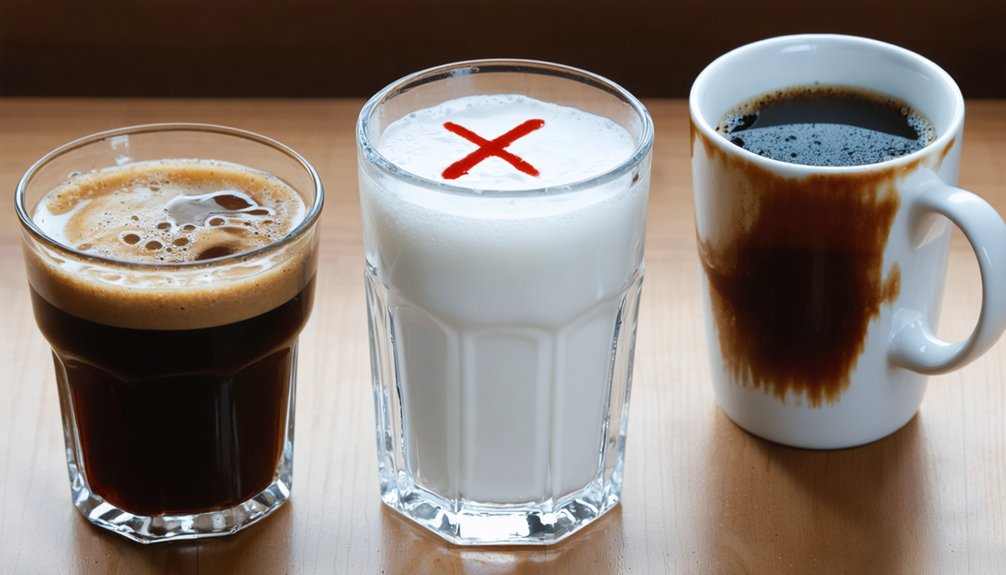
Even the most effective whitening mouth rinse won’t deliver lasting results if your daily habits keep reintroducing stains. Chromogens in coffee and tea bind directly to enamel, counteracting hydrogen peroxide and blue covarine mechanisms.
Take control by implementing these evidence-backed strategies:
- Replace coffee with lower-chromogen coffee alternatives like herbal-infused drinks or chicory blends.
- Choose tea substitutes such as rooibos or peppermint, which produce considerably less surface staining.
- Use a straw when consuming staining beverages to minimize direct enamel contact.
- Rinse immediately with water after consumption to dilute residual chromogens before they bind.
Consistent daily rinsing twice per day only delivers clinically acceptable Delta E 00 values exceeding 1.8 when you’re actively preventing stain reintroduction between treatments.
Which Whitening Rinse Fits Your Sensitivity Level and Budget
If you experience tooth sensitivity, you’ll want to prioritize peroxide-free formulations, which deliver instant whitening effects without triggering discomfort.
Budget-conscious options like Listerine Advanced White provide clinically acceptable whiteness changes alongside cavity protection, making them a practical entry point.
As your budget increases, products like Signal White Now offer measurably superior color and whiteness improvements, giving you stronger clinical results for the additional cost.
Sensitivity-Friendly Budget Options
Choosing a whitening rinse that addresses both sensitivity and budget requires understanding how key ingredients affect enamel and comfort.
Peroxide-free and alcohol-free formulations offer reliable sensitivity solutions without compromising your oral microbiome. You’ll find effective budget-friendly options that deliver measurable whitening through alternative mechanisms.
Consider these clinically supported choices:
- Enzyme-based rinses break down discoloration gently while protecting enamel integrity.
- Blue covarine formulas create immediate visual brightness without sensitivity risks.
- Alcohol-free variants reduce burning sensations while maintaining whitening efficacy.
- Peroxide-free options eliminate sensitivity triggers while producing instant brightening effects.
Select products carrying the ADA Seal of Acceptance to confirm proven safety.
Rinsing twice daily maximizes stain breakdown while keeping your enamel structurally sound and your costs manageable.
Cost Versus Whitening Effectiveness
Balancing cost against whitening effectiveness means you’ll need to weigh ingredient potency, sensitivity tolerance, and clinical evidence before committing to a product.
A thorough cost analysis reveals that hydrogen peroxide formulations like Colgate Optic White deliver aggressive stain removal but carry sensitivity risks.
Blue covarine options, including Signal White Now, produce the highest measurable whiteness changes without compromising enamel bond strength, offering strong value.
Your effectiveness comparison should reference Delta E 00 values exceeding 1.8 as the clinical benchmark for acceptable results.
Charcoal-based rinses typically cost less yet record the lowest bond strength values, making them a poor investment.
Peroxide-free enzyme formulas balance affordability with gentleness.
Prioritize ADA-approved products to guarantee your spending aligns with clinically validated outcomes.
Frequently Asked Questions
Can Whitening Mouth Rinses Replace Professional Dental Whitening Treatments Entirely?
You can’t replace professional treatments with home remedies entirely. In an effectiveness comparison, whitening mouth rinses deliver subtle improvements within weeks, but they won’t match the clinically significant color changes that professional dental whitening consistently achieves.
Are Whitening Mouth Rinses Safe to Use During Pregnancy or Breastfeeding?
You should consult your doctor before using whitening mouth rinses during pregnancy or breastfeeding. Ingredient safety varies—avoid hydrogen peroxide formulas and prioritize enzyme-based options. Effectiveness comparison shows peroxide-free alternatives offer safer, gentler whitening with minimal systemic risk.
Do Whitening Rinses Interact Negatively With Dental Crowns or Veneers?
Coincidentally, whitening rinses won’t damage your crowns or veneers, but they won’t whiten them either. You’ll notice whitening efficacy targets natural enamel only, and dental sensitivity remains minimal since restorations don’t respond to peroxide-based formulations.
Can Children or Teenagers Safely Use Whitening Mouth Rinses Daily?
You shouldn’t let children use whitening rinses daily without consulting a dentist first. Whitening safety guidelines and age recommendations suggest teenagers may use them cautiously, as developing enamel remains vulnerable to peroxide-based formulations.
Does Rinsing Order Matter When Combining Mouthwash With Whitening Toothpaste?
Like a painter priming canvas before applying color, you’ll boost whitening effectiveness by brushing first, then rinsing. Proper rinsing techniques guarantee mouthwash contacts clean enamel directly, maximizing active ingredient absorption and delivering superior, consistent results.
References
- https://www.goodhousekeeping.com/health-products/g44891867/best-whitening-mouthwash/
- https://pmc.ncbi.nlm.nih.gov/articles/PMC12080066/
- https://www.byrdie.com/best-whitening-mouthwash
- https://teethcare360.co.uk/best-whitening-mouthwash-uk-expert-reviews/
- https://mydentaladvocate.com/product-reviews/top-5-best-whitening-mouthwash/
- https://www.restoviebelle.com/best-whitening-mouthwashes/
- https://grantortho.com/teeth-whitening-toothpaste-and-mouthwashes/
- https://www.womenshealthmag.com/beauty/g35031835/best-whitening-mouthwash/
- https://popwhitesmile.com/products/whiteningtoneroral-rinse
- https://www.forbes.com/health/dental/best-mouthwash/