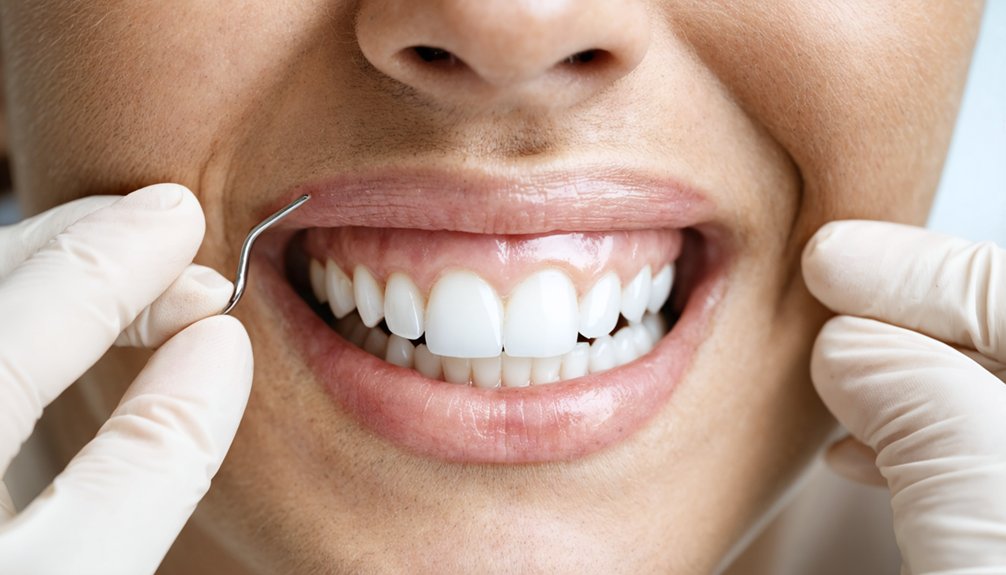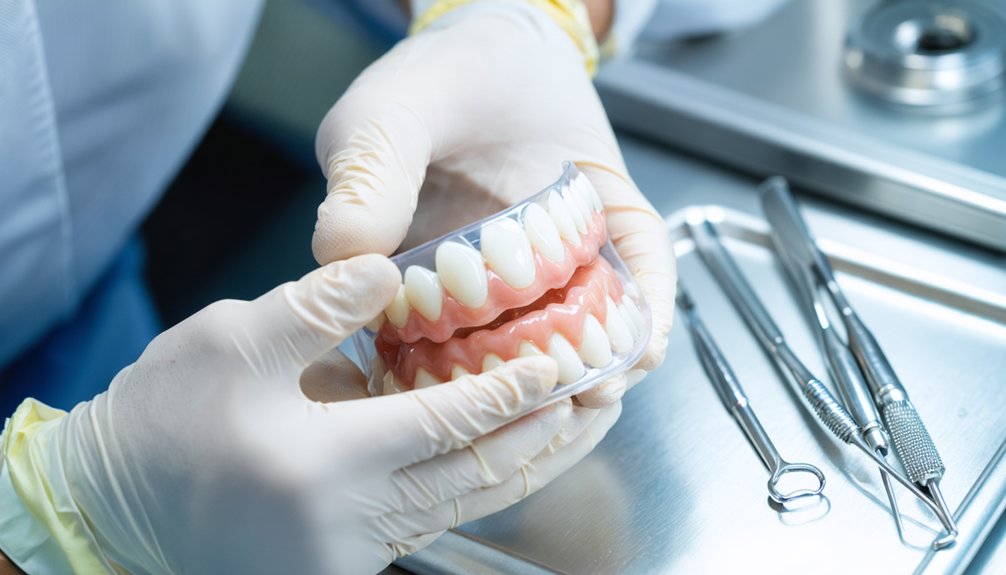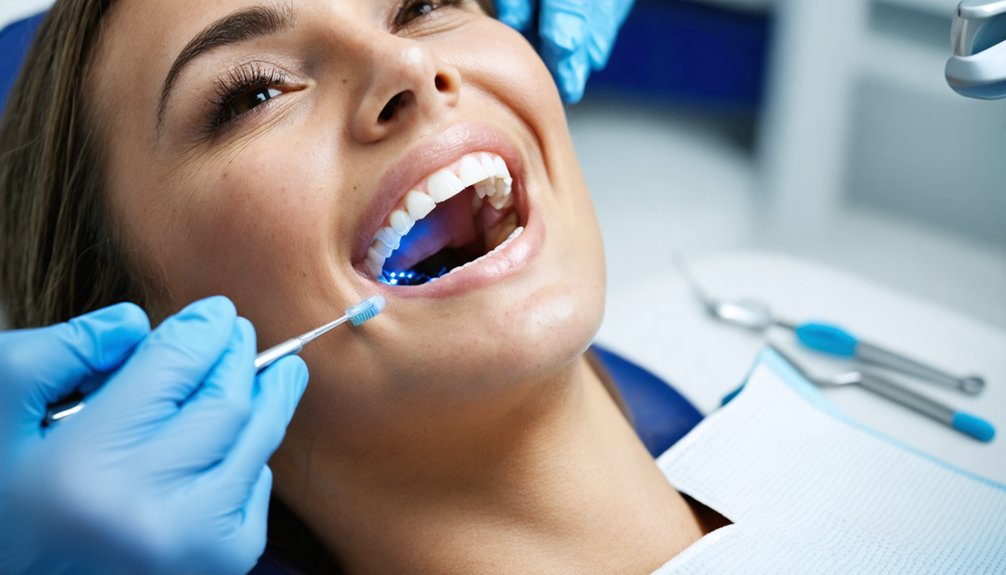
Your teeth can discolor from surface stains, aging, medications, or enamel erosion — and each cause responds differently to treatment. In-office whitening lifts stains by up to 8 shades in a single session using prescription-strength hydrogen peroxide gels. Dentist-provided at-home kits deliver gradual improvement over several weeks, while OTC strips offer minimal results. Your best option depends on discoloration type, budget, and desired speed — all of which become much clearer as you explore each option further.
Key Takeaways
- In-office whitening uses prescription-strength hydrogen peroxide gels, often activated by laser light, improving teeth by 3 to 8 shades in one session.
- At-home dentist-provided kits with custom trays deliver 1 to 4 shades improvement gradually, costing between $800 and $3,500.
- In-office treatments cost $300 to $1,000 per session, offering faster results compared to more affordable at-home alternatives.
- OTC whitening products cost $20 to $100 but only achieve 1 to 2 shades improvement with lower peroxide concentrations.
- Severe discoloration unresponsive to whitening may require alternatives like veneers, dental bonding, or crowns for effective correction.
Why Do Teeth Turn Yellow or Stained?
Teeth darken and stain through two distinct mechanisms: extrinsic discoloration, which accumulates on the tooth’s outer surface, and intrinsic discoloration, which originates within the tooth’s deeper structure.
Understanding these tooth discoloration causes empowers you to make targeted treatment decisions.
Extrinsic stains develop from consistent exposure to chromogenic substances like coffee, tea, red wine, and tobacco.
Surface stains from coffee, tea, and tobacco bind to enamel through repeated chromogenic exposure.
These pigment molecules bind directly to enamel, creating surface-level discoloration you can often reverse with professional intervention.
Intrinsic discoloration penetrates deeper, resulting from aging, trauma, certain medications like tetracycline, or excessive fluoride exposure during tooth development.
Enamel erosion effects compound both mechanisms by thinning the outer enamel layer, exposing the naturally darker dentin beneath and intensifying perceived yellowing.
Identifying your specific discoloration type determines which whitening approach will deliver effective results.
What Can One In-Office Whitening Session Actually Do?
Wondering what a single appointment can realistically deliver? In one in-office whitening session, you can expect your teeth to lighten by 3 to 8 shades within 30 to 90 minutes.
Those whitening session results stem from prescription-strength hydrogen peroxide gels applied directly to your tooth surfaces, often activated by laser or specialized light technology to accelerate stain breakdown.
The immediate effects are measurable and visible the same day. However, your specific outcome depends on stain type, depth, and your enamel’s baseline condition.
Intrinsic discoloration typically requires more sessions than surface staining. Some cases demand 1 to 3 visits for ideal results.
You’re in control here — discuss your target shade with your dentist beforehand so expectations align precisely with your clinical starting point.
Are Dentist-Provided At-Home Whitening Kits Worth It?
When weighing cost against results, you’ll find that dentist-provided at-home kits run between $800 and $3,500, yet they deliver only 1 to 4 shades of improvement over several weeks.
However, the custom-fabricated trays give you a precise fit that over-the-counter strips and generic trays simply can’t match, ensuring even gel distribution and reducing gum irritation.
If you prioritize a controlled, gradual whitening process with professional-grade materials, the custom kit offers measurable advantages over cheaper OTC alternatives despite the higher upfront investment.
Cost Versus Whitening Results
How much should you spend to get noticeably whiter teeth? The answer depends on your whitening effectiveness goals and treatment duration tolerance.
In-office treatments cost $300 to $1,000 per session but deliver 3 to 8 shades of improvement within 90 minutes.
Custom at-home kits range from $800 to $3,500, producing 1 to 4 shades of improvement over 1 to 6 weeks.
Over-the-counter products cost only $20 to $100 but yield minimal 1 to 2 shade improvements over months of use.
If speed matters, in-office treatment justifies the higher cost.
If you prefer gradual, controlled results, custom kits offer better long-term value than OTC alternatives.
Match your budget to your desired outcome rather than defaulting to the cheapest available option.
Custom Trays Versus OTC
Both custom trays and OTC whitening kits use peroxide-based agents, but their delivery systems, concentrations, and outcomes differ markedly. Custom trays offer superior fit comparison, higher gel concentration, and controlled application duration, giving you measurable advantages over generic strips or rinses.
- Custom trays conform precisely to your dental arch, eliminating uneven gel distribution.
- OTC strips deliver lower peroxide concentrations, producing only 1–2 shades of improvement.
- Sensitivity issues occur less frequently with dentist-supervised custom kits due to proper fit.
- Safety considerations favor custom trays, as ill-fitting OTC products risk prolonged gum contact.
- User experiences consistently report greater product effectiveness and satisfaction with dentist-fabricated systems.
If you’re serious about controlled, predictable results, custom trays outperform OTC options across every measurable category.
How Do OTC Whitening Strips and Gels Compare?
Over-the-counter whitening strips and gels both rely on low-concentration peroxide formulas, yet they differ meaningfully in application method and contact consistency.
Strips adhere directly to enamel surfaces, delivering controlled exposure during a fixed wear period, typically 30 minutes over 10 to 14 days.
Gels, applied via trays or brushes, can shift during use, reducing consistent enamel contact and limiting results.
An OTC effectiveness comparison reveals both options lighten teeth by only 1 to 2 shades, making them suitable for mild discoloration exclusively.
A whitening ingredient analysis confirms strips and gels rely on hydrogen peroxide or carbamide peroxide at lower concentrations than prescription alternatives.
If you’re managing moderate-to-severe staining, you’ll find these options insufficient without professional-grade intervention.
Which Teeth Whitening Option Is Right for You?
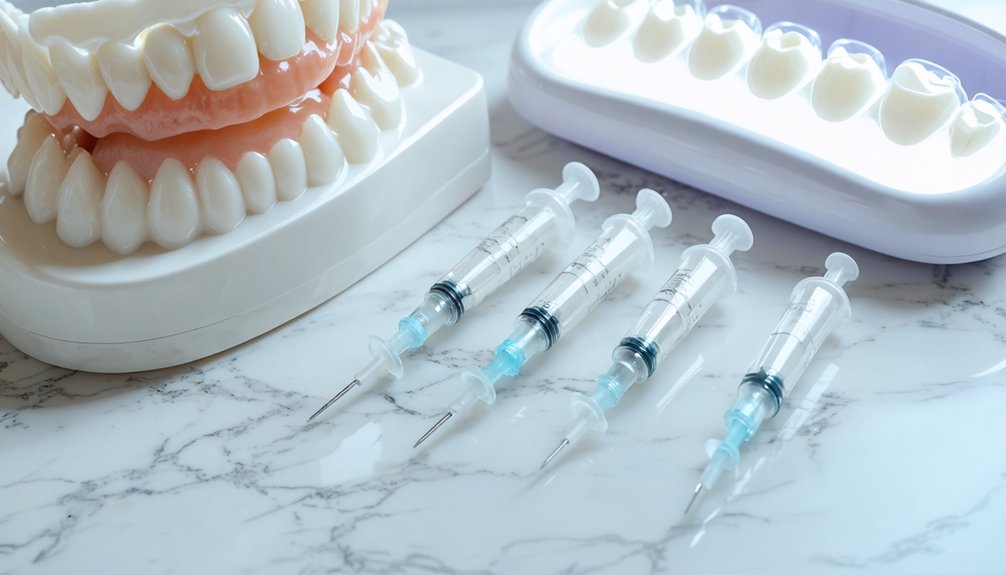
Choosing the right whitening option depends on your stain severity, budget, and how quickly you need results.
Evaluate whitening effectiveness against safety concerns before committing to any treatment.
- Severe, deep stains: In-office treatment delivers 3–8 shades lighter in one session.
- Moderate staining with flexibility: Custom at-home trays provide controlled, gradual results over 1–6 weeks.
- Mild surface discoloration: OTC strips or gels offer affordable correction at $20–$100.
- Stain-resistant or structurally damaged teeth: Veneers or bonding override whitening limitations entirely.
- Post-treatment maintenance: Whitening toothpaste and straw use protect your investment long-term.
If you’re prioritizing speed, go professional.
If you’re managing costs, custom trays balance effectiveness and value.
Crowns, veneers, and fillings won’t respond to bleaching agents—factor that into your decision.
How Much Does Professional Teeth Whitening Cost?
When considering professional teeth whitening, you’ll encounter two primary cost tiers.
In-office treatments typically run $300 to $1,000 per session, with most procedures averaging $500 to $800.
If you opt for dentist-fabricated at-home kits, you can expect to pay between $800 and $3,500, with costs averaging near $1,250 for the trays and gel combined.
Professional Whitening Treatment Costs
Professional teeth whitening costs vary across 3 main treatment tiers, each reflecting the level of clinical involvement and product strength.
Understanding cost variations helps you align treatment effectiveness with your budget and desired outcome.
- In-office professional whitening: $300–$1,000 per session, averaging $500–$800 for immediate, single-visit results.
- Custom at-home whitening kits: $800–$3,500 total, averaging $1,250 for dentist-fabricated trays with prescription-grade gels.
- Over-the-counter whitening products: $20–$100 per kit, offering the most accessible but least potent option.
- Porcelain veneers: $1,000–$2,500 per tooth for cases resistant to bleaching agents.
- Dental bonding: A cost-effective alternative for localized discoloration requiring cosmetic correction.
Each tier delivers distinct clinical outcomes, so matching your investment to your specific discoloration severity drives the most precise results.
At-Home Kit Pricing
At-home professional whitening kits cost between $800 and $3,500 in total, averaging around $1,250 for the complete system. This price includes dentist-fabricated custom trays and prescription-grade carbamide or hydrogen peroxide gels.
You’ll appreciate the at-home convenience of controlling your treatment schedule while achieving gradual results over one to six weeks.
Your dentist designs the trays to fit precisely, ensuring even gel distribution and minimizing gum irritation. You apply the gel daily for 30 to 60 minutes, allowing the peroxide to penetrate enamel and break down stains systematically.
Expect results of one to four shades lighter, depending on stain severity and treatment duration.
Compared to in-office sessions, this option offers a more measured, controlled approach at a predictable cost.
When Should You Consider Veneers, Bonding, or Crowns Instead?
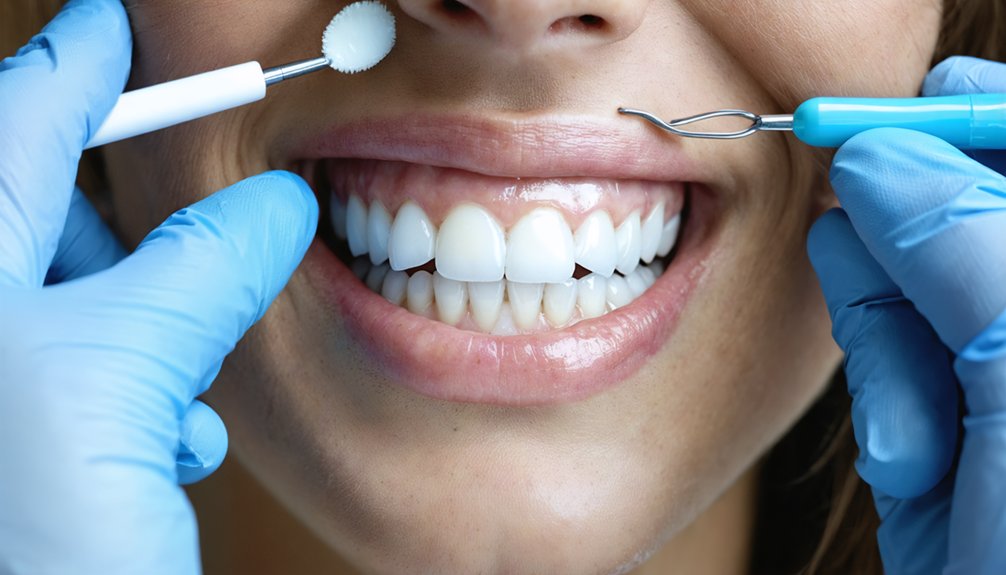
Sometimes, traditional whitening treatments simply won’t deliver the results you’re looking for—and that’s when alternative cosmetic options become worth considering.
Veneers benefits include permanently masking severe discoloration, structural damage, or stains resistant to bleaching agents. Understanding bonding limitations helps you weigh its suitability for localized staining versus widespread discoloration.
Crown durability makes it the preferred choice for teeth compromised by decay or root canals. Aesthetic considerations and treatment longevity should drive your final decision, while factoring in maintenance costs over time.
Consider these alternatives when you’re facing:
- Tobacco-induced staining that resists peroxide treatments
- Trauma-related discoloration embedded within dentin
- Medication-caused intrinsic stains unresponsive to bleaching
- Structurally damaged teeth requiring full coverage restoration
- Mismatched restorations like fillings, crowns, or veneers that won’t whiten
How Do You Keep Your Teeth White After Treatment?
Once you’ve committed to a whitening method—whether veneers, bonding, or a bleaching protocol—maintaining your results requires consistent, deliberate effort.
Apply these whitening maintenance tips systematically: use whitening toothpaste with mild abrasives daily, schedule monthly OTC touch-ups, and attend regular professional cleanings to eliminate tartar and surface accumulation.
Stain prevention strategies are equally critical. Limit coffee, tea, red wine, and tobacco—these compounds actively reintroduce discoloration.
When consuming pigmented beverages, use a straw to minimize anterior enamel contact. If you’ve invested in professional treatment, periodic dentist-supervised maintenance visits reinforce and extend your results.
Frequently Asked Questions
Can Teeth Whitening Treatments Damage Existing Dental Restorations or Implants?
Like a paint that won’t stick to glass, whitening agents can’t alter your crowns, veneers, or implants. You must consider teeth restoration safety and whitening product compatibility to avoid uneven, mismatched results.
Is Teeth Whitening Safe for Pregnant or Breastfeeding Individuals?
You shouldn’t undergo teeth whitening while pregnant or breastfeeding. Follow established safety guidelines and opt for natural alternatives like proper brushing and dietary adjustments until you’ve completed breastfeeding and consulted your healthcare provider.
How Long Does a Professional Teeth Whitening Treatment Typically Last?
Results typically last 1–3 years—studies show 80% of patients retain brightness longer with consistent whitening maintenance. You’ll extend your results by avoiding staining foods and skipping unverified home remedies that’ll compromise your professionally achieved shade.
Can Whitening Treatments Worsen Existing Cavities or Gum Disease?
Yes, whitening treatments can worsen existing conditions. If you’ve got untreated cavities, you’ll experience intensified cavity sensitivity. Active gum disease increases your risk of severe gum irritation. Address both issues with your dentist before beginning any whitening protocol.
At What Age Is Professional Teeth Whitening Considered Safe for Patients?
Coincidentally, most dentists align on age 16 as safe for professional whitening, once permanent teeth fully develop. You’ll minimize teeth sensitivity risks and maximize whitening effectiveness by waiting, ensuring your enamel’s maturity supports ideal, controlled treatment outcomes.
References
- https://www.ada.org/resources/ada-library/oral-health-topics/whitening
- https://my.clevelandclinic.org/health/symptoms/10958-tooth-discoloration&rut=c490b58059aae147f301efd2e54fcc4dc887955ee75aa84cc6ee28f4fb9cef5f
- https://www.rejuv-health.com/cosmetic-dentistry/teeth-whitening-cost/
- https://www.boutiquedentalandimplants.com/articles/guide-on-professional-teeth-whitening-treatment
- https://www.yourdentistryguide.com/professional-whitening/
- https://www.hopkinsmedicine.org/health/treatment-tests-and-therapies/teeth-whitening
- https://www.aspendental.com/dental-services/cosmetic-dentistry/teeth-whitening/
- https://www.360-dental.com/professional-teeth-whitening-everything-you-need-to-know/
- https://www.champaigndentalgroup.org/about-us/blog-articles/teeth-whitening-methods-complete-guide
- https://www.webmd.com/oral-health/teeth-whitening-and-bleaching