Laser teeth whitening works by activating a hydrogen peroxide gel with a KTP laser, releasing oxygen ions that break down both intrinsic and extrinsic stains deep within your enamel and dentin. Your provider applies the gel evenly across all four tooth quadrants, then positions the laser approximately 1mm from the surface for repeated activation cycles. You can achieve up to 10 shades of improvement in a single session — and there’s considerably more to understand before booking your appointment.
Key Takeaways
- KTP lasers activate hydrogen peroxide gel, releasing oxygen ions that penetrate enamel and dentin to effectively break down stubborn stains.
- Gel is applied evenly across all four tooth quadrants, with the laser positioned 1mm from the surface for precise activation.
- Multiple light activation cycles with fresh gel reapplication optimize results, with sessions typically lasting 20 to 30 minutes.
- Balancing light intensity and activation duration prevents incomplete bleaching results and minimizes enamel sensitivity during treatment.
- A pretreatment oral health exam ensures patients are suitable candidates, maximizing safety and overall whitening effectiveness.
How Laser Teeth Whitening Actually Works
Laser teeth whitening works by activating a hydrogen peroxide-based gel applied directly to your teeth’s surface.
Laser teeth whitening activates a hydrogen peroxide gel applied directly to your teeth, breaking down stains effectively.
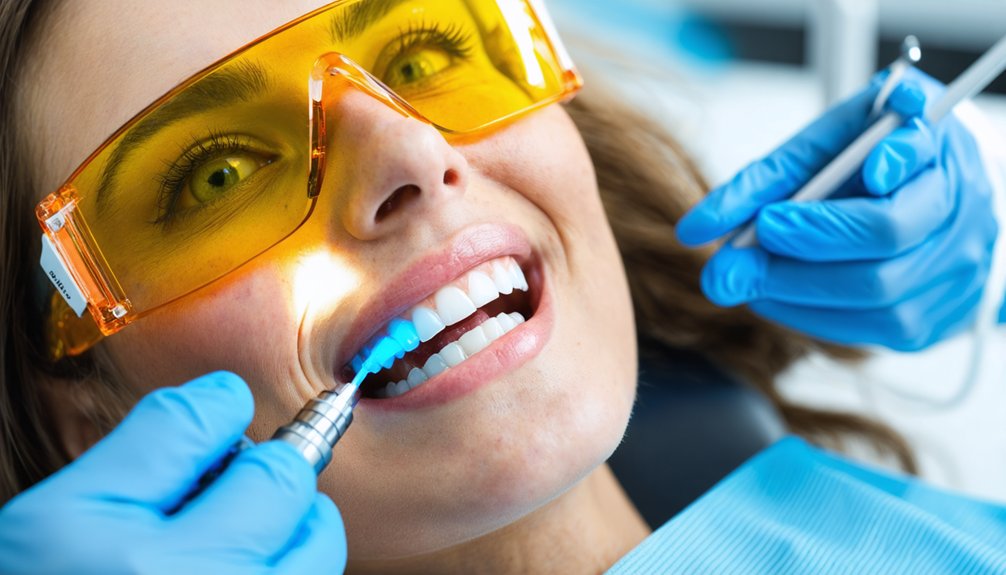
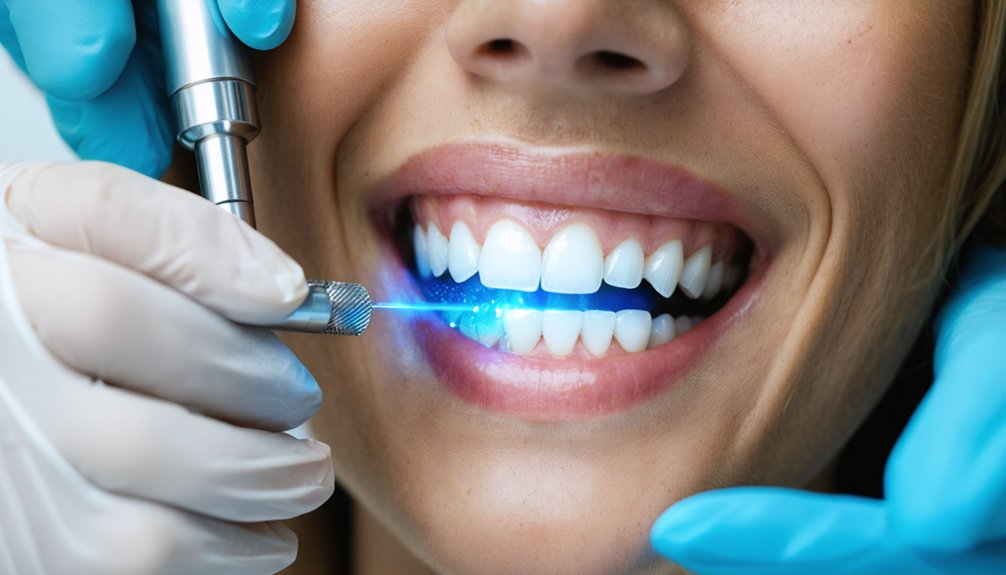
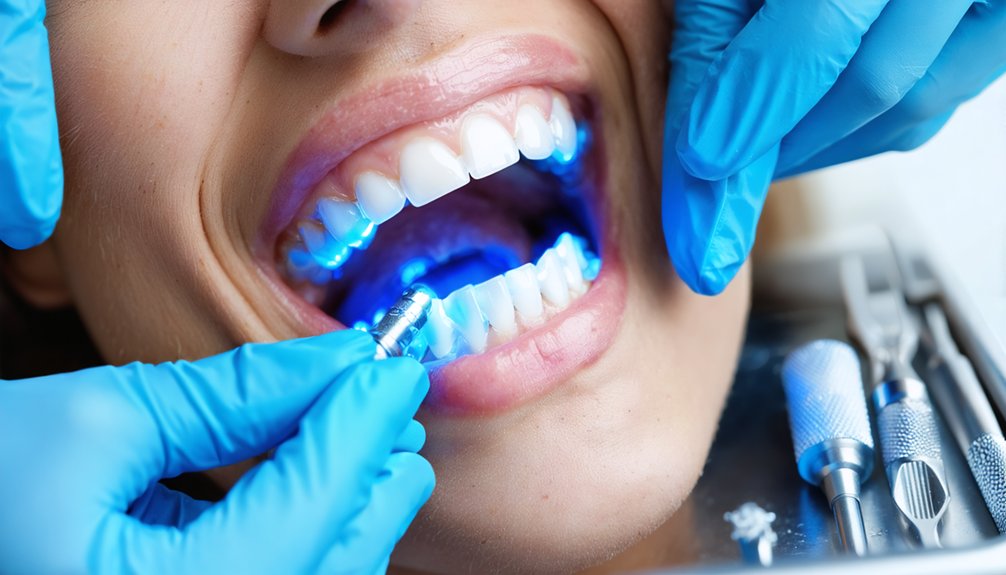
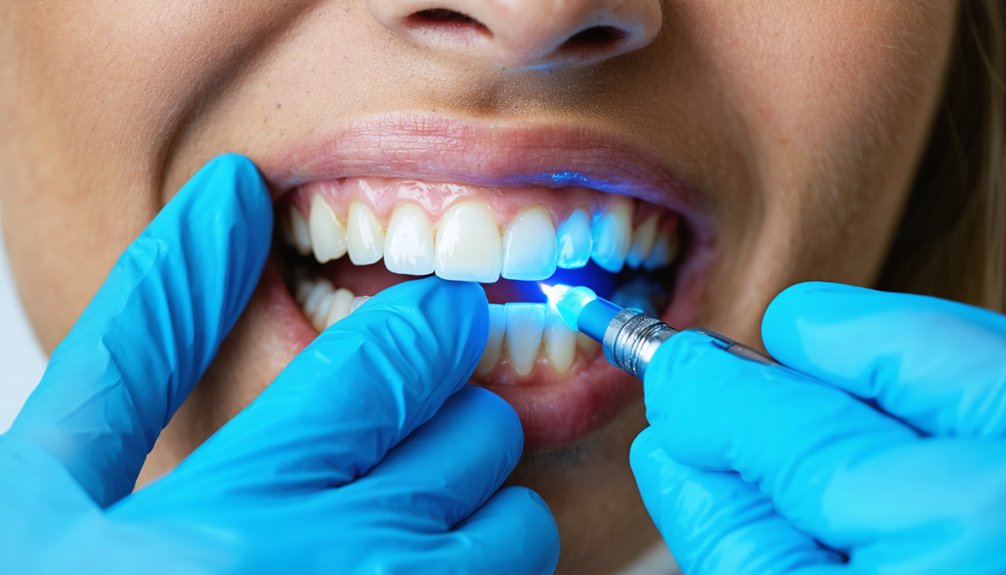
During gel application, your dentist coats all four tooth quadrants evenly, positioning a custom laser device approximately 1mm above the gel. Laser activation then triggers oxygen ion release, allowing the gel to penetrate deep into enamel and dentin, breaking down both extrinsic and intrinsic stains effectively.
You’ll undergo repeated light activation cycles with fresh gel reapplication, totaling 20 to 30 minutes of treatment time.
The KTP laser remains the most efficient wavelength for this process, delivering controlled energy precisely. Your dentist monitors every cycle, ensuring parameters stay within safe limits.
Final rinsing removes residual gel, and you can immediately assess your shade improvement results.
Does the Type of Light Used Change Your Results?
Whether the type of light source used affects your whitening outcome is a question worth addressing directly. It does. KTP lasers currently deliver the most efficient wavelength for dental bleaching, penetrating enamel more effectively than standard alternatives.
High-intensity LED lamps serve as a functional substitute, but they don’t match laser precision.
Light intensity directly determines how aggressively the gel activates. Higher intensity accelerates the chemical reaction, releasing more oxygen ions to break down stains faster.
Activation duration works alongside intensity — too short, and you’ll see incomplete results; too long, and you risk enamel sensitivity.
You’re not choosing between cosmetic options here. You’re selecting a clinical variable that controls your outcome.
Understanding that distinction helps you make a more informed, results-driven decision before committing to treatment.
What Happens During a Laser Teeth Whitening Appointment?
Five distinct steps define what happens during a laser teeth whitening appointment, and knowing them in advance removes uncertainty from the process.
Your clinician begins with a pretreatment exam to identify any oral health issues. Gel application follows, covering all four tooth quadrants evenly.
A custom laser device is then positioned approximately 1mm from the gel surface, initiating controlled light activation. You’ll undergo repeated activation cycles with gel reapplication over 20 to 30 minutes.
Final rinsing removes residual gel while your clinician assesses shade improvement.
Understanding this sequence gives you command over your patient experience. Each step follows a standardized protocol designed to maximize results while minimizing risk, ensuring you leave the appointment with measurable, clinically verified shade improvements achieved through precise, supervised technique.
How Many Shades Whiter Can Laser Whitening Get You?
With laser teeth whitening, you can achieve up to 10 shades of improvement in a single 60-minute session, with clinical data confirming a 76% reduction in discoloration following laser activation.
Your results typically last between 12 and 36 months, though periodic touch-up appointments help maintain ideal whiteness.
Because laser activation drives the whitening gel deeper into enamel and dentin, you’ll find that both extrinsic and intrinsic stains respond more effectively than they’d with conventional peroxide methods.
Maximum Shade Improvement Potential
Laser teeth whitening can lighten your teeth by up to 10 shades in a single 60-minute session, making it one of the most dramatic cosmetic improvements available in a single dental visit.
Clinical data confirms a 76% reduction in discoloration following laser activation, validating both shade improvement techniques and whitening gel effectiveness as measurable, evidence-based outcomes.
Unlike slower peroxide methods, laser activation drives gel deeper into enamel and dentin, targeting both extrinsic and intrinsic stains simultaneously.
You’re not simply surface-treating discoloration — you’re restructuring it at a structural level.
Results typically last 12 to 36 months, with periodic touch-ups maintaining your achieved shade.
This level of precision and control distinguishes in-office laser whitening from inferior at-home alternatives that deliver inconsistent, short-lived results.
Single Session Whitening Results
A single 60-minute laser whitening session can get your teeth up to 10 shades whiter, a result that no at-home kit or standard peroxide tray can realistically match.
Clinical data confirms a 76% reduction in discoloration following laser activation, giving you measurable, verifiable outcomes rather than vague promises.
Shade matching conducted before and after treatment quantifies your exact improvement, removing all guesswork from the process. You’ll know precisely where you started and how far you’ve advanced.
Patient testimonials consistently reinforce what the clinical numbers confirm — results are visible immediately, not gradually over weeks.
If you want control over your outcome, a single in-office laser session delivers it.
The results last between 12 to 36 months, making your investment both effective and durable.
Longevity Of Whitening Results
Once you’ve achieved up to 10 shades of improvement in a single session, the more pressing question becomes how long those results will hold.
Results typically last 12 to 36 months, but factors affecting longevity vary by individual behavior and biology.
Control your outcome with these whitening maintenance tips:
- Avoid staining agents — coffee, red wine, and tobacco accelerate discoloration and shorten results considerably.
- Schedule periodic touch-ups — reinforcing results every 12 months preserves your achieved shade level.
- Maintain consistent oral hygiene — brushing and flossing reduce surface stain accumulation between sessions.
- Monitor enamel health — compromised enamel absorbs stains faster, directly undermining longevity.
You determine how long your results last.
Discipline between appointments is what separates a 12-month outcome from a 36-month one.
Is Laser Teeth Whitening Safe for Your Teeth and Gums?
When performed correctly, laser teeth whitening is safe for both your teeth and gums. Strict safety protocols protect you throughout the procedure. Your clinician applies gel only to tooth surfaces, avoiding your gingiva, tongue, and lips to prevent chemical irritation.
Laser teeth whitening is safe when performed correctly, with strict protocols protecting your teeth and gums throughout.
Everyone in the treatment room wears mandatory eye protection during laser activation.
You should expect minimal side effects when the procedure follows proper guidelines. Total gel application stays under 20 minutes to prevent enamel damage. Desensitizing treatments follow the procedure to address any temporary tooth sensitivity you might experience.
Your clinician controls laser parameters precisely, eliminating over-bleaching risks.
Professional supervision gives you a critical advantage over home applications. You’re not managing this process alone, which greatly reduces complications and guarantees consistently safe, predictable outcomes.
Is Laser Teeth Whitening Worth the Cost?
Safety addresses one concern, but cost analysis addresses another equally important question you’re likely asking yourself.
Laser teeth whitening costs more than standard peroxide treatments, yet the treatment benefits justify the investment for many patients.
Here’s what you’re actually paying for:
- Speed: You’ll achieve up to 10 shades of improvement in a single 60-minute session.
- Durability: Results last 12 to 36 months, outperforming cheaper at-home alternatives.
- Depth: Laser activation drives gel deeper into enamel, removing stubborn intrinsic and extrinsic stains.
- Supervision: Professional oversight eliminates risks associated with unmonitored home applications.
Insurance won’t cover this cosmetic procedure, so you’re paying out-of-pocket.
However, faster results and superior longevity make this a controlled, calculated decision worth considering.
Frequently Asked Questions
Can Laser Teeth Whitening Work on Dental Crowns or Veneers?
Laser teeth whitening won’t alter crown compatibility or veneer effects—you can’t lighten these restorations. The gel only affects natural enamel, so you’ll need replacement restorations if you want a uniformly brighter smile.
How Soon After Whitening Can You Eat or Drink Normally?
Wait—what you eat next matters more than you think. You’ll want to avoid food staining and manage post whitening sensitivity by waiting at least 48 hours before consuming normally colored foods and beverages.
Does Laser Whitening Work Differently on Sensitive Teeth Than Regular Teeth?
Yes, laser whitening does work differently on your sensitive teeth. Your sensitivity levels influence treatment duration, as clinicians adjust laser parameters and timing to minimize discomfort while still delivering effective, controlled stain removal results.
How Many Touch-Up Appointments Are Typically Needed Each Year?
You’ll typically need one to two touch-up appointments annually to maintain results. Following proper maintenance tips, like avoiding staining foods, directly impacts your touch-up frequency, helping your whitening last between 12 to 36 months effectively.
Can Pregnant or Nursing Patients Safely Undergo Laser Teeth Whitening?
Like a ship steering through stormy waters, you should avoid laser teeth whitening if you’re pregnant or nursing. Safety precautions demand caution, so you’ll want to explore alternative methods until after your pregnancy concludes.
References
- https://www.mylifesmiles.com/teeth-whitening-clinic/what-are-the-best-laser-teeth-whitening-methods
- https://www.interesjournals.org/articles/different-types-of-laser-use-in-teeth-bleaching.pdf
- https://www.biolase.com/media/Whitening_Step-by-Step.pdf
- https://magictouchdentalclinic.com/laser-teeth-whitening.html
- https://www.healthline.com/health/dental-and-oral-health/laser-teeth-whitening
- https://www.atlanticdentalcare.net/our-blog/what-is-the-best-way-to-whiten-teeth
- https://urbndental.com/tips-on-laser-whitening-you-must-know/
- https://www.fletcherfamilydentistry.com/laser-teeth-whitening-vs-other-methods/
- https://www.thantakit.com/what-are-the-best-laser-teeth-whitening-methods/
- https://link.springer.com/chapter/10.1007/978-3-662-47317-7_9