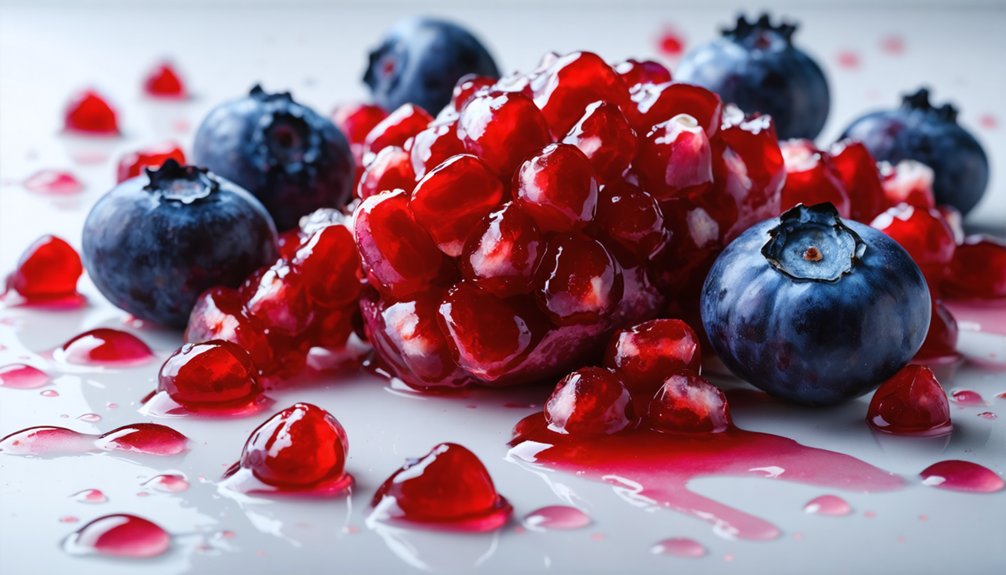
Both blueberries and pomegranates stain your teeth through a combination of chromogens, tannins, and organic acids. Chromogens are intensely pigmented molecules that bond directly to your enamel, while tannins strengthen that bond and increase surface adhesion. The organic acids in these fruits erode enamel, creating microscopic pores where pigments embed deeper over time. Understanding each mechanism separately gives you the clearest path toward protecting your smile.
Key Takeaways
- Blueberries and pomegranates contain chromogens, deeply pigmented molecules that bond directly to enamel, causing persistent discoloration.
- Tannins enhance staining by increasing enamel’s stickiness, allowing dark pigments to adhere more effectively to tooth surfaces.
- Organic acids erode enamel, creating microscopic pores that allow pigments to penetrate deeper than surface-level brushing can remove.
- Blueberries cause more aggressive discoloration due to higher anthocyanin levels, while pomegranate juice accelerates mineral loss through significant erosive potential.
- Repeated exposure embeds chromogenic pigments progressively deeper into enamel, making stains increasingly difficult to remove over time.
Do Blueberries and Pomegranates Actually Stain Your Teeth?
Yes, blueberries and pomegranates do stain your teeth, and the mechanism behind it’s more complex than simple surface contact. Both fruits contain chromogens, deeply pigmented molecules that bond directly to your enamel.
They also carry tannins, which act as chemical facilitators that strengthen that bond. On top of that, their organic acids erode your enamel, creating microscopic pores that allow pigments to penetrate deeper into the tooth structure.
Fruit consumption frequency directly determines how severe the discoloration becomes. The more often you eat these fruits without addressing the aftermath, the more cumulative damage you’ll accumulate.
Maintaining strong oral hygiene practices after eating these fruits isn’t optional if you want to prevent persistent staining. You have the ability to control the outcome.
What Are Chromogens and Why Do They Stick to Blueberries and Pomegranates?
Chromogens are the primary agents responsible for the deep staining you’ve already read about, and understanding their chemistry explains why blueberries and pomegranates are particularly aggressive at discoloring enamel.
Chromogens are the chemical culprits behind aggressive enamel staining — and blueberries and pomegranates are among the worst offenders.
Chromogen classification places these compounds among the most structurally complex pigments in natural foods. Blueberries contain anthocyanins, while pomegranates carry dark polyphenolic pigments — both exhibiting intense color and strong molecular reactivity.
Pigment bonding occurs when these chromogens encounter enamel surfaces, forming direct chemical attachments that resist mechanical removal. Their molecular structure allows them to integrate into enamel rather than simply sitting on top of it.
You’re fundamentally dealing with pigments engineered by nature to adhere aggressively to any surface they contact, including your teeth.
How Do Tannins Make Fruit Staining Worse?
While chromogens drive the initial staining process, tannins amplify it greatly. These polyphenolic compounds don’t stain teeth directly—instead, they roughen your enamel surface, creating attachment sites where chromogens bond more aggressively.
Understanding tannin effects helps you take targeted action before discoloration sets in. When you consume blueberries or pomegranate, tannins interact with your enamel’s protein layer, increasing its stickiness. This chemical alteration makes it markedly easier for dark pigments to latch on and resist removal.
The result is staining that brushing alone won’t fully address. For effective staining prevention, rinse with water immediately after eating these fruits. This disrupts the tannin-chromogen bonding window before pigments embed deeper into your enamel structure, giving you a measurable advantage against long-term discoloration.
How Do the Acids in These Fruits Erode Your Enamel?
Blueberries and pomegranates contain organic acids that actively strip minerals from your enamel, lowering its pH and triggering a process called demineralization.
As fruit acidity attacks your enamel surface, it leaches away calcium and phosphate, leaving microscopic pores behind. Research shows pomegranate juice carries erosive potential comparable to cola drinks, making it a significant threat to enamel protection.
Once acids soften your enamel, the surface roughens and becomes increasingly porous.
That porosity doesn’t just weaken your teeth structurally—it creates direct entry points for dark chromogenic pigments to penetrate deeper. Continuous exposure compounds this damage, making it cumulative and largely irreversible without professional intervention.
You’re not just staining your teeth; you’re fundamentally compromising the integrity of your enamel with every unmanaged exposure.
Why Does Eroded Enamel Trap Pigments So Much More Easily?
When acid strips minerals from your enamel, it leaves behind microscopic pores that act as direct entry points for chromogenic pigments.
These pores allow dark compounds from blueberries and pomegranates to penetrate beyond the surface, embedding themselves deeper into the tooth structure than brushing can reach.
Your roughened enamel also develops an irregular texture that physically traps pigment particles, giving tannins more surface area to anchor staining molecules in place.
Microscopic Pores Allow Penetration
Once acid erosion compromises your enamel’s mineral density, the resulting microscopic pores transform an otherwise smooth, protective surface into a pigment trap.
These entry points allow chromogenic compounds from blueberries and pomegranates to penetrate beyond the surface layer, embedding themselves deep within your enamel’s structure.
Increased microscopic porosity fundamentally alters your enamel texture, converting it from a dense, resistant barrier into a porous substrate that actively absorbs dark pigments.
Once chromogens infiltrate these pores, standard brushing can’t dislodge them effectively. The deeper the penetration, the more persistent the discoloration becomes.
You retain control by minimizing acid exposure duration.
Rinse immediately after consuming these fruits, and schedule regular professional cleanings to smooth compromised enamel surfaces before pigment infiltration becomes irreversible.
Roughened Enamel Attracts Pigments
Acid erosion doesn’t just weaken enamel—it fundamentally changes its surface architecture. When organic acids strip minerals from your enamel, they leave behind a roughened, irregular surface riddled with microscopic crevices.
That rough enamel dramatically increases pigment affinity by expanding the total surface area available for chromogen attachment.
Tannins exploit this altered terrain effectively. They bind to the roughened peaks and valleys, creating anchor points where dark pigments from blueberries and pomegranates can form durable chemical bonds.
A smooth enamel surface allows pigments to be rinsed away more easily. A compromised surface does the opposite—it holds them.
You can’t reverse existing erosion, but you can limit further damage. Rinse immediately after consuming these fruits to reduce the window during which acids continue roughening your enamel.
Which Is Worse for Staining: Blueberries or Pomegranate?
Both blueberries and pomegranates stain teeth through the same core mechanisms, but blueberries tend to cause more aggressive discoloration due to their exceptionally high anthocyanin concentration.
Despite valuable blueberry benefits and pomegranate nutrients, both fruits compromise enamel integrity through pigment adhesion and acid erosion.
Both blueberries and pomegranates offer impressive nutrients while simultaneously threatening enamel through pigment adhesion and acid erosion.
Key distinctions include:
- Blueberries deliver deeper blue-spectrum pigments that bind more aggressively to enamel surfaces.
- Pomegranate juice demonstrates erosive potential comparable to cola, accelerating mineral loss.
- Anthocyanins in blueberries create stronger chromogenic bonds than pomegranate’s dark pigments.
- Both fruits contain tannins that enhance pigment adhesion to roughened enamel.
- Pomegranate’s liquid form increases prolonged tooth contact compared to whole blueberries.
You can enjoy both fruits strategically by rinsing immediately after consumption and scheduling regular professional cleanings.
Does Eating These Fruits Cause Permanent Tooth Discoloration?
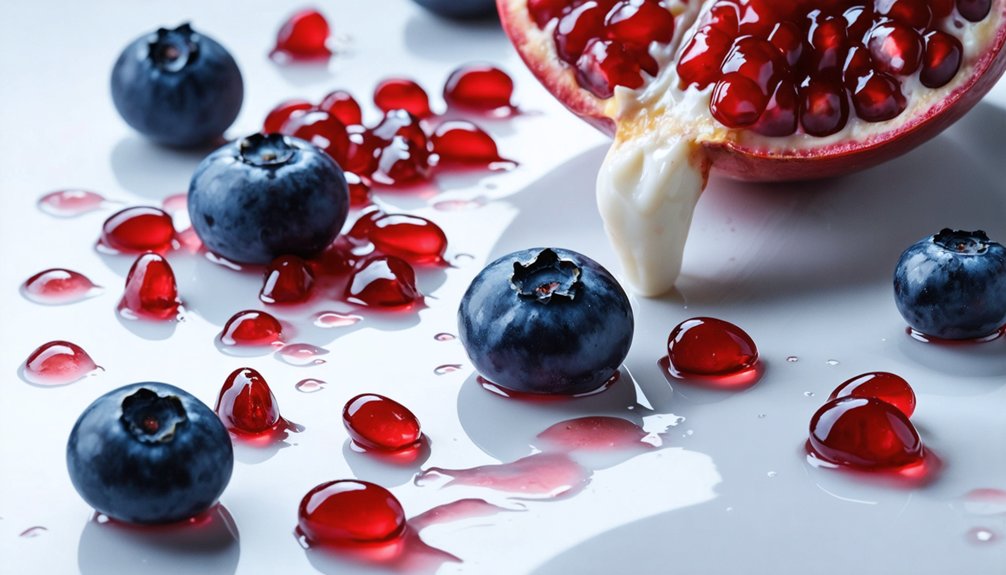
Whether blueberries and pomegranates cause permanent tooth discoloration depends largely on consumption frequency, enamel condition, and how quickly you intervene after eating.
Repeated acid exposure erodes enamel progressively, increasing porosity and allowing chromogenic pigments to penetrate deeper over time. Once pigments embed into microscopic cracks, standard brushing becomes insufficient, and you’ll likely require professional tooth whitening to restore your enamel’s natural color.
However, discoloration isn’t inevitable. If you rinse immediately after consumption, maintain regular dental cleanings, and limit intake frequency, you can greatly reduce cumulative staining risk.
Consider incorporating lower-pigment fruit alternatives like apples or pears to minimize chromogen and tannin exposure while retaining nutritional benefits.
Early intervention remains your most effective defense against long-term, treatment-resistant discoloration.
How Can You Eat These Fruits Without Staining Your Teeth?
Knowing that long-term staining is largely preventable shifts the focus toward practical protective habits you can build into your routine.
These healthy alternatives and protective measures let you consume both fruits without sacrificing enamel integrity.
- Rinse immediately with water after eating to displace residual acids and chromogens
- Use a straw when drinking pomegranate juice to minimize direct enamel contact
- Wait thirty minutes before brushing to avoid abrading acid-softened enamel
- Swish water vigorously post-consumption to mechanically clear tannins and pigments from enamel surfaces
- Schedule regular professional cleanings to smooth enamel and eliminate pigment-trapping crevices
Each measure targets a specific staining mechanism—acid erosion, tannin facilitation, or chromogen adhesion.
Applying them consistently gives you meaningful control over discoloration without eliminating nutrient-dense fruits from your diet.
When Do Blueberry and Pomegranate Stains Require Professional Removal?
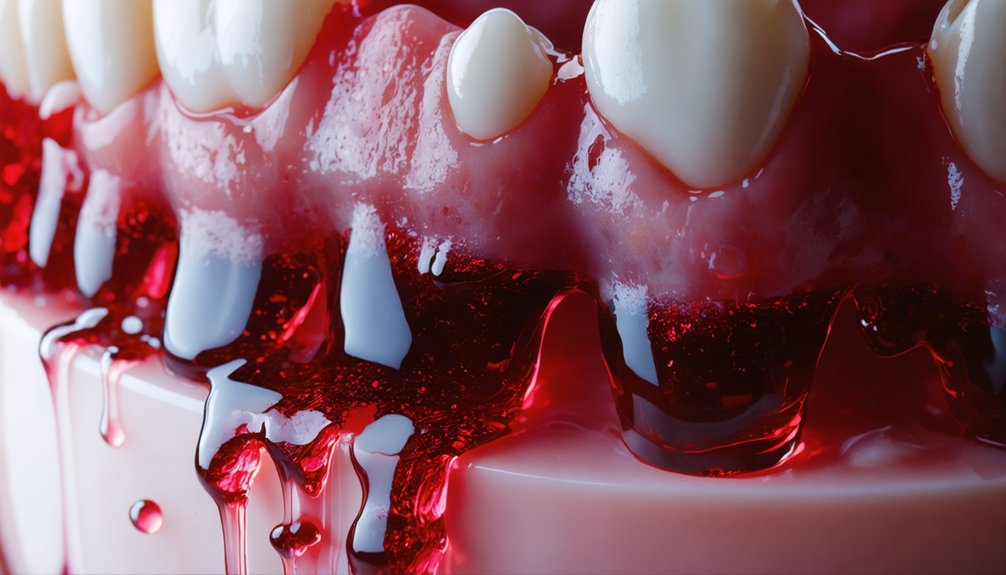
Once stains from blueberries or pomegranates penetrate beyond the enamel surface, at-home brushing and rinsing can’t fully reverse the discoloration. When staining severity reaches this level, you need professional treatments to restore your tooth color effectively.
You should schedule a professional evaluation if stains persist after two weeks of consistent home care. Dental professionals use polishing tools to smooth roughened enamel, removing trapped pigments embedded in microscopic pores.
For deeper discoloration, clinical-grade whitening agents oxidize chromogenic compounds lodged within the enamel structure. Delaying treatment allows pigments to bond more aggressively to compromised enamel, making removal progressively harder.
If you consume blueberries or pomegranates frequently, scheduling regular professional cleanings every six months gives you the strongest defense against cumulative, irreversible staining.
Frequently Asked Questions
Can Blueberry and Pomegranate Stains Affect Dental Veneers or Crowns?
Yes, blueberry and pomegranate pigments can discolor veneers and crowns. You’ll compromise veneer maintenance and crown longevity if you don’t rinse immediately after consumption, as chromogens and tannins actively bond to restoration surfaces.
Do Children’s Teeth Stain Faster From These Fruits Than Adults’ Teeth?
Yes, children’s enamel is thinner and less mineralized, so fruit acidity penetrates it faster. You’ll notice staining develops more quickly, making rinsing immediately after consumption a critical preventive step for protecting their developing teeth.
Does Mixing Blueberries and Pomegranates Together Worsen the Staining Effect?
Yes, mixing them compounds the staining effect. You’re combining doubled chromogens, tannins, and fruit acidity, accelerating enamel erosion and pigment penetration. Prioritize stain prevention by rinsing immediately after consumption to actively minimize cumulative discoloration risk.
Can Saliva Naturally Neutralize the Staining Compounds From These Fruits?
You’re fighting an uphill battle — your saliva composition offers partial neutralization, but it can’t fully counteract tannins and chromogens. Staining duration increases with repeated exposure, so you’ll need proactive rinsing and professional cleanings to maintain control.
Are Frozen Blueberries Less Likely to Stain Teeth Than Fresh Ones?
Frozen blueberries aren’t less likely to stain your teeth. They retain the same staining compounds — anthocyanins, tannins, and acids — that erode enamel and embed pigments. You should rinse immediately after consuming either form.
References
- https://clubwhitesmile.com/why-do-blueberries-and-pomegranate-stain-teeth/
- https://www.ballantyneendo.com/7-foods-that-stain-your-teeth/
- https://clubwhitesmile.com/blueberries-and-pomegranate-teeth-staining/
- https://www.healthline.com/health/foods-that-stain-teeth
- https://crest.com/en-us/oral-care-tips/teeth-stains/20-foods-and-drinks-that-stain-your-teeth
- https://www.dentistinlongbeach.com/dentistry-blog/discover-which-foods-and-drinks-stain-teeth-in-long-beach-ca/
- https://familydentistottawa.com/7-foods-staining-teeth/
- https://spencerdds.com/blog/berries-what-to-know-about-tooth-staining/
- https://www.circledrivedental.com/top-6-foods-that-stain-your-teeth
- https://www.webmd.com/oral-health/features/foods-stain-teeth-feature