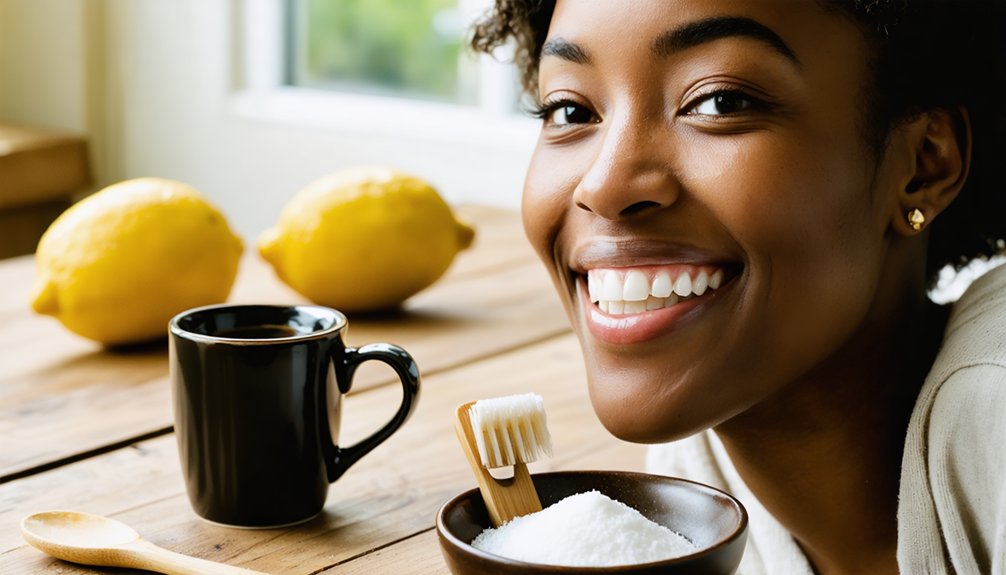
Coffee stains your teeth because tannins bind to enamel and acidity increases its porosity. You can fight surface stains daily by rinsing with water after coffee, brushing with baking soda twice weekly, or swishing diluted hydrogen peroxide. Crunchy produce and oil pulling offer additional preventive support. For deeper discoloration, professional whitening or dental scaling delivers faster results. Each remedy works differently, and knowing which fits your situation makes all the difference.
Key Takeaways
- Rinsing your mouth with water immediately after coffee washes away tannins, reducing cumulative staining over time.
- Baking soda mixed with water, used twice weekly, effectively targets surface-level coffee discoloration.
- Hydrogen peroxide diluted 50/50 with water, swished for 30 seconds, lifts surface pigmentation when used sparingly.
- Crunchy foods like apples and carrots physically scrub enamel, dislodging coffee tannins after consumption.
- Persistent or intrinsic staining requires professional treatments like in-office peroxide whitening or laser bleaching for effective results.
Why Coffee Stains Teeth in the First Place
Coffee stains teeth because it contains tannins—polyphenolic compounds that bind readily to tooth enamel and leave behind yellow or brown pigment deposits.
Coffee acidity compounds this problem by softening enamel temporarily, making it more porous and receptive to pigment absorption.
When enamel erosion occurs over time, the underlying dentin—which is naturally yellow—becomes more visible, deepening discoloration beyond surface-level staining.
Your consumption frequency, beverage temperature, and saliva production all influence how aggressively staining progresses.
Dark roasts carry higher tannin concentrations, accelerating pigment buildup.
Understanding this mechanism gives you a strategic advantage: you’re not simply dealing with surface residue but a chemical interaction between acidic compounds and your enamel’s structural integrity.
Addressing both factors simultaneously produces more effective, longer-lasting whitening outcomes.
Daily Habits That Stop Coffee Stains Before They Set
After each cup of coffee, you should rinse your mouth with plain water immediately to wash away pigment residue before it bonds to enamel.
You can also limit direct liquid contact with your front teeth by drinking coffee through a straw, reducing tannin exposure on visible surfaces.
Both habits require minimal effort yet offer meaningful preventive value when practiced consistently.
Rinsing After Every Sip
Rinsing your mouth with water immediately after drinking coffee is one of the simplest yet most effective daily habits for preventing surface stains from setting.
Proper rinsing techniques involve swishing water vigorously around your teeth for several seconds, dislodging tannin residue before it bonds to enamel. Effective hydration plays a dual role here — it dilutes pigment concentration in your mouth while simultaneously stimulating saliva production, which naturally neutralizes acids.
You don’t need special products to make this work. Plain water, applied consistently after every cup, greatly reduces cumulative staining over time.
If you alternate sips of water with coffee throughout your session, you further limit tannin contact with anterior tooth surfaces, giving stains fewer opportunities to penetrate your enamel.
Drinking Coffee Through Straws
Switching to a straw is one of the simplest mechanical strategies for limiting coffee’s contact with your front tooth surfaces. By directing liquid past your incisors and canines, you’re greatly reducing tannin exposure on your most visible enamel.
The straw benefits here are measurable: less pigment contact means less surface staining over time.
When considering straw types, reusable options like stainless steel, glass, or silicone are clinically preferable to single-use plastic alternatives. They’re durable, easy to sanitize, and cost-effective for daily use.
Position the straw toward the back of your mouth for maximum rerouting efficiency.
This habit pairs effectively with immediate water rinsing, creating a two-step protective protocol that significantly reduces cumulative coffee stain development on anterior tooth surfaces.
Baking Soda and Charcoal Pastes That Lift Coffee Stains
Baking soda and activated charcoal are two widely used abrasive agents that can lift coffee stains through distinct mechanical and chemical mechanisms.
Understanding their application protocols helps you maximize results while protecting enamel integrity.
Baking Soda Benefits:
1. Mix one teaspoon with water, brush for one to two minutes, and limit use to twice weekly to prevent enamel wear.
Charcoal Effectiveness:
2. Dip a damp toothbrush into activated charcoal powder, brush for two to three minutes, and rinse thoroughly to avoid gray residue between teeth.
Frequency Control:
3. Restrict charcoal use to once weekly, as overuse accelerates enamel erosion.
Both agents address surface-level coffee discoloration effectively when you apply them correctly and maintain disciplined usage schedules.
How to Use Hydrogen Peroxide and Vinegar on Coffee Stains Safely
Both hydrogen peroxide and apple cider vinegar offer evidence-backed whitening effects, but you’ll need to apply each with care to avoid enamel erosion.
For hydrogen peroxide safety, dilute it at a fifty-fifty ratio with water, then swish for thirty seconds before spitting and rinsing thoroughly. Avoid prolonged contact, as concentrated solutions accelerate enamel degradation.
For vinegar application tips, dilute one tablespoon of apple cider vinegar into a full cup of warm water. Swish the solution for thirty to sixty seconds, then immediately rinse with plain water.
This post-rinse step is non-negotiable—it neutralizes residual acidity on enamel surfaces. Neither solution should replace standard brushing.
Used correctly and sparingly, both agents effectively lift surface pigmentation left by coffee tannins.
How Oil Pulling Works on Coffee Stains (And Its Real Limits)
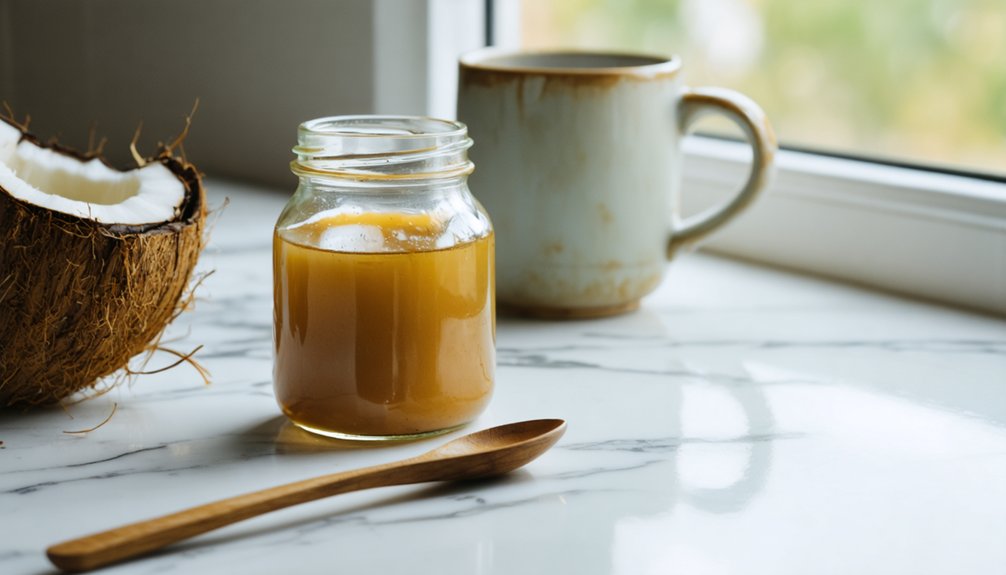
When you swish one tablespoon of virgin coconut oil for fifteen to twenty minutes, the oil metabolically binds to bacteria and pulls plaque from tooth surfaces, indirectly reducing the dull film that makes coffee stains appear more pronounced.
You should understand, however, that oil pulling doesn’t chemically break down the tannin-based pigments embedded in enamel, making it a supportive habit rather than a primary whitening intervention.
For best results, incorporate it into your daily routine alongside more targeted stain-removal methods, since its effects on deep coffee discoloration are modest at best.
Oil Pulling Mechanism Explained
Oil pulling works through a straightforward mechanical and biochemical process: swishing one tablespoon of virgin coconut oil for fifteen to twenty minutes creates a physical barrier that binds bacteria and dislodges plaque from tooth surfaces.
Among oil pulling benefits, the technique reduces microbial accumulation that accelerates coffee stain adherence.
Mastering oil pulling techniques requires following three precise steps:
- Place one tablespoon of virgin coconut oil in your mouth before eating or drinking.
- Swish continuously for fifteen to twenty minutes without swallowing.
- Spit the oil out and rinse thoroughly with water afterward.
The oil emulsifies during swishing, trapping pigment-producing bacteria.
However, it doesn’t penetrate intrinsic stains or reverse deep discoloration—making it a preventive tool rather than a corrective solution.
Limitations Of Oil Pulling
While coconut oil pulling offers measurable benefits for plaque reduction and surface hygiene, its mechanism doesn’t address the full spectrum of coffee staining.
Coffee deposits tannins deep within enamel micropores, and oil pulling effectiveness is largely confined to bacterial removal and superficial debris, not chromogen extraction from within enamel structure.
You shouldn’t rely on oil pulling as a standalone whitening strategy.
Dental health considerations require acknowledging that intrinsic discoloration—staining embedded below the enamel surface—responds poorly to lipid-based emulsification.
Oil pulling won’t reverse existing pigmentation caused by years of coffee consumption.
For meaningful stain reduction, you’ll need to combine oil pulling with abrasive or peroxide-based interventions.
Treat it as a complementary hygiene practice rather than a primary corrective solution.
Fruits and Vegetables That Fight Coffee Stains While You Eat
Certain fruits and vegetables act as natural abrasives, mechanically scrubbing tooth surfaces as you chew. Incorporating crunchy produce into your diet gives you passive stain control without additional effort.
- Apples and carrots — Their firm texture physically scrubs enamel surfaces, dislodging pigment deposits left by coffee tannins.
- Strawberry paste — Mashed strawberries contain malic acid, which dissolves surface discoloration when applied directly and left on teeth for five minutes.
- Celery — High water content stimulates saliva production, which naturally neutralizes acids and rinses away residual staining compounds.
You don’t need elaborate protocols to benefit from these options. Simply prioritizing these foods after coffee consumption gives you measurable, incremental stain reduction through consistent dietary habit rather than reactive intervention.
When Home Remedies Can’t Fix Your Coffee Stains
Home remedies address surface stains, but they can’t penetrate intrinsic discoloration embedded within the enamel or dentin layer.
When you’ve exhausted natural whitening options without visible results, professional intervention becomes necessary. In-office whitening delivers the fastest, most dramatic reduction in deep-set staining, using clinically formulated peroxide concentrations that home methods simply can’t replicate.
Professional dental scaling removes calcified deposits that compromise both aesthetics and enamel protection.
At-home peroxide strip kits offer a middle-ground solution for moderate staining that resists dietary or paste-based treatments.
If you’re noticing persistent gray or yellow tones despite consistent home care, that’s your signal to consult a dentist. Waiting prolongs the discoloration and may complicate treatment options down the line.
The Fastest Professional Fixes for Coffee-Stained Teeth
When surface stains cross into deeper discoloration, professional treatment delivers results that no home remedy can match. Your dentist offers targeted interventions that work faster and more precisely than anything you’ll find over the counter.
The three most effective professional options include:
- In-office whitening — Peroxide-based agents applied under clinical supervision produce dramatic stain reduction in a single session.
- Laser whitening — Light-activated treatment accelerates the bleaching process, reaching discoloration that topical products can’t penetrate.
- Dental bonding — Composite resin applied directly to the tooth surface conceals stubborn staining that whitening alone won’t correct.
Professional dental scaling also removes calcified buildup before any whitening procedure, maximizing your results.
You’re not guessing with these options — you’re acting on clinically validated methods.
Frequently Asked Questions
Can Whitening Toothpaste Replace Professional Treatment for Severe Coffee Stains?
No, whitening toothpaste can’t replace professional treatment for severe coffee stains. You’ll manage mild discoloration through home remedies and stain prevention habits, but you need professional dental scaling or in-office whitening for deep-set, stubborn staining.
Does Adding Milk to Coffee Actually Prevent Staining on Teeth?
Yes, adding milk to your coffee binds tannins, reducing their staining potential. Whole or plant-based milk types work effectively. If staining persists, consider coffee alternatives like herbal teas to maintain greater control over discoloration.
How Long Does It Take to See Results From Home Whitening?
Spoiler: it won’t happen overnight. You’ll typically see natural whitening results within two to four weeks using peroxide strips consistently. Pair them with stain prevention habits, and you’ll accelerate visible improvement noticeably.
Are Electric Toothbrushes Significantly Better Than Manual Ones for Stain Removal?
Yes, electric toothbrushes with rotating heads outperform manual ones for stain prevention. Their superior brushing techniques remove plaque more effectively, giving you greater control over coffee-stained teeth and producing clinically measurable improvements in surface discoloration.
Can Chewing Sugar-Free Gum After Coffee Reduce Staining Over Time?
Yes, it works. Chewing sugar-free gum for thirty minutes post-coffee boosts saliva production, actively neutralizing tannins. Sugar free benefits compound over time, and gum effectiveness means you’re consistently reducing staining potential with minimal effort.
References
- https://www.brownroaddental.com/ways-to-remove-coffee-stains-from-your-teeth/
- https://dentistinmanvel.com/goodbye-to-coffee-stains-8-effective-methods-to-brighten-your-smile/
- https://www.healthline.com/health/dental-and-oral-health/what-does-coffee-do-to-your-teeth
- https://familydentistnashua.com/remove-coffee-stains-from-teeth/
- https://www.goodrx.com/conditions/dental-care/remove-coffee-stains-teeth
- https://www.whitecentersmiles.com/remove-coffee-stains-off-your-teeth-fast/
- https://www.barniescoffee.com/blogs/blog/a-coffee-lovers-guide-to-whiter-teeth
- https://www.advancedsmilesmarion.com/resources/teeth-whitening-coffee-stains
- https://www.reddit.com/r/Coffee/comments/ort9jx/coffeestained_teeth/
- https://www.bridgepointedentistry.com/how-to-remove-coffee-stains-on-your-teeth/