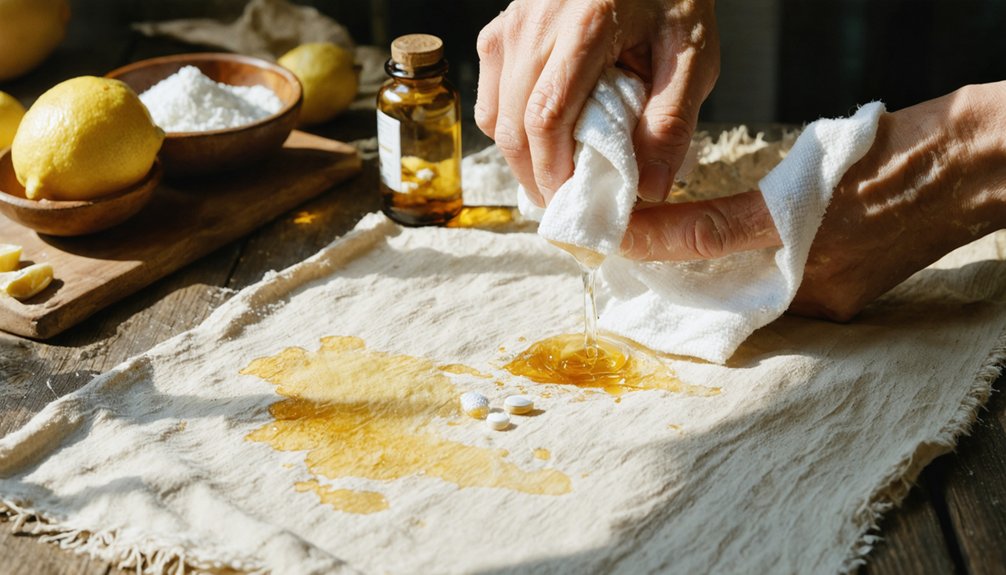
Medication stains bond aggressively to fabric fibers within minutes, so you can’t treat them like ordinary spills. Blot the excess immediately—never rub—then flush with cold water from the back of the stain for at least 60 seconds. Apply an enzyme-based pretreatment or liquid detergent and let it sit for 5–15 minutes before laundering. Identifying the stain type by color helps you select the most targeted removal method, and there’s considerably more to know about getting the best results.
Key Takeaways
- Blot spills immediately instead of rubbing, then rinse with cold water from behind the stain for at least 60 seconds.
- Identify the stain color to choose the right treatment: rust-brown needs rust remover, orange-red needs vinegar and dish soap.
- Apply liquid detergent or enzyme-based stain remover directly to the stain and let it sit for 5–15 minutes before washing.
- For set-in stains, soak in oxygen-based bleach solution and use enzyme pretreatment for up to 30 minutes before laundering.
- Always air-dry treated garments, as machine drying can permanently set any remaining stain discoloration into the fabric.
Why Medication Stains Are So Hard to Remove
Medication stains resist standard removal methods because their active pharmaceutical ingredients and synthetic dye additives bind aggressively to fabric fibers at a molecular level. This molecular bonding drives stain persistence, making conventional detergents insufficient for full extraction.
Iron-containing preparations oxidize upon air exposure, darkening the stain and compounding treatment challenges greatly. Tablet coatings and capsule colorants penetrate fiber matrices rapidly, especially when heat is applied prematurely.
You must recognize that delay worsens outcomes—the longer a dye remains untreated, the more irreversibly it fixes to the fabric. Liquid medications present additional complexity because their low viscosity accelerates deep fiber penetration within minutes.
Understanding these chemical mechanisms positions you to select targeted interventions rather than relying on generalized washing approaches that consistently underperform against medication-derived discoloration.
How to Identify What Kind of Medication Stain It Is
Before you treat a medication stain, you need to identify its source and color type, since different chemical compositions require different removal strategies.
Orange or red stains typically indicate dye-based liquid medicines like cough syrups, while rust-brown marks often signal iron-containing preparations that darken through oxidation.
You can narrow down the source by cross-referencing the stain’s color and location with your current medications, including their coatings, liquid dyes, and active ingredients.
Recognizing Stain Color Types
Identifying the color of a medication stain gives you critical diagnostic information about its chemical composition and the removal approach you’ll need.
Different stain color types correspond to specific chemical agents: yellow or orange marks typically indicate dye-based syrups or cough medications, while rust or reddish-brown stains signal iron-containing preparations that oxidize on fabric.
Dark brown or gray discoloration often points to antibiotic residue, particularly tetracycline or minocycline compounds. Green or blue-tinted marks suggest certain antipsychotic formulations or coated capsule dyes.
Accurately categorizing your stain color before treatment prevents you from applying incompatible solutions that fix rather than remove the stain.
Document the medication name alongside the observed stain types to cross-reference removal protocols and select targeted treatments efficiently.
Identifying Medication Stain Sources
How a stain behaves on fabric tells you more about its source than the color alone. Liquid syrups spread outward with diffuse borders, while crushed tablets leave concentrated, irregular deposits. Iron-containing preparations produce rust-colored marks that darken upon oxidation. Dye-based capsule coatings create sharp, intense spots distinct from ingredient-driven discoloration.
Identifying medication types responsible for staining requires examining three variables: color, spread pattern, and oxidation behavior. Orange or red marks typically indicate synthetic dye components. Brown or gray residue suggests iron or mineral-based formulations. Yellow banding points to antibiotic exposure.
Accurate source identification directly informs stain prevention and treatment strategy. Once you’ve categorized the stain by its chemical origin, you can select the appropriate removal agent without guessing or causing further fabric damage.
First Steps to Take Right After a Medication Spill
When a medication spill occurs, you must act within minutes—blot the excess liquid or powder immediately rather than rubbing, which drives the stain deeper into the fabric fibers.
Next, rinse the affected area under cold running water from the back of the stain to flush out active ingredients and dye without further embedding them.
Once you’ve rinsed thoroughly, pretreat the stained area with a liquid laundry detergent or commercial stain remover, letting it penetrate for 5–15 minutes before laundering.
Act Immediately After Spilling
Act fast the moment a medication spills onto fabric—delay allows dyes and active pharmaceutical ingredients to penetrate fibers and fix permanently. Immediate intervention is your strongest stain prevention tool.
Follow this precise fabric care sequence:
- Blot—don’t rub—excess liquid or powder using a clean cloth to lift material without spreading it.
- Rinse under cold running water from the fabric’s reverse side, flushing dye and active compounds outward.
- Apply liquid laundry detergent or a targeted stain remover directly; let it penetrate 5–15 minutes.
- Launder immediately at the highest temperature the care label permits.
Avoid heat exposure—dryers thermally set residual stain compounds. If discoloration remains post-wash, repeat pretreatment before applying heat.
You control the outcome through speed and precision.
Rinse With Cold Water
Cold water is your first line of defense after blotting excess medication from fabric. Position the garment so water flows from the back of the stain outward, forcing dye and active compounds away from the fibers rather than deeper into the weave.
This rinse technique is critical for effective stain prevention—hot water sets many medication dyes permanently, so temperature control isn’t optional.
Run cold water through the stained area for at least 60 seconds, applying steady pressure. You’re mechanically displacing the staining agent before it bonds to fabric fibers.
If the medication contains iron or heavy pigments, prolonged flushing further reduces fixation risk. Once you’ve thoroughly rinsed, you’re ready to apply a pretreatment solution for the next removal phase.
Pretreat Before Washing
Once you’ve rinsed the stained fabric with cold water, apply a small amount of liquid laundry detergent or enzyme-based stain remover directly to the affected area.
These pretreatment techniques break down dye molecules and active pharmaceutical compounds before washing. Let the solution sit 5–15 minutes to maximize penetration.
Follow these effective methods in sequence:
- Blot—don’t rub—the pretreatment agent into the stain using a clean cloth.
- Work from the stain’s outer edge inward to prevent spreading.
- Allow full dwell time before rinsing or loading into the washer.
- Reapply if the stain remains visible after the initial treatment period.
Skipping pretreatment greatly reduces removal success, particularly with pigmented syrups or iron-containing medications that bind aggressively to fabric fibers.
The Best DIY Solutions for Common Medication Stains
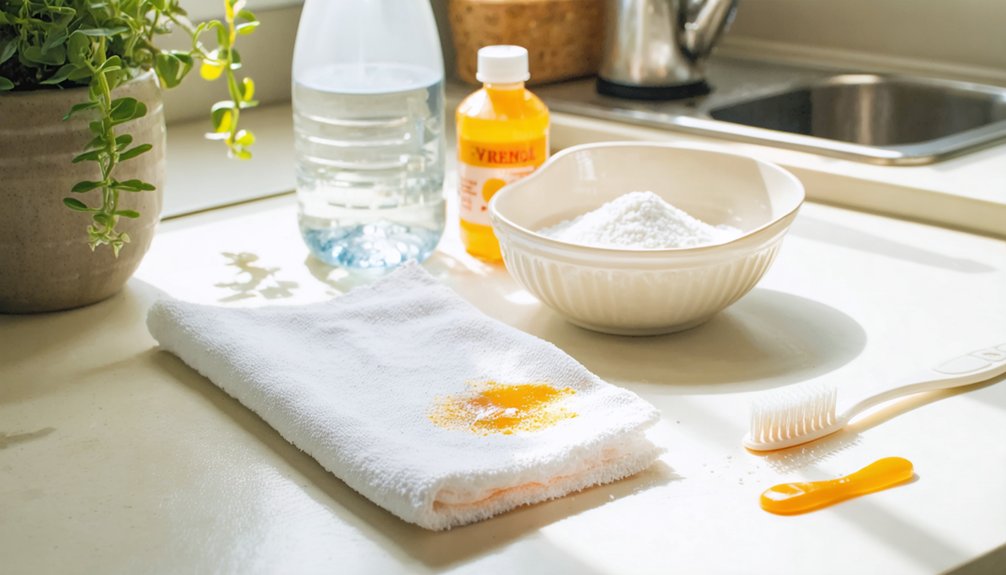
When a medication stain occurs, you’ll want to act within minutes—blot the excess material immediately rather than rubbing, then flush the stain from the back with cold running water to push the dye out of the fibers instead of deeper in.
Different medication types require targeted approaches. For dye-based liquid medicines, apply a mixture of warm water, dish soap, and white vinegar directly to the stain, blot, then rinse thoroughly.
For orange or red cough syrups, use a vinegar-and-rubbing-alcohol solution. Iron-containing preparations respond better to commercial rust-removal products.
For stubborn residue, soak overnight in cold water with oxygen-based bleach.
Stain prevention remains your best strategy, but when spills occur, always test any solution on an inconspicuous fabric area before full application.
How to Remove Tough Iron and Rust-Colored Medication Stains
Iron-containing medications—such as oral iron supplements and certain liquid preparations—leave rust-colored stains that oxidize on fabric, making them considerably harder to remove than standard dye-based marks.
Stain prevention remains your first defense—act immediately before oxidation sets.
For established iron stains, apply these cleaning techniques in sequence:
- Blot excess liquid; avoid rubbing to prevent deeper fiber penetration.
- Flush the stain’s reverse side with cold running water to displace loosened particles.
- Apply a commercial rust-removal product or white vinegar directly; allow 10–15 minutes of contact time.
- Launder in the coolest water the fabric tolerates, then air-dry—never apply heat until the stain’s fully eliminated.
Repeat the cycle as needed.
For delicate fabrics, consult a professional dry-cleaning service.
What to Do When Set-In Medication Stains Won’t Come Out
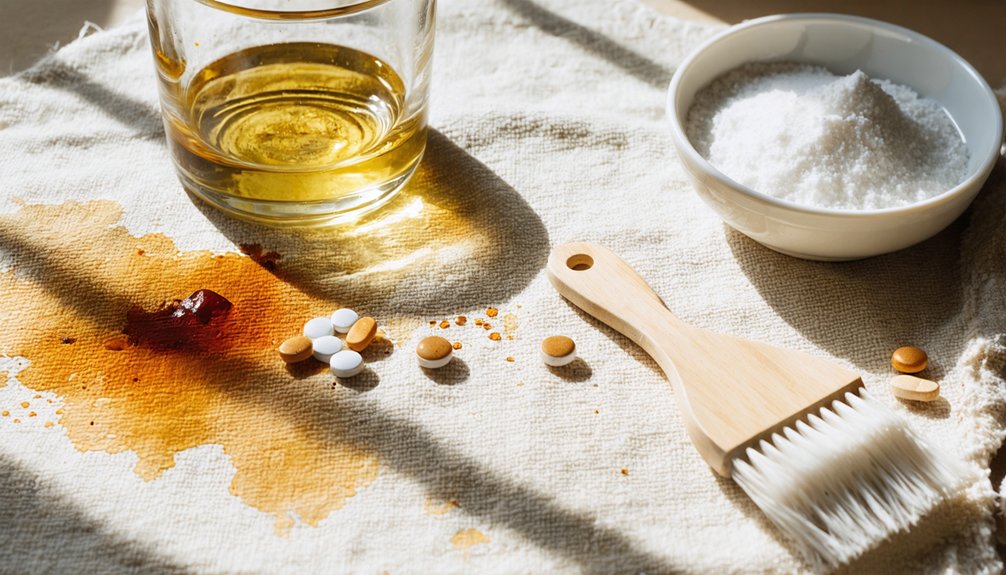
Set-in medication stains—those that have already bonded to fabric fibers through heat exposure or prolonged contact—require more aggressive intervention than fresh marks.
Begin stain removal by re-wetting the affected area with cold water, then apply an enzyme-based pretreatment directly to the site. Allow it to penetrate for 30 minutes before laundering.
For stubborn medication types—particularly iron-based preparations or dye-heavy syrups—soak the garment overnight in oxygen-based bleach solution, then rewash.
If discoloration persists after two treatment cycles, consult a professional dry-cleaning service, specifying the medication type involved to guide solvent selection.
Never re-dry the garment between attempts; heat permanently sets residual dye.
Precision at each intervention stage maximizes your removal success rate without causing collateral fabric degradation.
The Right Products for Stubborn Medication Stain Removal
Choosing the right removal product depends on the medication’s chemical composition—dye-based stains, iron-containing preparations, and oily topical residues each respond to different active agents.
Matching effective products to stain type is central to successful stain removal techniques:
- Dye-based stains (syrups, capsule colorants): Apply oxygen-based bleach (OxiClean) or a vinegar-rubbing alcohol solution.
- Iron-containing preparations: Use a commercial rust remover cautiously; standard detergents won’t neutralize oxidized iron deposits.
- Oily topical residues: Pretreat with dish soap to break down lipid-based carriers before laundering.
- Protein or compound-based stains: Cold-water enzyme detergents (containing protease or amylase) effectively break molecular bonds.
Always test your chosen product on a hidden fabric area first to prevent unintended bleaching or fiber degradation.
How to Protect Your Clothes From Medication Stains

Preventing medication stains requires less effort than removing them, so adopting a few targeted habits before and during medication use greatly reduces fabric exposure.
Your preventive measures should begin with deliberate clothing choices — wear dark or designated old garments when handling pigmented syrups, topical preparations, or iron-containing liquids.
Use an apron or bib during medication intake to intercept potential splashes before they contact outer layers.
Administer liquid medicines over a sink, never while moving.
Store bottles upright and sealed to eliminate incidental spills.
After handling colored medications, wipe your hands and face immediately to prevent dye transfer onto fabric.
These targeted behavioral adjustments, combined with smart clothing choices, eliminate most staining incidents before they require any corrective intervention.
When to Take Medication-Stained Clothing to a Professional
Even with sound preventive habits in place, some medication stains will resist home treatment and require professional intervention. Knowing when to escalate guarantees you don’t permanently damage the fabric through repeated failed attempts.
Seek professional care when:
- Multiple pretreatment cycles haven’t reduced the stain’s intensity after 48 hours.
- Stain identification reveals iron-based or dye-fixed compounds that standard detergents can’t break down.
- The garment’s care label restricts water, heat, or chemical exposure.
- The fabric is delicate, expensive, or structurally compromised by prior removal attempts.
Dry cleaners use solvent-based treatments and specialized spotting agents that aren’t available for home use.
Provide them with the medication’s name and color composition—this detail accelerates accurate stain identification and improves treatment outcomes considerably.
Frequently Asked Questions
Can Medication Stains Cause Permanent Fabric Damage Over Time?
Yes, they can. If you don’t apply stain removal techniques promptly, dyes and iron compounds fix permanently into fibers. Prioritize immediate fabric care—blot, rinse cold, pretreat—to maintain full control over discoloration outcomes.
Do Medication Stains on Teeth Require the Same Removal Approach as Fabric?
No, they don’t. Fabric stains respond to detergents and soaking, but tooth whitening requires professional bleaching or veneers for intrinsic discoloration. You’ll achieve better stain prevention outcomes by addressing each substrate with its clinically appropriate intervention.
Are Children More Vulnerable to Medication-Related Tooth Discoloration Than Adults?
Yes, your little one’s smile is more vulnerable. During tooth development, children’s forming enamel absorbs medications like tetracycline more deeply. Age factors determine risk severity—adults’ completed enamel resists intrinsic discoloration far more effectively than developing dentition.
Can Switching Medications Prevent Future Staining on Clothing or Teeth?
Yes, switching medications can prevent future staining. You’ll want to discuss medication alternatives with your provider as key preventive measures, reducing pigment-related fabric and dental discoloration by eliminating the offending compound’s dyes or reactive chemical constituents entirely.
Does Medication Staining on Fabric Affect the Garment’s Structural Integrity?
Medication stains won’t obliterate your garment’s structural integrity, but they can weaken fabric composition over time. You’ll want to prioritize prompt stain removal to prevent chemical degradation, dye fixation, and fiber deterioration from active pharmaceutical ingredients penetrating deeply.
References
- https://bentonvilledentist.com/blog/is-it-normal-for-teeth-to-stain-from-daily-medications/
- https://www.alibaba.com/product-insights/effective-methods-to-remove-medicine-stains-from-clothes-a-step-by-step-guide-for-quick-and-safe-cleaning.html
- https://www.thespruce.com/how-to-remove-liquid-medicine-stains-2146975
- https://www.73smiles.com/does-whitening-help-medication-stains/
- https://site.extension.uga.edu/textiles/care/stain-removal/remove-stains-from-medicine-acne-mercurochrome-cough-syrup-iodine/
- https://alldiysolutions.com/how-to-remove-liquid-medicine-stains-from-clothes/
- https://www.youtube.com/watch?v=B7Xip90iKk8
- https://lifetips.alibaba.com/laundry-secrets/how-to-remove-liquid-medicine-stains
- https://www.hunker.com/13423469/stain-removal-tips-for-orange-dye-in-medicine/
- https://sunrise-dentistry.com/blog/drug-induced-teeth-discoloration-causes-and-treatment-options/