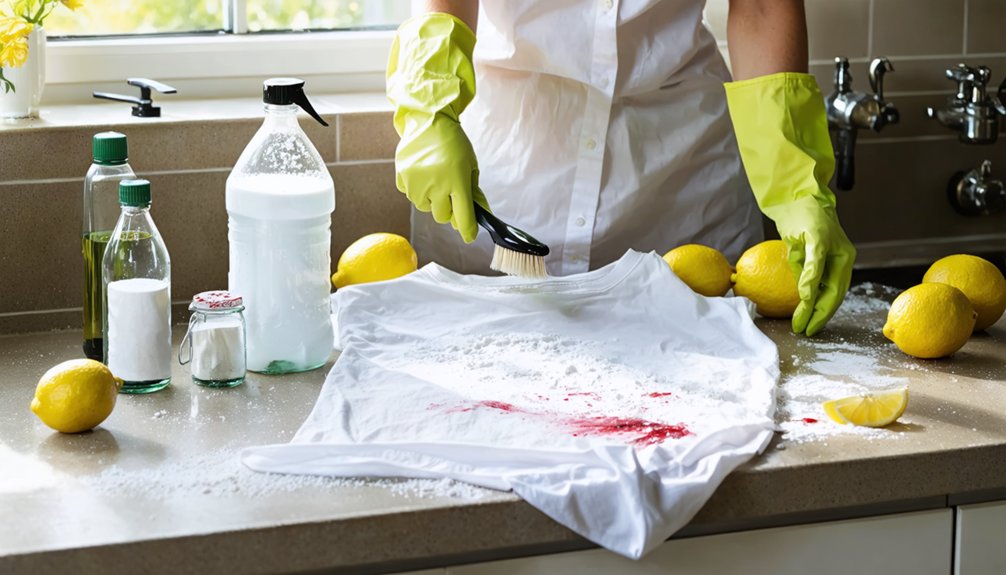
You don’t need expensive cleaners to remove tough stains — common household products work surprisingly well. Act fast by blotting liquids and scraping solids immediately. Blue Dawn mixed with hydrogen peroxide tackles stubborn stains, while baking soda paste handles grease and sweat. Distilled white vinegar diluted 50/50 with water makes an effective pre-treatment. Cold water rinses fresh blood instantly. The right technique for each stain type makes all the difference, and there’s more to uncover ahead.
Key Takeaways
- Act fast by blotting liquid stains with a white paper towel and scraping solid stains with a blunt knife.
- Mix equal parts Blue Dawn and hydrogen peroxide to effectively treat tough, set-in stains.
- Apply a baking soda paste directly to grease or sweat stains before washing for best results.
- Dilute distilled white vinegar 50/50 with water as an effective pre-treatment solution for various stains.
- Always test homemade solutions on a hidden fabric area first to prevent color damage.
Act Fast: What to Do the Moment a Stain Happens
The first few seconds after a stain occurs are your best window for successful removal. Your immediate actions determine whether a stain sets permanently or lifts cleanly.
The moment a stain happens is the moment you either save the fabric or lose it permanently.
If it’s solid or bulky, grab a blunt knife and scrape away the excess before it presses deeper into the fibers. For liquids, blot firmly with a white paper towel — don’t rub. Rubbing forces the stain further in, making pre-treatment techniques less effective later.
For fresh blood, rinse immediately with cold water. Hot water sets the protein, so temperature matters.
For greasy stains, sprinkle talcum powder right away to absorb the oil before it bonds to the fabric. Act quickly, stay methodical, and you’ll give every subsequent treatment step its best possible chance of working.
The Best At-Home Products for Stain Removal
What’s already in your kitchen or bathroom cabinet can handle most stain emergencies effectively.
These everyday ingredients outperform many commercial products when you use them correctly.
Keep these homemade remedies ready:
- Blue Dawn and hydrogen peroxide – Combine equal parts for tough set-in stains.
- Baking soda paste – Mix with water until thick; apply directly to grease or sweat stains.
- Distilled white vinegar – Dilute 50/50 with water for a reliable pre-treatment solution.
- 3% hydrogen peroxide – Apply directly to fresh blood or dingy fabric.
- Talcum powder – Sprinkle onto oily stains immediately to absorb grease before washing.
Always allow 15 minutes to one hour of contact time before rinsing, and store hydrogen peroxide in a dark container to preserve its potency.
How to Remove Blood, Wine, Coffee, and More
Tackling specific stains requires knowing exactly what works for each type.
For a blood stain, rinse it immediately with cold water, then apply 3% hydrogen peroxide directly. Hot water sets protein-based stains, so avoid it.
For a wine stain, don’t rub it — blot it, then treat it with a 50/50 mix of dish soap and hydrogen peroxide.
A coffee stain responds well to boiling water poured directly over it right away.
For a grease stain, sprinkle baking soda first to absorb the oil, then soak it in soapy water.
A wax stain hardens with ice, making it easier to scrape off.
For a gum stain, freeze the item first, then scrape away the brittle residue cleanly.
How to Remove Stains That Won’t Budge
Some stains don’t lift on the first try, and that’s when you need to adjust your approach rather than repeat the same method. Tough stains require a targeted strategy based on what’s still embedded in the fiber.
- Switch your agent: If soap failed, try a 50/50 hydrogen peroxide and water soak for 30 minutes to break down stubborn marks at the fiber level.
- Extend contact time: Allow your chosen stain remover to sit between 15 minutes and one hour before rinsing or machine washing.
- Layer your treatment: Apply baking soda paste first, let it dry, then follow with a Blue Dawn and hydrogen peroxide solution for compounded action.
Never rinse prematurely—doing so interrupts the chemical process before it’s complete.
Safety Tips for Using At-Home Stain Removers
At-home stain removers work well, but you need to handle them correctly to avoid damaging fabric or harming yourself.
Even natural alternatives like hydrogen peroxide and white vinegar can bleach or weaken fibers if misused. Always check garment labels before applying any DIY solutions, especially bleach-based ones.
Store hydrogen peroxide in a dark container to maintain its effectiveness, and never mix it with bleach.
Allow stain removers to sit between 15 minutes and one hour—no longer—to prevent fiber breakdown.
Avoid automatic rinsing before washing when using homemade treatments, as this reduces their effectiveness.
Test any solution on a hidden area first to confirm colorfastness.
Following these precautions keeps both your clothing and yourself protected throughout the stain removal process.
Frequently Asked Questions
Can Stain Removal Techniques Differ Based on Fabric Type or Material?
Yes, stain removal techniques do differ based on fabric composition and stain types. You’ll need to check garment labels, use cold water on delicates, and match your chosen method to both the material and specific stain you’re treating.
Are At-Home Stain Removers Safe for Colored or Dyed Garments?
Color’s your armor—protect it by doing colorfast testing first. You’ll avoid dye transfer by dabbing the remover on a hidden seam, waiting 15 minutes, then checking before treating the full stain.
How Should Leftover Homemade Stain Remover Mixtures Be Properly Stored Afterward?
Store your leftover mixtures in dark, airtight storage containers to preserve their shelf life. You’ll want to label each one clearly, keep them cool, and use them within a week for the best results.
Can Old or Set-In Stains Still Be Removed With Household Products?
Yes, even ancient old stains can surrender to effective techniques! You’ll want to soak the fabric in a 50/50 hydrogen peroxide and water mix for up to an hour, letting the solution break down stubborn, set-in residue completely.
Which Stains Are Impossible to Fully Remove With At-Home Products?
Some stains you can’t fully remove at home. Ink stains and wine stains that have set deeply into fibers often resist household treatments, leaving permanent traces no matter which at-home method you’ve tried.
References
- https://wellnessmama.com/natural-home/stain-treatment-reference/
- https://eathealthy365.com/diy-stain-removers-that-actually-work-a-complete-guide/
- https://www.nytimes.com/wirecutter/reviews/best-laundry-stain-remover/
- https://www.goodhousekeeping.com/uk/house-and-home/household-advice/a657035/must-have-stain-buster-tools/
- https://www.cleaninginstitute.org/cleaning-tips/clothes/stain-removal-guide
- https://www.consumerreports.org/home-garden/cleaning/the-ultimate-stain-removal-guide-a1115619847/
- https://www.goodhousekeeping.com/uk/house-and-home/household-advice/a670070/best-stain-busting-tools/
- https://www.consumerreports.org/appliances/laundry-stain-removers/best-laundry-stain-removers-from-consumer-reports-tests-a1058254182/
- https://thefiltery.com/best-non-toxic-natural-stain-remover/
- https://dontwastethecrumbs.com/diy-homemade-stain-remover/