You can whiten your teeth with a retainer, but safety and effectiveness depend on your retainer type. Fixed wire retainers don’t interfere with whitening agents, while removable clear retainers squeeze out gel, causing uneven results and gum irritation. Dental professionals recommend custom whitening trays over retainers for consistent gel contact. You should also wait 24 to 48 hours before reinserting any removable retainer after treatment. The details ahead will help you make the safest choice for your situation.
Key Takeaways
- Fixed wire retainers are safe during whitening, as stainless steel does not react with bleaching agents.
- Removable clear retainers squeeze out whitening gel, causing uneven results and increasing gum irritation.
- Dentists recommend custom whitening trays with gel reservoirs instead of retainers for effective treatment.
- Remove retainers before applying any whitening product to avoid damaging them or reducing effectiveness.
- Wait 24 to 48 hours after whitening before reinserting retainers to protect temporarily porous enamel.
Can You Whiten Teeth With a Retainer In?
Whether you can whiten your teeth with a retainer in depends largely on the type of retainer you’re wearing.
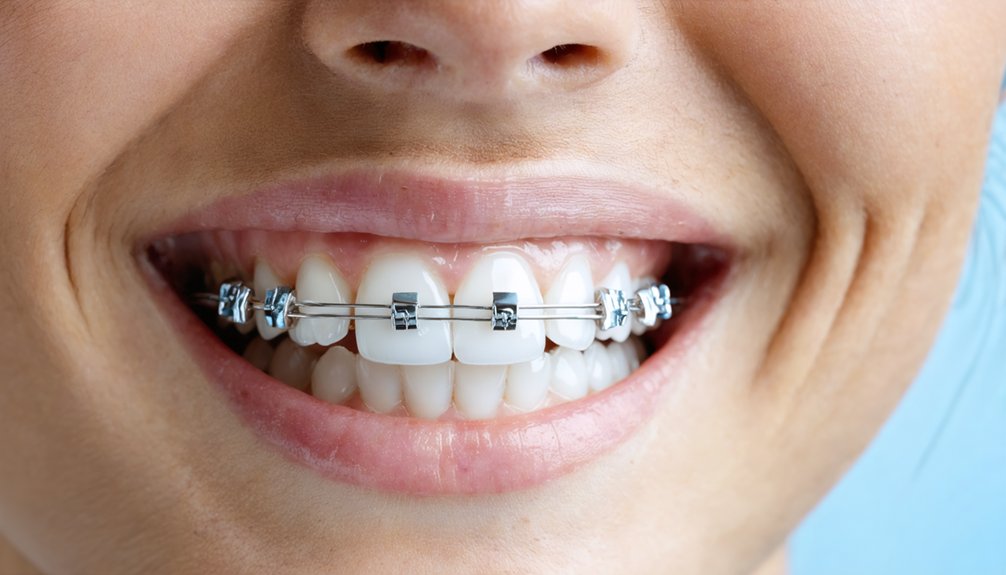
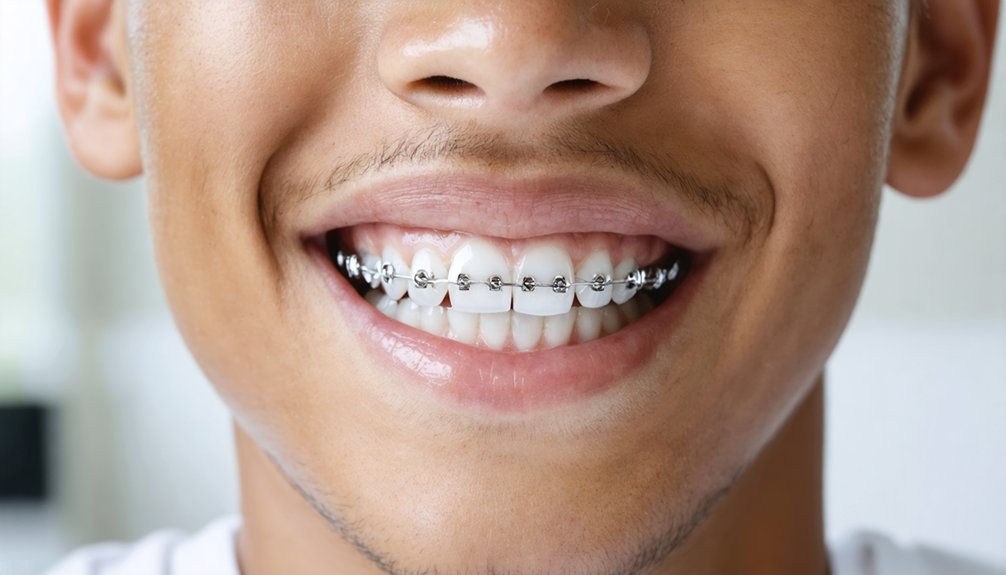
Fixed retainers bonded to the back of your teeth don’t interfere with whitening effectiveness, since the stainless steel wire doesn’t react chemically to peroxide-based agents. Your enamel still responds normally to bleaching treatments.
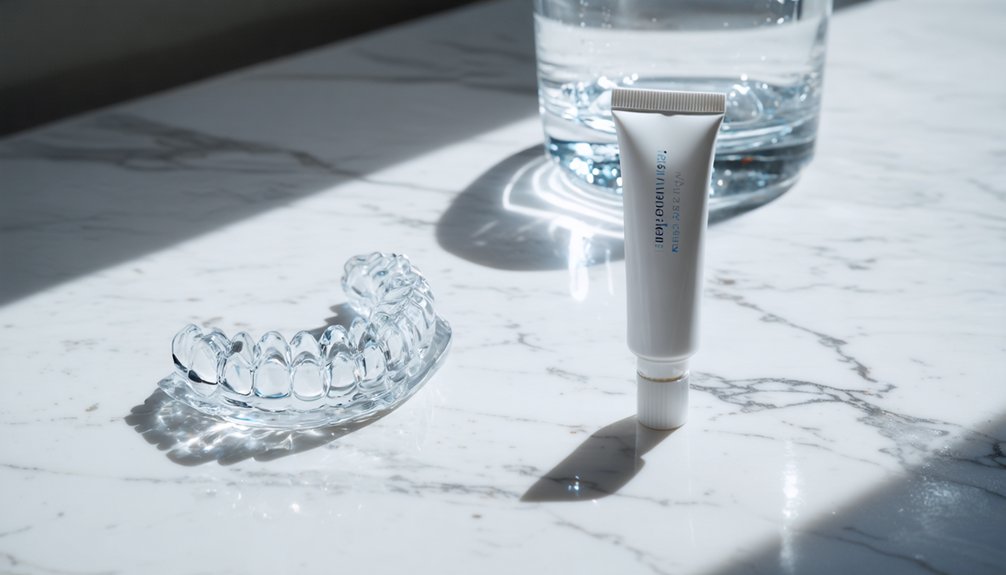
Removable clear retainers, however, aren’t designed to hold whitening gel against your teeth. Their tight fit causes gel to squeeze out, reducing whitening effectiveness and increasing your risk of gum irritation and teeth sensitivity.
Removable clear retainers squeeze out whitening gel, cutting effectiveness while raising your risk of irritation and sensitivity.
Dental professionals actively discourage using them as whitening trays.
For controlled, predictable results, remove your retainer before applying any whitening product and use a custom tray with proper gel reservoirs designed specifically for that purpose.
Does Your Retainer Type Change What’s Safe for Whitening?
Your retainer type directly determines which whitening methods are safe and which carry measurable risks. Retainer materials respond differently to peroxide-based agents, directly affecting whitening effectiveness and tissue safety.
- Fixed wire retainers: Steel doesn’t react to bleaching agents, but adjacent composite bonding may not whiten evenly.
- Removable clear retainers: Tight-fitting plastic lacks gel reservoirs, causing expulsion onto gum tissue and uneven results.
- Custom dentist-provided trays: Reservoir space holds gel correctly, maximizing whitening effectiveness while minimizing gum contact.
- Over-the-counter strips: Incompatible with any bonded retainer; dentists advise waiting until appliances are fully removed.
Knowing your specific retainer materials lets you select a clinically appropriate whitening method rather than risking structural damage or compromised outcomes.
Why Your Retainer Makes a Terrible Whitening Tray
Although retainers look similar to whitening trays, they function through an entirely different design principle that makes them poorly suited for delivering bleaching agents.
Whitening trays include gel reservoirs that maintain consistent contact between peroxide and enamel. Your retainer has no such reservoir—it fits tightly against tooth surfaces, causing gel to squeeze outward immediately upon insertion.
This design failure directly reduces whitening effectiveness, since the bleaching agent never maintains adequate dwell time against enamel.
Simultaneously, expelled gel contacts your gum tissue, triggering chemical irritation. Repeated exposure to peroxide can also cause retainer damage, degrading the plastic structure over time and compromising its orthodontic function.
You’re not just getting poor whitening results—you’re actively undermining the appliance responsible for maintaining your tooth alignment.
What’s the Safest Way to Whiten Teeth With a Retainer?
Understanding why retainers fail as whitening trays points directly toward the solution: use the right tool for each job.
Follow these evidence-based steps to whiten safely without compromising retainer maintenance or results:
- Remove your retainer before applying any whitening product to guarantee full enamel contact.
- Use custom whitening trays with gel reservoirs provided by your dentist — these whitening methods minimize gum exposure and maximize even coverage.
- Wait 24 to 48 hours after treatment before reinserting your retainer, depending on peroxide concentration used.
- Clean your retainer thoroughly before reinsertion to eliminate bacteria and residual agents.
If you have a fixed retainer, in-office laser treatments apply gel directly to tooth surfaces without disturbing the bonded wire.
How Long Before You Can Put Your Retainer Back In?
Timing matters more than most patients expect when it comes to reinserting a retainer after whitening. Your enamel becomes temporarily porous immediately after treatment, making it vulnerable to staining and bacterial transfer.
The standard recommendation is a minimum 24-hour wait before reinserting any retainer. However, if your whitening duration involved high-concentration peroxide gels, extend that window to 48 hours.
Wait at least 24 hours before reinserting your retainer—48 hours if high-concentration peroxide gels were used.
Retainer hygiene is equally critical at this stage. Before reinserting, clean your retainer thoroughly to eliminate residual bacteria or whitening agents that could contact sensitized enamel.
During the waiting period, avoid coffee, tea, red wine, and tomato-based foods, as staining risk remains elevated. Following these evidence-based guidelines protects both your whitening results and your enamel’s structural integrity.
Frequently Asked Questions
Can Whitening Gel Permanently Damage the Bond Holding Fixed Retainers?
Standard whitening concentrations won’t permanently damage your fixed retainer’s bond under professional supervision, maintaining retainer safety. However, you’ll compromise whitening effectiveness if high-concentration gels are repeatedly misused, potentially weakening bonding materials over time.
Should You Brush Your Teeth Before Reinserting Your Retainer After Whitening?
Like rinsing a glass before refilling it, you should brush and floss thoroughly before reinserting your retainer. Proper retainer care and smart whitening timing prevent bacteria transfer and residual gel from compromising your freshly whitened enamel.
Are Over-The-Counter Whitening Strips Safe to Use With Fixed Retainers?
You shouldn’t use over-the-counter whitening strips with fixed retainers, as they’re not recommended for appliances. They compromise whitening effectiveness and proper retainer care, so wait until your orthodontic appliances are removed before applying strips.
Can Repeated Whitening Treatments Cause Structural Damage to Retainer Plastic?
Yes, repeated treatments can weaken, warp, and compromise your retainer’s plastic over time. You’ll want to monitor your whitening frequency carefully and prioritize retainer maintenance by consulting your dentist before continuing any prolonged whitening regimen.
What Foods Should You Avoid Immediately After a Teeth Whitening Treatment?
After whitening, you should avoid coffee, tea, red wine, and tomato sauce for one to two days. Following these whitening food restrictions supports effective post-treatment care and prevents new staining while your enamel remains temporarily porous.
References
- https://bestorthonc.com/2021/12/16/can-i-use-my-retainer-for-my-teeth-whitening/
- https://www.dentistsanfrancisco.com/teeth-whitening-with-retainers/
- https://www.newsmilelife.com/blogs/blogs/teeth-whitening-with-retainers-safe-or-not
- https://www.ismile.co.nz/can-you-have-teeth-whitening-while-wearing-a-permanent-retainer/
- https://cannock.lateethwhitening.co.uk/can-i-get-teeth-whitening-wearing-retainer/
- https://www.invastor.com/blog/202281-should-you-use-retainers-after-whitening/
- https://www.youtube.com/watch?v=iqJRmhigLSg
- https://www.retainyoursmile.com/post/clear-retainers-and-teeth-whitening-can-you-do-both
- https://thecomfortdentistry.com/is-it-possible-to-wear-teeth-whitening-strips.html
- https://expertwhitening.com/it-it/blogs/news/can-i-use-whitening-strips-with-braces-or-retainers