To avoid risks in DIY teeth whitening, you’ll need to choose ADA-approved products, follow instructions precisely, and limit application time. Acidic ingredients like lemon juice and vinegar erode enamel fast, while high-concentration peroxide can burn gum tissue and expose dentin. Never repeat sessions back-to-back, and watch for sensitivity, gum redness, or uneven patches. Treating whitening as a clinical process rather than a cosmetic shortcut will protect your smile long-term—and there’s much more you should know before starting.
Key Takeaways
- Choose ADA-sealed whitening products and follow manufacturer instructions precisely to minimize risks of enamel erosion and chemical damage.
- Avoid acidic DIY ingredients like lemon juice and vinegar, as they rapidly soften enamel and increase cavity risk.
- Limit whitening agent contact to recommended durations and avoid applying products directly to gum tissue.
- Skip back-to-back whitening sessions, as repeated chemical exposure compounds enamel damage without improving results.
- Seek professional advice if sensitivity persists beyond 48 hours, or gum redness, swelling, or blistering occurs.
The Real Reasons DIY Teeth Whitening Causes Damage
DIY teeth whitening can seem like a cost-effective solution, but it carries serious risks that many people underestimate. Acidic ingredients like lemon juice rapidly soften your enamel, while baking soda’s abrasive nature wears down protective tooth surfaces.
High-concentration hydrogen peroxide roughens and softens enamel further, exposing your dentin layer and triggering painful sensitivity.
These costly mistakes don’t just affect appearance—they accelerate cavity formation and structural tooth damage. Once enamel erodes, you can’t reverse it. You’re fundamentally trading short-term brightness for long-term dental vulnerability.
Before attempting any whitening treatment, you should seriously evaluate alternative methods, including ADA-approved over-the-counter products or professionally supervised procedures.
Understanding what damages your teeth empowers you to make informed, precise decisions that protect your oral health rather than compromise it.
Ingredients That Silently Destroy Tooth Enamel
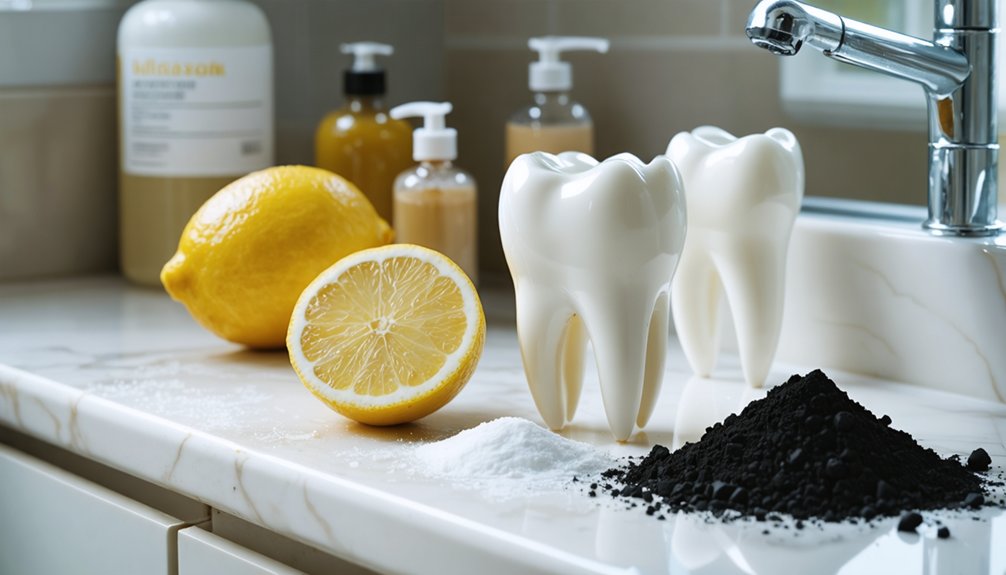
When you reach for acidic ingredients like lemon juice or vinegar, you’re rapidly softening your enamel layers with every application.
Baking soda, though widely used, acts as an abrasive that gradually wears down the protective surfaces your teeth depend on.
High concentrations of hydrogen peroxide compound the damage further by roughening and softening enamel at the structural level.
Acidic Ingredients Damage Enamel
Acidic ingredients like lemon juice and vinegar are among the most damaging substances you can apply to your teeth. These acids rapidly soften enamel layers, making them vulnerable to abrasion and permanent mineral loss.
Once enamel erodes, it doesn’t regenerate on its own, which means you’re disrupting the natural enamel remineralization process your body depends on for structural protection.
You’re fundamentally trading short-term brightness for long-term damage. Softened enamel accelerates cavity formation and increases sensitivity considerably.
If you want meaningful results without compromising your dental health, focus on safe whitening alternatives like ADA-approved whitening toothpastes or professionally supervised bleaching treatments.
These options deliver controlled outcomes without exposing your enamel to corrosive acids that cause irreversible harm. Choosing wisely now prevents costly, painful interventions later.
Baking Soda Wears Teeth
Baking soda is widely marketed as a gentle, natural whitening agent, but it functions as a physical abrasive that gradually wears down your enamel’s protective surface layer. Each application removes microscopic amounts of tooth enamel that your body can’t regenerate.
Over time, cumulative abrasion thins your enamel, exposing the underlying dentin and increasing sensitivity to temperature changes. You mightn’t notice immediate damage, but the structural weakening is progressive.
Thinner enamel also raises your cavity risk and makes teeth more vulnerable to fractures under ordinary biting pressure. The whitening effect you’re observing isn’t brightening—it’s surface removal.
If you’re using baking soda regularly, you’re trading long-term structural integrity for short-term aesthetic results. Discontinuing use and consulting a dentist helps you protect what enamel remains.
Peroxide Causes Surface Roughening
Baking soda isn’t the only ingredient quietly compromising your enamel—hydrogen peroxide does it through an entirely different mechanism.
When peroxide concentration exceeds safe thresholds, it chemically roughens your tooth’s surface rather than simply abrading it. This roughening destabilizes the enamel matrix, leaving microscopic irregularities that trap staining particles and accelerate future discoloration.
Whitening duration compounds the problem greatly. The longer you expose teeth to high-concentration peroxide, the deeper the chemical penetration reaches—eventually breaching the dentin layer beneath.
Once dentin is exposed, you’ll experience heightened sensitivity to temperature and pressure changes.
You must treat peroxide-based products as precision tools, not aggressive solutions. Exceeding recommended concentration levels or application times doesn’t accelerate results—it accelerates irreversible structural damage that no whitening product can reverse.
How Whitening Chemicals Burn Gums and Soft Tissue
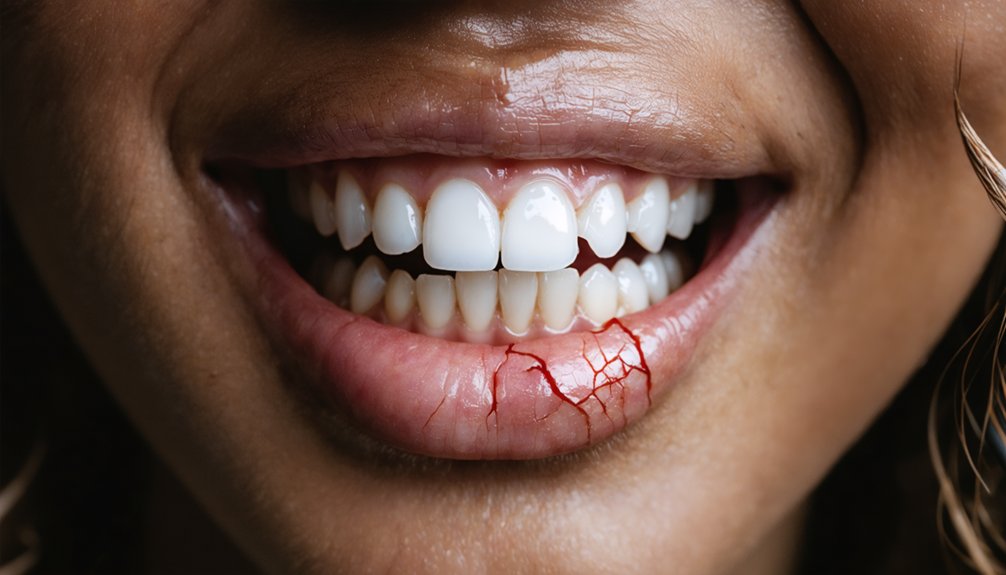
When whitening gels leak onto your gums, they can cause immediate redness, swelling, and soreness. High-strength hydrogen peroxide intensifies gum irritation and can produce chemical burns across oral tissue, including your lips and throat.
Unregulated kits sold online frequently contain poorly measured concentrations that trigger sensitivity issues even in healthy mouths.
Repeated exposure compounds the damage. Chemical burns don’t always resolve on their own—they can result in permanent tissue injury requiring professional dental intervention.
Gum recession is another long-term consequence you’ll face from continued DIY whitening without proper precautions.
To maintain control over your outcomes, follow safe practices: use only ADA-approved products, apply gels precisely, and limit session frequency.
Seek professional guidance before starting any whitening regimen to assess your risk and protect your soft tissue effectively.
Why Overbleaching Makes Your Teeth Hurt
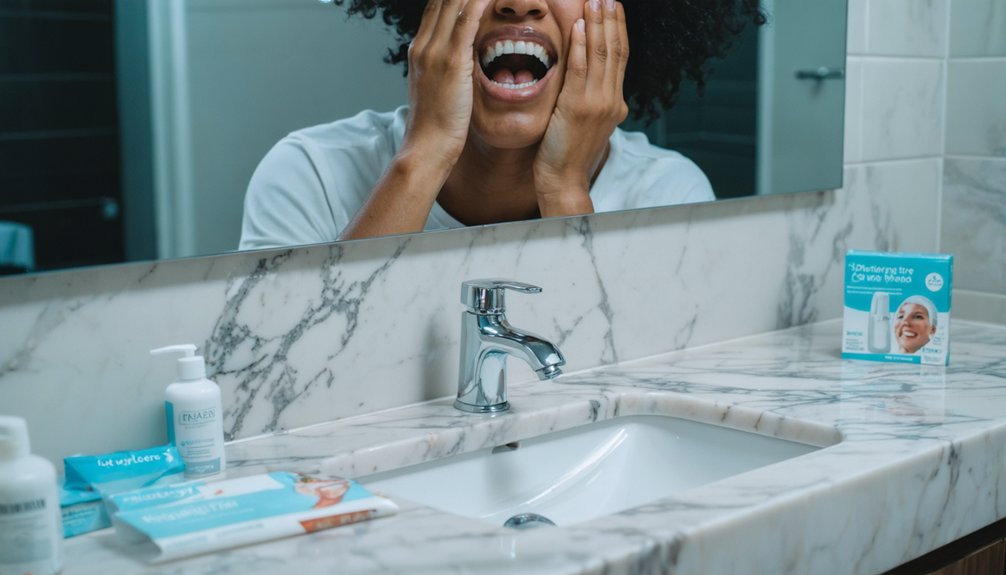
Overbleaching exposes the dentin layer beneath your enamel, leaving nerve endings vulnerable to external stimuli. Once dentin loses its protective cover, sensitivity triggers like hot beverages, cold air, and sweet foods cause sharp, immediate discomfort.
You’re fundamentally stripping away your teeth’s natural defense system with each excessive bleaching session.
Aggressive bleaching also alters your tooth’s microstructure, weakening its structural integrity and increasing fracture risk under normal pressure.
Deep chemical penetration can even reach the pulp, causing lasting damage that’s difficult to reverse.
Enamel restoration isn’t fully achievable once significant loss occurs, making prevention your strongest strategy.
Follow manufacturer instructions strictly, avoid back-to-back whitening sessions, and consult a dental professional if sensitivity develops.
Controlling your whitening frequency protects both your comfort and your long-term dental health.
Why DIY Whitening Leaves Teeth Blotchy and Uneven
Beyond structural damage, DIY whitening also creates cosmetic problems that are frustratingly difficult to correct. Uneven results are among the most common complaints, often stemming from inconsistent application techniques that leave patches of untreated enamel alongside over-bleached areas.
The blotchy appearance this creates can actually make your teeth look worse than before treatment.
Color variations worsen when you apply whitening agents over existing cavities or dental restorations, since composite fillings and ceramic crowns respond differently to bleaching chemicals.
DIY comparisons to professional procedures reveal a significant gap in precision and outcome control.
If even whitening matters to you, alternative methods supervised by a dentist offer controlled application and predictable results.
Repeating DIY sessions to fix patchiness only compounds the damage without resolving the underlying unevenness.
Which Over-the-Counter Whitening Products Are Safe?
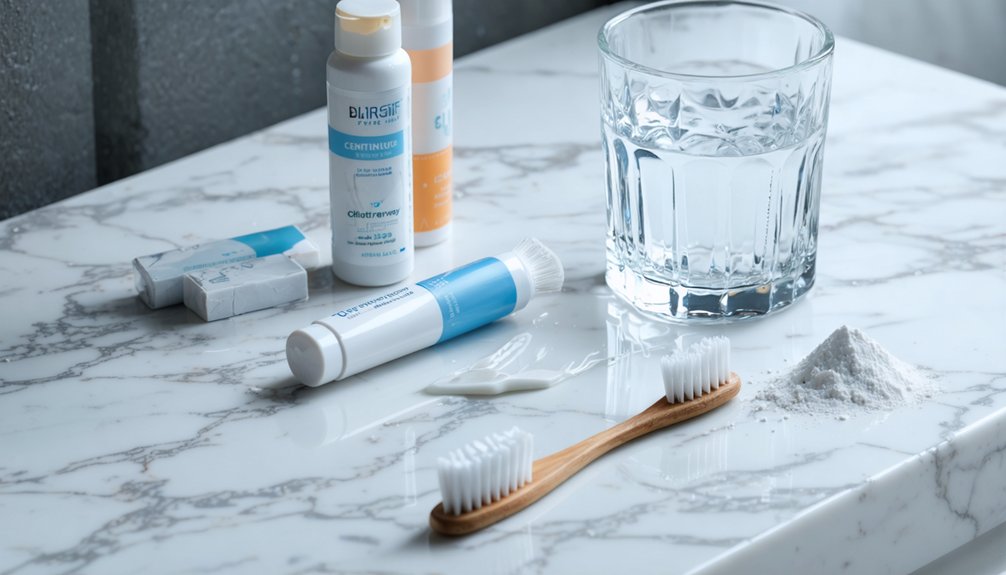
Steering through the over-the-counter whitening market safely starts with one reliable benchmark: the ADA Seal of Acceptance. Products carrying this designation have undergone verified safety and efficacy testing.
When evaluating safe drugstore options, you’ll find that effective whitening strips with ADA approval consistently outperform unregulated alternatives.
Follow these critical selection guidelines:
- Choose ADA-sealed products only — they’ve been independently tested for safety and performance
- Follow manufacturer instructions precisely — skipping or extending sessions accelerates enamel erosion and sensitivity
- Avoid back-to-back whitening sessions — consecutive treatments compound chemical damage considerably
- Skip unregulated online kits — their ingredient concentrations often exceed safe thresholds
Professional supervision remains your strongest safeguard. A dentist can verify which kit suits your specific dental condition before you begin any whitening regimen.
How to Apply DIY Whitening Without Damaging Teeth
When applying DIY whitening products, you should follow manufacturer instructions precisely and avoid exceeding recommended exposure times to minimize enamel erosion.
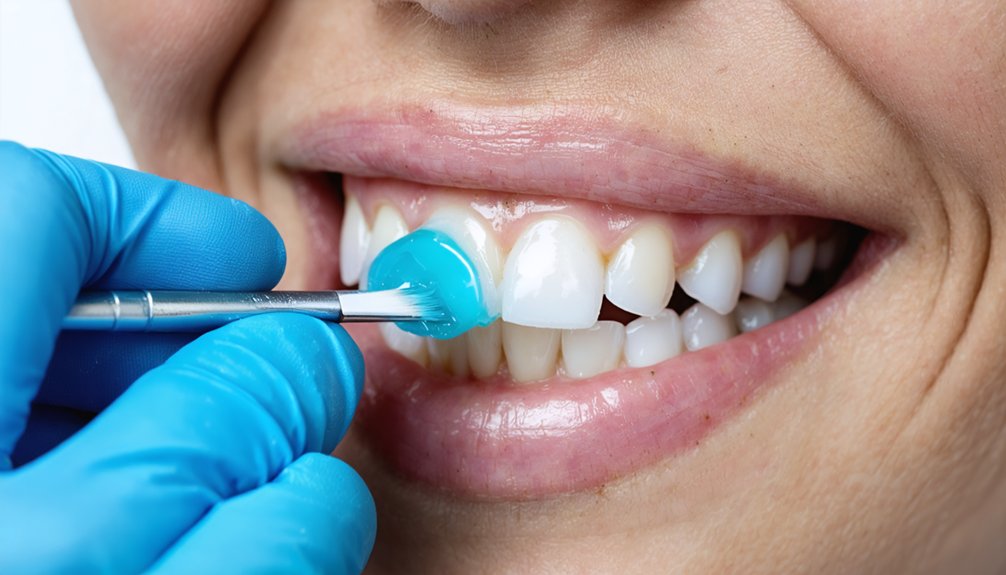
You’ll want to apply gels or strips carefully, keeping whitening agents away from gum tissue to prevent chemical irritation and burns.
Back-to-back sessions greatly increase your risk of enamel damage, so spacing treatments according to product guidelines protects your tooth’s structural integrity.
Safe Application Techniques
Applying DIY whitening products safely requires strict attention to technique, timing, and product selection. You must follow manufacturer instructions precisely to minimize enamel erosion, gum irritation, and sensitivity risks. Effective techniques prioritize controlled exposure, not prolonged or repeated sessions.
Use these safe application guidelines to protect your oral health:
- Limit contact time — never exceed recommended durations; overexposure damages enamel microstructure.
- Apply precisely — keep whitening agents off gum tissue to prevent chemical burns or recession.
- Choose ADA-approved products — avoid acidic or abrasive homemade formulas that erode protective surfaces.
- Space sessions appropriately — back-to-back applications increase sensitivity and structural weakening risks.
Consistent, disciplined application gives you greater control over results while considerably reducing preventable damage to your teeth and surrounding tissues.
Minimizing Enamel Exposure
Protecting your enamel starts before you open the whitening product. Avoid DIY whitening myths that promote acidic ingredients like lemon juice or vinegar—these soften enamel rapidly and accelerate erosion.
Baking soda, despite its popularity, abrades protective surfaces with repeated use.
Apply whitening agents only to clean, dry teeth, and never exceed the recommended contact time. Overexposure bleaches past the enamel, reaching the dentin layer and triggering sensitivity.
After each session, prioritize enamel remineralization techniques: use fluoride toothpaste, consider remineralizing gels containing calcium phosphate, and wait at least 30 minutes before eating or drinking.
Space your sessions appropriately—back-to-back applications accelerate structural damage. You control the outcome by treating whitening as a clinical process, not a cosmetic shortcut.
Warning Signs You Need to Stop and See a Dentist
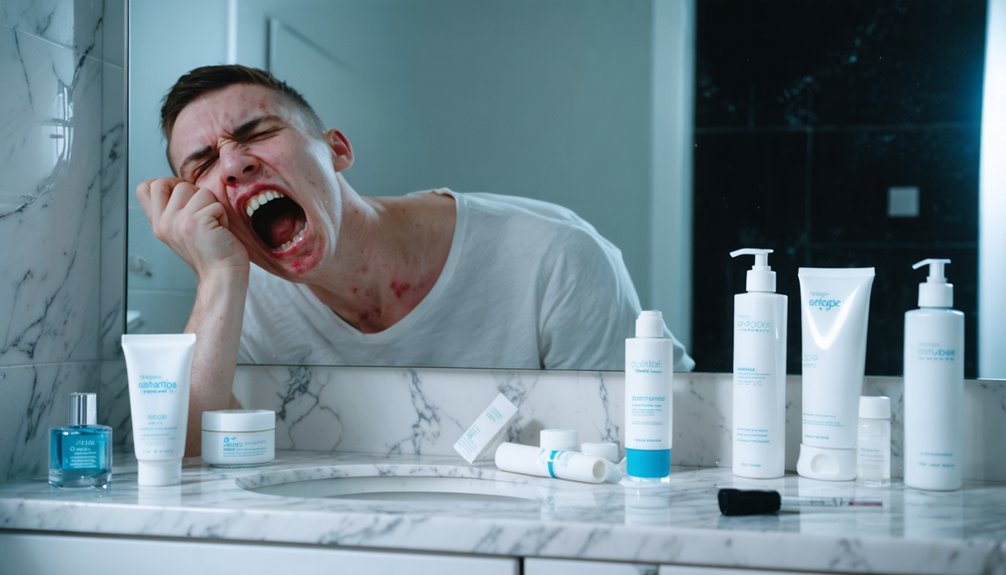
Certain warning signs during DIY whitening should prompt you to stop treatment immediately and consult a dentist. Ignoring these signals risks escalating minor issues into serious dental emergencies that compromise your oral hygiene and overall health.
Watch for these critical indicators:
- Persistent sensitivity lasting beyond 48 hours after treatment, signaling potential dentin exposure or pulpal damage.
- Gum redness, swelling, or blistering, indicating chemical burns requiring professional intervention before permanent tissue damage occurs.
- Uneven white patches or translucency on enamel surfaces, suggesting irreversible structural erosion.
- Sharp or throbbing tooth pain, which may indicate deep chemical penetration into the tooth’s core.
Stopping treatment at the first sign of these symptoms gives you control over preventing long-term damage that no whitening result justifies.
Professional Whitening Options That Eliminate the Risk
When DIY methods carry too many risks, professional whitening options give you a safer, more controlled path to the results you want. Dentist recommendations guide you toward effective treatments tailored to your specific oral health needs.
Unlike unregulated kits, professional whitening procedures use controlled concentrations of bleaching agents applied under clinical supervision, considerably reducing the chance of enamel erosion, gum burns, or uneven results.
Your dentist verifies your candidacy before starting any whitening procedures, ensuring existing cavities or restorations won’t complicate treatment.
Patient education is central to this process — you’ll understand exactly what each step involves and why it matters. These safe alternatives don’t just whiten teeth; they protect your long-term dental integrity.
Exploring your treatment options with a licensed professional is always the smarter, lower-risk choice.
Frequently Asked Questions
Can DIY Whitening Products Interact With Prescription Medications You Take?
Yes, DIY whitening products can interact with your medications. You’ll want to check ingredient safety carefully, as certain chemicals may conflict with prescriptions. Consult your dentist before exploring natural alternatives to guarantee you’re protecting your oral health safely.
Is Teeth Whitening Safe for Pregnant or Breastfeeding Women to Use?
During this delicate chapter of life, you’ll want to pause DIY whitening. Safety concerns require careful ingredient evaluation, as bleaching agents haven’t been confirmed safe for expecting or nursing mothers. Consult your dentist first.
At What Age Is Teeth Whitening Considered Safe for Teenagers?
Most dentists recommend you wait until age 14–16, when permanent teeth fully develop. Before then, you’ll risk heightened teeth sensitivity and reduced whitening effectiveness, as developing enamel’s more vulnerable to chemical bleaching agents’ damaging microstructural effects.
Does Dental Insurance Ever Cover Professional Whitening Treatments or Procedures?
Virtually never will insurance coverage include professional treatments, as insurers classify whitening as cosmetic. You’ll want to verify your plan’s exclusions carefully and consult your dentist to explore affordable, supervised whitening alternatives that protect your dental health.
Can Whitening Products Affect the Results of Upcoming Dental X-Rays?
Whitening products don’t directly alter dental x-ray implications, but whitening sensitivity can signal underlying issues your dentist must assess beforehand. You should always disclose recent whitening use so your provider can interpret structural changes accurately.
References
- https://www.richardfossumdds.com/blog/what-are-the-dangers-of-diy-teeth-whitening/
- https://mouth.co.uk/the-dangers-and-risks-of-diy-tooth-whitening-methods/
- https://www.mydental.com/the-dangers-of-diy-teeth-whitening-critical-information-to-know/
- https://aestheticdentistrytx.com/the-dangers-of-homemade-teeth-whitening-treatments/
- https://www.weningerdentistry.com/news/4-dangers-of-diy-teeth-whitening/
- https://www.smiledmd.com/blog/the-dangers-of-overusing-diy-teeth-whitening-products/
- https://www.glendaleheightsfamilydental.com/blogs/diy-teeth-whitening-risks
- https://www.lwdentist.com/diy-teeth-whitening-what-works-and-what-to-avoid/
- https://pmc.ncbi.nlm.nih.gov/articles/PMC4058574/
- https://health.clevelandclinic.org/is-teeth-whitening-safe