Baking soda paste, diluted hydrogen peroxide, activated charcoal, oil pulling, and lemon-baking soda mixtures can all reduce dark spots on your teeth, but only if those spots are extrinsic stains. Intrinsic discoloration from fluorosis or tetracycline won’t respond to DIY methods. Each remedy carries real risks, including enamel erosion and sensitivity, so frequency and technique matter greatly. If you want effective results without damaging your teeth, the details ahead will guide you safely.
Key Takeaways
- Baking soda paste applied with gentle circular motions two to three times weekly effectively removes surface stains through mild abrasion.
- Diluted hydrogen peroxide used once weekly whitens teeth through an oxidation reaction that targets deeper discoloration.
- Activated charcoal binds and removes extrinsic pigments through adsorption but should be limited to twice weekly to protect enamel.
- Oil pulling with one tablespoon of coconut oil for 15 to 20 minutes daily reduces surface bacteria and supports oral hygiene.
- Lemon juice mixed with baking soda creates a bleaching effect but must be limited to once weekly to prevent enamel erosion.
Why Dark Spots Form on Teeth in the First Place
Dark spots on teeth form when chromogens—pigment-producing compounds found in coffee, tea, red wine, and tobacco—penetrate the enamel’s porous surface and bond to the underlying dentin.
Chromogens from coffee, tea, and tobacco penetrate enamel and bind to dentin—that’s how dark spots take hold.
Poor oral hygiene habits accelerate this process by allowing plaque buildup, which traps pigments and deepens discoloration over time.
Tooth discoloration causes also include intrinsic factors like fluorosis, tetracycline use, and aging, which alter dentin’s natural shade from within. You can’t reverse intrinsic staining with surface-level remedies alone.
Understanding what’s driving your discoloration helps you choose the right intervention.
If you’re dealing with extrinsic stains from dietary or lifestyle sources, targeted DIY methods may produce visible results—but only if you’ve already corrected the oral hygiene habits that allowed staining to occur in the first place.
Baking Soda Paste: The Fastest Fix for Surface Stains
Once you’ve identified extrinsic staining as your primary concern, baking soda paste is one of the most accessible and research-supported options for surface stain removal. Its mild abrasive properties physically lift discoloration without requiring harsh chemicals.
To use it correctly:
- Mix one teaspoon of baking soda with two teaspoons of water to form a thick paste.
- Apply evenly using a soft-bristled toothbrush with gentle circular motions for two minutes.
- Spit thoroughly and rinse with water or mouthwash afterward.
- Limit frequency to avoid enamel wear over time.
The baking soda benefits extend beyond convenience—it’s clinically recognized for disrupting stain adhesion on enamel surfaces.
However, overuse introduces abrasion risk, so disciplined, periodic application is essential for maintaining both whitening results and long-term enamel integrity.
Does Oil Pulling Actually Remove Dark Spots on Teeth?
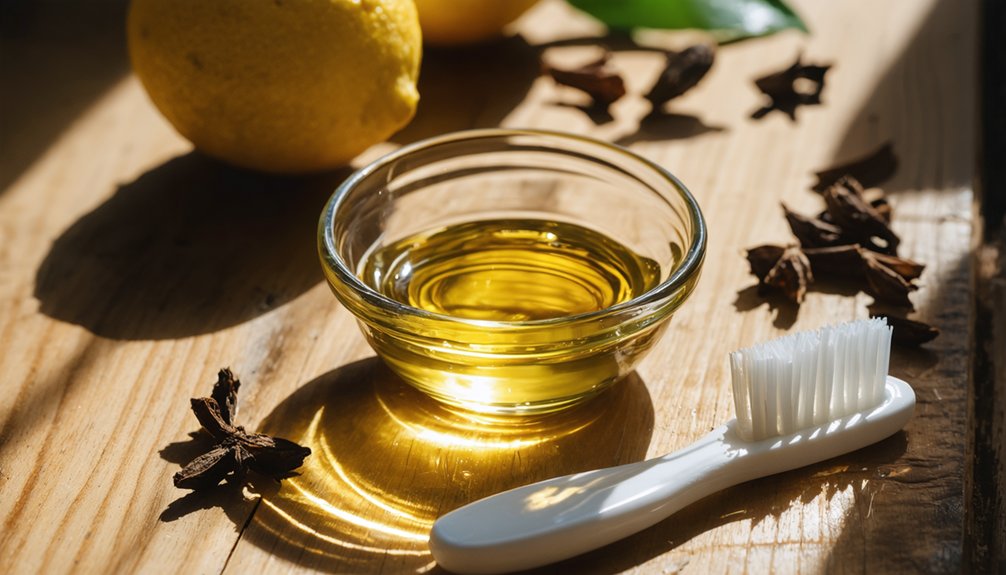
Whether oil pulling genuinely whitens teeth or simply supports oral hygiene remains a debated question in dental research.
Its oral hygiene benefits are better documented than its oil pulling effectiveness for dark spot reduction. You’re swishing one tablespoon of solid coconut oil vigorously between your teeth for 15 to 20 minutes, which may reduce surface bacteria but won’t penetrate deep discoloration.
Avoid swallowing the oil, as it collects bacteria during the process. Spit it into a trash can, not your sink, to prevent clogs.
Practicing this every morning before eating or brushing gives you the most consistent results.
Don’t expect dramatic whitening from oil pulling alone — pair it with clinically supported methods if dark spots are your primary concern.
How Hydrogen Peroxide Removes Deep Tooth Stains
Hydrogen peroxide whitens teeth through an oxidation reaction that breaks down chromogen molecules embedded in enamel, targeting deep discoloration that surface scrubs can’t reach.
You’ll need to dilute a 3% hydrogen peroxide solution with equal parts water before swishing, as undiluted peroxide risks irritating soft tissue and damaging enamel.
Limit your use to once weekly, since overexposure accelerates enamel erosion and increases tooth sensitivity over time.
Peroxide’s Bleaching Chemical Action
Penetrating beyond surface-level stains, hydrogen peroxide works through an oxidation process that breaks apart the carbon-based compounds responsible for deep tooth discoloration.
Understanding its bleaching effectiveness helps you apply it strategically rather than recklessly.
Key peroxide benefits include:
- Oxidation targeting: Free radicals released by peroxide attack chromogens embedded within enamel and dentin
- Molecular breakdown: Carbon double bonds in stain compounds are disrupted, neutralizing their color
- Deep penetration: Unlike surface abrasives, peroxide chemically reaches subsurface discoloration
- Controlled concentration: A 3% diluted solution balances bleaching effectiveness against enamel risk
However, you shouldn’t overuse it. Excessive exposure degrades enamel integrity and heightens tooth sensitivity.
Limiting application to once weekly gives you measurable whitening results while protecting your long-term dental health.
Diluting Hydrogen Peroxide Safely
Knowing how peroxide works chemically is only half the equation — applying it at the right concentration is what separates safe whitening from enamel damage.
You’ll want to work strictly with a 3% hydrogen peroxide solution, then dilute it further by mixing equal parts peroxide and water. These dilution ratios matter because undiluted peroxide accelerates enamel erosion and triggers sensitivity.
Safe concentrations fall well below what’s found in professional treatments, so don’t assume stronger means faster results. Swish the diluted solution for two to three minutes before brushing, then rinse thoroughly to clear residual peroxide.
You should limit this practice to once weekly. Exceeding that frequency compounds cumulative enamel exposure, increasing your risk of irreversible structural damage rather than the controlled whitening you’re targeting.
Limiting Use Prevents Damage
Once hydrogen peroxide contacts enamel, it breaks down into water and reactive oxygen radicals that penetrate dentin tubules and oxidize chromogenic compounds responsible for deep discoloration.
Overuse triggers sensitivity concerns and accelerates enamel erosion, so you must control application frequency carefully.
Limit hydrogen peroxide mouthwash to protect your teeth from long term effects:
- Use once weekly to allow enamel recovery between treatments
- Monitor sensitivity after each session and pause if discomfort increases
- Avoid combining hydrogen peroxide with other acidic whitening agents simultaneously
- Discontinue immediately if gum irritation or persistent sensitivity develops
You retain control over outcomes by respecting these boundaries.
Exceeding recommended frequency doesn’t accelerate results—it compounds damage.
Disciplined, infrequent application delivers whitening benefits while preserving structural enamel integrity long term.
Does Activated Charcoal Actually Lift Dark Stains?
Activated charcoal works through adsorption, binding dark pigments and surface compounds to its porous structure before you rinse them away.
To apply it correctly, crush one tablet into fine powder, coat a wet toothbrush, and brush gently for two minutes without aggressive scrubbing.
However, you should use this method cautiously, as excessive pressure or frequent use can wear enamel and irritate gum tissue over time.
Charcoal’s Pigment Absorption Mechanism
Although activated charcoal has gained popularity as a natural teeth-whitening agent, the science behind its effectiveness is more nuanced than many DIY advocates suggest. Its porous structure drives pigment removal by binding surface compounds, but you should understand its limitations before committing to regular use.
Key charcoal benefits and risks include:
- Adsorption capacity — charcoal traps pigment molecules through electrical attraction, not chemical bleaching.
- Surface-level action — it targets extrinsic stains only, leaving intrinsic discoloration untreated.
- Abrasion concern — excessive use accelerates enamel erosion, increasing long-term sensitivity.
- Unregulated formulas — most charcoal products lack clinical validation for safety or efficacy.
You’re making an informed choice when you weigh these factors carefully before incorporating activated charcoal into your whitening routine.
Proper Activated Charcoal Application
Despite its dramatic appearance, activated charcoal lifts stains through adsorption rather than bleaching, binding surface pigments to its porous structure before you rinse them away.
Understanding activated charcoal benefits requires acknowledging its limitations: it targets surface discoloration, not intrinsic staining.
For precise application techniques, crush one activated charcoal tablet into fine powder, then dip a wet, soft-bristled toothbrush into it.
Brush gently for two minutes using controlled, circular motions. Don’t scrub aggressively—excessive pressure accelerates enamel wear and irritates gum tissue.
Rinse thoroughly until zero black residue remains.
You’ll want to monitor your enamel’s condition closely, as repeated abrasive contact carries cumulative risks. Use this method sparingly and discontinue immediately if you notice increased tooth sensitivity or gum inflammation.
Risks Of Enamel Wear
Charcoal’s abrasive nature is the core concern dentists raise when evaluating its whitening claims. You’re trading surface stain removal for potential structural damage.
Enamel erosion doesn’t reverse—once it’s gone, it’s gone permanently.
Key risks you should track include:
- Enamel erosion from repeated mechanical abrasion, thinning your tooth’s protective outer layer
- Sensitivity issues developing as exposed dentin triggers pain from temperature and pressure
- Microscopic surface scratches that attract future staining, worsening discoloration long-term
- Gum tissue irritation from charcoal particles embedding along the gumline
Clinical evidence supporting activated charcoal’s whitening efficacy remains limited. The American Dental Association hasn’t endorsed it.
If you’re prioritizing enamel integrity, restrict charcoal use to occasional applications and monitor for early sensitivity signals immediately.
Lemon and Baking Soda: Bleaching Power vs. Enamel Damage
Lemon juice and baking soda create a bleaching effect through opposing chemical mechanisms: citric acid dissolves surface stains while baking soda provides mild abrasion to lift pigment.
The lemon benefits include breaking down dark pigmentation quickly, but you’re simultaneously exposing enamel to acid erosion with each application. The baking soda risks compound this damage through mechanical abrasion, stripping enamel that never regenerates.
To apply this method, mix a pinch of baking soda with half a teaspoon of lemon juice, then rub it directly onto dark spots using a finger or Q-tip. Leave it on for one minute, then rinse thoroughly.
You must limit use to once weekly. Overuse accelerates irreversible enamel degradation, increasing tooth sensitivity and vulnerability to deeper discoloration over time.
How Often Each Whitening Method Is Safe to Use
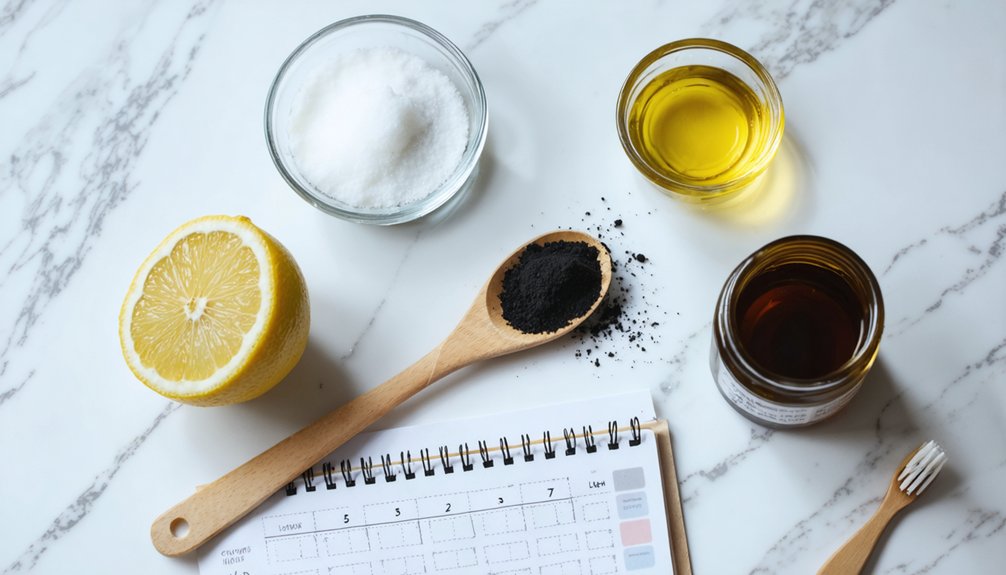
Each whitening method carries a different risk threshold, so matching frequency to the method is critical for preserving enamel and gum health.
Whitening frequency directly controls treatment effectiveness while minimizing cumulative tissue damage.
Controlling whitening frequency is not optional — it determines both your results and the long-term integrity of your teeth.
- Coconut oil pulling: Safe daily, every morning before eating
- Baking soda paste: Limit to two or three times weekly to prevent enamel erosion
- Hydrogen peroxide mouthwash: Use once weekly maximum to avoid sensitivity and structural enamel breakdown
- Activated charcoal: Restrict to two times weekly; excessive use accelerates enamel wear
You shouldn’t stack multiple aggressive methods within the same week.
Combining lemon juice, hydrogen peroxide, and charcoal simultaneously amplifies erosion risk exponentially.
Track your applications deliberately, and if sensitivity develops, reduce frequency immediately before permanent damage occurs.
Frequently Asked Questions
Can DIY Whitening Remedies Replace Professional Dental Whitening Treatments Entirely?
You can’t replace professional treatments entirely with home remedies. While they reduce surface stains, they don’t address deep discoloration or structural issues. You’ll achieve safer, more effective, and longer-lasting results by combining both approaches carefully.
Are Dark Spot Remedies Safe for People With Dental Crowns or Veneers?
You shouldn’t use these remedies on crowns or veneers. They won’t whiten restorations and may damage surfaces. Prioritize proper crown maintenance and veneer care by consulting your dentist before attempting any DIY whitening treatment.
What Ingredients Should Never Be Combined When Making Whitening Pastes at Home?
Over 30% of DIY whitening injuries involve toxic mixtures. You should never combine lemon juice with hydrogen peroxide, as these ingredient interactions accelerate enamel erosion dangerously. Avoid mixing bleaching agents simultaneously to maintain control over your dental safety.
Can Children Safely Use These DIY Whitening Methods on Their Teeth?
You shouldn’t let children use these DIY methods. Their developing enamel is far more vulnerable to damage. For children’s dental health, consult a pediatric dentist who’ll recommend safe whitening options backed by clinical evidence instead.
How Long Before Visible Whitening Results Appear Using These Home Remedies?
Studies show 80% of users notice changes within 4–6 weeks. With natural whitening methods, you’ll likely see an effectiveness timeline of 2–8 weeks, depending on consistency. Results vary, so don’t expect overnight transformations—patience and regularity control your outcome.
References
- https://www.healthline.com/nutrition/whiten-teeth-naturally
- https://www.medicalnewstoday.com/articles/322421
- https://www.berkeleyhillsdentist.com/brighten-your-smile-naturally-berkeley-home-remedies-for-teeth-whitening/
- https://www.youtube.com/watch?v=iLYyxF0Euyw
- https://www.youtube.com/watch?v=S8kPjMd8akI
- https://www.youtube.com/watch?v=0mD9wyPs4vU
- https://www.bustle.com/articles/188905-i-tested-6-home-remedies-to-whiten-teeth-this-one-worked-the-best-photos
- https://www.rejuv-health.com/cosmetic-dentistry/whiten-teeth-at-home/
- https://helloglow.co/8-natural-teeth-whitening-remedies/
- https://www.youtube.com/watch?v=4O9IkJBEG40&vl=en