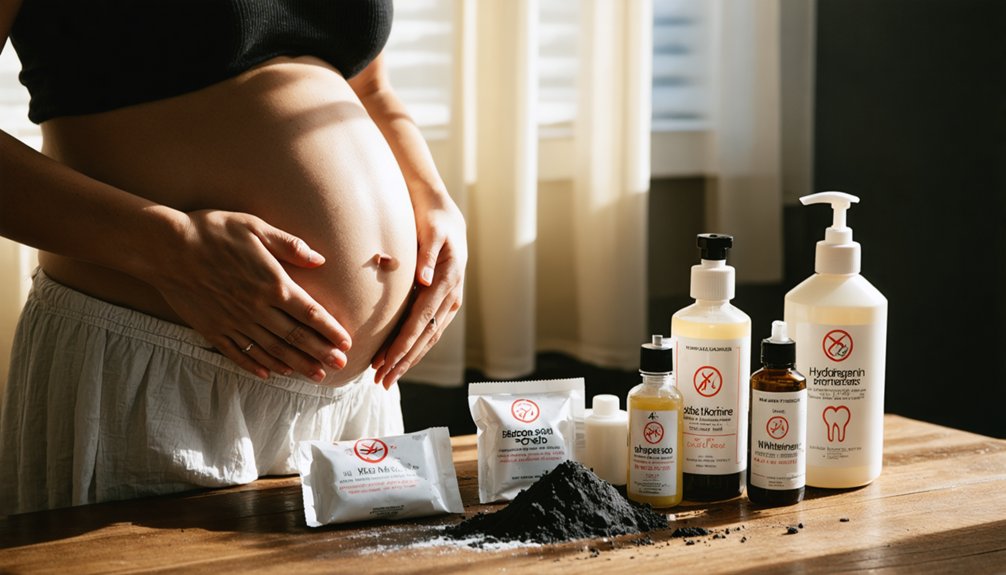
During pregnancy, you’ll want to skip harsh bleaching agents like hydrogen peroxide and carbamide peroxide until after delivery. Instead, dentists typically approve ADA-accepted whitening toothpaste, oil pulling with coconut oil, and natural stain-removing foods like apples and celery. Always consult your dentist before trying anything new, since your trimester and gum health affect what’s safe for you. There’s much more to take into account when choosing the right approach for your smile.
Key Takeaways
- Consult your dentist before any whitening procedure to assess pregnancy status, trimester, gum sensitivity, and existing oral health conditions.
- Avoid hydrogen peroxide and carbamide peroxide, especially in concentrations above ten percent, due to potential absorption and insufficient fetal safety data.
- ADA-approved whitening toothpaste provides mild stain removal without harsh chemicals, making it a safer option during pregnancy.
- Natural alternatives like oil pulling, baking soda paste, and crunchy produce can gently lift stains without chemical risks.
- Postpartum whitening yields safer, more effective results; dentists recommend waiting until breastfeeding ends and gums have normalized.
Is Teeth Whitening Safe During Pregnancy?
When you’re expecting, it’s natural to wonder whether teeth whitening is safe for you and your baby. The honest answer is that no definitive studies confirm bleaching products are either dangerous or completely safe during pregnancy.
Major dental organizations, including the American Dental Association, recommend postponing chemical whitening treatments as a precaution.
Hormonal changes can heighten gum sensitivity, making bleaching agents more irritating than usual. Rather than taking unnecessary risks, you can explore natural stain removal methods, like eating crunchy fruits or using whitening toothpaste with the ADA seal.
These practical oral health tips let you maintain a brighter smile without chemical exposure.
Ultimately, consulting your dentist before any whitening procedure gives you the control and confidence to make an informed, safe decision.
Why Pregnancy and Whitening Products Don’t Mix Well
- Peroxide absorption — hydrogen and carbamide peroxide can enter your bloodstream in small amounts.
- Increased sensitivity — hormonal changes inflame gum tissue, amplifying chemical irritation.
- Insufficient safety data — no studies confirm bleaching products are safe for your developing baby.
- Swallowing risk — gels and strips raise accidental ingestion concerns.
- Pyogenic granuloma — pregnancy-related gum growths can worsen with chemical exposure.
No evidence confirms danger, but none confirms safety either—so postponing is your most informed choice.
Whitening Ingredients to Avoid While Expecting
When choosing whitening products during pregnancy, you’ll want to avoid hydrogen peroxide and carbamide peroxide, the two primary bleaching agents found in most professional and at-home kits.
Both chemicals can cause gum irritation and temporary tooth sensitivity, risks that are already heightened by your pregnancy hormones. Concentrations above ten percent carry even greater risks, so you should check product labels carefully and consult your dentist before using anything that lists these ingredients.
Hydrogen Peroxide Risks
Although no definitive studies confirm that hydrogen peroxide harms a developing baby, dental and health organizations still recommend avoiding it during pregnancy as a precautionary measure.
Despite common whitening myths, skipping peroxide-based products isn’t about confirmed danger—it’s about protecting your dental health when safety data remains incomplete.
Here’s why hydrogen peroxide deserves caution during pregnancy:
- It can cause increased tooth sensitivity, worsened by pregnancy hormones.
- Small amounts may enter your bloodstream if accidentally swallowed.
- Concentrations above 10% heighten irritation risks considerably.
- Manufacturers often explicitly warn against use during pregnancy.
- Gum inflammation common in pregnancy makes chemical exposure riskier.
You’re not overreacting by avoiding it—you’re making a smart, informed choice with the information currently available.
Carbamide Peroxide Concerns
Carbamide peroxide is another whitening ingredient worth avoiding during pregnancy, and understanding why makes the precaution easier to accept.
This compound breaks down into hydrogen peroxide once it contacts your teeth, meaning ingredient safety concerns overlap considerably with those you’ve already encountered.
Because researchers haven’t conducted sufficient studies on carbamide peroxide‘s effects during pregnancy, no one can confirm it’s completely risk-free. Small amounts can be swallowed during application, potentially entering your bloodstream.
Hormonal shifts also heighten gum sensitivity, making irritation more likely.
You’re not giving up permanently—you’re making a deliberate, informed choice to protect your baby during a critical window.
After delivery, carbamide peroxide treatments remain a viable option you can revisit with your dentist confidently.
High Concentration Dangers
Concentration levels matter more than most people realize, and products with peroxide concentrations above ten percent carry a heightened risk of tooth sensitivity and gum irritation for anyone—pregnant or not.
High concentration effects intensify when pregnancy hormones already make your gums more reactive. Knowing your sensitivity risks helps you make smarter, safer choices.
Watch for these warning signs with high-concentration products:
- Sharp, lingering tooth pain after application
- Swollen or bleeding gums post-treatment
- Increased gum tenderness during routine brushing
- White spots or uneven enamel texture
- Burning sensations along the gumline
You’re in control here. Choosing lower-concentration alternatives or waiting until postpartum eliminates unnecessary exposure.
Always verify the peroxide percentage before purchasing any whitening product, and consult your dentist before proceeding.
What Your Dentist Needs to Know Before You Whiten
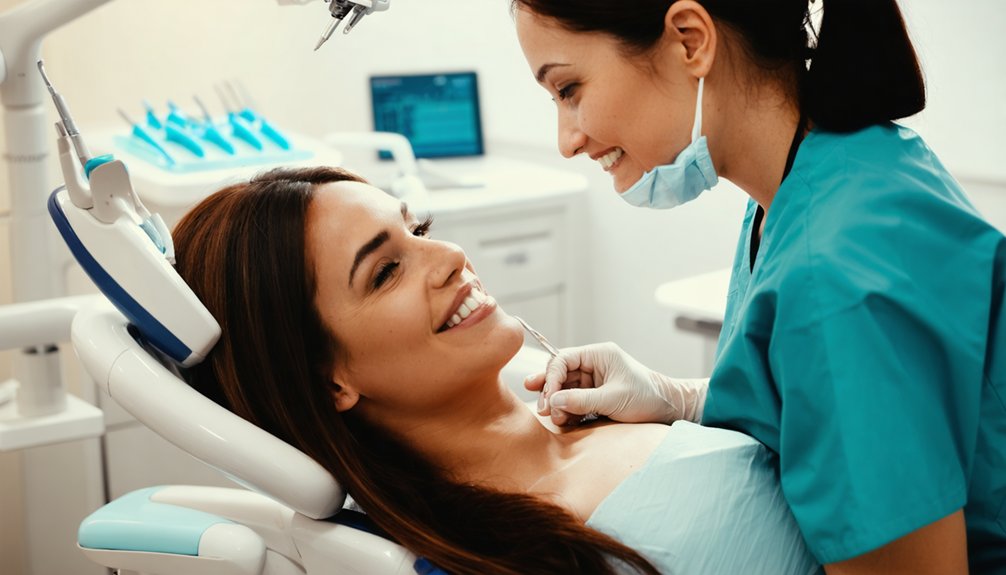
Before your dentist can recommend any whitening approach, they’ll need a complete picture of your pregnancy status, trimester, and overall oral health.
Consultation importance can’t be overstated here—your patient history directly shapes which options are safe and appropriate for you.
Be prepared to share your current trimester, any gum sensitivity or bleeding, medications you’re taking, and whether you’re breastfeeding.
Your dentist will also assess whether pregnancy gingivitis or pyogenic granulomas are present, since these conditions can worsen with chemical exposure.
This information allows your dentist to either approve a low-risk alternative, adjust treatment protocols, or advise postponement.
You stay in control when you arrive informed and transparent.
Withholding details, even minor ones, limits your dentist’s ability to protect both you and your baby.
Whitening Options Your Dentist Will Actually Approve
Once your dentist has reviewed your health history, they’ll typically steer you toward options that minimize chemical exposure while still addressing surface stains.
Through dental consultation, you’ll discover that natural stain removal methods are often the safest starting point:
- Whitening toothpaste with the ADA seal offers mild abrasion without harsh chemicals
- Oil pulling with coconut oil reduces bacteria and lifts surface stains gently
- Crunchy produce like apples and celery naturally scrub enamel during chewing
- Baking soda paste provides gentle micro-abrasion under professional guidance
- Low-peroxide strips may be approved if concentrations stay below ten percent
These options let you maintain control over your exposure level while protecting your baby.
Your dentist monitors your gum response throughout, ensuring sensitivity stays manageable.
Safe At-Home Whitening Alternatives During Pregnancy
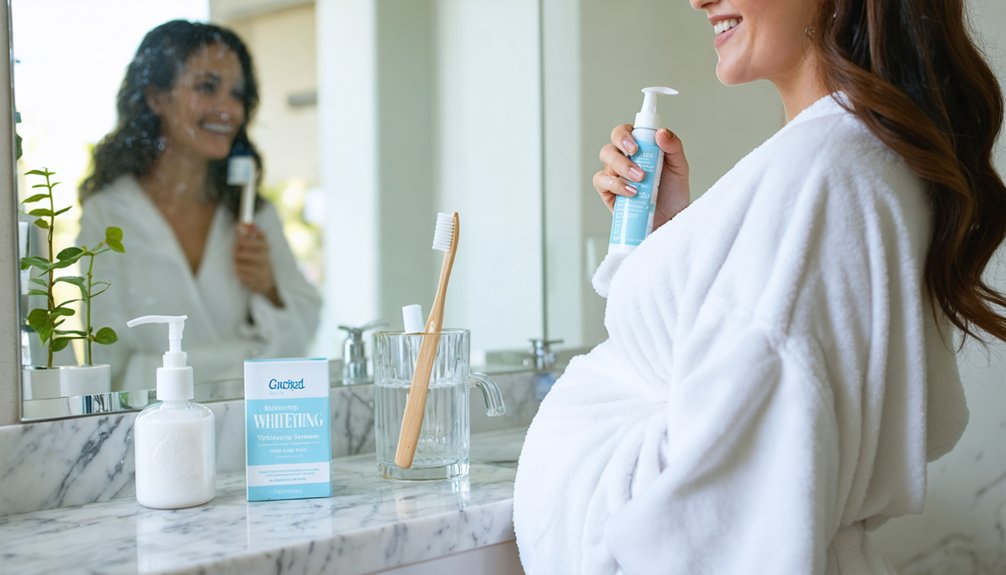
While professional treatments are largely off the table during pregnancy, you’ve got several at-home alternatives that dental experts consider low-risk and practical.
These gentle alternatives let you maintain control over your oral care without exposing yourself or your baby to unnecessary chemicals.
Start with ADA-approved whitening toothpaste, which uses mild abrasives to reduce surface stains safely. You can also try oil pulling with coconut oil to minimize bacteria and lift minor discoloration.
Crunchy foods like apples and celery naturally scrub enamel during chewing, offering passive natural whitening benefits. Dairy products strengthen enamel simultaneously.
If you’re considering a baking soda-based paste or low-abrasion method, consult your dentist first. Even seemingly harmless remedies deserve professional sign-off when you’re pregnant.
The Best Time for Teeth Whitening After Pregnancy
After delivery, you’ll find that your options for teeth whitening expand considerably.
Postpartum timing matters, so schedule a dental consultation before starting any treatment. Your gums need time to normalize after hormonal shifts.
Smart postpartum whitening involves:
- Waiting until breastfeeding ends to eliminate any risk of peroxide entering breast milk
- Scheduling a dental consultation within six weeks postpartum to assess gum health
- Choosing professional in-office treatments for controlled peroxide concentrations
- Starting with low-peroxide strips if your dentist approves earlier intervention
- Confirming gum sensitivity has resolved before attempting any bleaching procedure
You’re now in control of your timeline.
Dentists universally agree that postponing whitening until after pregnancy produces safer, more effective results with fewer complications.
Frequently Asked Questions
Can Pregnancy Hormones Permanently Change the Natural Color of Your Teeth?
Hormonal changes don’t permanently alter your teeth’s natural color. You may notice temporary discoloration and increased tooth sensitivity during pregnancy, but once hormones stabilize postpartum, your teeth typically return to their original shade naturally.
Does Teeth Whitening Affect Prenatal Vitamins or Supplement Absorption?
Like an unopened door, direct evidence doesn’t exist yet — teeth whitening won’t affect your prenatal vitamin absorption. However, you’ll want to monitor teeth sensitivity and maintain oral health, as gum irritation could indirectly complicate your overall nutritional routine.
Are Whitening Results Less Effective or Shorter-Lasting After Giving Birth?
You won’t necessarily see shorter-lasting results postpartum, but hormonal shifts can affect whitening sensitivity. With proper postnatal care and dentist guidance, you’ll maintain effective, longer-lasting whitening outcomes once your gums stabilize after delivery.
Can a Dentist Document Whitening Postponement for Insurance or Medical Records?
Like a paper trail protecting a hiker’s path, your dentist can document whitening postponement in your medical records, noting whitening safety concerns and dentist recommendations, giving you control over your documented care history.
Do Whitening Procedures Interact With Pregnancy-Related Medications or Supplements?
No confirmed interactions exist, but you should still discuss your medications and supplements with your dentist. They’ll help you weigh safety precautions, explore alternative options, and guarantee you’re making an evidence-based decision that keeps you confidently in control.
References
- https://nvdentists.com/pregnancy-safe-teeth-whitening/
- https://www.thebump.com/a/whiten-teeth-pregnancy
- https://enamel.clinic/teeth-whitening-while-pregnant-safe-options-for-a-brighter-smile/
- https://abqteethwhitening.com/pregnancy-safe-teeth-whitening-what-are-your-options/
- https://www.babycenter.com/pregnancy/health-and-safety/is-it-safe-to-bleach-my-teeth-during-pregnancy_1245153
- https://www.mdsgdentistry.com/can-you-use-teeth-whitening-strips-while-pregnant/
- https://www.wellnessdentalplan.com/what-to-know-about-teeth-whitening-while-pregnant
- https://www.which.co.uk/news/article/can-i-whiten-my-teeth-while-pregnant-afHyT3E0ZGpU
- https://kidshealth.org/HumanaSouthCarolina/en/parents/tooth-whitening-pregnancy.html
- https://www.colgate.com/en-us/oral-health/oral-care-during-pregnancy/teeth-whitening-when-pregnant-is-it-safe