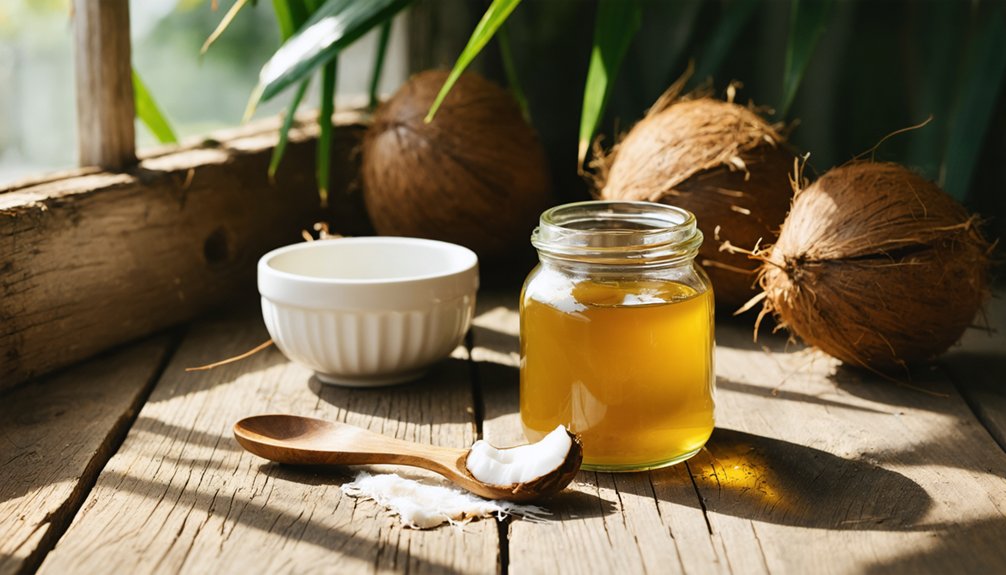
To whiten your teeth with coconut oil, swish one tablespoon of organic coconut oil between your teeth for 15–20 minutes, then spit it into the trash, rinse with warm water, and brush. It works by binding to harmful bacteria and lifting surface stains without damaging your enamel. Don’t swallow the oil, and use high-quality organic coconut oil for best results. There’s even more you can do to accelerate your whitening naturally.
Key Takeaways
- Melt one tablespoon of organic coconut oil in your mouth, then swish it gently between teeth for 15–20 minutes.
- Avoid swallowing the oil, as it accumulates toxins and bacteria during the pulling process.
- Spit used oil into a trash can, rinse with warm water, then brush your teeth thoroughly.
- Enhance whitening results by occasionally combining oil pulling with baking soda paste or hydrogen peroxide rinse.
- Consistency is key; daily oil pulling sessions gradually reduce plaque, bacteria, and surface staining over time.
Why Coconut Oil Whitens Teeth Without Damaging Enamel
Coconut oil whitens teeth through antimicrobial action rather than chemical abrasion, which means it won’t strip or weaken your enamel the way commercial bleaching agents can.
Its natural whitening effect comes from reducing the oral bacteria that contribute to plaque buildup and surface staining. When you swish coconut oil consistently, you’re controlling the microbial environment in your mouth rather than aggressively stripping your teeth’s outer layer.
Swishing coconut oil consistently controls your mouth’s microbial environment, reducing the bacteria behind plaque buildup and surface staining.
This approach prioritizes enamel protection by working with your mouth’s natural biology. Unlike peroxide-based treatments that penetrate enamel to lift pigment, coconut oil lifts surface stains mechanically through oil’s natural binding properties.
You’re not trading whiter teeth for weakened enamel—you’re achieving gradual brightness while actively maintaining the structural integrity of your teeth.
What Should You Have Ready Before You Begin?
Before your first oil pulling session, gather everything you’ll need so the process flows without interruption. Having your supplies ready keeps your natural remedies routine consistent and supports long-term dental health.
- One tablespoon of organic coconut oil (solid or liquid)
- A trash can nearby for spitting out used oil
- Warm water for rinsing after the session
- Fluoride toothpaste to brush before and after pulling
- A timer set for 15–20 minutes
You’re taking control of your oral hygiene by preparing intentionally. Brush your teeth before starting, and avoid eating or drinking anything beforehand.
This simple setup removes barriers that interrupt your focus, letting the coconut oil work effectively across all mouth surfaces. Consistency starts with preparation.
How to Do Coconut Oil Pulling Step by Step
With your supplies set out and your teeth already brushed, you’re ready to begin the pulling process itself. Take one tablespoon of coconut oil and let it melt fully in your mouth before you start swishing.
Once liquefied, move the oil gently between your teeth and along your gumline for 15–20 minutes. Don’t rush it—this duration is what activates the coconut oil benefits, allowing the oil to bind surface stains and reduce harmful bacteria that compromise your oral hygiene.
The longer you swish, the harder coconut oil works—binding stains and banishing bacteria for healthier teeth.
Keep the oil moving without gargling or swallowing. When time’s up, spit it directly into a trash can.
Rinse with warm water, then brush again to clear any residual oil. You’re now in full control of a cleaner, brighter smile.
Are You Making These Oil Pulling Mistakes?
Even small missteps in your oil pulling routine can quietly undermine your results. Avoiding common errors keeps your technique sharp and your enamel protected.
Watch for these critical technique adjustments:
- Swishing duration: Don’t cut sessions short—15–20 minutes fully addresses bacteria concerns.
- Oil quality: Always use organic, high-quality coconut oil for maximum antimicrobial benefit.
- Swallowing risk: Never swallow the oil; it’s loaded with absorbed toxins and bacteria.
- Frequency guidelines: Daily pulling is ideal, but over-pulling won’t accelerate whitening and risks irritation.
- Gargling mistake: Gentle swishing protects your enamel—gargling creates unnecessary pressure and disrupts technique.
You’re in control of your results. Small, consistent corrections to your oil pulling habits compound over time, delivering the gradual, chemical-free whitening you’re working toward.
How Long Does Coconut Oil Whitening Take to Work?
How quickly you see results from coconut oil pulling depends on your consistency and the nature of your stains. Surface stains from coffee or tea typically respond faster, while deeper discoloration takes longer to shift.
Your whitening timeline generally looks like this:
- Days 1–7: Reduced plaque and fresher breath
- Days 7–14: Early surface stain reduction becomes noticeable
- Week 3 and beyond: Gradual brightening with consistent daily practice
For effectiveness comparison, studies place oil pulling alongside chlorhexidine for plaque reduction, though it won’t match professional bleaching speed.
You’re choosing a slower, chemical-free approach that supports long-term oral health rather than overnight results.
Commit to daily 15–20 minute sessions, and you’ll take measurable control over your oral hygiene and whitening progress.
Natural Add-Ons That Make Coconut Oil Whitening Work Faster
If you want to speed up your coconut oil whitening results, pairing it with a few natural add-ons can make a noticeable difference.
You can apply a baking soda paste weekly, rinse with diluted hydrogen peroxide (1.5%–3%) before brushing, or rub pineapple enzymes on your teeth for 60 seconds as an occasional boost.
Used consistently alongside oil pulling, these methods work together to break down surface stains faster without relying on harsh chemicals.
Baking Soda Paste Benefits
Pairing baking soda paste with your coconut oil pulling routine can accelerate surface stain removal in a way that neither method achieves alone. Baking soda’s mild abrasive action lifts stains while supporting oral hygiene without compromising enamel when used correctly.
Mix one teaspoon of baking soda with two teaspoons of water and apply it weekly to keep tooth sensitivity minimal.
Key benefits of adding baking soda paste to your routine:
- Neutralizes acid in your mouth, reducing bacterial activity
- Gently polishes enamel surfaces to reveal whiter teeth
- Costs considerably less than commercial whitening treatments
- Combines safely with coconut oil pulling for compounded results
- Controls plaque buildup between professional dental cleanings
Limit use to once weekly to protect enamel and prevent increased tooth sensitivity over time.
Hydrogen Peroxide Rinse Tips
Baking soda paste handles surface stains well, but adding a hydrogen peroxide rinse takes your whitening routine a step further by targeting deeper discoloration.
As one of the most effective mouthwash alternatives available, a diluted hydrogen peroxide solution works by releasing oxygen molecules that break down stain compounds embedded in enamel.
For hydrogen peroxide safety, always stay within the 1.5%–3% concentration range. Higher concentrations irritate gum tissue and weaken enamel over time.
Swish the solution for 60 seconds before brushing, then follow immediately with your coconut oil pulling session for compounded results.
Don’t use this rinse daily. Limiting it to three times per week keeps your enamel protected while still accelerating visible whitening.
You stay in control of both the pace and the outcome.
Pineapple Enzyme Whitening Method
Another natural add-on worth incorporating is the pineapple enzyme method, which uses bromelain—a proteolytic enzyme found in fresh pineapple—to break down protein-based stain deposits on enamel. The pineapple benefits extend beyond nutrition; enzyme effectiveness targets surface discoloration without abrasives or bleach.
Rub fresh pineapple flesh directly on your teeth for 60 seconds before oil pulling to maximize results.
Keep these application guidelines in mind:
- Use only fresh pineapple, not canned, to preserve active bromelain content.
- Limit use to once or twice weekly to protect enamel integrity.
- Apply before oil pulling, not after, to sequence treatments correctly.
- Rinse with water immediately after the 60-second application.
- Avoid brushing immediately after, as enamel remains temporarily softened.
Frequently Asked Questions
Can Children Safely Use Coconut Oil Pulling for Teeth Whitening?
Kids can absolutely transform their oral health with coconut oil benefits! You’ll want to supervise closely, as swallowing risks are huge. For kids oral health, you’re keeping it natural, integrative, and preventative with gentle, age-appropriate guidance.
Does Coconut Oil Pulling Help With Tooth Sensitivity Over Time?
Coconut oil won’t directly reduce tooth sensitivity, but it can help by lowering gum inflammation and bacteria over time. You’ll likely notice improved oral comfort when you practice daily oil pulling consistently.
Is Coconut Oil Pulling Safe to Practice During Pregnancy?
Like a gentle tide, coconut oil benefits your oral health naturally. It’s generally considered safe during pregnancy, but you should always consult your doctor first to guarantee pregnancy safety and make empowered, informed decisions for your care.
Can Coconut Oil Pulling Replace Regular Professional Dental Cleanings Entirely?
You can’t replace professional cleanings entirely with oil pulling. It’s a powerful preventative tool for dental hygiene, but dentists detect long-term effects and issues you can’t address at home. Integrate both for best control.
Should Oil Pulling Be Avoided After Recent Dental Work or Fillings?
Studies show oil pulling reduces plaque comparably to chlorhexidine, but you should avoid it after recent dental work. Let your fillings fully set first to protect your dental hygiene and maximize oil pulling benefits safely.
References
- https://www.lidercare.com/how-to-whiten-teeth-with-coconut-oil-a-step-by-step-guide/
- https://www.healthline.com/nutrition/whiten-teeth-naturally
- https://www.youtube.com/watch?v=kOk7brgedRs
- https://www.youtube.com/watch?v=79AUzu-omVU
- https://www.glenlakedentalcare.com/how-does-coconut-oil-whiten-teeth
- https://www.youtube.com/watch?v=Nt2OzsSMNxc
- https://www.youtube.com/watch?v=mpJaKC_xf6Y
- https://www.devondentist.ca/natural-oil-pulling-for-a-brighter-smile-step-by-step/
- https://scandigum.com/en-us/blogs/news/how-to-whiten-teeth-naturally
- https://www.youtube.com/watch?v=1syRsFRHBOg