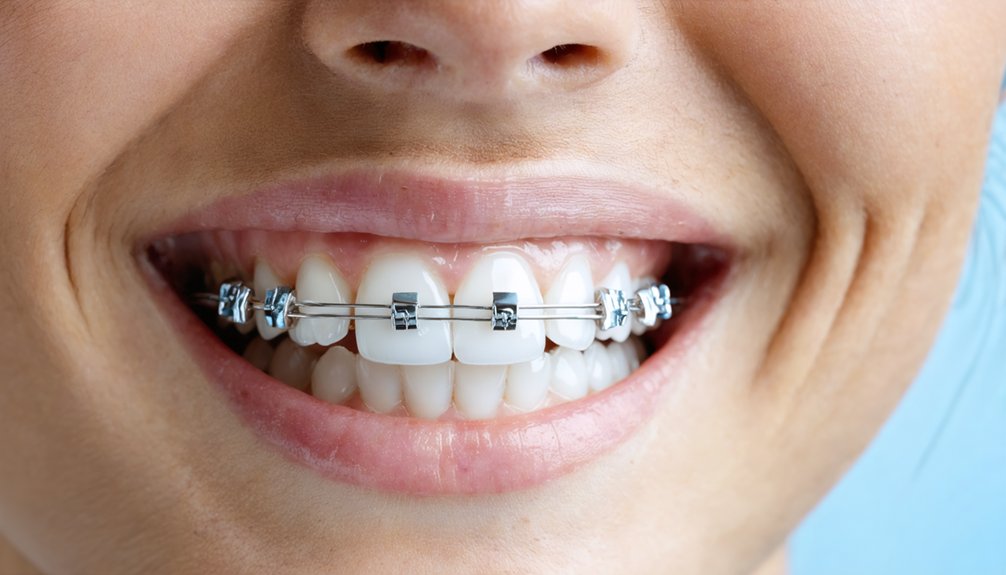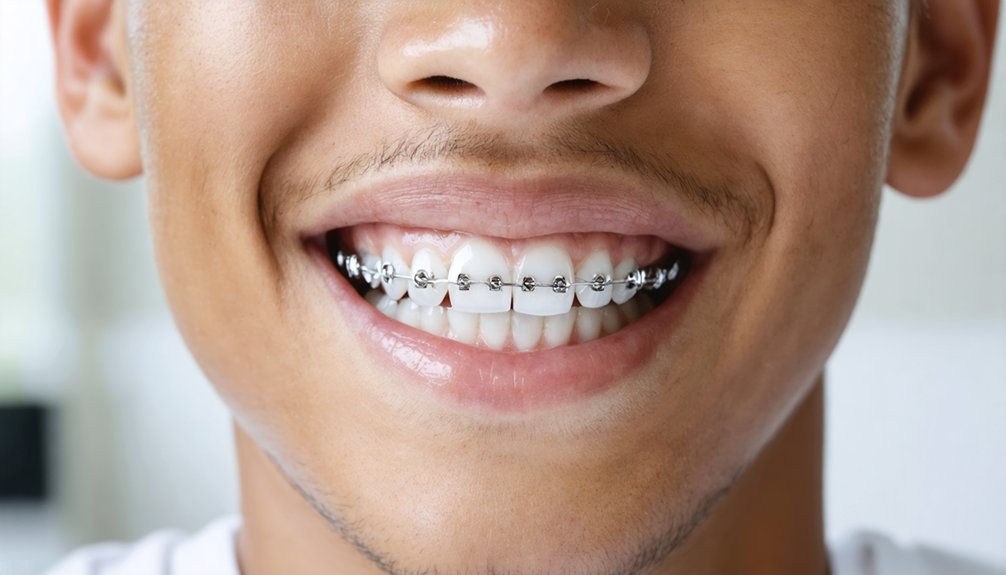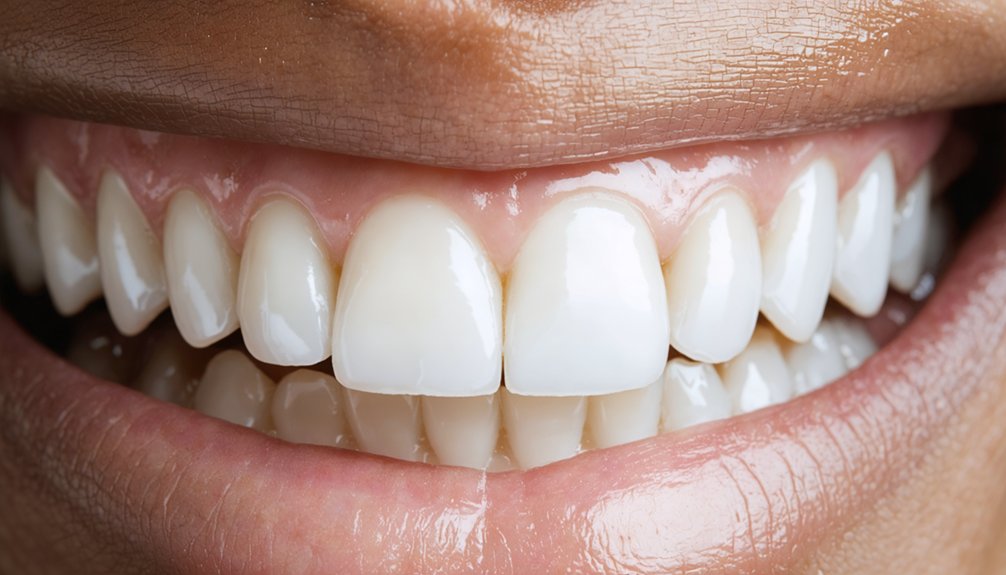
You can’t whiten dental bonding the same way you whiten natural teeth. Whitening agents like hydrogen peroxide penetrate your natural enamel to lighten it from within, but they don’t affect composite resin. This means your bonded teeth can end up looking mismatched against your brightened natural teeth. Your options include replacing existing bonding or considering porcelain veneers for consistent results. Keep exploring to understand exactly how to handle whitening with dental bonding.
Key Takeaways
- Whitening agents cannot lighten dental bonding; peroxide only penetrates natural enamel, leaving composite resin chemically unchanged and unaffected.
- After whitening, bonding may appear darker or yellower against brightened surrounding teeth, creating a visible color mismatch.
- Whitening before bonding placement is recommended, allowing dentists to match new resin to your desired brightened shade.
- If bonding already exists, replacing it with new composite or porcelain veneers can restore a consistent smile appearance.
- Wait two weeks after whitening before replacing bonding to ensure tooth color has fully stabilized for accurate shade matching.
Why Whitening Agents Don’t Work on Dental Bonding
When you whiten your teeth, the hydrogen peroxide in the whitening agent penetrates your natural enamel and alters its color from within.
Composite resin, however, doesn’t respond the same way. The synthetic material resists peroxide penetration entirely, leaving your bonding unchanged while your surrounding teeth brighten.
This creates a visible mismatch — your natural teeth lighten, but your bonding stays the same shade or appears darker yellow by comparison.
Understanding this helps you separate whitening myths from realistic expectations.
You’re not without options, though. Bonding alternatives like replacement composite or porcelain veneers give you full control over your final shade.
Knowing how your materials behave puts you in a stronger position to plan your cosmetic treatment strategically and achieve consistent, lasting results.
Should You Whiten Before Getting Dental Bonding?
If you’re planning to get dental bonding, whitening your teeth first is the smartest approach.
Whitening beforehand allows your cosmetic dentist to match the new resin to your brightened shade, creating a seamless, uniform appearance.
Skipping this step risks a visible color mismatch that may require costly corrections down the line.
Whitening Before Bonding Benefits
Whitening your teeth before getting dental bonding is something most cosmetic dentists strongly recommend. Applying whitening techniques first gives you full control over your final shade before any bonding materials are placed.
Here’s why sequencing matters:
- Your dentist matches the new resin to your brightened shade, ensuring consistency
- You avoid color mismatches that require costly corrective procedures later
- You achieve your desired tone before committing to permanent bonding materials
- Whitening after bonding leaves the resin unchanged, creating visible contrast
- Planning ahead eliminates the need for premature bonding replacement
Achieving A Seamless Match
Achieving a seamless match between your bonding and natural teeth comes down to one key decision: timing.
If you whiten first, your cosmetic dentist can use precise color matching techniques to select a composite shade that aligns perfectly with your brightened smile. This approach gives you full control over the final result before any bonding techniques are applied.
Skipping this step creates a problem you can’t easily reverse. Once bonding is placed, whitening your natural teeth will shift their shade while leaving the resin unchanged, creating a visible contrast.
You’d then need replacement procedures to correct it.
Whitening beforehand eliminates that risk entirely. It lets your dentist work with a stable, established shade, ensuring your bonding integrates naturally from the start.
Avoiding Post-Bonding Corrections
Skipping the whitening step before bonding can lead to corrections you’d rather avoid. Whitening first gives your cosmetic dentist the foundation needed for accurate color matching techniques, eliminating unnecessary post bonding adjustments later.
Here’s what happens when you whiten before bonding:
- Your dentist matches the composite resin to your brightened shade precisely.
- You avoid visible color mismatches between the filling and surrounding teeth.
- You reduce the likelihood of replacing bonding prematurely.
- You maintain control over your final smile outcome from the start.
- You skip costly corrective procedures that disrupt your results.
Taking this step upfront puts you in control of the process. You get a seamless, lasting result without the frustration of revisiting the dental chair for avoidable color corrections.
Why Bonded Teeth Look Mismatched After Whitening
When you whiten your teeth, the peroxide in the whitening agent penetrates your natural enamel and lifts its color, but it skips over composite resin entirely.
Your bonding stays at its original shade while the surrounding teeth grow brighter, creating a visible color contrast.
The result is a mismatch that can make your bonding look darker or more yellow than the freshly whitened teeth around it.
Peroxide Skips Resin
Peroxide-based whitening agents work by penetrating the hard structure of your natural teeth, but they don’t interact with composite resin the same way.
Understanding resin properties helps explain why bonding techniques can’t produce the same results as whitening natural enamel:
- Hydrogen peroxide alters the color of natural tooth structure only
- Composite resin remains chemically unchanged during whitening treatment
- Your bonding stays its original shade while surrounding teeth brighten
- The resin appears darker yellow against your newly whitened smile
- Synthetic material simply doesn’t allow standard whitening penetration
This contrast isn’t a flaw in your whitening treatment—it’s a predictable outcome rooted in material science.
Knowing this upfront puts you in control of planning the right cosmetic solution for a uniform result.
Resin Stays Original Shade
There’s one key reason bonded teeth look mismatched after whitening: composite resin can’t respond to peroxide the way natural enamel does.
While your natural teeth brighten, the bonding holds its original shade — that’s actually a sign of resin durability, not failure. The material is designed for color stability, resisting chemical changes that would otherwise break it down over time.
The problem isn’t that your bonding weakened — it’s that your surrounding teeth changed while the resin didn’t. This contrast makes older bonding appear yellower or dull against your newly whitened smile.
Once you understand this, you can take control of the outcome. Replacing or upgrading your bonding after whitening gives you a uniform, consistent result that matches your brightened tooth shade precisely.
Visible Color Contrast Develops
Once whitening treatment concludes, the contrast between your natural teeth and bonded areas becomes immediately visible. Your brightened enamel shifts several shades lighter, while the resin holds its original tone, creating real aesthetic challenges that affect your overall color perception and smile uniformity.
Here’s what you’ll typically notice:
- Natural teeth appear noticeably brighter than bonded surfaces
- Bonding takes on a yellowish tone against whitened enamel
- The mismatch becomes more pronounced in direct lighting
- Front tooth bonding draws the most visible attention
- The contrast worsens as whitening results fully develop
Recognizing this outcome puts you in control. Understanding why the mismatch occurs helps you make informed decisions about corrective options, whether that means replacing the bonding or exploring alternative cosmetic solutions with your dentist.
How to Whiten Teeth That Already Have Bonding
Whitening teeth that already have dental bonding requires a different approach than standard whitening treatments, since composite resin doesn’t respond to peroxide-based agents the way natural enamel does.
You have two practical options for restoring a uniform smile.
First, your dentist can replace the existing bonding materials with a new composite matched to your freshly whitened teeth. You’ll need to wait two weeks after your final whitening session before replacement, allowing your tooth color to fully stabilize.
Second, you can opt for porcelain veneers, which offer superior stain resistance and long-term color stability. Your dentist removes the old resin and bonds a veneer in your desired shade.
Both whitening techniques restore consistency across your smile and give you full control over your final result.
How Long Should You Wait Before Replacing Bonding?
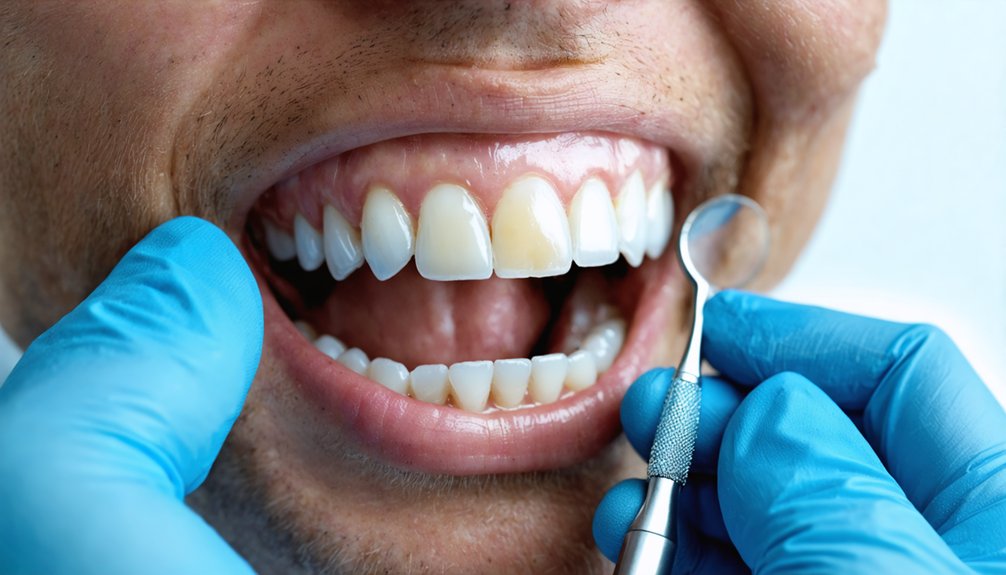
Timing matters when it comes to replacing your bonding after whitening. You’ll need to wait two weeks after your final whitening session before your dentist begins any bonding techniques. This stabilization period guarantees accurate color matching and proper adhesion of the new composite resin.
Here’s why this waiting period works in your favor:
- Your tooth shade fully stabilizes within two weeks
- Color matching becomes precise and predictable
- The new resin bonds more effectively to stable enamel
- Your dentist selects the correct composite shade confidently
- You avoid mismatched results that require additional corrections
Skipping this window risks inaccurate color matching and poor bonding outcomes.
Respecting the timeline gives you full control over your final results.
Can a Veneer Replace Bonding for a Whiter Smile?
When composite bonding no longer matches your whitened smile, a veneer offers a reliable alternative worth considering. Your dentist removes the old resin and replaces it with a porcelain or ceramic veneer matched precisely to your desired shade.
Veneer benefits extend beyond aesthetics. Porcelain resists staining more effectively than composite resin, giving you longer-lasting color stability and reducing the need for frequent replacements.
Porcelain veneers resist staining far longer than composite resin, offering lasting color stability with fewer replacements needed.
If your existing bonding is damaged or heavily discolored, a veneer delivers a more durable, uniform result.
Exploring bonding alternatives like veneers gives you greater control over your smile’s long-term appearance.
Professional placement guarantees the veneer blends seamlessly with your surrounding teeth, restoring a consistent, bright look that composite bonding alone can’t always maintain after whitening.
How Long Does Dental Bonding Last After Whitening?
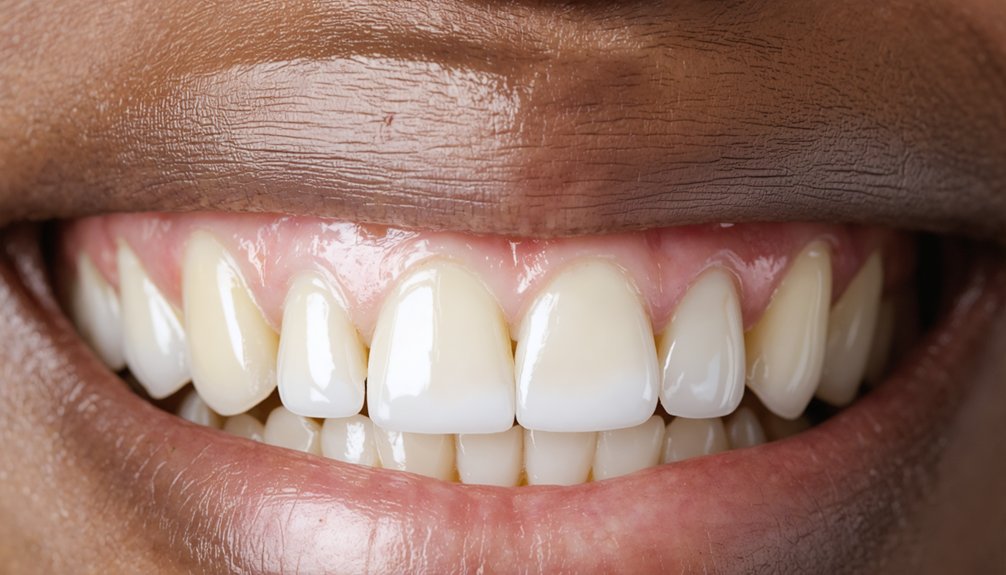
Dental bonding typically lasts 3 to 10 years, but whitening your natural teeth can shorten that timeline by creating a visible color mismatch between the brightened enamel and the unchanged resin.
Bonding longevity depends heavily on how well you manage that contrast. Using the right whitening techniques before bonding is placed gives you the most control.
To maximize your results:
- Whiten first, then get bonding matched to your new shade
- Wait two weeks after whitening before replacing existing bonding
- Use ADA-approved whitening toothpaste to maintain brightness
- Schedule regular professional cleanings to reduce surface staining
- Replace aging bonding promptly to preserve a uniform appearance
Taking these steps keeps your smile consistent and extends the functional life of your bonding material.
Which Toothpastes and Habits Slow Staining on Bonded Teeth
Keeping bonded teeth looking bright comes down to the products you use and the daily habits you build around them. Choose an ADA-approved whitening toothpaste and pair it with an electric toothbrush to maximize surface cleaning without damaging the resin.
These toothpaste options won’t change the shade of your bonding, but they’ll remove surface buildup that dulls both your natural teeth and the composite material.
Your staining habits matter just as much. Coffee, red wine, tea, and tobacco accelerate discoloration on bonding faster than on enamel.
Rinsing after consuming staining foods and beverages reduces the contact time these substances have with your resin. Combine smart product choices with consistent oral hygiene, and you’ll extend the time before your bonding needs professional attention.
Frequently Asked Questions
Does Dental Insurance Cover Bonding Replacement After Teeth Whitening Treatment?
Like replacing worn tires for peak performance, insurance policies typically won’t cover bonding replacement after whitening since it’s cosmetic. You’ll want to verify your plan’s bonding durability benefits directly with your provider.
Can Teeth Bonding Be Whitened Using Laser Whitening Procedures?
Laser whitening won’t change your bonding materials’ color. Whitening effectiveness only works on natural tooth structure. You’ll need to replace the composite resin after whitening to achieve a seamless, uniform smile.
How Much Does Replacing Bonded Teeth After Whitening Typically Cost?
Like a fresh canvas awaiting new color, replacement costs vary. You’ll find cost factors like location and complexity shape your replacement options, typically ranging from $300–$600 per tooth—giving you control over your renewed smile.
Is Dental Bonding Safe to Use on Sensitive Teeth After Whitening?
Yes, dental bonding’s generally safe for sensitive teeth after whitening. Your dentist can manage sensitivity effectively through proper sensitivity management techniques, ensuring bonding longevity while keeping you comfortable and in full control of your treatment outcome.
Can Bonding Be Applied to Every Tooth in the Mouth?
While bonding materials offer versatility, not every tooth guarantees ideal aesthetic results. You can apply bonding to most teeth, but your dentist’ll assess each tooth’s condition, location, and function to verify successful, lasting outcomes.
References
- https://www.drbobsdentalcare.com/can-cosmetic-bonding-be-whitened/
- https://www.scarsdaledentistry.com/services/cosmetic-bonding-teeth-whitening/
- https://www.baldwinfamilydental.com/blog/2021/11/18/can-bonded-teeth-be-whitened/
- https://www.colgate.com/en-ca/oral-health/teeth-whitening/whitening-bonded-teeth-perfect-your-smile
- https://my.clevelandclinic.org/health/treatments/10922-dental-bonding
- https://www.nyccd.com/blog/dental-composite-bonding/
- https://www.gillisdental.com/blog/2021/10/25/is-it-possible-to-whiten-bonded-teeth/
- https://www.whittierdentalservices.com/services/cosmetic-dentistry/bonding
- https://partheniadental.com/should-i-whiten-my-teeth-before-bonding/
- https://www.colgate.com/en-ca/oral-health/bonding/improving-my-smile-tooth-whitening-and-tooth-bonding