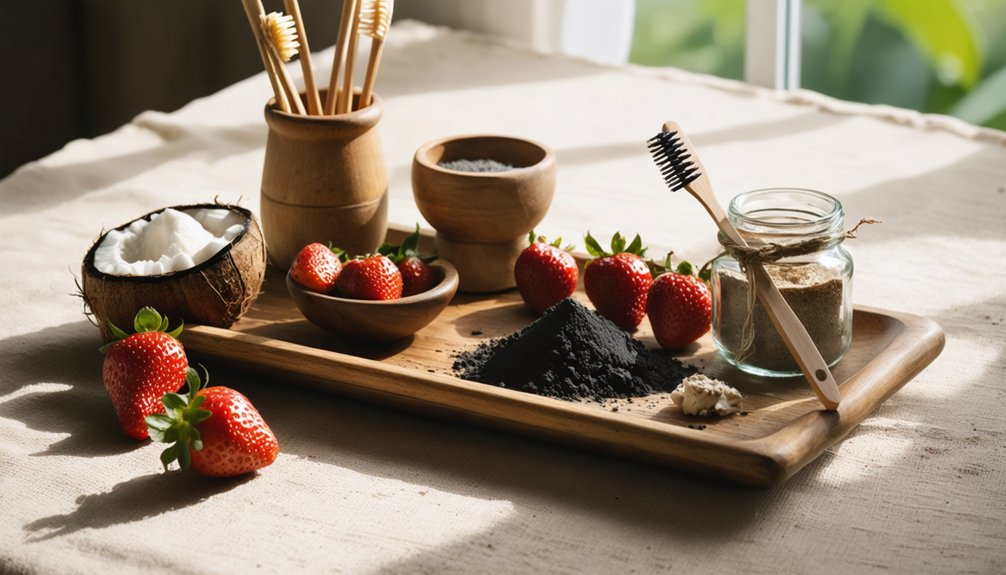
You can brighten your smile naturally without harsh chemicals by using methods that work with your body’s biology. Baking soda paste, coconut oil pulling, and diluted hydrogen peroxide are proven eco-friendly options. Daily habits like rinsing after staining beverages, eating fiber-rich foods, and switching to sustainable bamboo tools also make a real difference. Combining these biocompatible approaches builds lasting results, and each method ahead will show you exactly how to make them work for your lifestyle.
Key Takeaways
- Brush gently with a baking soda and water paste 2-3 times weekly, followed by fluoride toothpaste for enamel remineralization.
- Dilute 3% hydrogen peroxide equally with water and swish for 60 seconds once or twice weekly before brushing.
- Practice coconut oil pulling for 10-15 minutes, 2-3 times weekly, leveraging its natural antimicrobial properties to reduce oral bacteria.
- Prevent stains daily by rinsing with water after staining beverages and using straws to minimize enamel contact.
- Replace plastic toothbrushes with bamboo alternatives and choose biodegradable floss to maintain sustainable oral hygiene habits.
Baking Soda Paste: The Gentle Eco-Friendly Whitener
Baking soda has been a trusted natural whitener for generations, and making a simple paste from it remains one of the most eco-friendly ways to brighten your teeth. Its baking soda benefits go beyond whitening — it’s non-toxic, biodegradable, and gentle on enamel when used correctly.
For paste application, wet your toothbrush and dip it directly into the paste, coating the bristles evenly. Brush in gentle circular motions for 90 seconds, focusing on your front teeth. Don’t scrub hard or exceed two minutes. Rinse thoroughly, then follow with a fluoride toothpaste to remineralize your enamel.
You’ll want to limit use to two or three times weekly. This keeps your whitening routine effective, safe, and fully aligned with a natural, biocompatible approach to oral care.
Daily Habits That Stop Stains From Forming
While baking soda paste handles existing discoloration, stopping stains before they form is just as important. Your daily oral hygiene routine directly determines how well your teeth resist yellowing over time.
After consuming stain-causing beverages like coffee, tea, or red wine, rinse immediately with water to flush surface pigments before they set. Use a straw when drinking iced coffee or tea to minimize direct contact with enamel.
Brush at least twice daily for two full minutes and floss once each day to remove buildup consistently.
Incorporate fiber-rich foods like apples, celery, and carrots into your diet — they naturally scrub teeth as you chew. Cut back on sugar to support healthier oral bacteria and reduce the conditions that accelerate discoloration.
Coconut Oil Pulling for a Naturally Brighter Smile
Another ancient practice worth adding to your eco-friendly routine is coconut oil pulling, a technique rooted in Ayurvedic tradition that supports oral health without synthetic chemicals. The coconut benefits extend beyond cooking—its natural antimicrobial properties help reduce oral bacteria while gently lifting surface stains.
To begin, take one tablespoon of coconut oil each morning before eating anything. Let it melt, then start oil swishing gently through your teeth for 10 to 15 minutes. Don’t gargle or swallow it.
When you’re finished, spit into a trash can to prevent drain clogs, rinse with warm water, and brush normally.
Practicing this two to three times weekly gives you meaningful control over your oral health using a simple, biodegradable, chemical-free method.
How to Use Hydrogen Peroxide Without Damaging Enamel
To use hydrogen peroxide safely, mix equal parts water with a 3% solution to create a gentler 1.5% rinse that’s less likely to irritate sensitive enamel.
Swish the diluted rinse before brushing, limiting use to once or twice weekly so your enamel stays protected from overexposure.
This mindful, biocompatible approach lets you harness hydrogen peroxide’s natural stain-lifting properties without compromising your teeth’s structural integrity.
Diluting Hydrogen Peroxide Safely
Hydrogen peroxide can brighten surface stains gently, but you’ll want to dilute it properly to protect your enamel. Start with a 3% drugstore solution and mix it with equal parts water, bringing it down to a safer 1.5% concentration.
These dilution ratios matter because higher concentrations increase your risk of enamel sensitivity and tissue irritation.
As a safety precaution, use this rinse only once or twice weekly, never daily. Swish it briefly before brushing, then follow with your regular fluoride toothpaste to remineralize exposed surfaces.
Avoid swallowing the solution, and if you notice increased sensitivity, reduce frequency immediately.
This approach keeps your whitening routine biocompatible with your body’s natural chemistry, giving you controlled, gradual results without compromising your long-term dental health.
Limiting Rinse Frequency
Even with proper dilution, how often you reach for that hydrogen peroxide rinse matters just as much as the concentration you’re using. Limit your use to once or twice weekly to protect your enamel from gradual erosion.
Daily rinsing disrupts your mouth’s natural biocompatibility, stripping away protective mineral layers your teeth need to stay strong.
Keep your rinse duration short — swish for no longer than 60 seconds per session. Longer exposure doesn’t accelerate whitening; it accelerates damage.
On non-peroxide days, explore rinse alternatives that align with a natural approach. Warm salt water or diluted food-grade peppermint water cleanses effectively without chemical stress.
You’re in control of what enters your mouth, so choose frequency and method with intention.
Protecting Enamel During Use
Protecting your enamel while using hydrogen peroxide starts with one non-negotiable rule: always dilute before you rinse.
Mix equal parts water with a 3% drugstore solution to bring it down to 1.5%, making it biocompatible with your enamel‘s natural mineral structure. This is one of the most reliable enamel preservation techniques you can practice at home.
Use the diluted rinse before brushing, not after, and limit application to once or twice weekly. You’re in control of how much exposure your teeth receive, so don’t exceed that frequency.
Safe whitening practices mean recognizing that more isn’t better. Overuse strips minerals faster than your saliva can restore them.
Rinse with plain water after, then brush with a fluoride or calcium-based toothpaste to actively support remineralization.
Foods That Lift Surface Stains While You Eat
Certain foods you already eat can gently lift surface stains while supporting your enamel’s natural strength.
Fiber rich snacks like celery, apples, and carrots act as natural scrubbers, increasing saliva flow and physically clearing debris from your tooth surfaces as you chew. That mechanical action works quietly every time you reach for a crunchy snack.
Enzyme rich fruits offer another layer of natural cleaning.
Fresh pineapple contains bromelain, an enzyme that breaks down protein-based stains on enamel. Rub a small piece directly on your front teeth for about 60 seconds, then rinse immediately and wait 30 minutes before brushing.
Use this method once or twice weekly to protect your enamel from excessive acid exposure while still benefiting from the stain-lifting properties.
Eco-Friendly Dental Tools That Support Whitening
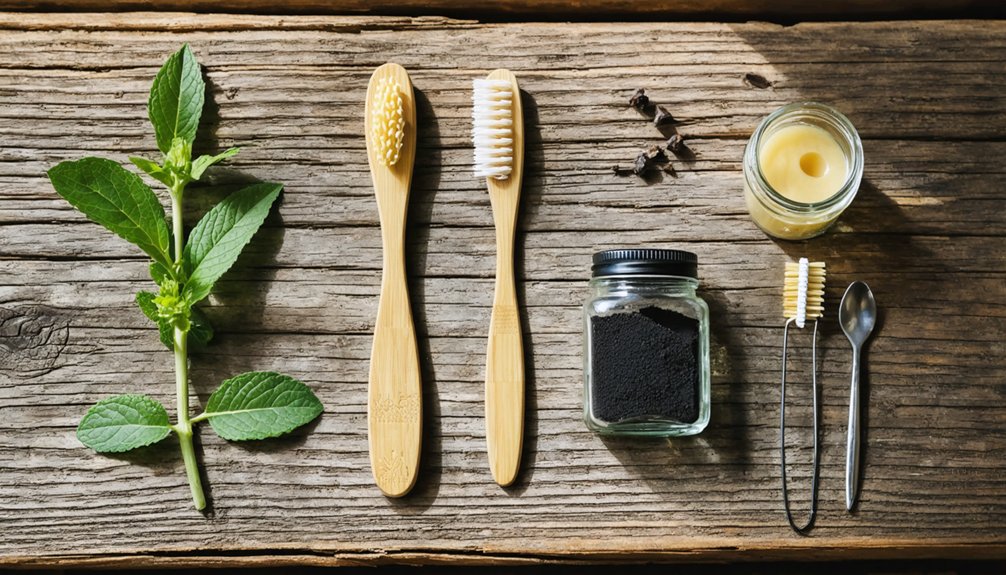
Many of the tools you use daily carry just as much impact as the products you apply with them. Switching to sustainable toothbrushes made from bamboo reduces plastic waste while giving you a firm, effective clean that supports surface whitening.
Pair that with biodegradable floss to remove debris between teeth without introducing synthetic materials into your routine or the environment. When choosing toothpaste, look for formulas containing fluoride, calcium, or phosphate to actively protect and remineralize enamel.
You can also add a few drops of peppermint extract for freshness without artificial additives. Avoid charcoal-based products sourced from unsustainable or abrasive materials, as they can wear enamel over time.
Every tool you select becomes part of a biocompatible system that aligns your whitening goals with environmental responsibility.
The Right Eco-Friendly Method for Your Teeth and Lifestyle
Choosing the right eco-friendly method depends on your teeth’s sensitivity, your daily routine, and how your body responds to natural ingredients. If your enamel is sensitive, diluted hydrogen peroxide or pineapple enzymes may irritate more than help.
Start with oil pulling or baking soda paste, since both support natural whitening without aggressive chemical exposure.
Your lifestyle shapes which sustainable practices actually stick. If mornings feel rushed, oil pulling’s 15-minute commitment may not fit. Instead, integrate a baking soda paste two to three times weekly after your regular brushing routine.
Use a bamboo toothbrush and fluoride toothpaste to support remineralization alongside your chosen method.
Listen to how your teeth respond. Adjust frequency, switch methods, and combine approaches gradually until you find what works biocompatibly with your body’s needs.
Frequently Asked Questions
Can Eco-Friendly Whitening Methods Work for Sensitive Teeth and Gums?
Yes, you can use eco-friendly whitening methods for sensitive teeth. Natural ingredients like diluted hydrogen peroxide and coconut oil offer gentle sensitivity solutions, letting you control your whitening routine while keeping your enamel biocompatible and protected.
How Long Before Eco-Friendly Whitening Methods Show Visible Results?
Like tending a garden, you’ll see visible results in two to four weeks using consistent, biocompatible methods. Skip charcoal effectiveness claims and turmeric benefits hype—baking soda, oil pulling, and hydrogen peroxide rinses naturally integrate to restore your smile’s brilliance.
Are Natural Whitening Methods Safe to Use During Pregnancy?
You’ll want to consult your doctor first, but many natural alternatives are generally considered safe. Focus on pregnancy safety by using baking soda paste, oil pulling, and fiber-rich foods while avoiding hydrogen peroxide rinses entirely.
Can Children Safely Use Baking Soda or Coconut Oil Whitening?
Carefully consider children’s care — you should consult their dentist before trying baking soda safety or coconut oil benefits. Both can offer natural, biocompatible support, but children’s developing enamel needs professional guidance to protect their unique biological needs.
Do Eco-Friendly Whitening Methods Interact With Dental Crowns or Veneers?
Yes, eco-friendly whitening methods can affect crowns materials and veneers longevity. You’ll want to apply baking soda or hydrogen peroxide rinses sparingly, as these biocompatible options won’t naturally whiten restorations, only surrounding enamel.
References
- https://www.gaetzdental.ca/eco-friendly-ways-to-keep-your-teeth-naturally-white/
- https://www.dentistsanfrancisco.com/eco-friendly-teeth-whitening/
- https://www.healthline.com/nutrition/whiten-teeth-naturally
- https://1dentalgrouptx.com/blog/best-teeth-whitening-methods/
- https://www.shorelinedentalstudio.com/blog/oral-health/green-dental-care/
- https://robisondental.com/9-natural-ways-to-whiten-your-teeth/
- https://www.ecomasteryproject.com/eco-friendly-teeth-whitening-method/
- https://www.motherearthliving.com/health-and-wellness/eco-friendly-ways-keep-teeth-healthy-clean-zb0z1810/
- https://www.queensparkdental.co.uk/blog/eco-friendly-innovations-in-teeth-whitening-techniques/
- https://www.mouthhealthy.org/all-topics-a-z/natural-teeth-whitening