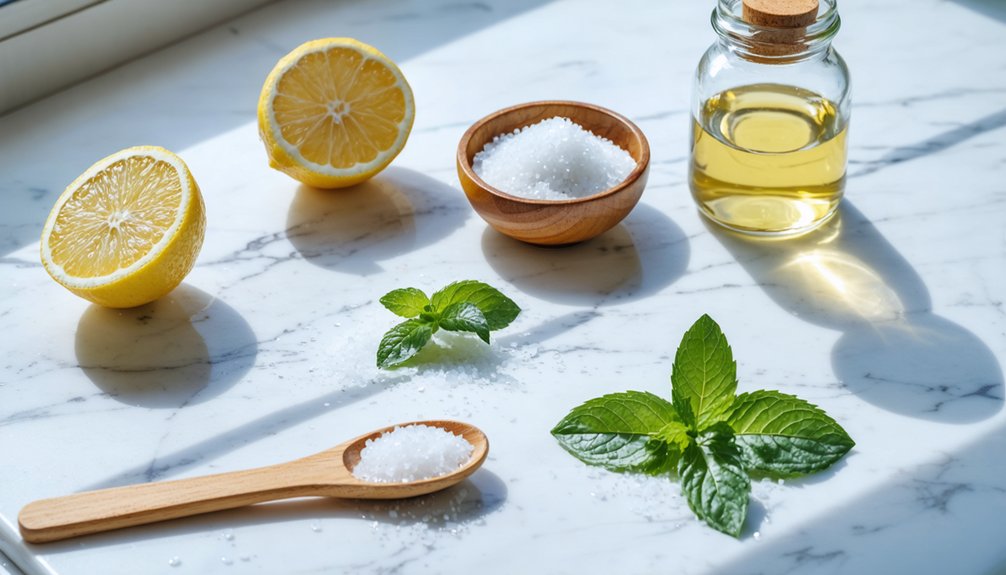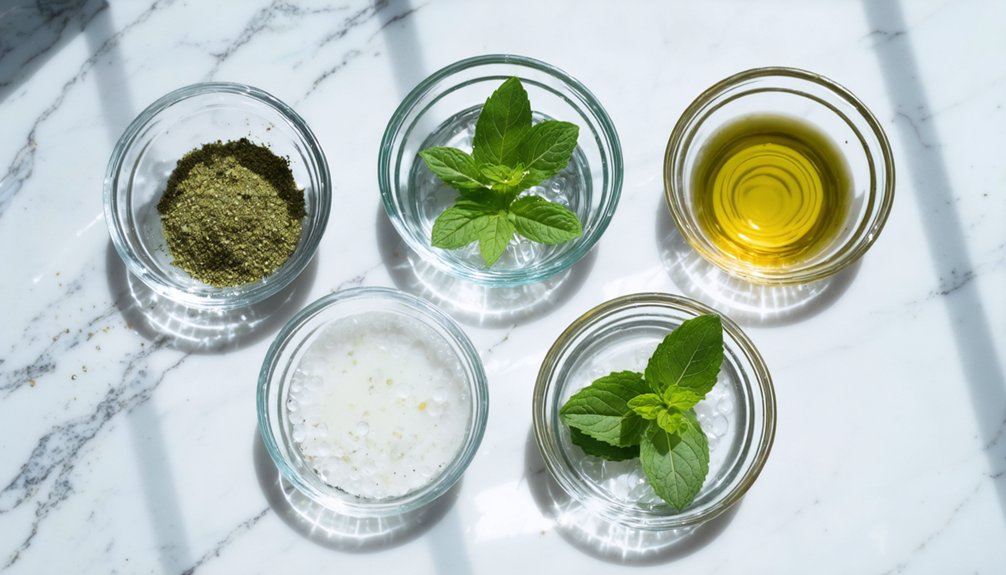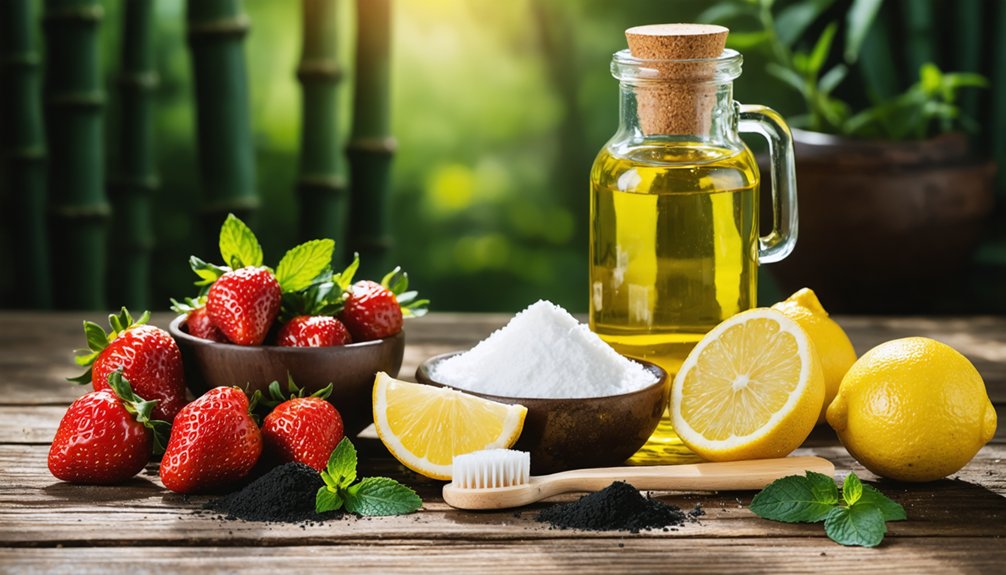
You can whiten your teeth naturally using remedies like coconut oil pulling, baking soda paste, diluted hydrogen peroxide, and fruit-based scrubs. Each method targets surface stains without harsh chemicals, but overusing acidic or abrasive ingredients can permanently erode enamel. Stick to recommended frequencies and dilutions to protect your teeth while still seeing results. The details on each remedy make all the difference between brightening your smile and damaging it.
Key Takeaways
- Coconut oil pulling, swished for 15-20 minutes twice daily, reduces bacteria and mildly whitens teeth over one month.
- A baking soda and water paste applied gently for two minutes effectively removes surface stains without harsh chemicals.
- Hydrogen peroxide at 1.5%-3% concentration used as a mouthwash can whiten teeth when swished and thoroughly rinsed.
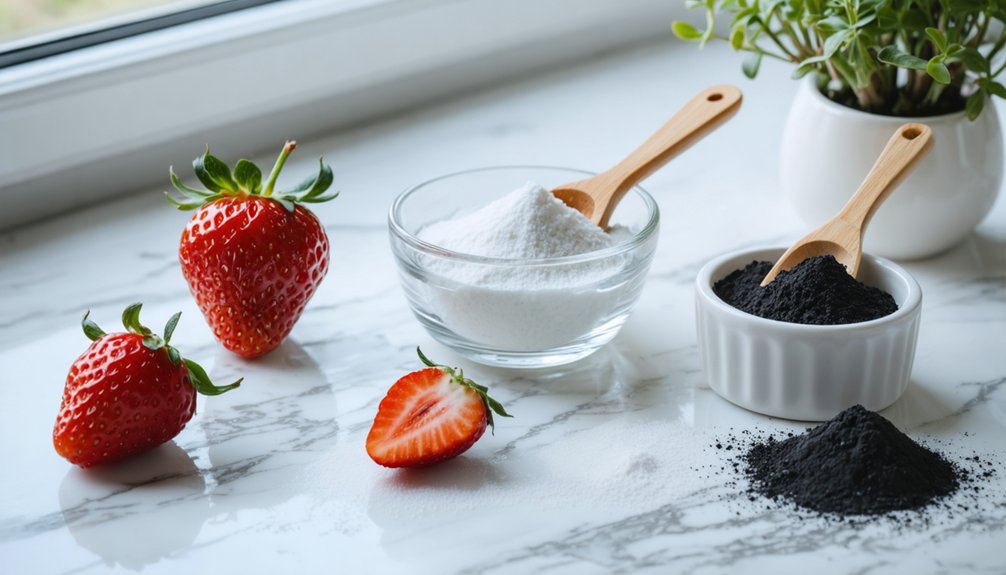
- Mashed strawberry mixed with baking soda, applied for five minutes once or twice weekly, targets mild surface stains.
- Activated charcoal, limited to once weekly use, helps whiten teeth while minimizing the risk of enamel erosion.
Why Your Teeth Yellow and How Natural Remedies Help
Teeth naturally yellow over time due to two primary causes: extrinsic staining from foods, drinks, and tobacco, and intrinsic discoloration from aging, medications, or enamel thinning.
Understanding these teeth discoloration causes helps you choose the right approach. Natural whitening benefits include avoiding harsh chemicals while still targeting surface stains effectively.
Methods like oil pulling, baking soda, and hydrogen peroxide work by either lifting stains mechanically or through mild oxidation. However, you should remain cautious — overuse of any remedy can erode enamel or irritate gum tissue.
Natural doesn’t automatically mean safe in excessive amounts. When you apply these remedies correctly and consistently, they offer a controlled, accessible path toward a brighter smile without compromising your long-term dental health.
Does Oil Pulling With Coconut Oil Actually Whiten Teeth?
Among the natural remedies worth examining closely, oil pulling with coconut oil stands out as one of the oldest and most discussed methods. You place one tablespoon of coconut oil in your mouth, then swish it through your teeth for 15 to 20 minutes. Let the solid oil melt first before you begin.
While oil pulling benefits include reduced bacteria and improved gum health, direct evidence supporting coconut oil efficacy for whitening remains limited. You shouldn’t expect dramatic color changes.
Oil pulling may support gum health, but don’t expect coconut oil to dramatically whiten your teeth.
For measurable results, commit to twice daily sessions for a full month. Always spit the oil out afterward and rinse with warm water. Don’t swallow it, as it contains absorbed bacteria.
Approach this method as a hygiene supplement, not a standalone whitening solution.
How to Use Baking Soda to Whiten Teeth Without Wrecking Enamel
To make a baking soda whitening paste, mix equal parts baking soda and water until you get a thick consistency. Then apply it gently to your teeth using a soft-bristled toothbrush in small circular motions for two minutes.
If you want a stronger formula, combine one tablespoon of baking soda with two tablespoons of hydrogen peroxide. However, you must limit this version to twice daily for no more than one week to prevent enamel erosion.
Baking soda’s mild abrasiveness can effectively remove surface stains, yet overuse strips protective enamel. Therefore, sticking to recommended frequencies isn’t optional—it’s essential for long-term dental health.
Baking Soda Paste Recipe
Baking soda offers one of the most accessible and well-researched methods for natural teeth whitening, but using it incorrectly can gradually erode your enamel.
Understanding baking soda benefits means recognizing both its mild abrasive power and its alkaline chemistry, which neutralizes acids that stain teeth.
To apply effective whitening techniques, mix equal parts baking soda and water into a thick paste.
Apply it using a soft-bristled toothbrush, brushing in gentle circular motions for two minutes while coating all teeth thoroughly.
For stronger results, combine one tablespoon of baking soda with two tablespoons of hydrogen peroxide instead.
Limit this method to twice daily for one week maximum.
Exceeding that frequency strips enamel progressively, causing long-term sensitivity and structural damage you can’t reverse.
Safe Application Techniques
Knowing the right recipe gets you halfway there, but how you physically apply baking soda determines whether you whiten your teeth or quietly damage them over time.
Follow these application techniques and safety precautions carefully to protect your enamel.
- Use a soft-bristled toothbrush or your finger to apply the paste gently.
- Brush in small circular motions for exactly two minutes—no longer.
- Never scrub aggressively; light pressure activates whitening without grinding enamel.
- Limit baking soda and hydrogen peroxide brushing to twice daily for one week maximum.
- Always rinse thoroughly with water after each session to remove all residue.
Skipping these precautions turns a simple whitening method into a gradual erosion problem you won’t notice until it’s too late.
Frequency And Enamel Protection
Even with perfect application technique, using baking soda too frequently will erode your enamel faster than surface stains can disappear.
Since enamel regeneration doesn’t occur once mineral loss advances, protecting what you have matters more than aggressive whitening. Limit baking soda brushing to twice daily for one week maximum, then pause completely before resuming.
When you combine baking soda with hydrogen peroxide, that same twice-daily, one-week ceiling applies. Whitening frequency directly determines whether you’re strengthening your results or undermining your teeth’s structural integrity.
Between whitening sessions, switch to a fluoride toothpaste to remineralize and reinforce enamel. Track your cycles deliberately—more isn’t better here.
You’re in control of whether this remedy helps or harms, so discipline your schedule accordingly.
How to Use Hydrogen Peroxide Safely at Home
Hydrogen peroxide is an effective whitening agent, but you’ll need to use it carefully to avoid damaging your enamel or irritating your gums. Following hydrogen peroxide precautions and effective dilution methods guarantees you get results without setbacks.
- Use only a 1.5% or 3% concentration as a mouthwash before brushing.
- Dilute a 3% solution by mixing equal parts peroxide and water to reach 1.5%.
- Swish the solution for a few minutes, then rinse thoroughly with water.
- Never exceed the recommended usage frequency to prevent sensitivity or enamel erosion.
- Always choose ADA-approved products containing hydrogen peroxide for verified safety standards.
Staying within these boundaries gives you control over your whitening routine while protecting your long-term dental health.
Which Fruit-Based Scrubs Actually Brighten Teeth?
Beyond chemical-based solutions like hydrogen peroxide, some natural fruit scrubs can offer mild brightening effects worth considering.
Two commonly used options are strawberry benefits and banana peel applications, each working differently on surface stains.
Two natural options—strawberry and banana peel—each tackle surface stains through distinct, gentle mechanisms worth exploring.
For strawberry benefits, mash one strawberry and combine it with half a teaspoon of baking soda. Apply this mixture to your teeth, leave it for five minutes, then rinse completely.
Limit use to once or twice weekly to protect enamel.
For banana peel, rub the inside of a fresh peel across your teeth for two minutes, then rinse thoroughly.
Results are subtle, so don’t expect dramatic changes.
Both methods target surface discoloration mildly. Overuse risks enamel erosion, so follow recommended frequency strictly.
Can Activated Charcoal and Turmeric Really Whiten Teeth?
Charcoal and turmeric have gained popularity as unconventional whitening remedies, but their effectiveness depends heavily on correct application.
Understanding charcoal effectiveness and turmeric benefits helps you use these remedies safely without damaging enamel.
- Crush one charcoal tablet into powder and dip a wet toothbrush to brush normally.
- Brush with activated charcoal gently for two minutes, then rinse without regular toothpaste.
- Mix half a teaspoon of turmeric powder with coconut oil or water to form a paste.
- Brush gently with turmeric paste for one to two minutes, then rinse thoroughly.
- Limit charcoal whitening to once weekly to protect healthy enamel structure.
Both methods require strict frequency control.
Overuse accelerates enamel erosion, undermining your whitening goals entirely.
How to Use Apple Cider Vinegar Without Damaging Your Teeth
Although apple cider vinegar offers mild antibacterial and whitening benefits, its high acidity can erode enamel if you use it incorrectly.
To protect your teeth while capturing its whitening benefits, always dilute half a teaspoon of apple cider vinegar in a full glass of water before using it as a mouthwash. Swish the solution for no more than two minutes each morning, then spit it out completely.
Never apply undiluted apple cider vinegar directly to your teeth. After rinsing, wait at least 30 minutes before brushing to prevent enamel abrasion while your teeth are still acid-softened.
Limit use to once daily, and monitor your teeth for increased sensitivity. If sensitivity develops, discontinue use immediately and consult your dentist.
Which Natural Whitening Remedies Cause Enamel Damage Over Time?
When you use acidic natural ingredients like lemon juice, apple cider vinegar, or strawberries too frequently, you’re actively eroding the enamel that protects your teeth.
Enamel doesn’t regenerate, so repeated acid exposure causes permanent structural damage that no whitening remedy can reverse.
You should also limit baking soda and hydrogen peroxide applications strictly to recommended frequencies, as overuse weakens enamel and increases tooth sensitivity over time.
Acidic Ingredients Eroding Enamel
Some of the most popular natural whitening remedies contain acidic ingredients that actively erode tooth enamel over time, and you’ll want to know which ones pose the greatest risk.
Enamel erosion is irreversible, making it critical to understand how acidic foods and ingredients weaken your teeth’s protective layer.
- Lemon juice mixed with baking soda creates an acidic reaction that strips enamel with repeated use.
- Apple cider vinegar, even diluted, softens enamel if used too frequently.
- Strawberry scrubs contain citric acid that gradually demineralizes enamel surfaces.
- Brushing immediately after consuming acidic foods accelerates enamel wear considerably.
- Hydrogen peroxide used beyond recommended concentrations increases enamel vulnerability.
You control how often you apply these remedies, so limiting their frequency protects your long-term dental health.
Overuse Risks Explained
Overusing natural whitening remedies can silently damage your enamel long before you notice visible harm, and understanding which methods carry the highest risk helps you make smarter choices.
The risks of overuse are highest with acidic and abrasive agents. Baking soda combined with hydrogen peroxide should never exceed twice daily for one week. Charcoal brushing must stay limited to once weekly, as its abrasive texture accelerates enamel wear.
Lemon juice and apple cider vinegar weaken enamel with repeated exposure, increasing enamel sensitivity and vulnerability to decay. Even strawberry scrubs, when applied too frequently, introduce erosive malic acid.
You control the outcome by respecting recommended frequencies. Exceeding guidelines doesn’t accelerate results — it compounds damage. Disciplined, measured application protects your enamel while still delivering gradual, noticeable whitening over time.
How Often to Use Each Natural Whitening Remedy
Each natural whitening remedy comes with its own recommended frequency, and sticking to these guidelines helps you protect your enamel while achieving results. Overusing natural alternatives can compromise ingredient safety and trigger teeth sensitivity, so precision matters.
- Use coconut oil pulling twice daily for one full month.
- Limit baking soda and hydrogen peroxide brushing to twice daily for one week.
- Apply strawberry and baking soda scrubs only one to two times weekly.
- Restrict activated charcoal treatments to once weekly for enamel care.
- Swish apple cider vinegar mouthwash once each morning before brushing.
Following these schedules maximizes whitening effectiveness without accelerating enamel erosion. You control the outcome by respecting each remedy’s limits.
Respecting each remedy’s schedule protects your enamel and puts lasting whitening results fully in your control.
Consistency within safe boundaries, not excess, delivers the results you’re working toward.
Daily Habits That Maintain Your Whitening Results
Maintaining your whitening results depends less on repeated treatments and more on the daily habits you build around oral hygiene and diet.
Your whitening habits should include brushing 30 minutes to one hour after consuming acidic foods, which limits staining before it sets. Swishing apple cider vinegar diluted in water each morning adds an extra layer of protection without aggressive treatment.
Strong maintenance routines also mean rinsing with clove oil and salt water regularly to support overall oral health. Avoid letting poor hygiene undo the progress you’ve made through consistent natural methods.
You’ll protect enamel longer by limiting how frequently you apply abrasive remedies and prioritizing gentle, daily practices instead. Consistency in these foundational habits ultimately determines how long your results last.
Frequently Asked Questions
Can Natural Whitening Remedies Interact With Dental Crowns or Veneers?
Like sandpaper on polished wood, abrasive natural ingredients can scratch your veneers or crowns. You’ll risk dental sensitivity and surface damage, so always consult your dentist before applying any home whitening remedy to protected teeth.
Are Natural Whitening Methods Safe to Use During Pregnancy or Breastfeeding?
You should avoid most natural whitening methods during pregnancy or breastfeeding due to significant safety concerns. Pregnancy effects make ingredients like hydrogen peroxide and essential oils risky. Always consult your healthcare provider before starting any whitening regimen.
How Long Does Whitening Last After Stopping Natural Remedy Treatments?
Once you stop natural treatments, whitening duration varies—results typically fade within weeks. Natural methods offer limited effectiveness comparison to professional options, so you’ll need consistent habits and good oral hygiene to maintain any visible improvements longer.
Can Children Safely Use Natural Teeth Whitening Remedies at Home?
You shouldn’t use natural teeth whitening remedies on children without consulting a dentist first. Children’s dental safety is paramount, as natural remedy effectiveness varies, and ingredients like peroxide or baking soda can damage developing enamel irreversibly.
Should You Consult a Dentist Before Starting Any Natural Whitening Routine?
Ironically, you’d skip the expert while chasing whitening effectiveness. You should consult a dentist first—they’ll assess your teeth sensitivity, confirm safe options, and guarantee you’re not unknowingly damaging your enamel with unregulated natural remedies.
References
- https://www.healthline.com/nutrition/whiten-teeth-naturally
- https://mypenndentist.org/dental-tips/2024/02/29/safe-ways-to-whiten-teeth-naturally/
- https://www.mydentaloffice.com/10-home-remedies-for-whiter-teeth-that-actually-work/
- https://www.berkeleyhillsdentist.com/brighten-your-smile-naturally-berkeley-home-remedies-for-teeth-whitening/
- https://www.pleasantfamilydentistry.com/blog/6-natural-ways-to-whiten-your-teeth
- https://www.youtube.com/watch?v=snhhQi10vrE
- https://www.youtube.com/watch?v=6VxphLA7LD8
- https://www.youtube.com/watch?v=fFptX4wvMg8
- https://www.youtube.com/watch?v=YKCmfVA9_kc
- https://www.webmd.com/oral-health/ss/slideshow-natural-teeth-whitening