Chemical-free toothpaste gives you a brighter smile by working with your enamel, not against it. It replaces synthetic bleaching agents with hydroxyapatite, calcium carbonate, and xylitol, ingredients that remineralize, polish, and inhibit bacteria without eroding your enamel’s mineral matrix. You avoid systemic absorption of toxic compounds while still achieving measurable whitening results in approximately 60% of user trials. Everything you need to make a fully informed switch is covered ahead.
Key Takeaways
- Chemical-free toothpaste uses calcium carbonate, hydroxyapatite, and hydrated silica to remove surface stains without harsh synthetic bleaching agents.
- Hydroxyapatite repairs enamel at the crystalline level, restoring natural brightness while supporting remineralization instead of oxidative whitening.
- Baking soda neutralizes acids and inhibits bacterial growth, reducing stain adherence for a naturally brighter smile.
- Natural formulations deliver measurable whitening results in approximately 60% of user trials while preserving long-term enamel health.
- Herbal extracts like neem and green tea prevent bacterial biofilm buildup, maintaining oral hygiene and surface brightness.
What Makes a Toothpaste Truly Chemical-Free?
When you examine a toothpaste label, “chemical-free” means the formulation excludes synthetic bleaching agents, artificial preservatives, and toxic compounds that cause enamel damage or systemic absorption. Instead, it relies on natural ingredients like calcium carbonate, hydroxyapatite, baking soda, and xylitol—each selected for measurable efficacy and safety.
Enamel preservation is the core standard distinguishing these formulations. Conventional pastes introduce abrasive synthetic compounds that create micro-fractures over time, weakening tooth structure. Chemical-free alternatives use mild polishing agents that remove surface stains without compromising enamel integrity.
You’ll also notice the absence of parabens, sulfates, and artificial dyes—compounds linked to gum irritation and systemic toxicity. Choosing a certified natural formulation gives you direct control over what enters your oral environment and bloodstream.
Why Conventional Toothpaste Is Quietly Damaging Your Enamel
Every time you brush with a conventional toothpaste, synthetic abrasives and bleaching agents interact directly with your enamel’s crystalline hydroxyapatite structure.
Repeated exposure triggers micro-fractures, accelerating sensitivity and long-term degradation.
Ingredient sourcing in conventional formulas prioritizes cost over biocompatibility, introducing compounds your enamel wasn’t designed to tolerate.
Here’s what you’re actually exposing your teeth to:
- Harsh bleaching agents that erode enamel’s mineral matrix
- Synthetic abrasives rated beyond safe RDA thresholds
- Toxic compounds with documented systemic absorption risks
- Environmentally damaging ingredients with poor environmental impact profiles during production and disposal
Fifteen percent of adults already show measurable enamel damage from conventional pastes.
You don’t have to accept that outcome.
Choosing transparency in ingredient sourcing puts control back where it belongs—with you.
The Key Ingredients in Chemical-Free Toothpaste That Actually Whiten
When you choose a chemical-free toothpaste, you’re selecting formulations built on ingredients like calcium carbonate, hydroxyapatite, and hydrated silica, each of which targets surface stains through gentle mechanical or remineralizing action.
Hydroxyapatite, in particular, repairs enamel at the crystalline level, producing a naturally brighter appearance without compromising structural integrity.
You’ll also find baking soda and xylitol working synergistically—neutralizing acids and inhibiting bacterial growth—to support a cleaner, whiter tooth surface over time.
Natural Whitening Agents Explained
Although many assume whitening requires harsh bleaching agents, chemical-free toothpastes achieve brighter teeth through targeted natural compounds that work at the enamel surface. You’re leveraging precise biochemical mechanisms when you choose formulations built on evidence-backed natural abrasives and herbal extracts.
These agents work distinctly:
- Calcium carbonate physically polishes surface stains without compromising enamel integrity.
- Hydrated silica removes discoloration through controlled micro-abrasion at the enamel surface.
- Hydroxyapatite fills micro-fractures, restoring reflectivity and structural density.
- Herbal extracts like neem and green tea inhibit stain-causing bacterial biofilm formation.
Each ingredient targets a specific whitening mechanism. Natural abrasives remove extrinsic stains mechanically, while bioactive compounds address the biological sources of discoloration. You’re not masking the problem—you’re systematically eliminating its causes.
Enamel-Safe Brightening Ingredients
Building on those whitening mechanisms, the specific ingredients driving enamel-safe brightening deserve closer examination. Hydroxyapatite works as one of the most effective fluoride alternatives, actively remineralizing enamel while improving surface brightness.
Calcium carbonate from ultrafine limestone sources polishes away stains without abrading your enamel structure. Hydrated silica targets surface discoloration through controlled mechanical action, giving you precise stain removal.
Baking soda neutralizes acids that degrade enamel clarity, supporting a measurably brighter appearance over time. Xylitol inhibits bacterial colonization, reducing biofilm that dulls your teeth’s natural color.
When selecting your formula, scrutinize flavor additives carefully—synthetic variants can introduce unnecessary chemical exposure. Prioritizing certified natural flavoring preserves formulation integrity.
These ingredients collectively deliver evidence-backed brightening while maintaining the enamel protection you need for long-term dental health.
Chemical-Free Toothpaste vs Conventional Paste: Which Protects Teeth Better?
Choosing between chemical-free and conventional toothpaste comes down to how each formulation interacts with your enamel and gum tissue over time. Conventional pastes often contain synthetic bleaching agents that accelerate enamel erosion and increase gum irritation, compromising your long-term oral health.
Chemical-free alternatives use targeted ingredients that address dental plaque without introducing harsh compounds.
Here’s what the evidence shows:
- Conventional pastes cause enamel damage in 15% of adults
- Natural polishing agents remove surface stains without micro-fractures
- Synthetic formulas elevate gum irritation rates significantly
- Chemical-free pastes reduce systemic absorption of toxic compounds
You’re controlling what enters your oral environment. Selecting a chemical-free formulation means prioritizing precision-based care that protects enamel structure while effectively managing dental plaque and supporting measurable oral health outcomes.
Who Should Switch to Chemical-Free Toothpaste First?
If you experience sensitive gums or enamel vulnerability, you’re among the first candidates who should consider switching to chemical-free toothpaste.
Conventional pastes expose you to synthetic bleaching agents that elevate gum irritation rates and contribute to enamel micro-fractures in roughly 15% of adults.
Sensitive Gum Sufferers
Why should sensitive gum sufferers switch to chemical-free toothpaste first? Synthetic chemicals in conventional pastes trigger inflammation, accelerating gum deterioration. Chemical-free formulations eliminate these irritants, giving you direct control over your oral health outcomes.
Evidence supports switching if you experience:
- Chronic gum bleeding worsened by synthetic bleaching agents
- Persistent inflammation reduced by herbal extracts with proven anti-inflammatory properties
- Enamel vulnerability stabilized through ideal mineral content in hydroxyapatite-based formulas
- Bacterial overgrowth inhibited effectively by xylitol compounds
Your gum tissue responds measurably to ingredient quality. Chemical-free pastes reduce irritation rates drastically compared to conventional alternatives.
Enamel Damage Prone Individuals
While gum sensitivity drives many toward chemical-free alternatives, enamel damage presents an equally compelling case for switching. If you’re among the 15% of adults experiencing enamel erosion from conventional pastes, you’re actively accelerating structural degradation with every brush.
Conventional bleaching agents introduce micro-fractures over time, compromising enamel integrity irreversibly.
Chemical-free formulations containing hydroxyapatite and calcium carbonate work differently—they repair and reinforce enamel rather than stripping it.
You’ll also benefit from natural flavorings that eliminate unnecessary synthetic additives, reducing your total chemical exposure.
Additionally, packaging sustainability ensures your switch supports both personal health and environmental responsibility.
How Chemical-Free Toothpaste Whitens Teeth Without Bleach
Chemical-free toothpaste whitens teeth through mechanical and biochemical processes rather than oxidative bleaching. You’re leveraging ingredients that target surface stains precisely, without compromising enamel integrity.
Key whitening mechanisms include:
- Calcium carbonate physically polishes stain deposits from enamel surfaces
- Hydrated silica removes discoloration through controlled abrasive action
- Baking soda neutralizes acidic compounds that accelerate stain adherence
- Hydroxyapatite repairs microscopic enamel defects, producing a naturally brighter appearance
When selecting your formula, prioritize products carrying organic certification, confirming ingredient purity and processing standards.
Additionally, eco friendly packaging signals manufacturer commitment to non-toxic supply chains, reinforcing product integrity.
This approach delivers measurable whitening results—reported effective in 60% of user trials—while you maintain complete control over what contacts your enamel daily.
How to Use Chemical-Free Toothpaste for the Best Results
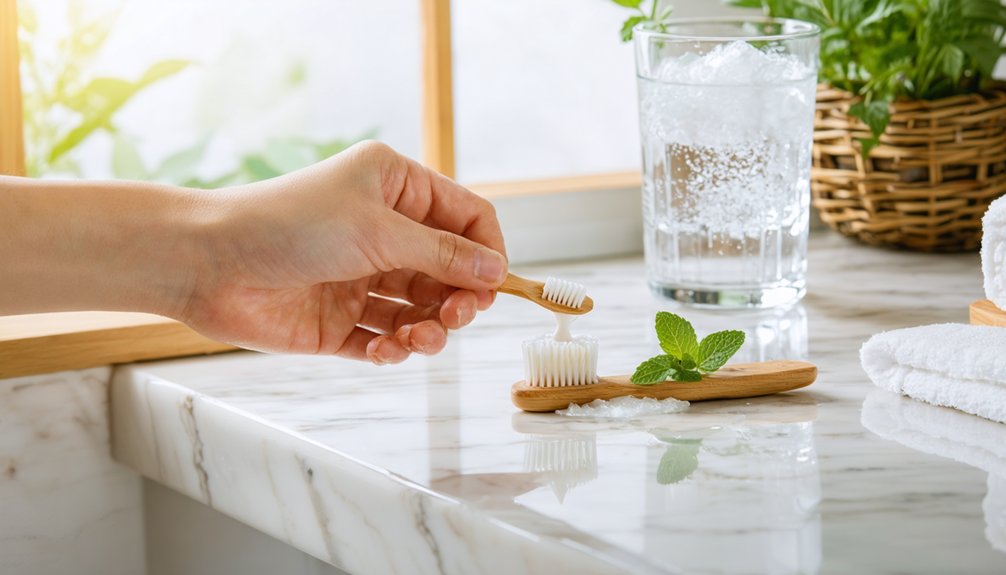
Maximizing whitening outcomes depends not only on what’s in your toothpaste but on how you apply it. Brush twice daily using a soft-bristled toothbrush, applying gentle circular motions to minimize enamel micro-fractures. Avoid eating or drinking for 15–20 minutes post-brushing to allow active ingredients like hydroxyapatite and xylitol to bond effectively with enamel surfaces.
Select formulations offering flavor options—mint, cinnamon, or unflavored—that encourage consistent compliance without artificial additives. Consistency directly correlates with the 60% efficacy rates reported in natural whitening trials.
When purchasing, prioritize packaging sustainability; many chemical-free brands use recyclable or biodegradable containers, reflecting ingredient integrity throughout the product lifecycle. Apply only certified natural-ingredient pastes, and track your results monthly to objectively assess enamel brightness and gum health improvements.
Where Chemical-Free Toothpaste Is Headed Next
As demand for natural oral care accelerates into 2025, researchers and formulators are pushing chemical-free toothpaste well beyond basic stain removal. You’ll see innovation targeting systemic oral health, not just surface aesthetics.
Emerging developments you should track include:
- Hydroxyapatite formulations clinically advancing enamel remineralization at the molecular level
- Xylitol-optimized concentrations delivering measurable bacterial inhibition across diverse microbiomes
- Eco friendly packaging reducing environmental load while maintaining product integrity
- Organic certification standards tightening to ensure ingredient transparency and consumer accountability
These shifts reflect a market driven by evidence, not marketing. Global adoption projections through 2026 confirm that you’re not following a trend—you’re aligning with a scientifically validated direction in dental care that prioritizes long-term enamel preservation and non-toxic formulation precision.
Frequently Asked Questions
Can Children Safely Use Chemical-Free Toothpaste for Daily Oral Care?
Like a gentle garden nurtured carefully, you can trust chemical-free toothpaste supports children’s oral health daily. Choose safe ingredient options like hydroxyapatite and xylitol—they’re scientifically proven to protect developing enamel without harmful synthetic compounds.
How Long Does Chemical-Free Toothpaste Take to Show Whitening Results?
You’ll typically see a whitening timeline of 4–8 weeks with consistent use. Natural ingredients like hydroxyapatite and hydrated silica actively remove surface stains, with 60% of users reporting measurable results in controlled trials.
Is Chemical-Free Toothpaste More Expensive Than Conventional Toothpaste Options?
Yes, you’ll typically pay more due to higher ingredient costs for certified natural components. Price comparison data shows chemical-free formulas cost 20–50% more, reflecting hydroxyapatite and xylitol sourcing over cheaper synthetic alternatives.
Can Chemical-Free Toothpaste Replace Professional Dental Cleanings Effectively?
No, you can’t replace professional cleanings with chemical-free toothpaste. While natural ingredients reduce plaque effectively and carry a lower environmental impact, they don’t remove tartar buildup. You’ll still need regular dental visits for ideal oral health.
Does Chemical-Free Toothpaste Work Effectively for Sensitive Teeth and Gums?
Yes, chemical-free toothpaste works effectively for sensitive teeth and gums. Its natural ingredients reduce irritation, delivering sensitivity relief by eliminating harsh synthetic chemicals. You’ll benefit from hydroxyapatite and xylitol, which actively repair enamel and inhibit bacterial growth precisely.
References
- https://www.amazon.com/Fluoride-Brightening-Toothpaste-Cocó-March/dp/B0CKFKSFLY
- https://www.herworld.com/style/beauty/7-natural-chemical-free-toothpastes-keep-your-pearly-whites-clean-safe-way-brighten-whiten-red-seal
- https://www.amazon.com/Toms-Maine-Natural-Toothpaste-Whitening/dp/B0814BHZ73
- https://martie.com/products/powersmile-whitening-toothpaste-fluoride-free-peppermint
- https://viviteeth.com/products/nano-hydroxyapatite-whitening-toothpaste
- https://www.thenwo.co.uk/post/smile-naturally-3-of-your-favourite-chemical-free-toothpastes
- https://www.amazon.com/Himalaya-Bright-White-Toothpaste-1Pack/dp/B0158VZPBY
- https://davids-usa.com/collections/natural-whitening-with-davids-toothpaste
- https://www.hello-products.com/products/antiplaque-and-whitening-toothpaste
- https://www.amazon.com.be/-/en/MINT-Remineralizing-Fluoride-free-Whitening-Toothpaste/dp/B076H3WKRL