Lemon juice can brighten minor surface stains on your teeth, but you’ve got to use it carefully. Its citric acid breaks down discoloration compounds and dissolves calcium deposits on enamel, but overuse causes permanent acid erosion. You should dilute it with water, limit applications to twice weekly, and always wait 30 minutes before brushing. It won’t fix deep or intrinsic stains. Keep going to discover exactly how to apply it safely and when to stop.
Key Takeaways
- Lemon juice contains citric acid that acts as a bleaching agent, breaking down surface stains and dissolving calcium deposits on enamel.
- Effective methods include diluted rinses, baking soda paste, lemon peel rubbing, and targeted cotton swab application on stained areas.
- Limit lemon juice applications to twice weekly, keeping each session to 1–2 minutes to prevent enamel erosion.
- Always dilute lemon juice with water, rinse thoroughly afterward, and wait 30 minutes before brushing to protect enamel.
- Lemon juice only removes minor surface stains; persistent discoloration after six weeks warrants professional dental treatment.
Does Lemon Juice Actually Whiten Teeth?
While lemon juice does produce a visible whitening effect, it’s important to understand the mechanism behind it before you start rubbing citrus on your enamel. Citric acid acts as a bleaching agent, breaking down discoloration compounds and dissolving calcium deposits that cause yellowing.
Citric acid breaks down discoloration compounds and dissolves calcium deposits — but understand the mechanism before applying it to your enamel.
Among natural remedies, lemon juice ranks as one of the more chemically active options available to you.
However, the same acidity responsible for whitening also erodes enamel over time. This distinction matters for your dental hygiene because surface stains may temporarily disappear while your tooth structure weakens underneath.
Lemon juice can’t address intrinsic stains caused by trauma or medication, so your results will vary. Understanding this trade-off lets you make a controlled, informed decision before proceeding with any lemon-based whitening technique.
How Citric Acid Breaks Down Tooth Stains
When you apply lemon juice to your teeth, citric acid acts as a natural bleaching agent that breaks down the discoloration compounds responsible for yellowing. It also dissolves calcium deposits and organic matter embedded in your enamel, loosening stains that regular brushing can’t remove.
Additionally, the acid triggers oxidation reactions that help restore whiteness, though you should recognize that these same processes can erode enamel if you’re not cautious.
Citric Acid Bleaching Properties
How exactly does citric acid work to strip away the stains dulling your teeth? Citric acid acts as a natural bleaching agent, breaking down the discoloration compounds bonded to your enamel surface. It dissolves calcium deposits and organic matter responsible for yellowing, while oxidation reactions triggered by acid exposure help restore visible whiteness.
You can harness these properties through lemon peel rubbing or a baking soda paste, both of which enhance mechanical and chemical stain removal simultaneously. However, you must exercise control over exposure time. Citric acid doesn’t distinguish between stain molecules and enamel minerals, meaning prolonged contact accelerates erosion, increasing sensitivity and structural transparency.
Understanding this mechanism lets you make informed decisions rather than applying these methods blindly.
Dissolving Calcium And Discoloration
Citric acid doesn’t simply coat your teeth — it chemically dismantles the compounds causing discoloration by attacking calcium-based deposits and organic matter bonded to enamel surfaces. When you apply lemon juice, the acid dissolves the calcium structures that anchor yellowing compounds, effectively loosening their grip.
Rubbing lemon peel directly against teeth reinforces this process through mild mechanical action, dislodging surface stains simultaneously.
Pairing lemon juice with baking soda introduces a neutralizing buffer that controls acid exposure while maintaining stain-breaking effectiveness. You’re fundamentally directing a controlled chemical reaction against discoloration.
However, understand that prolonged acid contact accelerates enamel erosion rather than whitening. Limit each session carefully, rinse immediately afterward, and monitor sensitivity — because dissolving stains and dissolving enamel require only a narrow margin of difference.
Oxidation Restores Tooth Whiteness
Beyond dissolving calcium deposits, citric acid triggers oxidation reactions that chemically break apart the pigmented molecules responsible for tooth discoloration. These reactions temporarily restore brightness by targeting organic compounds embedded within enamel surfaces.
However, you must understand that this process simultaneously disrupts your mouth pH, shifting it toward dangerous acidity levels that weaken protective enamel layers over time.
Prolonged acid exposure also alters oral bacteria populations, potentially encouraging harmful microbial growth that compromises overall dental health. You’re gaining short-term whitening while risking long-term structural damage if you don’t apply strict frequency controls.
Neutralizing acid immediately after treatment with a fluoride rinse helps stabilize your mouth pH and limit bacterial disruption. Monitor sensitivity carefully, as increasing discomfort signals that oxidation is affecting healthy tooth structure beyond surface stains.
5 Ways to Apply Lemon Juice for Whiter Teeth
Lemon juice can brighten surface stains, but you’ll need to apply it carefully to avoid damaging your enamel in the process. Beyond its lemon flavor and well-known skin benefits, citric acid offers mild bleaching action when used strategically.
Here are five controlled methods:
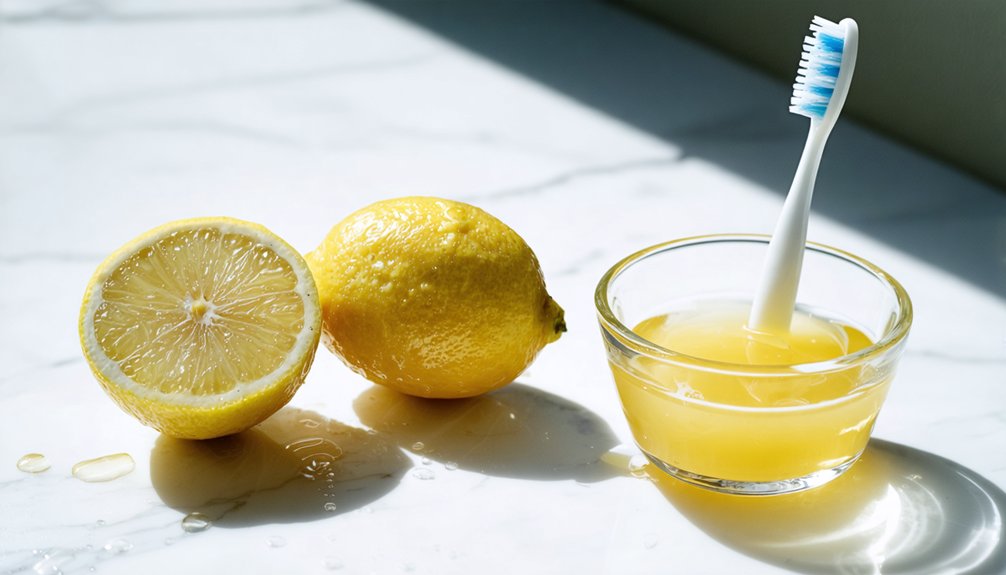
- Diluted juice rinse – Mix equal parts lemon juice and water; swill for up to ten minutes weekly.
- Baking soda paste – Combine both ingredients and apply directly to stained surfaces.
- Lemon peel rub – Gently rub the peel against teeth for two to three minutes.
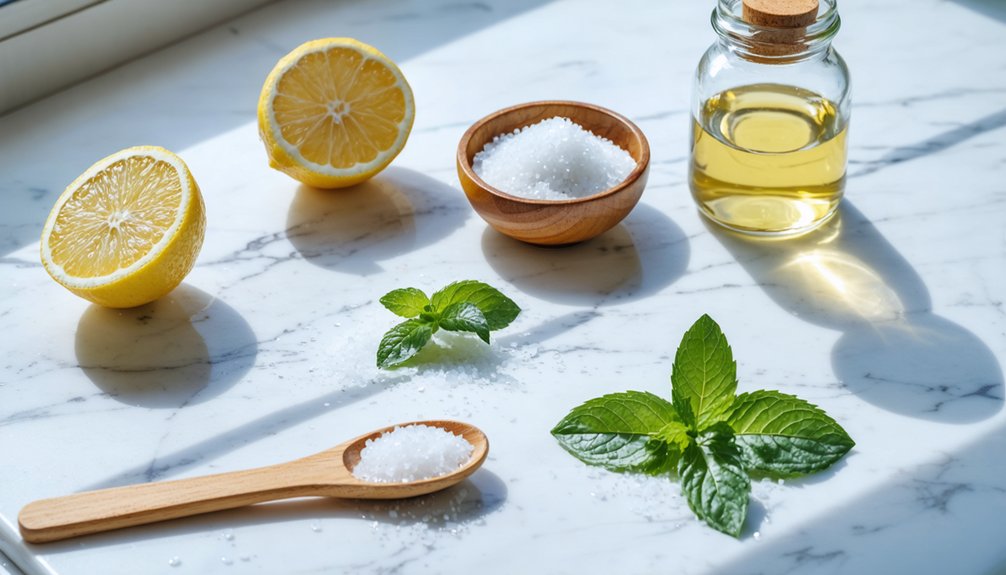
- Sea salt scrub – Mix with lemon juice for mechanical cleaning.
- Targeted cotton swab application – Apply solution only to stained areas, protecting gum tissue entirely.
How to Protect Your Enamel While Using Lemon Juice
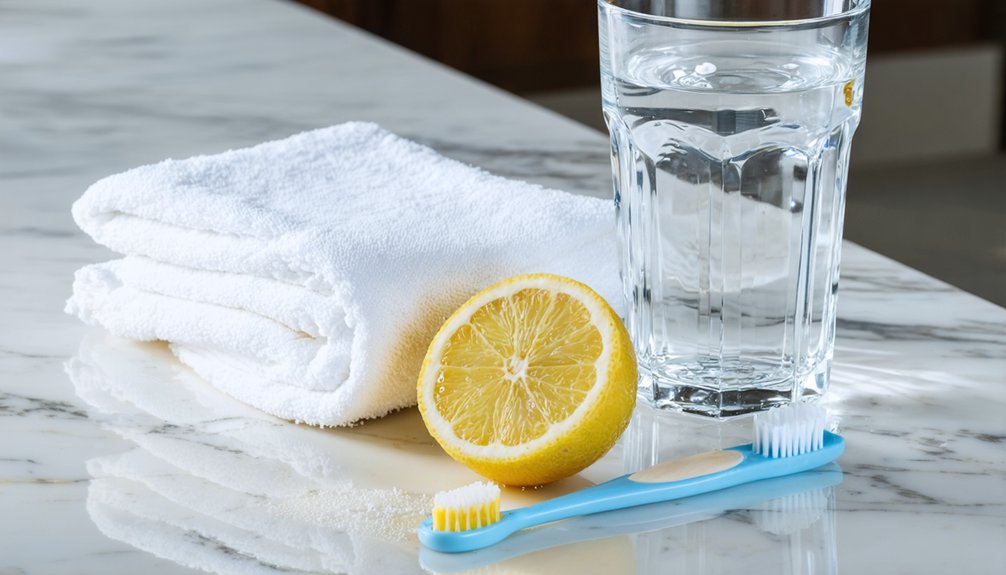
While lemon juice offers mild whitening benefits, its acidity can erode enamel permanently if you don’t take protective steps. Enamel erosion occurs when repeated acid exposure weakens your tooth’s outer layer, increasing sensitivity and transparency over time.
To maintain pH balance in your mouth, always dilute lemon juice with equal parts water before applying it. Never brush immediately after treatment — wait at least thirty minutes to allow saliva to neutralize residual acid.
Rinse thoroughly with clean water after every session, then follow with a fluoride rinse to reinforce enamel strength.
Limit applications to twice weekly, and monitor your sensitivity levels consistently. If sharp pain develops, discontinue use immediately and consult your dentist to assess any structural damage before continuing any whitening regimen.
How Often Should You Use Lemon Juice on Your Teeth?
Frequency matters just as much as technique when using lemon juice for whitening. You should limit lemon fruit applications to twice weekly, as cumulative acid exposure accelerates enamel erosion significantly. Each session shouldn’t exceed one to two minutes of contact time on your teeth.
After every application, wait at least thirty minutes before resuming your regular oral hygiene routine. Brushing immediately after acid exposure weakens already-softened enamel, causing irreversible damage.
If you’re using lemon juice as a mouthwash, restrict that practice to once weekly.
Monitor your teeth closely between sessions. If sensitivity sharpens or discomfort increases, discontinue use immediately and consult your dentist.
Controlled, infrequent application delivers measurable results while protecting your long-term dental health. Overuse won’t accelerate whitening—it’ll accelerate damage.
Ingredients That Make Lemon Juice Whiten Faster
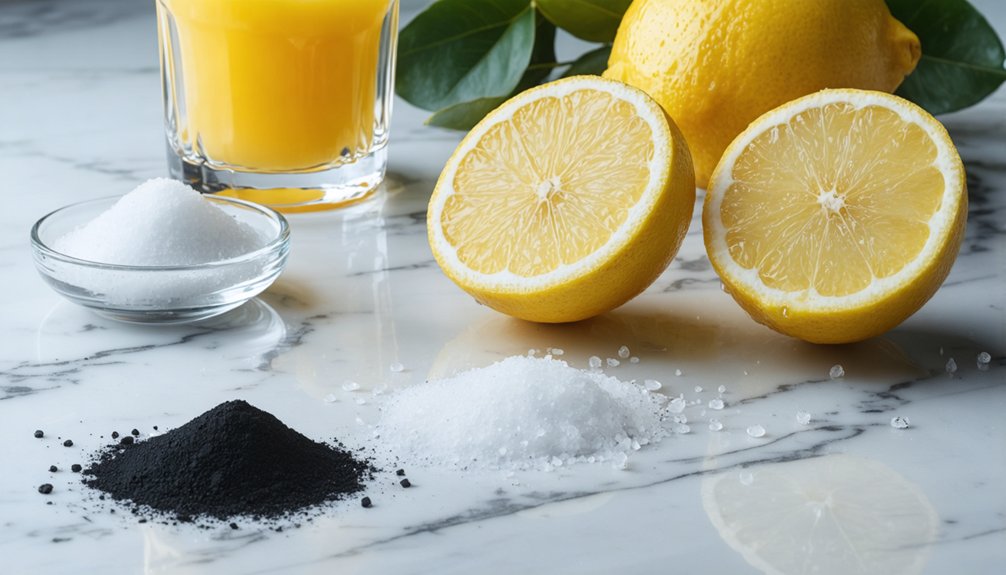
Boosting lemon juice’s whitening power is possible by combining it with complementary ingredients, though each addition carries its own risks. You can mix baking soda with lemon juice to enhance oxidative stain removal, but limit contact time to prevent enamel erosion.
Combining lemon juice with baking soda boosts whitening power, but limit contact time to protect enamel.
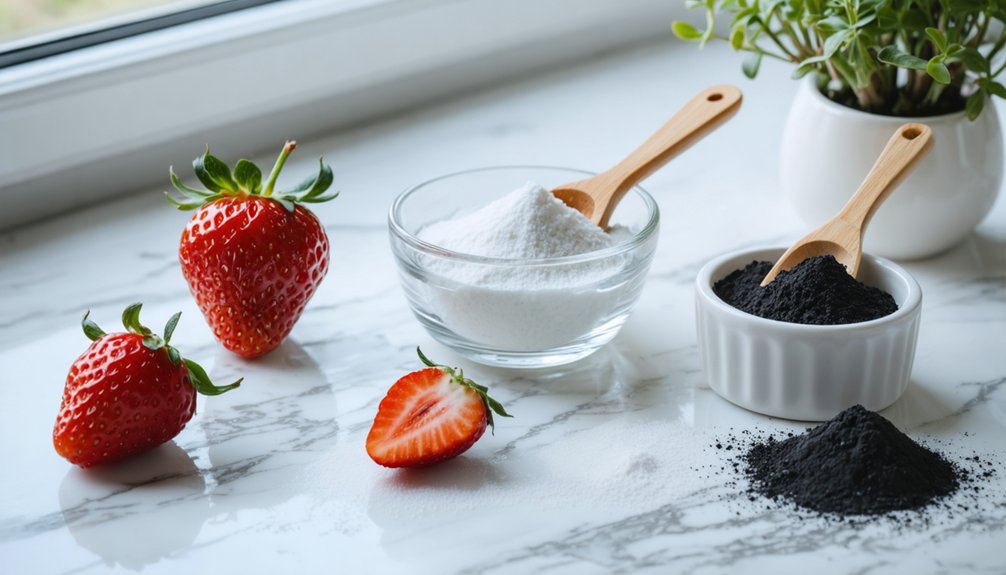
Sea salt adds mechanical abrasion, helping dislodge surface deposits through controlled scrubbing. Activated charcoal introduces absorptive properties that target deeper discoloration when blended into your flavor combinations.
Natural extracts like guava leaf provide enzymatic action that complements citric acid’s bleaching effect without excessive harshness. Some protocols include hydrogen peroxide, which amplifies oxidation but markedly increases sensitivity risk.
You must evaluate each ingredient’s impact individually before combining them. Always prioritize enamel integrity over accelerated results, and consult your dentist before experimenting with multi-ingredient whitening mixtures.
Signs You Should Stop Lemon Treatments and See a Dentist
Recognizing when to stop lemon treatments can protect you from irreversible dental damage. If you notice increased tooth sensitivity, sharp pain, or visible transparency along your enamel edges, discontinue use immediately. These signs indicate acid erosion that no home remedy can reverse.
Your oral hygiene routine and dietary habits also influence how your teeth respond to acidic treatments. If you’re consuming acidic foods regularly or neglecting consistent brushing, lemon applications compound existing enamel vulnerability, accelerating damage faster than you’d expect.
See a dentist if sensitivity persists beyond 48 hours after stopping treatments, or if your teeth appear more yellow despite consistent application. That paradoxical darkening signals enamel thinning, exposing the dentin beneath.
Professional evaluation ensures you’re protecting your long-term dental health effectively.
When to Skip Lemon Juice and Try Professional Whitening
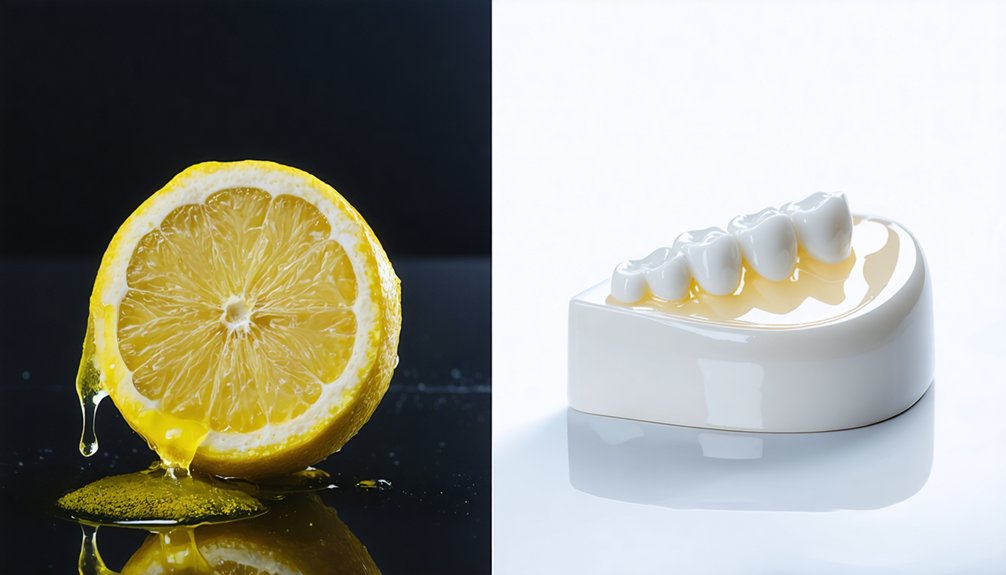
While lemon juice may lift minor surface stains, it’s not a substitute for professional whitening when deeper discoloration is involved. Intrinsic tooth discoloration from dental trauma, medications, or structural changes won’t respond to acid-based home remedies. You’re wasting time and risking enamel damage if you keep applying lemon to stains that require clinical intervention.
Recognize these situations where professional whitening is your only effective option:
- Dental trauma has caused internal darkening that no topical acid can reach.
- Your tooth discoloration originates from tetracycline or fluorosis exposure.
- Teeth appear transparent or structurally weakened from previous acid treatments.
- Surface stains persist after six consistent weeks of cautious home treatment.
Take control by choosing evidence-based solutions that actually match your condition.
Frequently Asked Questions
Can Children Safely Use Lemon Juice Whitening Treatments on Their Teeth?
Like fragile eggshells, children’s enamel can’t withstand lemon’s acidity. You shouldn’t use natural whitening methods on kids. Pediatric dental safety demands you consult a dentist before attempting any DIY treatments on developing teeth.
Does Lemon Juice Whitening Work Differently on Dental Crowns or Veneers?
Lemon juice doesn’t whiten crowns or veneers due to dental material sensitivity differences. You’ll only risk damaging their surface. Surface staining effects respond differently on artificial materials, so consult your dentist before attempting any lemon-based whitening treatment on restorations.
Can Lemon Juice Whitening Interact With Prescription Medications You Currently Take?
Lemon juice whitening can create serious medication interactions, especially if you’re taking blood thinners or calcium-affecting drugs. You’re risking significant dental health risks, so consult your dentist before combining acidic treatments with any prescription medications.
Is Lemon Juice Whitening Safe to Use During Pregnancy or Breastfeeding?
You shouldn’t use lemon juice whitening without consulting your doctor first. Pregnancy safety and breastfeeding considerations demand caution, as enamel erosion risks remain, and no evidence confirms these treatments are safe during these critical periods.
How Does Lemon Juice Whitening Compare to Oil Pulling for Stain Removal?
While both are natural remedies, lemon juice’s chemical effects actively dissolve stains through citric acid, whereas oil pulling mechanically reduces bacteria. You’ll find lemon juice works faster, but it’s riskier—oil pulling won’t erode your enamel.
References
- https://www.wellness.guide/whiten-teeth-with-lemon/
- https://www.cdhp.org/how-to-whiten-teeth-with-lemon/
- https://www.youtube.com/watch?v=9LF_m2iTINc
- https://www.youtube.com/watch?v=6VxphLA7LD8
- https://nhakhoaquoctebik.com/en/top-10-effective-ways-to-whiten-teeth-with-lemon-at-home/
- https://www.dentaly.org/en/teeth-whitening/lemon-teeth-whitening/
- https://dentalcarefree.com/blogs/How-to-Use-Lemon-Juice-for-Teeth-Brightening-and-Stain-Removal.html
- https://tastehub.decorexpro.com/en/limon/kak-otbelit-zuby/
- https://lemonsforyourlife.com/how-to-whiten-teeth-with-lemon-benefits-risks-and-safer-alternatives-explained/
- https://www.urmc.rochester.edu/news/publications/health-matters/diy-teeth-whitening-too-good-to-be-true