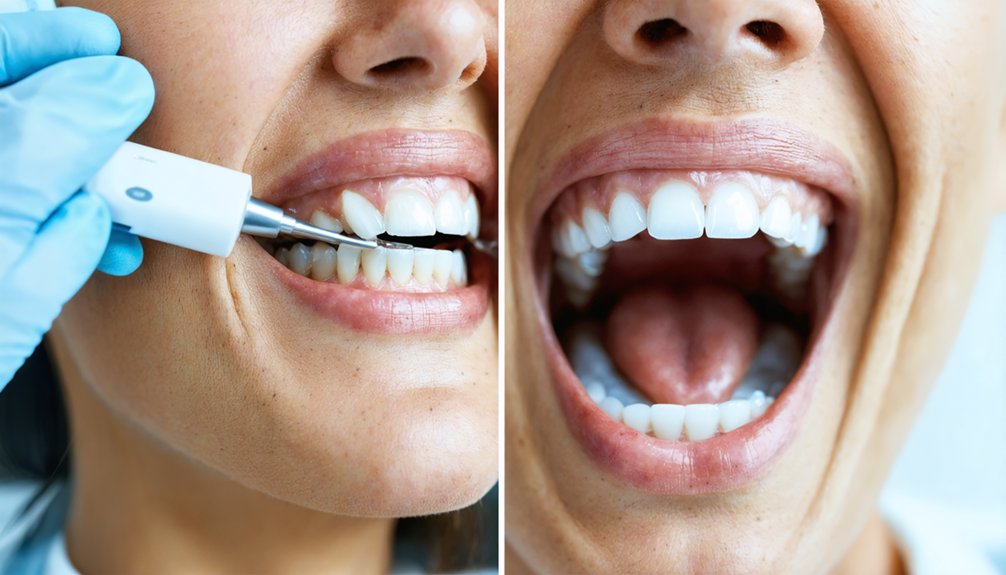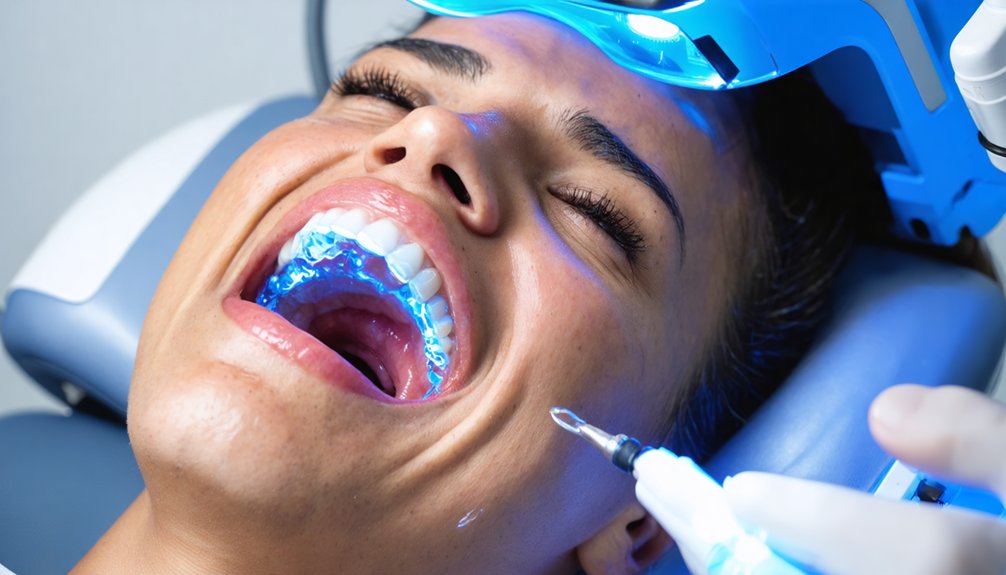
Professional teeth whitening poses risks because peroxide-based bleaching agents penetrate your enamel, causing dehydration, microstructural changes, and nerve sensitivity. You can experience chemical burns if gels contact your soft tissues, and overuse can outpace your enamel’s natural remineralization capacity. Poorly fitting trays increase your risk of tissue damage, while existing restorations may weaken or discolor unevenly. Without professional oversight, these risks compound considerably. The sections ahead break down each of these concerns in clinical detail.
Key Takeaways
- High-concentration peroxide used in professional whitening penetrates enamel, causing dehydration, microstructural changes, and sensitivity in up to two-thirds of patients.
- Poorly fitting trays can leak bleaching gel onto soft tissues, causing chemical burns and lasting damage if untreated.
- Aggressive bleaching erodes enamel and increases permeability, exposing dentin and surpassing the mouth’s natural remineralization capacity.
- Peroxide degrades ceramic, composite, and glass ionomer restorations, weakening structural stability and causing uneven color results.
- Without proper professional oversight, misuse of bleaching agents risks irreversible nerve damage, systemic toxicity, and cumulative oral harm.
Why Do Teeth Hurt After Whitening?
Tooth sensitivity after whitening is one of the most common side effects you’re likely to experience, affecting up to two-thirds of users during early stages of bleaching treatment. Peroxide penetrates enamel, triggering tooth dehydration and microstructural changes that temporarily expose dentin and its underlying nerve pathways.
You’ll typically notice discomfort within 2–3 days of starting strip- or tray-based treatment, though it often resolves by the fourth day post-treatment.
Higher peroxide concentrations correlate directly with greater sensitivity risk, so you can reduce that risk by selecting lower-concentration formulas and adhering strictly to manufacturer guidelines. Exceeding recommended durations won’t accelerate results—it’ll increase nerve irritation.
Monitoring your sensitivity patterns and adjusting treatment frequency gives you the most control over minimizing discomfort without compromising outcomes.
Can Whitening Gels Burn Your Gums?
When whitening gel contacts your gums, the peroxide can trigger chemical irritation that typically begins within a day of treatment and may last several days.
If your tray fits poorly, gel can leak onto surrounding soft tissue and cause painful chemical burns.
You can reduce this risk by ensuring your tray fits correctly and by following manufacturer guidelines closely.
Peroxide Contact Causes Irritation
Peroxide-based whitening gels can irritate gingival tissues on contact, making gum exposure one of the more immediate risks of bleaching treatment. When the gel reaches your gums, peroxide exposure triggers a localized inflammatory response, often beginning within a day of treatment.
This irritation typically lasts several days, depending on the concentration used and the duration of contact.
Strip- and tray-based systems carry particular risk because they don’t always conform precisely to your gum line. Ill-fitting trays can allow gel to leak onto surrounding soft tissue, and sensitivity triggers vary based on individual tissue tolerance.
In severe misuse cases, chemical burns to oral tissues become a real possibility. Controlling contact time and ensuring proper fit considerably reduces your risk of peroxide-induced gingival injury.
Ill-Fitting Trays Risk Burns
Gum irritation from peroxide contact is one risk, but an ill-fitting tray introduces a more serious one: chemical burns. When a tray doesn’t conform closely to your teeth, tray leakage allows concentrated bleaching gel to escape onto surrounding soft tissue. That contact can produce painful chemical burns affecting your gums, cheeks, or throat lining.
Unlike mild irritation that resolves within days, burns from leaking gel can cause lasting soft-tissue damage if you don’t intervene quickly. Swallowing leaked product adds another layer of risk, including nausea and internal irritation.
A professionally fitted tray minimizes leakage by creating a precise seal. Using an imprecise over-the-counter tray, or ignoring poor fit, considerably raises your exposure to these preventable injuries. Fit isn’t cosmetic—it’s a clinical safety variable.
Does Whitening Actually Damage Your Enamel?
Enamel damage is a legitimate concern, though the risk depends heavily on how whitening products are used. Research links aggressive bleaching to enamel erosion and microstructural changes that compromise tooth integrity. Here’s what the evidence shows:
- Overuse can exceed enamel’s natural remineralization capacity
- Whitening increases enamel permeability, potentially exposing dentin
- Aggressive regimens cause demineralization and surface softening
- Tooth roughening has been documented after repeated peroxide exposure
- Frequent bleaching raises erosion risk more than occasional treatments
You’re not powerless here. Following manufacturer guidelines and working with a dental professional notably reduces structural risk.
The damage isn’t inevitable—it’s largely dose-dependent. If you’re whitening outside recommended parameters, you’re actively increasing the likelihood of compromising your enamel’s long-term integrity.
Does Frequent Whitening Make the Damage Worse?
Frequency matters considerably when it comes to whitening-related damage. When you whiten repeatedly, you reduce the time your teeth have to recover through natural saliva protection and dietary remineralization. Saliva buffers acid exposure and restores lost minerals, but continuous bleaching cycles can outpace that recovery process entirely.
Regular bleaching is more likely than infrequent bleaching to produce tooth erosion, increased sensitivity, and gum irritation. If you’re also consuming dietary acids—citrus, vinegar, carbonated drinks—between sessions, you compound the structural risk further.
Enamel that’s already softened from peroxide exposure becomes more vulnerable to acid-driven mineral loss.
Using products beyond manufacturer-recommended durations or without professional oversight significantly raises your risk of cumulative, potentially irreversible damage. Controlling your whitening frequency is one of the most effective ways to protect your results and your oral health.
How Does Whitening Affect Crowns, Veneers, and Fillings?
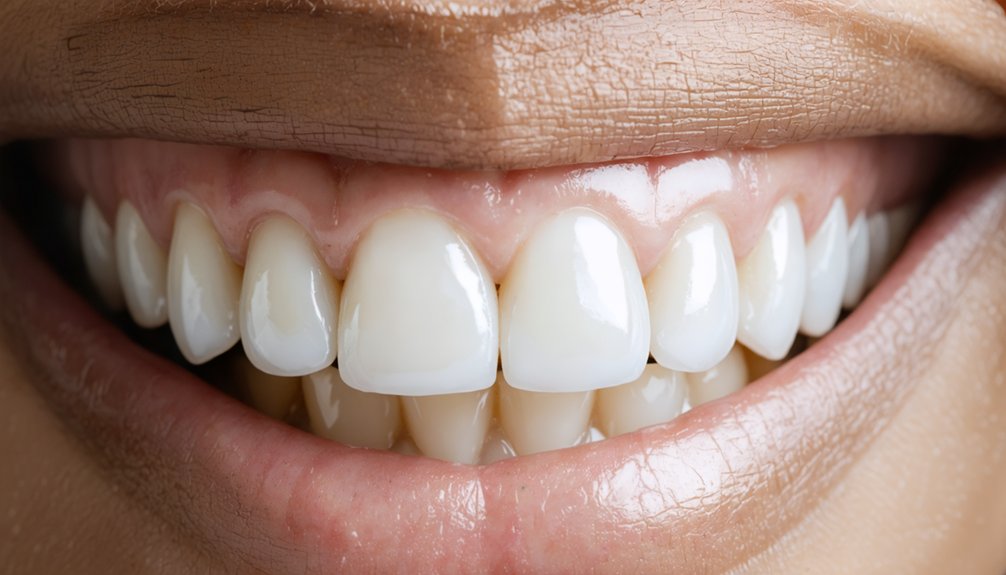
If you have crowns, veneers, or fillings, you should know that whitening agents interact with these restorations differently than with natural enamel.
Peroxide-based products can chemically degrade ceramic crowns, composite restorations, and glass ionomer cements, reducing their structural stability over time.
Because your natural teeth and restorations don’t respond to whitening the same way, you may end up with uneven, mismatched coloring that’s difficult to correct without replacing the affected dental work.
Restorations React Differently
Whitening agents don’t treat natural teeth and dental restorations equally. Peroxide reacts with natural enamel differently than with synthetic materials, creating uneven results and potential structural damage. Understanding material compatibility helps you make informed decisions before starting treatment.
Whitening may affect your restorations in these clinically documented ways:
- Ceramic crowns can undergo unacceptable color changes after peroxide exposure
- Composite restorations may experience reduced stability and surface degradation
- Glass ionomer cements show measurable breakdown following aggressive bleaching
- Veneers and sealants react chemically with whitening agents, compromising restoration durability
- Color mismatching occurs because restorations and natural teeth whiten at different rates
If you have existing dental work, unsupervised whitening considerably increases your risk of uneven color and material damage.
Professional evaluation before treatment is essential.
Uneven Color Changes
Studies confirm that whitening produces unacceptable color discrepancies between treated enamel and existing dental work.
If you have restorations, consult a dental professional before starting any whitening regimen.
Proceeding without that evaluation increases your risk of results you can’t easily reverse.
Is Whitening Without a Dentist Actually Safe?
While over-the-counter whitening products are widely available, using them without professional supervision carries real risks. You’re taking on full responsibility for concentration levels, application time, and fit—factors that directly affect outcomes.
Unsupervised whitening can lead to:
- Chemical burns from ill-fitting trays that leak peroxide gel onto gum tissue
- Permanent enamel damage from overuse beyond manufacturer directions
- Nausea if you accidentally swallow bleaching product
- Uneven results when existing restorations respond differently than natural teeth
- Worsened sensitivity without clinical guidance on appropriate concentration
Alternative treatments and natural remedies may seem safer, but many lack clinical evidence. Professional oversight isn’t optional—it’s protective. A registered dental professional can assess your oral conditions, prior restorations, and risk factors before recommending any whitening regimen.
Frequently Asked Questions
Can Teeth Whitening Cause Permanent Yellowing Over Time?
Yes, overusing whitening products can increase your discoloration risks. When you damage tooth enamel through aggressive bleaching, it becomes more permeable, exposing dentin beneath—making your teeth appear yellower over time rather than whiter.
Are Some People More Vulnerable to Whitening Side Effects?
Yes, you’re more vulnerable if you’ve got existing oral health issues or a genetic predisposition to sensitive teeth. Pre-existing restorations, thin enamel, or gum problems can intensify side effects, so always consult a dental professional first.
How Long Should You Wait Between Whitening Treatments?
Like a muscle needing rest after exercise, your enamel requires recovery time. You should wait at least 4–6 weeks between sessions, using custom trays and sensitivity management strategies to prevent cumulative damage.
Can Swallowing Whitening Gel Cause Serious Health Problems?
Swallowing whitening gel can harm you—dental safety depends on avoiding ingestion. Gel toxicity may trigger nausea and throat burns. You should always follow manufacturer guidelines and consult a dental professional to minimize serious complications.
Do Whitening Strips Carry the Same Risks as Professional Treatments?
Like a double-edged sword, whitening strips can trigger sensitivity and gingival irritation, mirroring professional risks. You’ll face fewer concentration concerns, but home remedies and natural alternatives won’t eliminate enamel damage or overuse dangers entirely.
References
- https://health.clevelandclinic.org/is-teeth-whitening-safe
- https://adanews.ada.org/huddles/risks-of-frequent-teeth-whitening/
- https://pmc.ncbi.nlm.nih.gov/articles/PMC4058574/
- https://www.dentistryofwestbend.com/teeth-whitening-risks-and-side-effects/
- https://www.ada.org/resources/ada-library/oral-health-topics/whitening
- https://www.dentistsanfrancisco.com/the-great-whitening-debate-can-professional-treatments-really-harm-your-smile/
- https://www1.deltadentalins.com/wellness/conditions-and-treatments/articles/teeth-whitening-risks.html
- https://www.healthline.com/health/is-teeth-whitening-safe#by-a-professional
- https://www.bbc.com/news/health-34257444
- https://olivefamilydentist.com/blog/pros-and-cons-of-professional-teeth-whitening/