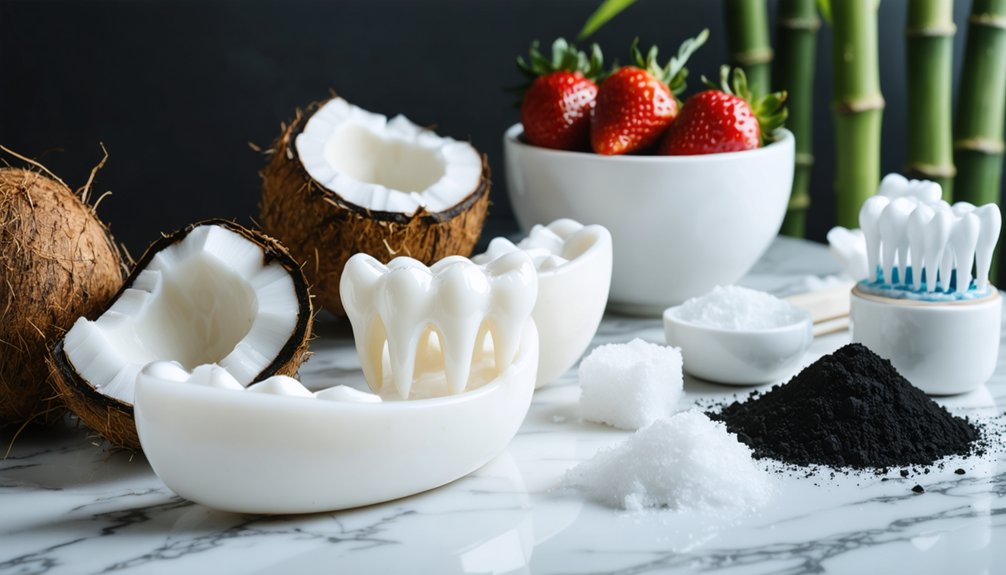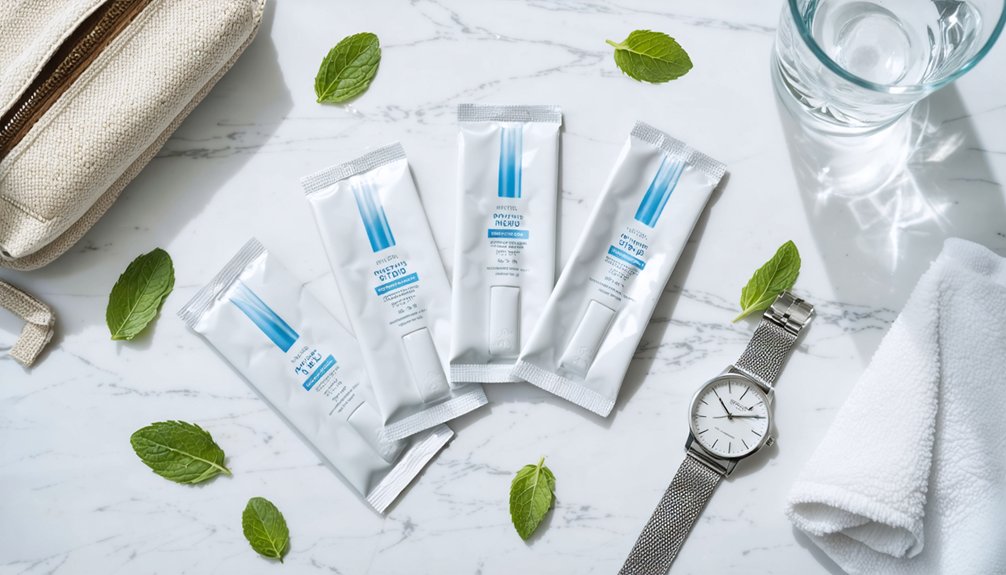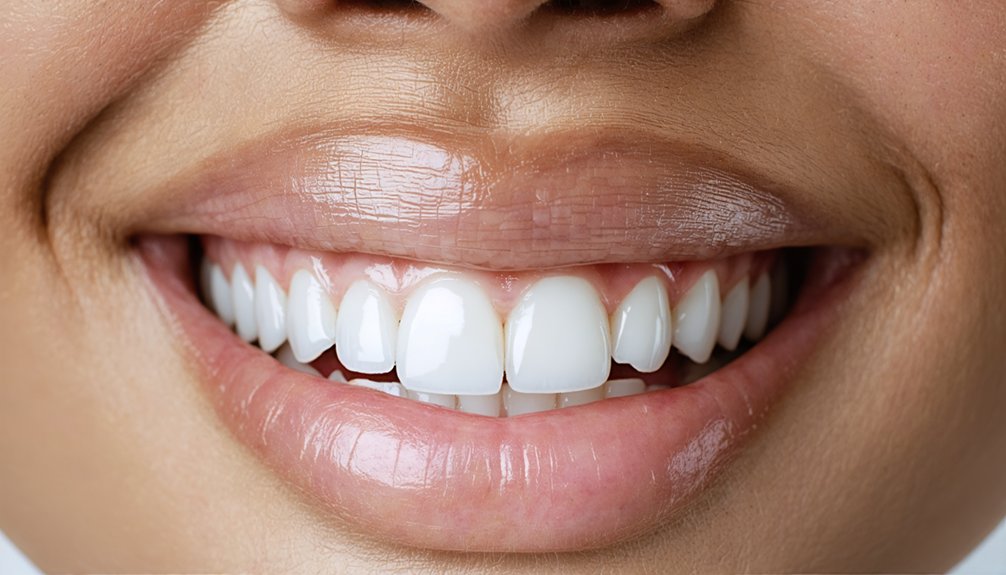
Whitening strips with PAP (phthalimidoperoxycaproic acid), hydroxyapatite, or coconut oil formulations offer better gum protection than traditional hydrogen peroxide strips. PAP targets stains without chemical irritation to soft tissue. Hydroxyapatite repairs enamel microdefects while reducing sensitivity. Coconut oil creates an antimicrobial barrier that reduces inflammation along the gum line. Brands like Smilepen, MOON Platinum, and Xwhite incorporate these ingredients for safer whitening. There’s much more to know about protecting your gums effectively.
Key Takeaways
- PAP-based strips like Smilepen Power Strips eliminate hydrogen peroxide, reducing chemical irritation and sensitivity while effectively targeting stains.
- MOON Platinum strips contain hydroxyapatite, preserving enamel integrity and minimizing gum sensitivity during whitening.
- Xwhite strips incorporate coconut oil, which nourishes gums, reduces inflammation, and inhibits bacterial plaque formation.
- Proper strip placement, avoiding gum line overlap, significantly reduces chemical contact with soft tissues and prevents irritation.
- Limiting wear time to recommended durations minimizes cumulative gum exposure, balancing whitening efficacy with tissue safety.
Why Whitening Strips Irritate Your Gums in the First Place
When whitening strips contact your gum tissue, the hydrogen peroxide or carbamide peroxide they contain triggers a chemical reaction that irritates soft tissue on a cellular level. These oxidizing agents don’t distinguish between tooth enamel and gum tissue — they penetrate both.
Whitening strips don’t discriminate — hydrogen peroxide penetrates gum tissue just as aggressively as tooth enamel.
If you have existing gum sensitivity, this chemical exposure amplifies your whitening concerns considerably.
Irritation can begin within 24 hours of your first application and persist for several days. Poorly fitted strips that overlap the gum line create direct, prolonged chemical contact, increasing tissue damage risk.
Standard treatment protocols — twice daily applications over two weeks — compound this cumulative exposure.
You’re not experiencing a minor inconvenience. You’re experiencing a predictable biochemical response to misapplied or chemically aggressive whitening agents.
What to Look for in a Gum-Safe Whitening Strip?
Knowing why gum irritation happens gives you a clear framework for choosing a product that avoids it. Prioritize strips with a non-peroxide formula, such as PAP, which targets stains without the chemical compounds that trigger tissue inflammation.
Look for hydroxyapatite-based formulations that reinforce enamel strength, reducing demineralization risk and sensitivity.
Fit matters equally — strips must conform snugly to tooth surfaces without contacting the gum line, similar to how dental floss reaches between teeth without damaging surrounding tissue.
Shorter wear times limit cumulative chemical exposure, lowering irritation risk.
Advanced adhesives that activate only on moistened tooth enamel — not lips or gums — offer additional protection.
Selecting a dentist-approved, enamel-safe formula gives you verifiable assurance that the product meets clinical safety standards.
Signs Your Whitening Strips Are Harming Your Gums
Even with careful product selection, gum damage can occur if strips are misapplied or poorly tolerated. Monitor your gum health closely during any whitening regimen.
Key warning signs include redness, swelling, or tenderness along the gum line, typically appearing within 24 hours of initial application. Bleeding gums, white patches, or a burning sensation signal direct chemical exposure and require immediate discontinuation.
For effective sensitivity management, don’t dismiss early discomfort as normal. Mild tingling on teeth differs from persistent gum pain, which indicates chemical irritation rather than standard sensitivity.
If symptoms persist beyond 48 hours after stopping use, consult a dentist. Recognizing these signs early prevents cumulative tissue damage and allows you to adjust your approach, whether that means switching formulas, correcting strip placement, or reducing application frequency.
Do Non-Peroxide Whitening Strips Actually Protect Your Gums?
If you’re concerned about gum irritation from traditional whitening strips, non-peroxide formulas offer a chemically distinct alternative worth examining. PAP-based strips, like Smilepen Power Strips, skip hydrogen peroxide entirely, eliminating the compound most responsible for dental sensitivity and gum tissue damage.
Here’s what non-peroxide strips actually deliver for your oral health:
- Chemical avoidance — PAP targets stains directly without oxidizing gum tissue
- Reduced sensitivity risk — No peroxide means fewer inflammatory responses in sensitive mouths
- Enamel preservation — PAP doesn’t compromise tooth structure or increase demineralization risk
- Gum-safe whitening — Formula works on stains while leaving surrounding tissue protected
Clinical evidence supports PAP as a gentler mechanism. You’re not sacrificing whitening effectiveness—you’re eliminating unnecessary chemical exposure your gums don’t need to endure.
How PAP Formula Whitens Your Teeth Without Touching Your Gums
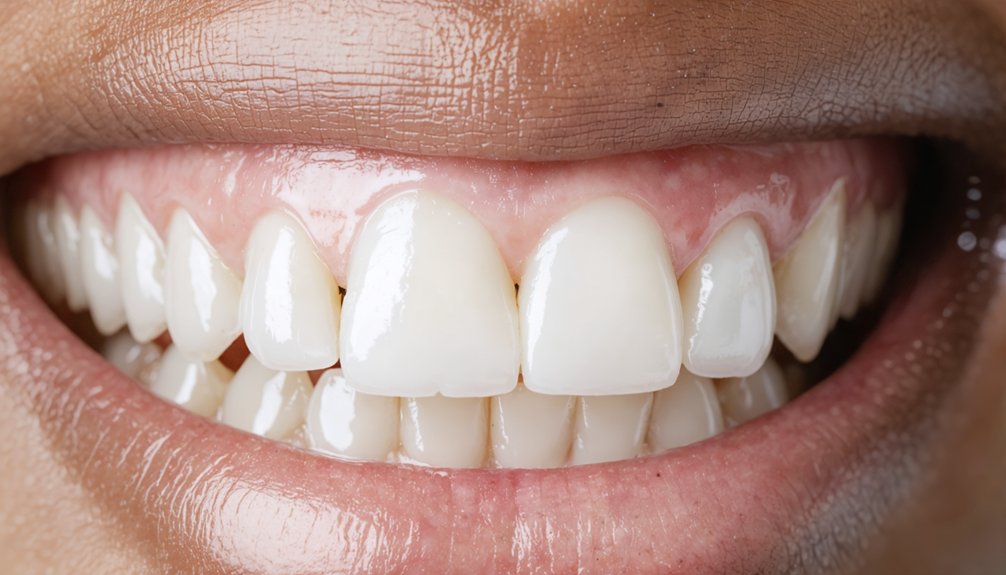
PAP—phthalimidoperoxycaproic acid—works by releasing oxygen molecules that react directly with chromophore compounds embedded in your enamel, breaking apart the molecular bonds that cause yellowing. Unlike hydrogen peroxide, PAP doesn’t penetrate beyond the enamel surface, so it won’t reach your gum tissue or trigger chemical irritation.
You’re getting targeted stain removal without systemic exposure to compounds that compromise gum integrity.
PAP formulations also support enamel strengthening, reducing demineralization risks that traditional peroxide strips accelerate. Because PAP remains localized to the tooth surface, you’re controlling exactly where the whitening chemistry occurs.
If you’ve noticed that sugar cravings increase when oral discomfort discourages consistent dental care, maintaining gum health through non-irritating whitening directly supports your broader oral hygiene discipline. PAP lets you whiten precisely, protecting every tissue that matters.
Why Hydroxyapatite Is Better for Sensitive Gums
Hydroxyapatite strengthens enamel by directly remineralizing micro-damaged tooth structure, which reduces the sensitivity that makes whitening uncomfortable for vulnerable gums. If you have reactive gums, this mechanism gives you measurable control over your whitening experience.
Here’s why hydroxyapatite supports gum health and enamel preservation:
- It repairs enamel microdefects before chemical exposure worsens them
- It reduces dentinal hypersensitivity, limiting nerve-driven gum reactions
- Its dissolving technology activates only on moistened teeth, preventing lip and gum contact
- It replaces peroxide-based mechanisms that compromise enamel integrity over repeated use
MOON Platinum strips leverage this compound to deliver professional-level whitening without sacrificing structural protection. You’re not just whitening—you’re actively reinforcing your enamel while keeping your gums chemically isolated from irritating compounds.
Can Coconut Oil in Whitening Strips Protect Your Gums?
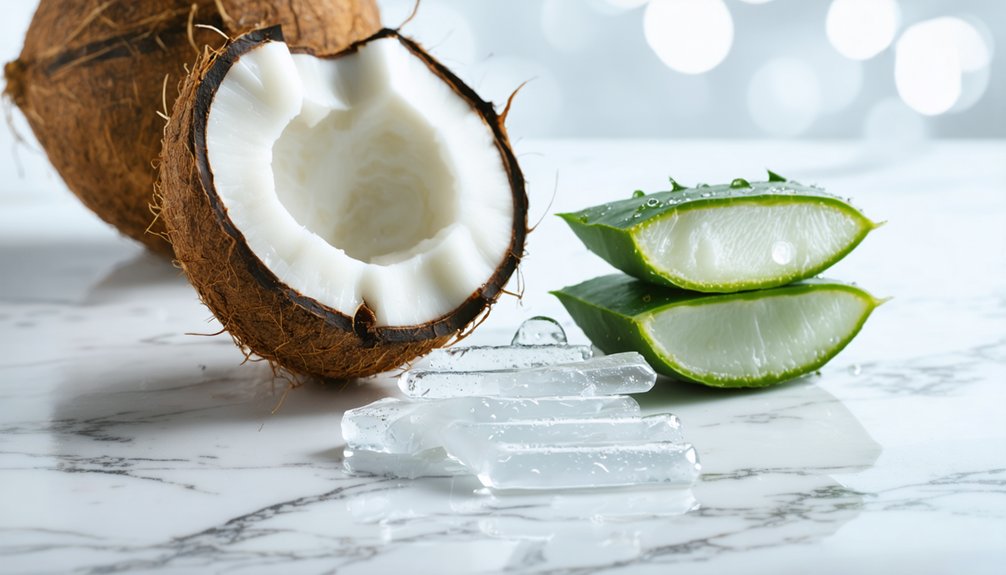
If you’re looking for an alternative approach to gum protection during whitening, coconut oil-infused strips offer a compelling option. Products like Xwhite visible strips combine hydrogen peroxide with coconut oil, which soothes sensitive gum tissue and actively prevents plaque buildup during treatment.
You’ll benefit from coconut oil’s nourishing properties, which work alongside the whitening agent to minimize chemical irritation at the gum line.
Coconut Oil’s Gum Benefits
Coconut oil has long been studied for its antimicrobial and anti-inflammatory properties, but can it actually protect your gums when integrated into a whitening strip? Evidence suggests it can deliver measurable gum nourishment benefits alongside whitening. Here’s what coconut oil contributes:
- Antimicrobial action — reduces bacteria responsible for plaque accumulation along the gum line
- Anti-inflammatory support — minimizes gum tissue irritation during chemical whitening exposure
- Gum nourishment — delivers a soothing, conditioning effect on sensitive gum tissue throughout treatment
- Plaque prevention — creates a protective barrier that limits bacterial adhesion post-application
If you’re managing gum sensitivity, selecting a strip that integrates coconut oil alongside hydrogen peroxide gives you a dual-action approach: effective whitening with active gum protection built directly into the formula.
Plaque Prevention Through Oil
How does coconut oil actually prevent plaque when it’s embedded in a whitening strip formula? Coconut oil disrupts bacterial membrane integrity, inhibiting the microbial colonies that convert sugar content into acid and plaque deposits.
When you apply Xwhite strips, the oil releases directly onto enamel surfaces, targeting bacteria at the gum line where plaque accumulates most aggressively.
This mechanism complements your existing oral hygiene routine. You should still use dental floss daily, as strips don’t reach interproximal spaces where bacterial colonies thrive.
However, the oil’s antibacterial action during each whitening session adds a protective layer that hydrogen peroxide alone can’t provide.
You’re not replacing mechanical plaque removal — you’re adding a biochemical defense that simultaneously whitens and supports gum health with each application.
Soothing Sensitive Gum Tissue
Beyond plaque prevention, coconut oil’s anti-inflammatory properties may directly soothe sensitive gum tissue during whitening. If you experience gum sensitivity, coconut oil’s integration into whitening strips creates a protective barrier that limits chemical exposure to vulnerable tissue.
Here’s how coconut oil actively supports your gum health:
- Reduces inflammatory responses triggered by whitening agents
- Forms a lipid barrier that minimizes direct chemical exposure to gum tissue
- Delivers nourishing compounds that support cellular integrity along the gum line
- Counteracts dryness and irritation that peroxide-based formulas frequently cause
You’re not simply whitening your teeth—you’re actively managing tissue health throughout the process.
Xwhite’s dentist-approved formula combines these protective mechanisms, giving you measurable control over both whitening outcomes and gum sensitivity risks simultaneously.
How Strip Fit Affects Gum Exposure During Whitening
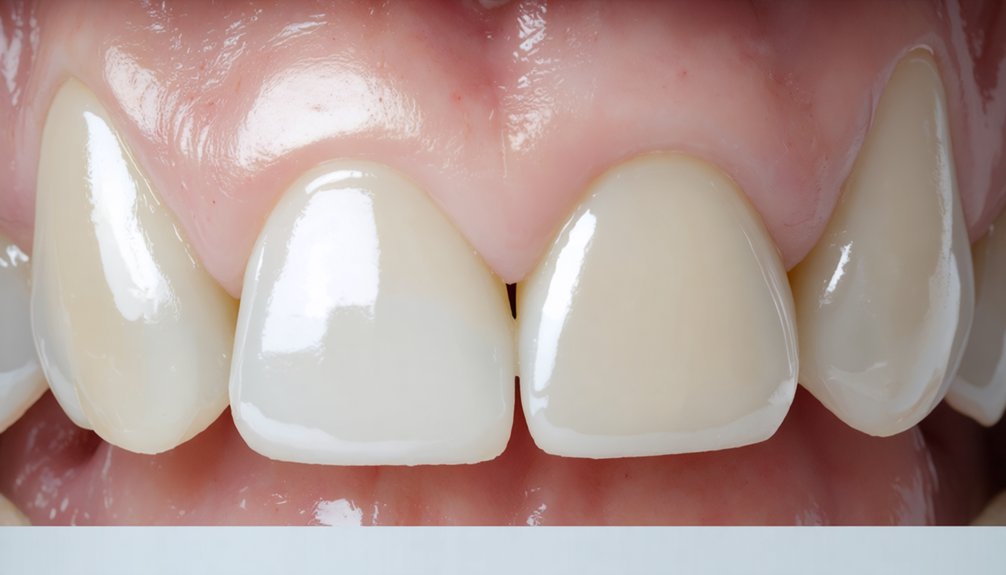
The fit of whitening strips directly determines how much chemical exposure your gums receive during treatment. When strip fit is poor, the edges curl or shift onto soft tissue, creating direct gum contact with active whitening agents. This contact triggers irritation within 24 hours and can persist for several days.
You’ll want to press each strip firmly against your teeth, confirming it contours to the enamel surface without overlapping the gum line. Check alignment before the treatment timer starts, not after. Poorly fitted strips don’t just irritate — they reduce whitening effectiveness by misaligning the formula away from target tooth surfaces.
Controlling gum contact starts with precise application. Verify the strip covers visible teeth completely while maintaining a clear boundary from soft tissue.
How Long Should You Wear Whitening Strips to Avoid Irritation?
Wear time directly controls how much chemical exposure your gums accumulate per session. Gel consistency and application techniques determine how effectively you minimize contact time without sacrificing results.
Wear time governs chemical accumulation. Technique determines how precisely you limit exposure without compromising results.
Follow these protocols to control exposure:
- Limit sessions to the minimum recommended duration — exceeding 30 minutes increases cumulative gum irritation risk significantly.
- Apply twice daily maximum — higher frequency amplifies chemical contact across a two-week cycle.
- Discontinue immediately if irritation begins — early cessation prevents prolonged tissue damage.
- Select shorter-wear formulations — products designed for sensitive teeth often reduce necessary contact time.
You control the outcome by respecting wear limits. Overextending sessions doesn’t accelerate whitening — it accelerates gum damage.
Precision in timing is as critical as precision in placement.
Best Whitening Strips for Gum Protection Right Now
When choosing whitening strips for gum protection, you’ll want to prioritize products formulated with key protective ingredients that minimize chemical exposure to sensitive gum tissue.
Three standout options currently offer distinct protective mechanisms: Smilepen Power Strips use a PAP formula instead of hydrogen peroxide, MOON Platinum strips rely on Hydroxyapatite for enamel protection and sensitivity reduction, and Xwhite integrates coconut oil to nourish gums while preventing plaque buildup.
Understanding what makes each formula effective helps you match the right strip to your specific sensitivity needs.
Top Gum-Safe Picks
Choosing the right whitening strip means balancing effective stain removal against meaningful gum protection. You’ll want to evaluate each option against clinical criteria before committing to a regimen.
- Smilepen Power Strips — PAP formula eliminates hydrogen peroxide, directly reducing gum sensitivity risk while preserving enamel integrity.
- MOON Platinum Strips — Hydroxyapatite technology prioritizes enamel preservation and dissolves only upon tooth contact, avoiding gum exposure.
- Xwhite Visible Strips — Coconut oil integration nourishes gums during whitening, offering plaque prevention alongside hydrogen peroxide whitening.
- Standard Peroxide Strips — Effective but require precise application to avoid gum contact; misalignment considerably increases irritation risk.
Assess your gum sensitivity levels honestly before selecting a formula. Your choice directly controls your risk exposure.
Key Protective Ingredients
Understanding the active ingredients in your whitening strips determines how well they protect your gums throughout treatment. Three compounds stand out for gum sensitivity and enamel preservation.
PAP (phthalimidoperoxycaproic acid) targets stains without releasing the reactive oxygen compounds that irritate gum tissue. Unlike hydrogen peroxide, it won’t chemically burn soft tissue on contact.
Hydroxyapatite bonds directly to enamel, reinforcing tooth structure while reducing sensitivity signals that accompany whitening. It addresses demineralization before it starts.
Coconut oil, when integrated into strip formulas, creates a protective barrier that soothes gum tissue and inhibits plaque adhesion during wear.
You should prioritize strips featuring at least one of these compounds, particularly if you’ve experienced gum irritation previously. Ingredient selection is your most effective control variable.
Frequently Asked Questions
Can Whitening Strips Be Used Safely During Pregnancy or Breastfeeding?
Imagine a first-time mom postponing whitening—wisely. You should avoid whitening strips during pregnancy and breastfeeding. Pregnancy safety concerns and breastfeeding considerations mean chemical absorption risks remain unclear; dentists consistently recommend delaying treatment until after nursing ends.
How Do Whitening Strips Compare to Professional Dental Whitening Treatments?
Professional treatments deliver stronger peroxide concentrations than at-home whitening strips, achieving faster results. You’ll find strips offer a cost comparison advantage, though they require longer treatment durations with lower efficacy and increased sensitivity risks.
Are Whitening Strips Effective on Crowns, Veneers, or Dental Implants?
Over 15 million Americans have veneers. Whitening strips won’t lighten crowns, veneers, implants, or dental bonding—they’re ineffective on artificial materials. You’ll only affect natural enamel, potentially worsening tooth sensitivity by creating visible color mismatches between treated and untreated surfaces.
Can Children or Teenagers Safely Use Gum-Protective Whitening Strips?
You shouldn’t allow children safety protocols to be overlooked—teenage use of whitening strips isn’t recommended without dental consultation, as developing enamel increases vulnerability to chemical sensitivity and gum irritation, even with protective formulations.
How Should Whitening Strips Be Stored to Maintain Their Effectiveness?
Store strips strategically: you’ll preserve peak performance by keeping them cool, dry, and away from direct sunlight. Seal packaging securely between uses. These storage tips guarantee effectiveness preservation, maintaining the active whitening agents’ potency throughout your treatment.
References
- https://www.cnet.com/health/personal-care/best-teeth-whitening-strips/
- https://www.healthline.com/health/do-whitening-strips-work
- https://smilepen.ch/en/products/whitening-strips
- https://moonoralbeauty.com/products/platinum-dissolving-teeth-whitening-strips
- https://xwhitesmile.com/en/