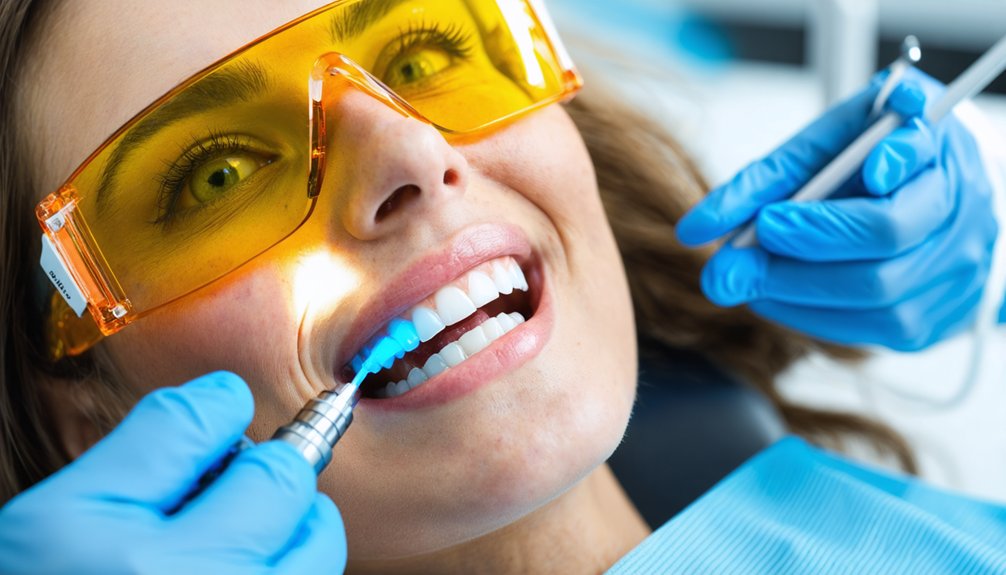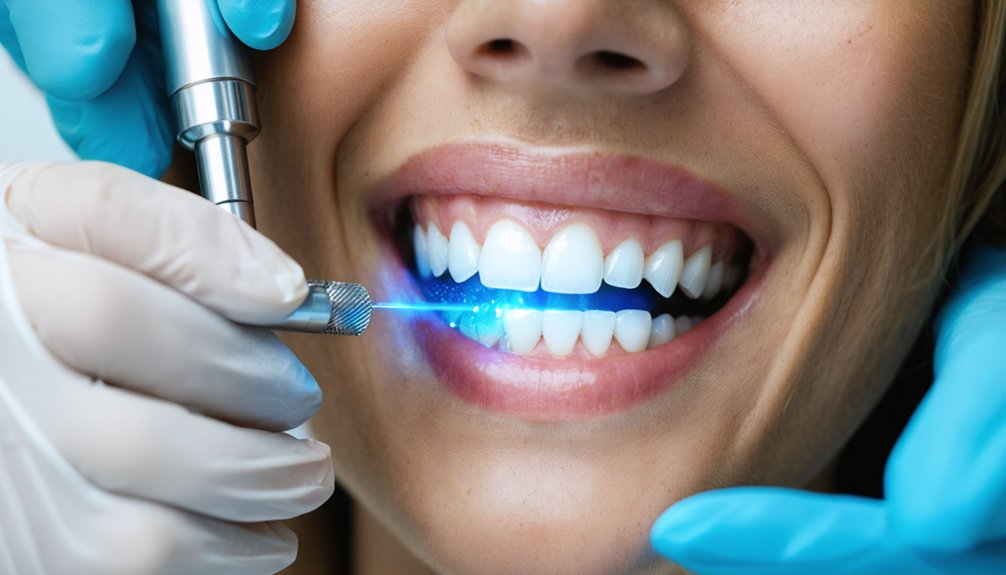
After laser teeth whitening, your teeth enter an immediate recovery phase where whitening gels have temporarily opened your enamel pores, making them highly susceptible to staining and sensitivity. Your protective protein pellicle layer takes 12–24 hours to regenerate, and sensitivity can last up to 72 hours. You’ll need to follow strict dietary restrictions for 48 hours and practice gentle oral hygiene. Everything you need to navigate your recovery successfully is covered ahead.
Key Takeaways
- Teeth are most sensitive within the first 24–72 hours post-treatment, with discomfort typically resolving within one week.
- Enamel remains highly porous for 48 hours, making strict dietary restrictions essential to prevent staining.
- Teeth appear brightest immediately after treatment, reaching their final shade by approximately day seven.
- Use desensitizing toothpaste, soft-bristled brushes, and fluoride rinses to support enamel recovery and reduce sensitivity.
- Results last 6 months to 2 years, depending on diet, smoking habits, and oral hygiene consistency.
What Happens to Your Teeth Right After Laser Whitening?
Once the laser whitening session ends, your teeth enter an immediate recovery phase that requires minimal downtime — you can resume normal activities right away. However, understanding what’s happening beneath the surface helps you protect your results.
Recovery after laser whitening is immediate — but protecting your results requires understanding what’s happening beneath the surface.
The whitening gels used during treatment temporarily open your enamel’s pores, making teeth highly susceptible to staining and sensitivity.
Simultaneously, the protective protein pellicle layer — naturally stripped during the procedure — takes 12 to 24 hours to fully regenerate. Until it does, your teeth remain vulnerable.
You’ll notice they appear brightest immediately post-treatment, but expect a slight tonal shift over the next 48 hours as rehydration occurs.
Maintaining proper dental hygiene during this window is critical to locking in your results and minimizing unnecessary complications.
When Will Your Teeth Reach Their Final Shade?
Though your teeth look their brightest immediately after treatment, that peak shade isn’t permanent — rehydration causes a slight tonal shift over the next 48 hours as moisture returns to the enamel. By day seven, your teeth typically settle into their true final shade.
This stabilization window is critical for dental stain prevention. Your enamel health remains vulnerable during the first 48 to 72 hours, making strict dietary compliance non-negotiable. Avoid pigmented foods, tobacco, and acidic beverages that accelerate discoloration before the protective pellicle layer fully reforms.
If you’ve completed multiple sessions, the cumulative result becomes clearer once rehydration finishes. Track your shade against a dental color guide to objectively measure progress and determine whether additional touch-up treatments align with your whitening goals.
How Long Does Sensitivity Last After Laser Whitening?
After laser teeth whitening, you can expect sensitivity to hot and cold temperatures to last anywhere from 24 to 72 hours, depending on your individual response to the treatment.
To manage discomfort, take 600 mg of ibuprofen every six hours for the first 24 hours and switch to a desensitizing toothpaste for 10 to 14 days if sensitivity persists.
For most patients, sensitivity resolves fully within one week, though those with heightened sensitivity may experience mild effects for up to two weeks.
Typical Sensitivity Duration
Sensitivity following laser teeth whitening typically lasts between 24 to 72 hours, though individual factors like baseline tooth sensitivity and enamel thickness can influence that window. Managing this phase strategically keeps you in control of your recovery.
- Take 600 mg of ibuprofen every 6 hours for the first 24 hours to preemptively reduce discomfort.
- Apply desensitizing toothpaste for 10 to 14 days if sensitivity persists beyond the initial window.
- Follow dietary restrictions strictly—avoid hot or cold foods and beverages until sensitivity subsides.
- Maintain oral hygiene using a soft-bristled toothbrush with gentle circular motions to avoid aggravating sensitive tissue.
Most non-sensitive cases return to baseline within one week. Persistent sensitivity may extend to two weeks, but consistent aftercare protocols markedly compress that timeline.
Managing Post-Treatment Discomfort
Knowing how long sensitivity lasts is one thing—knowing how to actively manage it is another. Take 600 mg of ibuprofen every six hours for the first 24 hours to get ahead of discomfort before it intensifies.
Switch to a desensitizing toothpaste and use it consistently for 10 to 14 days. Your oral hygiene routine matters here—brush gently with a soft-bristled toothbrush using circular motions, and avoid aggressive flossing near sensitive gumlines.
Dietary restrictions are equally critical during this window. Eliminate hot and cold foods and beverages until sensitivity subsides, typically within 24 to 72 hours.
Rinse with water immediately after consuming anything remotely staining. A fluoride rinse before bed adds a protective layer.
You control how smooth your recovery goes—follow the protocol precisely.
When Sensitivity Resolves
For most patients, tooth sensitivity following laser whitening resolves within 24 to 72 hours. Your teeth’s moisture levels normalize as rehydration occurs, gradually restoring natural comfort. Gum health also stabilizes within this window, provided you follow proper post-treatment protocols.
Track your recovery using these benchmarks:
- 24 hours: Acute sensitivity to temperature typically peaks then begins declining
- 48 hours: Teeth moisture levels stabilize; rehydration reduces nerve hypersensitivity noticeably
- 72 hours: Most sensitivity dissipates completely for non-sensitive individuals
- 1 to 2 weeks: Persistent cases involving compromised gum health or pre-existing sensitivity fully resolve
If sensitivity extends beyond two weeks, contact your dentist immediately. Prolonged discomfort may signal an underlying condition requiring professional evaluation rather than standard post-treatment management.
How to Relieve Tooth Sensitivity After Laser Whitening
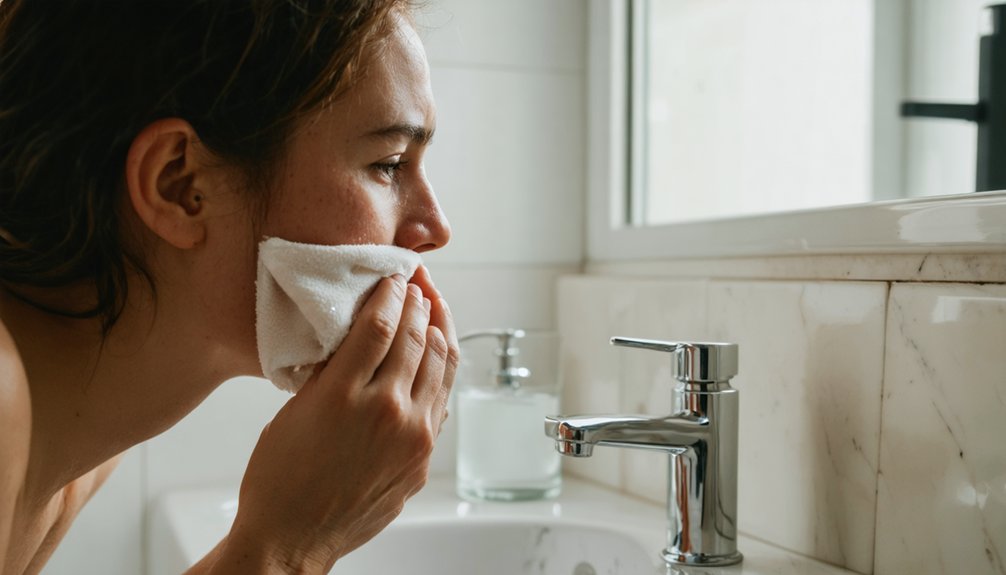
If you’re experiencing sensitivity after laser whitening, taking 600 mg of ibuprofen every 6 hours for the first 24 hours can help prevent or reduce discomfort.
You should also switch to a desensitizing toothpaste for 10 to 14 days, as it actively blocks the nerve signals responsible for temperature-triggered pain.
Avoiding extremely hot or cold foods and drinks during this window further reduces the irritation your newly treated teeth are vulnerable to.
Managing Post-Treatment Sensitivity
Tooth sensitivity after laser whitening is one of the most common side effects you’ll experience, but it’s entirely manageable with the right approach. Take 600 mg of ibuprofen every 6 hours for 24 hours to stay ahead of discomfort.
Apply desensitizing toothpaste for 10 to 14 days to rebuild protection. Your oral hygiene routine and nutrition tips during this window directly affect recovery speed.
- Avoid extremely hot or cold foods and beverages for 48 to 72 hours
- Use a soft-bristled toothbrush with gentle circular motions
- Rinse with water immediately after consuming any staining substance
- Stick to the White Diet — milk, water, bananas, and white bread
Sensitivity typically resolves within 24 to 72 hours with consistent management.
Desensitizing Products That Help
When sensitivity lingers after your laser whitening session, desensitizing products are your most reliable line of defense. Apply desensitizing toothpaste containing potassium nitrate or stannous fluoride twice daily for 10 to 14 days post-treatment. These compounds calm exposed dentinal tubules, reducing pain responses to temperature changes.
Incorporate a fluoride rinse into your nightly oral hygiene routine by swishing vigorously for at least one minute before bed. Fluoride strengthens enamel and accelerates remineralization, helping your teeth recover faster while supporting stain prevention by reinforcing the protective surface layer.
If over-the-counter options aren’t enough, ask your dentist about professional-grade desensitizing gels applied directly to tooth surfaces.
Taking 600 mg of ibuprofen every six hours during the first 24 hours also effectively controls discomfort before sensitivity peaks.
The White Diet: What to Eat and Avoid After Laser Whitening
After laser teeth whitening, what you eat and drink in the next 24 to 48 hours can directly impact how long your results last. Your enamel remains highly porous post-treatment, making strict diet restrictions and stain prevention essential during this window.
Follow the “White Diet” to protect your investment:
- Permitted foods: Milk, water, clear soda, bananas, peeled apples, and white bread
- Avoid immediately: Coffee, tea, red wine, dark sodas, red meat, and soy sauce
- Prohibited substances: Berries, mustard, ketchup, and tomato-based sauces for at least 48 hours
- No smoking or vaping: Tobacco and nicotine products stain enamel rapidly during recovery
Rinse with water immediately after consuming anything borderline. You control how well your results hold—your dietary choices in this period determine that outcome.
How to Brush and Floss Without Aggravating Sensitive Teeth
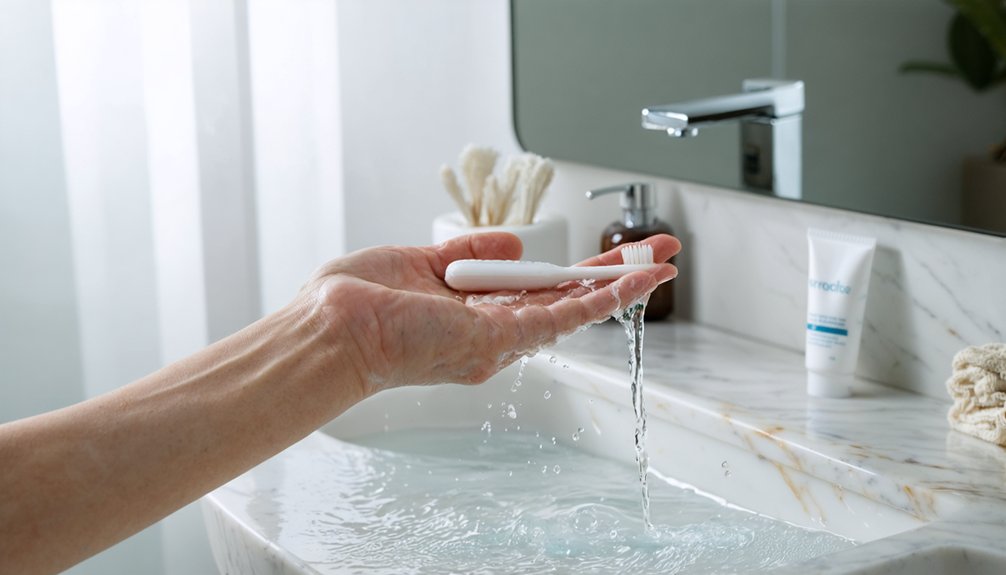
Keeping your teeth clean after laser whitening requires a modified approach to avoid irritating sensitive enamel and gums. Wait 30 to 60 minutes before brushing to reduce post-treatment irritation.
When you do brush, use a soft-bristled toothbrush with gentle circular motions — aggressive scrubbing damages vulnerable enamel and worsens sensitive gums.
Your oral hygiene routine should also include careful flossing. Don’t skip it, but work the floss gently between teeth to avoid aggravating inflamed gum tissue. If bleeding or discomfort increases, ease your pressure.
Rinse with water immediately after consuming anything potentially staining.
Before bed, swish a fluoride rinse vigorously for at least one minute without swallowing. This strengthens enamel and supports recovery during the most vulnerable window post-treatment.
How Long Do Laser Teeth Whitening Results Last?
Results from laser teeth whitening don’t last forever, but with proper maintenance, you can expect your smile to stay noticeably brighter for six months to two years depending on your dietary habits, oral hygiene routine, and lifestyle factors like smoking. Your dental aesthetics depend heavily on the choices you make post-treatment to prevent tooth discoloration from returning prematurely.
- Avoid red wine, coffee, tea, and darkly pigmented foods consistently.
- Schedule regular dental cleanings to remove surface stains before they set.
- Use touch-up whitening kits as recommended to extend results.
- Eliminate tobacco products, which accelerate discoloration faster than most dietary factors.
Multiple in-clinic sessions may be necessary to reach your desired brightness level, and periodic maintenance treatments keep your results from fading prematurely.
Frequently Asked Questions
Can I Wear Lipstick or Use Lip Products Right After Treatment?
48 hours post-treatment, you shouldn’t risk lipstick application or lip product safety—staining agents transfer directly onto vulnerable enamel. Avoid all lip cosmetics during this critical window to protect your results effectively.
How Many Laser Whitening Sessions Are Needed to Reach Desired Brightness?
You’ll typically need three to four laser whitening sessions to reach your desired brightness. Maintaining strict diet restrictions and proper dental hygiene between sessions guarantees you’re maximizing and preserving each treatment’s progressive whitening results effectively.
Is Laser Whitening Sensitivity Different From At-Home Whitening Kit Sensitivity?
Yes, sensitivity comparison reveals distinct whitening method effects—your at-home kit sensitivity dissipates after a 1-2 day rest between applications, while in-office laser results typically produce more immediate, intense sensitivity lasting 24-72 hours post-treatment.
How Long Does the Protective Pellicle Layer Take to Fully Regenerate?
Within 12–24 hours, your dental enamel’s protective pellicle layer fully regenerates. This protein shield is critical for your oral health, so you’ll want to minimize staining exposure and avoid abrasive substances during this vulnerable window.
Can I Resume Smoking or Vaping After the Initial 48-Hour Recovery Window?
While smoking restrictions and vaping guidelines ease after 48 hours, you shouldn’t resume these habits long-term, as tobacco products considerably reduce your whitening results’ longevity and compromise the sustained brightness you’ve invested in achieving.
References
- https://www.healthline.com/health/dental-and-oral-health/laser-teeth-whitening
- https://www.creativesmilesdentistry.net/wp-content/uploads/2020/12/Laser-Whitening-Post-Op.pdf
- https://ziedasdental.com/how-to-maintain-your-results-after-laser-teeth-whitening/
- https://aedit.com/procedure/laser-teeth-whitening
- https://yapitahealth.com/en/treatments/laser-teeth-whitening-procedure
- https://familydentistryofshelby.com/post-op-care/
- https://www.dentistsanfrancisco.com/teeth-whitening-aftercare-guide/
- http://www.dcaredentalclinic.com/tour-package/cosmetic-dentistry/laser-tooth-whitening/
- https://www.indiadens.com/pdf/18-POST-OP-INSTRUCTIONS-BLEACHING.pdf