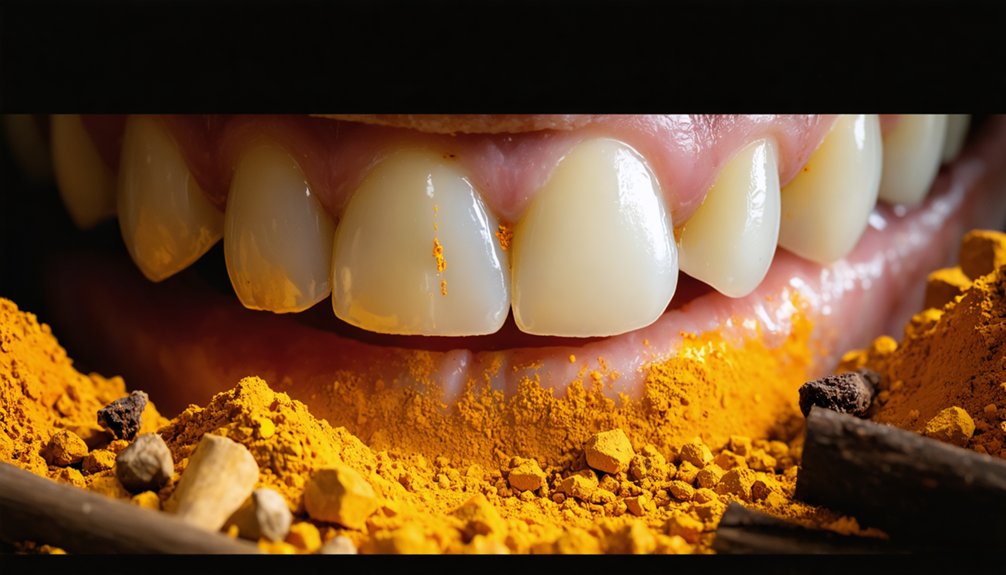
Turmeric and curry stain your teeth because curcumin, their core pigment, bonds aggressively to enamel at a molecular level. Its lipophilic nature lets it penetrate microscopic enamel pores, while tannins in curry act as molecular bridges that strengthen adhesion. Acidic ingredients like tomatoes and tamarind erode enamel further, widening those pores and driving pigment deeper. Without prompt action, surface stains become intrinsic ones that resist removal. There’s considerably more to understand about protecting your smile.
Key Takeaways
- Curcumin, turmeric’s primary pigment, aggressively binds to calcium in tooth enamel, creating persistent and difficult-to-remove stains.
- Curry contains tannins that act as molecular bridges, strengthening curcumin’s adhesion to the tooth surface.
- Acidic curry ingredients like tomatoes and tamarind erode enamel, widening pores and allowing deeper pigment infiltration.
- Hot curry causes micro-cracks in enamel through temperature fluctuations, further facilitating curcumin penetration below the surface.
- Repeated exposure shifts staining from removable surface stains to deeply embedded intrinsic stains, making removal significantly harder.
Why Do Turmeric and Curry Stain Teeth So Effectively?
Turmeric stains teeth so effectively because of curcumin, its primary polyphenolic pigment, which binds aggressively to both the calcium ions in your enamel and the protein-rich pellicle coating it. Its lipophilic nature allows it to penetrate microscopic enamel pores, creating stains that resist routine brushing.
Curcumin’s lipophilic nature allows it to penetrate enamel pores, creating stains that resist routine brushing.
Curry compounds this problem by introducing tannins, which act as molecular bridges, strengthening curcumin’s adhesion to your enamel surface.
Acidic curry ingredients further erode enamel, widening pores and accelerating pigment infiltration. Over time, repeated exposure shifts staining from extrinsic to intrinsic, making natural remedies increasingly insufficient for reversal.
Once pigments embed deeply, you’ll likely require professional treatments to restore your enamel’s appearance. Understanding this mechanism gives you a clear basis for taking targeted, preventative action before staining becomes entrenched.
How Acidic Curry Ingredients Open Enamel to Deeper Staining
Acidic curry ingredients like tomatoes, tamarind, and citrus actively erode your enamel‘s mineral surface, widening microscopic pores and creating fissures that trap curcumin pigments far below what brushing can reach. This acidic interaction temporarily softens enamel, reducing its natural resistance and increasing porosity during the exact window when pigment exposure is highest.
Temperature fluctuations from hot curry compounds this damage further, inducing micro-cracks that allow curcumin to infiltrate deeper structural layers. Enamel porosity increases with repeated acid exposure, meaning each curry meal compounds the vulnerability established by the last.
You can limit this damage by rinsing immediately after eating, waiting 30 minutes before brushing to avoid scrubbing softened enamel, and scheduling regular professional cleanings to address accumulation before it becomes intrinsic discoloration.
Are Turmeric Stains Surface-Level or Embedded in Your Enamel?
Whether a turmeric stain remains on your enamel’s surface or embeds deeper into the tooth structure depends on how long curcumin has had contact with your teeth and the integrity of your enamel at the time of exposure.
Surface-level extrinsic stains form quickly and respond well to professional hygiene cleaning. However, the staining mechanism shifts when enamel porosity is elevated. Increased porosity, often caused by acid exposure from curry ingredients, allows curcumin to penetrate beyond the surface and lodge within the tooth’s deeper layers.
These intrinsic stains resist routine brushing and are difficult to fully reverse. You can prevent deeper embedding by rinsing immediately after consumption, maintaining consistent oral hygiene, and scheduling regular professional cleanings before stains progress from surface-level to structural discoloration.
Why Turmeric Stains Become Harder to Remove the Longer You Wait
The longer curcumin remains in contact with your teeth, the more firmly it bonds to enamel structures, making removal progressively more difficult. Initial exposure produces extrinsic stains that respond well to professional cleaning and stain prevention routines.
However, delayed intervention allows curcumin to penetrate deeper, shifting surface discoloration into intrinsic staining that resists standard brushing entirely.
Repeated exposure without prompt rinsing accelerates pigment accumulation within enamel pores, compounding the difficulty of removal over time. Natural remedies and whitening toothpastes address early-stage staining effectively, but they’re largely ineffective once curcumin embeds deeply into dental structures.
You retain control by acting immediately—rinsing after consumption, brushing consistently, and scheduling regular hygiene appointments before stains migrate beyond the enamel surface and require more intensive professional intervention.
How to Stop Turmeric and Curry From Staining Your Teeth
Preventing turmeric and curry stains requires acting before pigments have the opportunity to bond and accumulate. Rinse your mouth with water immediately after consuming turmeric-based foods to disrupt early curcumin adhesion.
Brush twice daily with whitening fluoride toothpaste and floss once daily to clear trapped particles before they embed deeper.
As natural remedies go, pairing turmeric with dairy products like milk or yogurt creates a protective coating that blocks curcumin from reaching enamel.
For diet adjustments, limit high-turmeric meal frequency and use a straw for turmeric lattes or smoothies to minimize direct pigment contact.
Schedule regular professional hygiene appointments to address extrinsic buildup before intrinsic staining develops.
Consistent application of these strategies keeps discoloration manageable and your enamel protected.
Frequently Asked Questions
Can Turmeric Staining Affect Dental Restorations Like Crowns or Veneers?
Like a shadow that won’t fade, turmeric stains your crowns and veneers through dental material compatibility differences. You’ll need targeted stain removal techniques, as curcumin binds persistently—rinse immediately and schedule professional cleanings regularly.
Does Drinking Turmeric Tea Cause the Same Staining as Eating Curry?
Turmeric tea’s potency delivers similar culinary color staining as curry, but curry’s tannins intensify adhesion. You’ll reduce risk by rinsing immediately after drinking and using a straw to minimize direct enamel contact.
Are Certain Tooth Types or Enamel Thicknesses More Vulnerable to Staining?
Thinner enamel’s practically a welcome mat for curcumin. Your enamel vulnerability skyrockets with worn or porous surfaces, and tooth sensitivity signals weakened protection. You’re at higher staining risk, so prioritize remineralization and limit turmeric exposure proactively.
Can Turmeric Stains Affect the Results of Professional Teeth Whitening Treatments?
Yes, turmeric’s intrinsic stains can compromise your whitening results. Your dietary habits directly influence stain removal outcomes—deeper curcumin deposits resist bleaching agents, so you’ll need professional cleaning beforehand to maximize treatment effectiveness.
Do Children’s Teeth Stain Faster From Turmeric Than Adult Teeth?
Yes, children’s enamel has higher staining susceptibility because it’s thinner and more porous than adult enamel. You should limit your child’s turmeric exposure and rinse their mouth immediately after consumption to prevent accumulation.
References
- https://www.stpaulsmd.co.uk/blog/can-a-professional-hygiene-clean-help-get-rid-of-yellow-stains-caused-by-turmeric-or-curry
- https://dentistryondanforth.com/will-turmeric-stain-your-teeth/
- https://clubwhitesmile.com/why-does-turmeric-and-curry-stain-teeth/
- https://perforacare.com/blogs/stained-teeth/does-turmeric-stain-teeth
- https://www.trysnow.com/blogs/news/does-turmeric-stain-your-teeth
- https://familydentistottawa.com/7-foods-staining-teeth/
- https://www.aquafresh.com/en-gb/oral-care-information/deep-cleaning-and-teeth-whitening-information/how-to-prevent-stained-teeth/
- https://omre.co/blogs/news/does-turmeric-stain-your-teeth
- https://www.bbc.co.uk/food/articles/c4glpdle5dlo
- https://danforthdentistry.com/turmeric-for-teeth/