For deep discoloration, laser technology—particularly dual-wavelength systems like GentleMax Pro—delivers the most clinically effective results. These devices penetrate the lower dermis where excess melanin and structural breakdown originate. IPL addresses diffuse epidermal pigmentation, but it can’t reliably reach entrenched pigment zones. LED alone rarely corrects resistant deep discoloration. Your skin type, pigment depth, and wavelength selection all determine outcomes—and each of those factors is worth understanding before you choose a treatment.
Key Takeaways
- Laser technologies like GentleMax Pro and fractional lasers penetrate deeper skin layers, making them most effective for resistant, deep discoloration.
- Dual-wavelength lasers target pigment in lower skin layers, surpassing IPL and LED for complex, deep discoloration treatment.
- Near-infrared light (830–950 nm) reaches the deepest dermal layers, supporting structural repair and targeting entrenched pigmentation.
- IPL effectively treats diffuse epidermal pigmentation but is less suitable for deep discoloration compared to laser technology.
- LED therapy is safe across all skin types but lacks clinical efficacy for resistant, deeply embedded pigmentation.
What Deep Discoloration Actually Means for Your Skin
When most people notice uneven skin tone or stubborn dark spots, they’re seeing only part of the problem. Surface discoloration reflects what’s visible, but deep discoloration originates in the lower dermal layers where melanin overproduction and structural breakdown occur simultaneously.
Understanding color theory helps clarify why some pigmentation resists topical treatment — brown, red, and blue-gray tones each indicate different chromophore depths and compositions. Targeting the wrong depth means incomplete clearance, regardless of product quality.
Not all pigmentation responds the same — color reveals depth, and depth determines what treatment can actually reach.
Skin hydration also plays a structural role. Dehydrated skin scatters light unevenly, making discoloration appear more pronounced and obscuring accurate assessment. Hydrated tissue allows light-based treatments to penetrate more precisely and perform more predictably.
Deep discoloration isn’t a surface issue. It requires technology calibrated to reach and correct the source.
Why Wavelength Determines How Deep Light Penetrates
Because light behaves differently depending on its wavelength, the depth it reaches in tissue varies in predictable, measurable ways. Shorter wavelengths like blue light at 450 nm interact primarily at the surface, while green at 532 nm reaches melanocytes in the epidermis.
Red light at 630 nm penetrates deeper, producing measurable results on dark spots where color contrast between pigmented and surrounding tissue is most visible. Near-infrared at 830–950 nm reaches the dermis, supporting structural repair at levels visible light can’t access.
Treatment timing depends on matching wavelength to target depth. Selecting the wrong wavelength means energy dissipates before reaching the pigment. Understanding this relationship gives you precise control over which skin layer you’re addressing and which technology will actually deliver results.
IPL vs. Laser: Which One Reaches Deeper Pigment?
Both IPL and laser treatments direct energy into the skin to break down pigment, but they don’t reach the same depth or target the same type of discoloration. Your choice determines how effectively you address color contrast and skin hydration concerns alongside pigment clearance.
- IPL targets diffuse epidermal pigmentation like sun spots and redness using broad-spectrum light.
- GentleMax Pro and Frax lasers penetrate deeper, treating resistant pigment that IPL can’t reliably reach.
- Dual-wavelength lasers specifically address pigment sitting in lower skin layers for more complex discoloration.
If your discoloration is mild to moderate, IPL delivers compounding results within one to two weeks per session.
For deeper, more stubborn pigment, laser technology gives you more precise, controlled outcomes.
The Best Wavelengths for Breaking Down Deep Discoloration
Wavelength determines how far light energy travels into the skin and which chromophores it disrupts.
Wavelength is the deciding factor—it controls how deep light penetrates and which skin targets it reaches.
For color correction targeting deep discoloration, you’ll want wavelengths between 532 nm and 950 nm. Green light at 532 nm drives strong melanin pigment absorption, breaking down excess melanin in superficial-to-mid dermal layers.
Red light at 630 nm penetrates deeper, producing clinically documented results on stubborn dark spots. Near-infrared at 830 nm reaches the deepest layers, supporting tissue repair where resistant pigment resides.
Dual-wavelength protocols combine these ranges to address discoloration at multiple depths simultaneously.
Selecting the correct wavelength isn’t optional—it’s the variable that determines whether energy reaches your target chromophore or dissipates before making meaningful contact with deeper pigment deposits.
Why LED Light Rarely Reaches Deep Discoloration Alone
When you use LED light therapy for hyperpigmentation, you’re working with a modality that penetrates superficial skin layers effectively but struggles to reach deeper dermal pigment deposits.
Clinical evidence shows that red light at 630 nm and infrared at 830 nm produce measurable results on surface discoloration, yet deeper pigment sitting below the epidermis often requires more targeted energy delivery.
If your discoloration is resistant or seated deeper in the skin, technologies like GentleMax Pro, fractional lasers, or IPL direct concentrated energy precisely into pigment that LED devices can’t reliably address.
LED Penetration Depth Limits
LED light therapy operates across three primary wavelengths relevant to pigmentation—blue (450 nm), red (630 nm), and near-infrared (830 nm)—but even the deepest-penetrating options rarely reach the dermal layers where stubborn discoloration originates. Understanding color theory clarifies why: shorter wavelengths scatter before reaching deep pigment formation sites, limiting their clinical impact on resistant discoloration.
Here’s what the penetration data shows:
- Blue light (450 nm) targets surface bacteria, not deep melanin deposits.
- Red light (630 nm) reaches superficial dermis but falls short of deeper pigment formation zones.
- Near-infrared (830 nm) penetrates furthest yet still provides limited direct impact on entrenched discoloration.
When you’re targeting deep discoloration, LED alone won’t deliver the precision you need.
When Lasers Work Better
Penetration depth is where LED therapy meets its practical ceiling—and where laser technology takes over. When discoloration sits in the deeper dermal layers, LED’s diffuse energy simply can’t concentrate enough power to fragment the pigment.
Lasers direct precise wavelengths into targeted tissue, breaking melanin deposits into particles your body clears naturally.
For deeper color correction, GentleMax Pro and dual-wavelength fractional lasers outperform LED by delivering controlled energy exactly where resistant pigment lives. Non-ablative fractional lasers address both pigmentation and texture simultaneously, advancing skin rejuvenation without significant downtime.
IPL extends this reach further, penetrating deeply enough to treat sun spots, vascular redness, and moderate diffuse discoloration.
If your concern sits below the epidermis, laser-based modalities give you measurably stronger clinical outcomes than LED alone.
Which Light Treatment Is Right for Your Skin Type and Depth?
Choosing the right light treatment depends on both the depth of your discoloration and your skin’s tolerance for specific wavelengths.
If your pigment sits in the epidermis, IPL at targeted wavelengths effectively breaks down sun spots and diffuse redness without requiring ablative procedures.
For deeper, more resistant discoloration, you’ll need dual-wavelength lasers or near-infrared modalities that penetrate beyond what LED or standard IPL can reliably reach.
Matching Light to Depth
Not all light treatments reach the same skin depth, and matching wavelength to pigment location determines whether you’ll see clinical results. Superficial color correction requires different tools than deep pigment fragmentation.
- 532 nm green light targets melanocytes near the surface, breaking down excess melanin in the epidermis.
- 630 nm red light penetrates mid-dermal layers, producing clinically documented results on dark spots and discoloration.
- 830–950 nm near-infrared reaches the deepest skin layers, supporting repair where resistant pigmentation originates.
IPL addresses diffuse epidermal pigmentation effectively, while dual-wavelength lasers like GentleMax Pro reach pigment sitting lower in the skin.
You control outcomes by identifying pigment depth first, then selecting the wavelength with confirmed clinical reach for that specific layer.
Skin Type Compatibility
Skin type determines which light treatment delivers results versus which one risks post-inflammatory hyperpigmentation or burns. If you have deeper skin tones, aggressive IPL settings can trigger rebound pigmentation, making precise wavelength selection critical for safe color correction.
LED therapy at 630 nm or 830 nm works across all Fitzpatrick skin types without UV risk, making it a reliable skin rejuvenation option regardless of melanin density.
Lighter skin types tolerate IPL and GentleMax Pro more predictably, with faster clearance of sun-induced discoloration.
You should always confirm your provider calibrates device settings to your specific Fitzpatrick classification.
Mismatched technology and skin type don’t just delay results—they worsen the condition you’re treating. Precision in selection is non-negotiable.
How Many Sessions Deep Discoloration Actually Takes
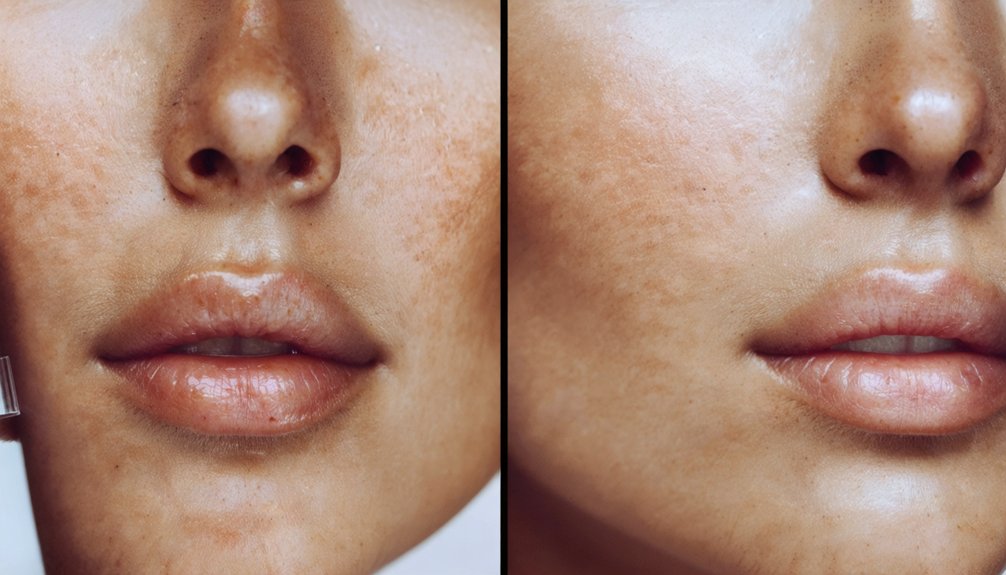
Clearing deep discoloration takes more sessions than most patients expect. Pigment migration below the epidermis demands repeated, targeted energy delivery before visible color correction occurs.
Standard session requirements by modality:
- IPL: 3–5 sessions spaced 3–4 weeks apart for sun spots and moderate discoloration
- Non-ablative fractional laser: 4–6 sessions for deeper, more resistant pigmentation
- LED red light therapy: Weekly in-office sessions for one month, with at-home maintenance every 1–3 months
You should expect compounding results rather than immediate clearance. Each session fragments additional pigment, allowing your lymphatic system to clear it progressively.
Skipping sessions interrupts this cycle and delays outcomes. Committing to the full protocol gives you the most precise control over your final results.
How Long Before You See Real Results
Results don’t arrive on a single timeline—they shift depending on the technology you’re using and how deep your pigmentation sits. IPL delivers visible changes within one to two weeks post-treatment as your body clears fragmented pigment. That clearance process follows predictable pigment chemistry—melanin absorbs targeted energy, fragments, and disperses through lymphatic pathways.
LED red light at 630 nm produces subtler shifts, typically requiring four to five weeks of consistent use before measurable tone correction appears. Color theory applies here: deeper discoloration requires longer wavelengths and more cumulative sessions before surface contrast visibly reduces.
Fractional lasers accelerate that timeline for resistant pigment. You’re not waiting passively—each session compounds the last, driving progressive results if your protocol stays consistent and evidence-based.
Does Your Device Have FDA Clearance for Skin Use?
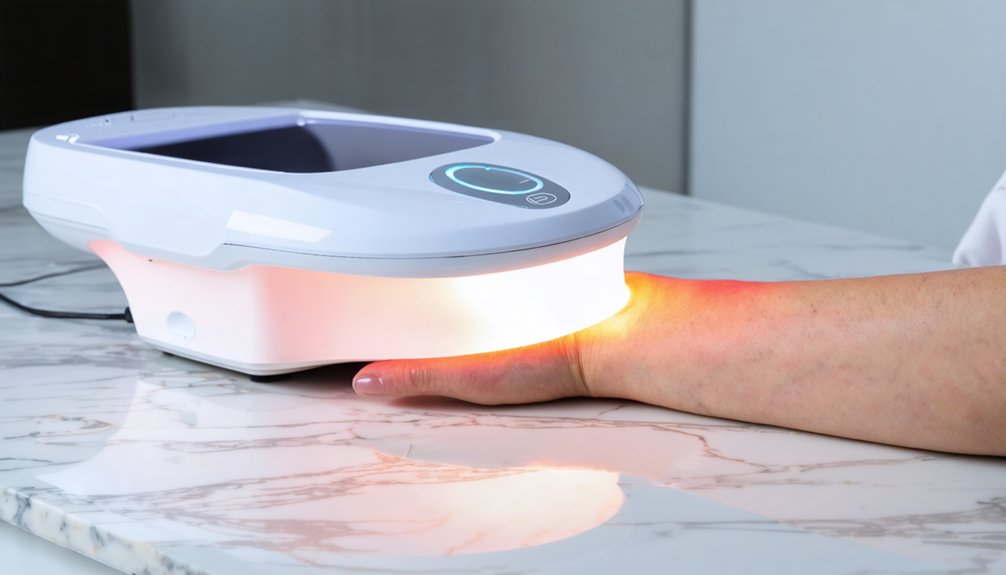
Before you invest in any light-based device for pigmentation, verify it carries FDA clearance or FDA 510(k) clearance for skin use. Clearance confirms the device’s thermal effects and light scattering parameters meet established safety thresholds.
Use this checklist before purchasing:
- Confirm FDA 510(k) clearance — search the FDA database directly using the device name or manufacturer.
- Review the indicated use — clearance for acne differs from clearance targeting pigmentation and discoloration.
- Assess thermal effect disclosures — legitimate devices document heat output and light scattering range to prevent tissue damage.
Uncleared devices carry unpredictable thermal effects and inconsistent light scattering, which risks worsening discoloration rather than correcting it.
Regulatory clearance isn’t optional — it’s your baseline for safe, effective treatment selection.
Frequently Asked Questions
Can Deep Discoloration Return After Successful Light Treatment Is Completed?
Yes, deep discoloration can return—because your skin hasn’t magically cured itself. Without maintenance treatments, sun protection, and supporting natural remedies or home remedies, you’ll likely see pigmentation resurface, requiring periodic sessions to sustain your results.
Is Combining LED With Laser Treatments Safe for Sensitive Skin?
Yes, you can safely combine LED with laser treatments for sensitive skin, but you’ll need to space sessions appropriately. Prioritizing skin sensitivity and treatment safety means consulting your provider to customize protocols that minimize irritation while maximizing results.
Does Sun Exposure Between Sessions Slow Deep Pigment Clearance Significantly?
Verily, yes — sun exposure between sessions triggers pigment recurrence, considerably slowing deep clearance. You’re undermining your laser or IPL results by skipping SPF. Protect your skin daily to maintain treatment momentum and prevent melanin re-activation.
Are Prescription Topicals Recommended Alongside Light Therapy for Deeper Results?
Yes, you’ll achieve deeper results by pairing prescription topicals as topical enhancers with light therapy. This complementary skincare approach accelerates melanin breakdown, boosts cellular turnover, and maximizes your treatment outcomes for stubborn, deep discoloration more effectively than light alone.
Can Deep Discoloration Treatments Be Performed Safely During Pregnancy?
You shouldn’t pursue deep discoloration treatments during pregnancy due to significant pregnancy safety concerns. Discoloration risks from lasers and IPL remain unstudied in pregnant populations, so consult your OB-GYN before considering any light-based intervention.
References
- https://www.aad.org/public/cosmetic/safety/red-light-therapy
- https://my.clevelandclinic.org/health/treatments/22146-led-light-therapy
- https://pmc.ncbi.nlm.nih.gov/articles/PMC11049838/
- https://us.currentbody.com/blogs/editorial/led-light-therapy-colour-benefits
- https://beyouthful.com/laser-treatment/best-laser-treatments-for-pigmentation-sun-spots/
- https://www.greenwichpointdermatology.com/sun-spots-begone-3-treatments/
- https://pmc.ncbi.nlm.nih.gov/articles/PMC11904167/
- https://nordenbeauty.com/en/red-light-blue-light-yellow-light-or-infrared-light/
- https://pmc.ncbi.nlm.nih.gov/articles/PMC6188454/