Professional whitening treatments work better because they start with an accurate diagnosis—identifying whether your dark spots are melasma, PIH, or sun damage before any product touches your skin. Your dermatologist selects ingredients and procedures matched to your Fitzpatrick skin type, reducing your risk of post-inflammatory hyperpigmentation. Prescription actives like hydroquinone and tretinoin target melanin at the source, outperforming OTC alternatives. Everything ahead breaks down exactly how each step of the professional process protects and corrects your skin.
Key Takeaways
- Professional diagnosis distinguishes melasma, PIH, and sun spots, ensuring targeted treatments rather than ineffective, one-size-fits-all approaches.
- Dermatologists select ingredients based on Fitzpatrick skin tone, preventing dangerous reactions like post-inflammatory hyperpigmentation from mismatched actives.
- Prescription-strength actives like hydroquinone and tretinoin deliver clinically validated mechanisms that outperform over-the-counter whitening alternatives significantly.
- Combination formulas targeting multiple melanin production stages consistently outperform single-ingredient DIY solutions available without professional guidance.
- Structured monitoring every 4–8 weeks with objective tools ensures timely protocol adjustments, maximizing results and preventing treatment failure.
Why Dark Spots Are Harder to Treat Than Most People Think
Dark spots are deceptively difficult to treat because melanin doesn’t exist at a single depth in the skin — it accumulates in the epidermis, dermis, or both, and each layer responds differently to treatment.
Historical misconceptions have led many to believe that consistent application of brightening agents guarantees results, but without identifying the pigment’s depth and cause — whether melasma, post-inflammatory hyperpigmentation, or solar lentigines — you’re treating blindly.
Alternative therapies marketed as universal solutions frequently fail because they don’t account for this structural complexity.
Dermatoscopy and clinical evaluation reveal what you can’t see with the naked eye, allowing for targeted intervention.
Without precise diagnosis, even aggressive treatment protocols produce inconsistent outcomes, wasted time, and potential worsening of pigmentation.
Why Skin Tone Determines Which Whitening Treatment Works for You
Your skin tone is the single most important variable a dermatologist considers when selecting a whitening treatment, because the Fitzpatrick Scale directly predicts how your melanocytes will respond to aggressive actives or energy-based procedures.
If you have deeper skin tones (Fitzpatrick IV–VI), you’re at markedly higher risk for post-inflammatory hyperpigmentation when exposed to high-intensity lasers or strong chemical peels that work safely on lighter complexions.
Matching the right ingredients and procedures to your specific tone isn’t a preference—it’s a clinical necessity that determines whether your treatment clears dark spots or worsens them.
Fitzpatrick Scale Treatment Matching
Six distinct skin phototypes make up the Fitzpatrick Scale, and your position on that spectrum directly determines which whitening treatments are safe and effective for your dark spots. Ignore beauty trends and celebrity endorsements—your phototype governs your treatment protocol.
- Types I–II: Tolerates higher-concentration chemical peels and laser frequencies with lower PIH risk.
- Types III–IV: Requires pre-treatment priming; aggressive lasers trigger paradoxical darkening without proper protocols.
- Types V–VI: Demands strictly controlled interventions—IPL is contraindicated; Nd:YAG and topical-only regimens minimize risk.
Your dermatologist maps your phototype against pigment depth using dermatoscopy, then builds a calibrated protocol.
Skipping this matching process doesn’t accelerate results—it compounds damage.
Precision-matched treatment is the only pathway to controlled, measurable pigment reduction.
Darker Skin Pigmentation Risks
Skin tone isn’t a cosmetic variable—it’s a biological determinant that directly controls which whitening treatments will reduce your dark spots and which will worsen them.
Darker skin tones (Fitzpatrick IV–VI) contain hyperactive melanocytes that respond aggressively to inflammation, heat, and chemical irritation.
DIY solutions like high-concentration lemon juice or unregulated hydroquinone formulations frequently trigger post-inflammatory hyperpigmentation—creating deeper, more resistant pigmentation than the original dark spots.
Cosmetic myths suggest aggressive exfoliation accelerates fading; in darker skin, it compounds melanocyte trauma.
Professionals counter these risks through controlled ingredient concentrations, pre-treatment priming, and inflammation management protocols.
Your skin’s melanocyte reactivity isn’t a liability if treatment is calibrated correctly—but without professional oversight, you’re statistically more likely to worsen your pigmentation than resolve it.
Tone-Specific Ingredient Selection
What works on a Fitzpatrick II complexion can actively worsen pigmentation on a Fitzpatrick V—because melanocyte density, reactivity, and inflammatory thresholds differ considerably across skin tones, and ingredient selection must account for these biological differences. Your dermatologist calibrates actives precisely to your Fitzpatrick classification.
- Lighter tones (I–III): Tolerate hydroquinone 4%, stronger chemical peels (TCA 20–30%), and retinoids without significant rebound risk.
- Medium tones (III–IV): Require buffered retinoids, mandelic acid peels, and consistent skin hydration to prevent inflammatory triggering.
- Darker tones (IV–VI): Need azelaic acid, tranexamic acid, and superficial chemical peels only—aggressive actives provoke paradoxical hyperpigmentation.
Precision here isn’t optional. Mismatched ingredients don’t just underperform—they create secondary pigment damage requiring months of corrective intervention.
How Dermatologists Diagnose Dark Spots Before Any Treatment Starts
Before a dermatologist recommends any treatment, they conduct a thorough diagnostic evaluation to identify the precise type and depth of your hyperpigmentation. They’ll differentiate between melasma, post-inflammatory hyperpigmentation, and sun spots—each requiring distinct cosmetic procedures and active ingredients.
Using dermatoscopy, they visualize pigment distribution at deeper skin layers, preventing misdiagnosis that leads to ineffective or worsening treatment outcomes.
Dermatoscopy reveals pigment at deeper skin layers, ensuring accurate diagnosis and preventing treatments that worsen your condition.
Your dermatologist also reviews your lifestyle habits, including sun exposure patterns, hormonal influences, and skincare history, to pinpoint underlying triggers. This extensive intake shapes your customized treatment protocol.
Without this diagnostic foundation, any treatment you pursue risks targeting the wrong pigment type, delaying results, or causing secondary damage. Accurate diagnosis is the critical first step that separates professional intervention from uninformed self-treatment.
Why Prescription Ingredients Outperform Every OTC Dark Spot Product
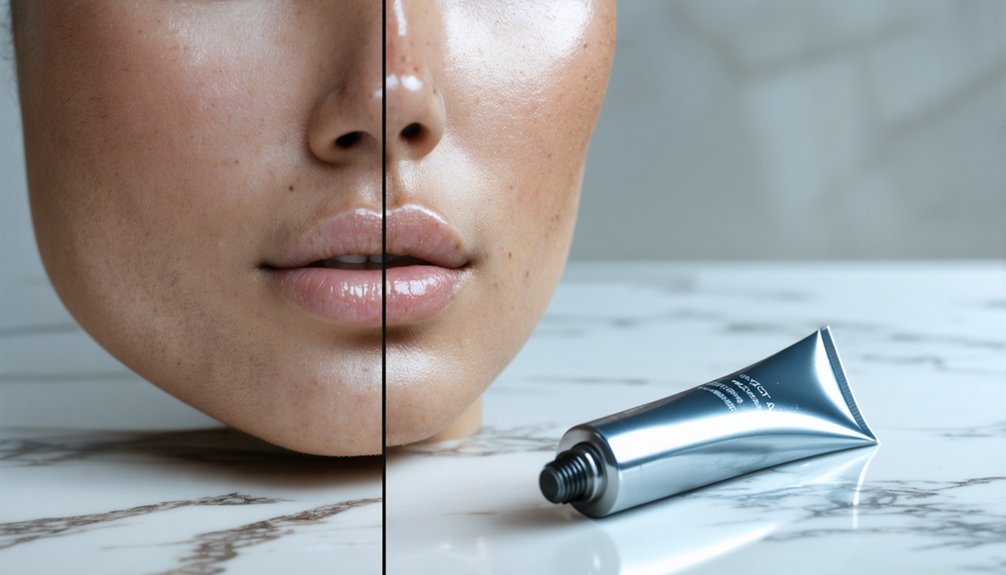
When it comes to fading dark spots, prescription ingredients outperform OTC alternatives because they operate at concentrations that actually drive clinical change. Cosmetic myths and natural remedies flood the market, yet none deliver the measurable efficacy of medical-grade formulations.
Prescription-level tools give you verified, controlled action:
- 4% hydroquinone directly inhibits melanin synthesis at a clinically effective threshold no OTC product reaches.
- Tretinoin accelerates cellular turnover, clearing pigmented cells faster than any cosmetic retinol equivalent.
- Combination therapy (hydroquinone + tretinoin + low-potency steroid) simultaneously targets pigment production, cell cycling, and inflammation.
You’re not guessing with prescription treatment—you’re executing a protocol backed by clinical data. OTC products manage symptoms superficially. Prescription ingredients address the biological mechanism directly, giving you precise, measurable control over your results.
Medical-Grade Ingredients Dermatologists Actually Prescribe for Dark Spots
When dermatologists treat dark spots, they prescribe medical-grade ingredients that work at concentrations far beyond what you’ll find on store shelves. You’ll typically encounter prescription-strength actives like 4% hydroquinone, high-dose vitamin C, and azelaic acid.
These ingredients are often combined into targeted multi-ingredient formulas that simultaneously inhibit melanin production, accelerate cell turnover, and reduce inflammation. Advanced retinoids like tretinoin anchor many of these regimens, driving pigment clearance at the cellular level with clinical precision.
Prescription-Strength Active Ingredients
Four prescription-strength actives form the clinical backbone of professional dark spot treatment: hydroquinone, tretinoin, azelaic acid, and corticosteroids. Unlike botanical extracts or home remedies, these compounds deliver clinically validated mechanisms that directly interrupt melanin production and accelerate pigment clearance.
Here’s what each active accomplishes:
- Hydroquinone (4%) inhibits tyrosinase, blocking melanin synthesis at its source.
- Tretinoin accelerates cellular turnover, dispersing existing pigment deposits faster than cosmetic alternatives.
- Azelaic acid disrupts abnormal melanocyte activity while reducing inflammation simultaneously.
Corticosteroids are strategically combined with these actives to suppress irritation, enabling your skin to tolerate higher concentrations without triggering paradoxical hyperpigmentation.
You can’t replicate this precision with over-the-counter formulations. Professional prescription access gives you targeted control that non-medical treatments simply can’t match.
Targeted Combination Therapy Formulas
Prescription actives don’t work in isolation—dermatologists combine them into synergistic formulas that target multiple stages of melanin production simultaneously. The classic triple combination—hydroquinone, tretinoin, and a low-potency corticosteroid—remains the gold standard for skin brightening, suppressing pigment synthesis while accelerating cellular turnover and controlling inflammation. You’re not getting this precision from over-the-counter alternatives.
Dermatologists also incorporate azelaic acid and kojic acid into rotational protocols, preventing resistance and minimizing irritation.
For clients with cosmetic tattoos near treatment zones, combination formulas are carefully adjusted to avoid destabilizing pigmented areas while still addressing surrounding hyperpigmentation. Each formula targets tyrosinase inhibition, melanosome transfer, and keratinocyte shedding concurrently. That multi-pathway approach is exactly why professional regimens outperform any single-ingredient solution you’d self-prescribe.
Advanced Retinoid Treatment Options
Retinoids represent the most clinically validated class of topical agents dermatologists prescribe for hyperpigmentation, and they work through mechanisms no over-the-counter retinol product can replicate.
Unlike natural remedies, prescription tretinoin directly binds retinoic acid receptors, accelerating keratinocyte turnover and dispersing melanin granules at the cellular level. Before advancing to cosmetic procedures like chemical peels or lasers, dermatologists often establish retinoid therapy as a foundational protocol.
Your prescribed options typically include:
- Tretinoin (0.025%–0.1%): Gold-standard for fading post-inflammatory hyperpigmentation and sun damage
- Tazarotene: Higher receptor affinity, superior for stubborn melanin deposits
- Adapalene: Better tolerated for sensitive skin without sacrificing efficacy
Dermatologists titrate concentration based on your skin’s response, ensuring measurable pigment reduction within 8–12 weeks.
Which Professional Whitening Procedures Target Pigment Directly?
Several professional procedures target pigment directly, each working at distinct skin depths to break down melanin deposits. IPL delivers broad-spectrum light to shatter superficial pigment clusters, while Nd:YAG lasers penetrate deeper dermal layers without damaging surrounding tissue.
Chemical peels using trichloroacetic acid accelerate cellular turnover, clearing pigment-laden cells efficiently. Microdermabrasion refines surface texture and enhances active ingredient absorption post-procedure.
You shouldn’t rely on hydroquinone myths suggesting it’s universally dangerous, nor should you substitute natural remedies for clinically validated procedures—both choices delay measurable results.
Each professional method is selected based on your pigment depth, skin tone, and hyperpigmentation type, diagnosed through dermatoscopy. Combining procedures within a structured protocol consistently produces 50–70% pigment reduction within 8–12 weeks.
How Dermatologists Prevent Burns and Scarring During Whitening Treatments
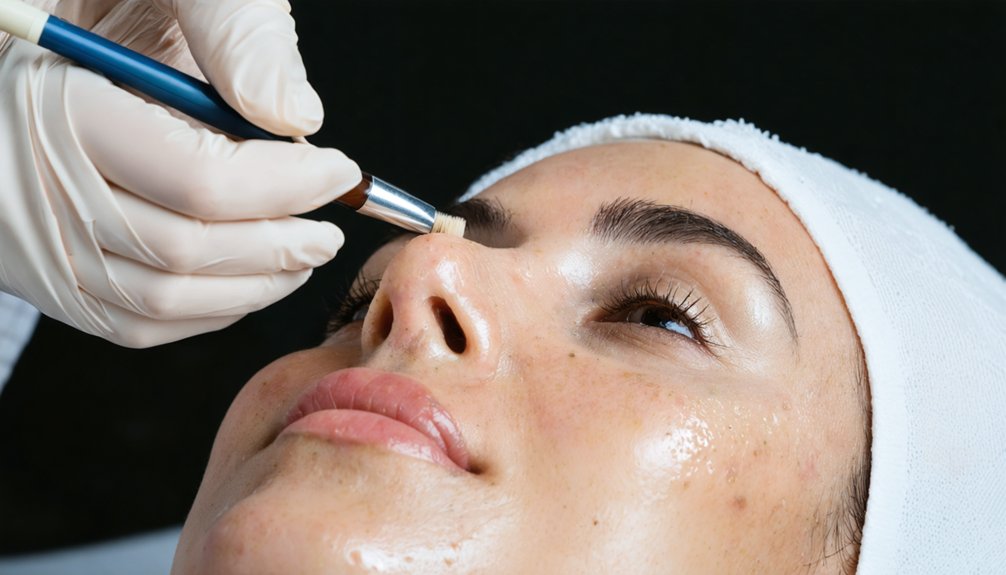
Targeting pigment directly with lasers, peels, and light-based therapies yields measurable results. However, these same mechanisms that break down melanin can damage the skin barrier if applied without proper safeguards.
Dermatologists enforce strict protocols during cosmetic procedures to protect your skin while delivering effective skin rejuvenation outcomes.
Key preventive measures include:
- Pre-treatment priming with retinoids or hydroquinone reduces pigment reactivity, lowering post-inflammatory hyperpigmentation risk in darker skin tones.
- Controlled parameter settings on laser and light devices are calibrated to your Fitzpatrick skin type, preventing thermal burns.
- Post-procedure barrier repair using ceramide-based moisturizers and SPF 30+ shields healing tissue from UV-triggered pigment rebound.
Without these safeguards, aggressive treatments cause secondary scarring that compounds your original concern, extending your recovery timeline considerably.
Why Sun Protection Is the Foundation of Every Professional Whitening Plan
Even the most advanced professional whitening treatments fail without consistent sun protection, because UV and visible light continuously stimulate melanocytes to produce new pigment, directly undermining your results.
Sun damage reactivates existing pigmentation patterns and generates new ones, erasing weeks of clinical progress.
Your dermatologist will prescribe tinted sunscreens containing iron oxide, which block both UV radiation and visible light—critical for controlling melasma specifically.
You’ll apply SPF 30+ broad-spectrum sunscreen daily, including indoors near windows, and reapply every two hours during outdoor exposure.
Avoid peak sun hours between 10 a.m. and 2 p.m., supplementing with wide-brimmed hats and protective clothing.
Without this non-negotiable foundation, no active ingredient—regardless of concentration or sophistication—can deliver sustained clearance of your dark spots.
What a Realistic Professional Whitening Timeline Actually Looks Like
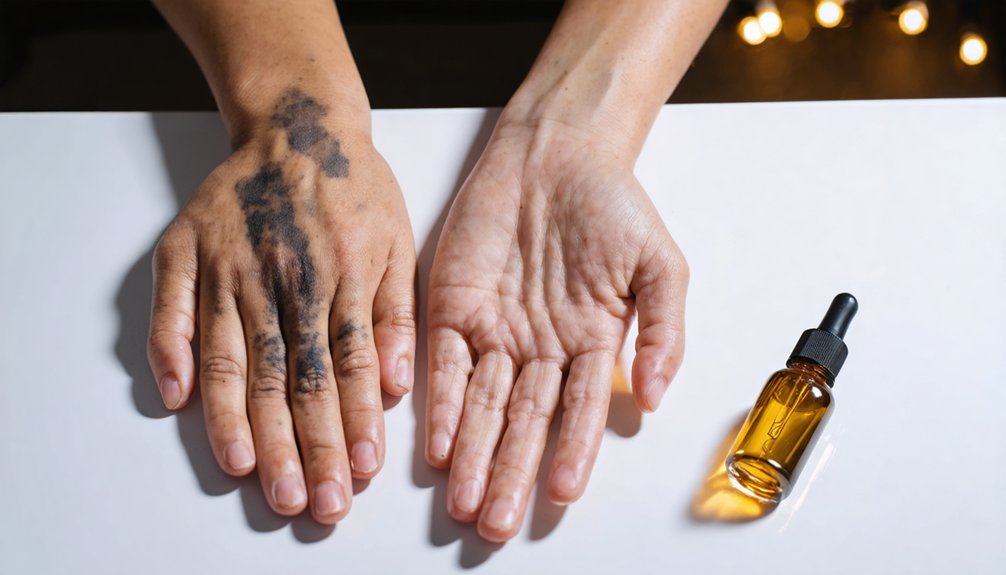
In the first few weeks of a professional whitening regimen, you’ll notice minimal visible change as active ingredients work at the cellular level before surface results appear.
At the midpoint—typically weeks 6 through 8—your dermatologist will use standardized photography and pigment metering to track measurable progress and adjust your protocol accordingly.
Once clearance is achieved, you’ll shift to a maintenance phase using lower-dose actives like niacinamide and scheduled follow-ups every 3–6 months to prevent recurrence.
Early Weeks: Minimal Visible Change
During the first two to four weeks of a professional whitening regimen, you’ll notice little to no visible change in your dark spots — and that’s clinically expected. Cellular turnover and melanin suppression occur beneath the surface before any color correction becomes visible. Your skincare routines are actively restructuring pigment pathways at the biological level.
Key processes occurring during this phase include:
- Melanin inhibition begins at the cellular level, slowing new pigment production
- Cell turnover acceleration from prescribed retinoids starts displacing pigmented cells upward
- Barrier adaptation occurs as your skin adjusts to active ingredients without triggering inflammation
Resist evaluating treatment efficacy this early. Premature discontinuation is the most common reason professional regimens fail. Trust the clinical process and maintain strict adherence.
Midpoint Progress Tracking Methods
By weeks four through eight, measurable change becomes visible — and this is when objective tracking methods become essential to your treatment plan. Your dermatologist uses standardized photography under consistent lighting and pigment metering devices to quantify fading beyond subjective perception.
These tools eliminate distortion from color theory variables — ambient light, screen calibration, and emotional bias — that cause you to misjudge your progress. Dismissing this step feeds into common skincare myths, like assuming no visible change means treatment failure.
Measurements taken at this midpoint establish whether your regimen requires adjustment or continuation. Without this data, you risk abandoning an effective protocol prematurely.
Objective tracking keeps your decisions anchored in clinical evidence, not guesswork, giving you precise control over your treatment trajectory.
Long-Term Maintenance After Clearance
Once your dark spots reach clearance — typically within six to twelve months of professional treatment — your regimen doesn’t end; it shifts into maintenance mode. Like scheduling routine cosmetic dentistry cleanings or periodic hair removal sessions, consistent professional follow-ups every three to six months keep recurrence controlled.
Your maintenance protocol should include:
- Low-dose actives like niacinamide or vitamin C to suppress residual pigment activity
- Daily broad-spectrum SPF 30+ with iron oxide, non-negotiable regardless of season
- Early intervention check-ins so emerging spots are addressed before they deepen
Skipping maintenance dismantles months of clinical progress. Your dermatologist will adjust your regimen based on hormonal shifts, seasonal UV exposure, and skin response — keeping you in active control of your results long-term.
The Maintenance Routines Professionals Use to Stop Dark Spots Returning
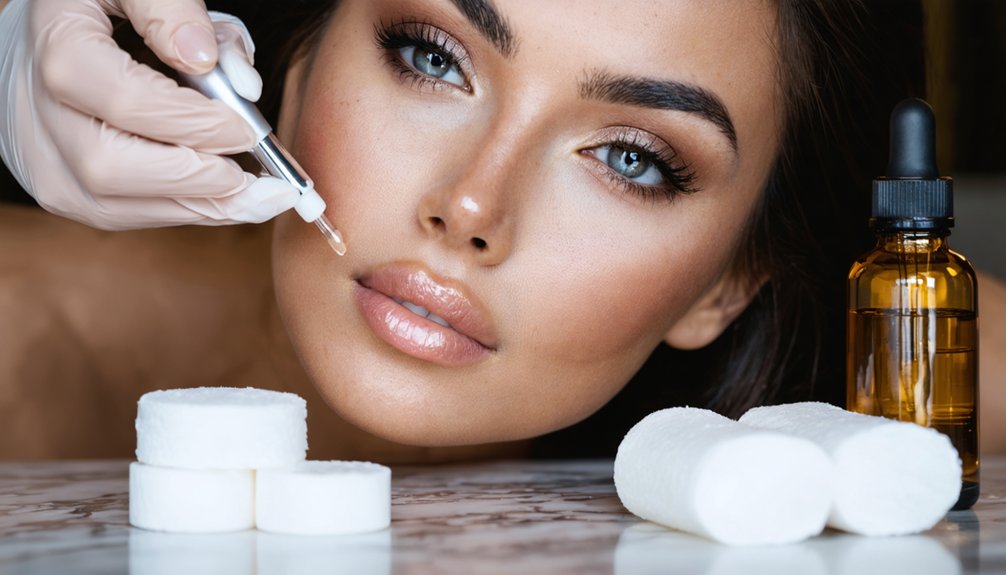
After successfully fading dark spots, keeping them from returning requires a structured, professionally guided maintenance routine. Your dermatologist will establish a regimen built on gentle actives—niacinamide and low-dose vitamin C—that suppress melanin production without triggering irritation.
Fading dark spots is only half the battle—a dermatologist-guided maintenance routine keeps pigmentation from returning.
Daily SPF 30+ application remains non-negotiable, reinforcing your skin’s primary defense against UV-induced pigment relapse.
Professionals schedule follow-ups every three to six months to detect emerging spots before they intensify. They’ll also address lifestyle habits that silently sabotage your progress—heat exposure, hormonal fluctuations, and chronic sun neglect all accelerate recurrence.
Equally important, your provider will correct persistent skincare myths, such as the belief that maintenance products are unnecessary once pigment clears.
Consistent, informed adherence to your maintenance protocol is what separates lasting results from repeated relapse.
Frequently Asked Questions
Can Hormonal Birth Control Worsen Dark Spots During Professional Whitening Treatment?
Yes, hormonal birth control can worsen dark spots by triggering hormonal fluctuations that intensify skin pigmentation. You’ll need to inform your dermatologist, who’ll adjust your professional whitening treatment plan to counteract this hormonal influence effectively.
Are Professional Whitening Treatments Safe to Use During Pregnancy or Breastfeeding?
Many assume all treatments are unsafe, but that’s not entirely true. You shouldn’t use most professional whitening treatments due to pregnancy safety concerns. Breastfeeding considerations also apply, so consult your dermatologist for approved alternatives immediately.
Does Diet or Nutrition Play Any Role in Reducing Dark Spots Professionally?
Yes, diet influences dark spots. Your vitamin intake of C and E supports pigment control, while professional-recommended dietary supplements like niacinamide enhance treatment efficacy, giving you measurable, evidence-backed results alongside your prescribed skincare regimen.
Can Professional Whitening Treatments Address Dark Spots on the Body, Not Face?
Professional whitening treatments can absolutely address body pigmentation and skin discoloration beyond your face. You’ll receive customized laser therapy, chemical peels, and medical-grade actives precisely targeting affected body areas with clinical efficacy.
How Do Stress Levels Impact the Effectiveness of Professional Dark Spot Treatments?
Stress management directly impacts your treatment outcomes. Elevated stress triggers hormonal fluctuations that stimulate melanin production, counteracting professional dark spot therapies. You’ll compromise results without controlling cortisol levels through consistent sleep, mindfulness, and lifestyle adjustments alongside your prescribed regimen.
References
- https://www.aad.org/public/everyday-care/skin-care-secrets/routine/fade-dark-spots
- https://www.youtube.com/watch?v=ri4VQ79mNPY
- https://www.healthline.com/health/beauty-skin-care/how-to-get-rid-of-dark-spots
- https://www.psmedical.com.hk/en/blog/pigmentation-removal-tips/3-ingredients-whitening-and-spot-removal/
- https://www.clinique.com/skin-school-blog/skin-experts/dark-spots-on-face
- https://www.harpersbazaar.com/beauty/skin-care/a45316644/how-to-get-rid-of-dark-spots-on-face/
- https://www.cvs.com/learn/beauty/skin-care/tips-to-fade-dark-spots
- https://www.clinique.com/skin-school-blog/dark-spots-treatment-routine
- https://www.westlakedermatology.com/blog/dark-spots/
- https://www.youtube.com/watch?v=j3yc9NMeGjk