Wine stains your teeth fast because chromogens, tannins, and acids work together to embed pigment deep into your enamel. You can fight back by prepping your teeth before your first glass, sipping strategically during the evening, and rinsing immediately after your last sip. Gentle home remedies like baking soda paste and coconut oil pulling can lift surface stains safely. Keep exploring to uncover every technique that keeps your smile bright.
Key Takeaways
- Brush with whitening toothpaste before drinking to remove plaque and reduce pigment adhesion to enamel.
- During drinking, sip sparkling water and snack on cheese or fibrous vegetables to neutralize acids and lift stains.
- Rinse thoroughly with water immediately after drinking, swirling for 30 seconds to dislodge tannins and chromogens.
- Avoid brushing right away; wait 30–60 minutes to allow enamel to reharden and prevent erosion.
- For persistent stains, use baking soda paste twice weekly or consult a dentist for professional whitening treatments.
How Wine Stains Your Teeth
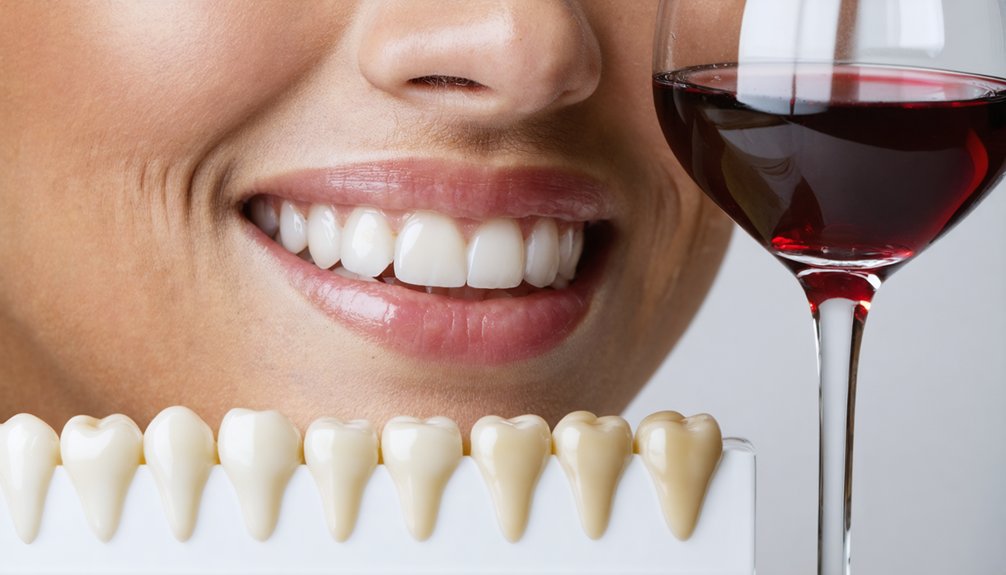
Wine stains your teeth through a combination of chromogens, tannins, and acids working in tandem. Understanding wine composition reveals why staining occurs so efficiently.
Chromogens are intensely pigmented compounds that latch onto tooth enamel with remarkable persistence. Tannins amplify this process by acting as a binding agent, making chromogens adhere more stubbornly to enamel surfaces.
Meanwhile, the natural acids in wine temporarily soften your enamel, opening its porous structure and allowing pigments to penetrate deeper layers. Both red and white wines contribute to this cycle, though red wine delivers a heavier chromogen concentration.
Once pigments embed beneath your enamel’s surface, standard brushing alone won’t fully reverse the damage. Recognizing this mechanism empowers you to intervene strategically before staining becomes entrenched.
Prep Your Teeth Before the First Sip of Wine
Before you uncork the bottle, taking a few deliberate steps to prepare your teeth can dramatically reduce wine’s staining potential. Strong oral hygiene before drinking isn’t optional — it’s strategic.
Start by brushing thoroughly with a whitening toothpaste to eliminate plaque, which acts as a pigment trap. Follow with flossing to clear debris from between teeth where tannins and chromogens embed most aggressively.
Apply a thin layer of petroleum-based lip gloss across your teeth to create a temporary protective barrier against pigment adhesion.
If you’ve recently eaten, wait at least 30 minutes before drinking to allow saliva to neutralize residual acids.
These targeted preparations give you measurable control over staining before wine ever contacts your enamel.
Drink Wine Without Staining Your Teeth
Even with solid pre-drinking preparation, you’ll need active strategies throughout the evening to keep stains at bay.
Sip sparkling water between glasses, snack on cheese or fibrous vegetables, and swirl water around your mouth after each pour to minimize pigment absorption.
Once you’ve finished your last glass, rinse immediately, avoid brushing for 30 to 60 minutes, and chew sugar-free gum to let your saliva neutralize lingering acidity.
Pre-Drinking Oral Preparation
Preparing your mouth before a glass of wine can considerably reduce how much pigment clings to your enamel. Start by brushing thoroughly with whitening toothpaste to eliminate plaque, then floss between every tooth to clear trapped debris. Both steps directly minimize surface areas where wine pigments settle.
Apply a thin petroleum-based lip gloss to create a protective barrier across your teeth and lips. If you’re focused on wine pairing and taste enhancement, wait at least 30 minutes after eating before your first sip — this allows saliva to neutralize lingering acids that weaken enamel.
A tongue scraper or dental wax can further refine your oral environment. These deliberate preparations give you measurable control over staining before your evening even begins.
During-Drinking Mitigation Strategies
Once your pre-drinking prep is locked in, your next line of defense works in real time. Between glasses, sip sparkling water and swirl it around your mouth to dislodge pigments before they settle.
Smart flavor pairing works in your favor here — cheese neutralizes acid while high-fiber vegetables like celery and carrots act as natural abrasives, lifting surface stains as you snack.
Your glass selection also matters; using a narrow-rimmed glass reduces wine contact with your front teeth. If you want maximum protection, drink through a straw to minimize direct surface exposure altogether.
These strategies don’t interrupt your experience — they enhance it. You’re staying proactive, managing pigment transfer in real time, and keeping your smile intact without sacrificing the moment.
Immediate Post-Drinking Actions
The moment your last glass is finished, your response time becomes critical. Rinse immediately with water, swirling it thoroughly to dislodge surface pigments before they penetrate enamel. Gently wipe residual staining using damp gauze — your lip barrier absorbs more than you’d expect, so address it directly. Follow up with dental flossing to clear pigment-trapping debris from contact points between teeth.
Don’t brush yet. Residual wine acidity leaves enamel temporarily softened, and brushing risks accelerating erosion rather than preventing stains. Instead, chew sugar-free gum to stimulate saliva production, which naturally neutralizes acidity and accelerates remineralization.
Wait 30 to 60 minutes before brushing. That window isn’t passive — it’s recalcification in progress. Controlling your timing here determines whether tonight’s indulgence becomes tomorrow’s visible staining problem.
Protect Your Teeth Right After Your Last Glass

As soon as you finish your last glass, rinse your mouth thoroughly with water to clear away residual pigments before they bond to your enamel. Swirl the water actively for several seconds to dislodge tannins clinging to tooth surfaces.
Don’t reach for your toothbrush yet, though — wine’s acidity temporarily softens enamel, so brushing too soon can cause microscopic abrasion that worsens long-term staining and erosion.
Rinse Immediately After Drinking
After finishing your last glass of wine, rinse your mouth immediately with water to flush out residual pigments before they bond further to your enamel. Wine color compounds, particularly chromogens found in red varieties, accelerate stain penetration within minutes of contact. A thorough rinse disrupts this process before pigments embed deeply into microscopic enamel pores.
Swirl water vigorously around your entire mouth for approximately 30 seconds, ensuring coverage across all tooth surfaces. Don’t brush immediately afterward — residual wine acidity temporarily softens enamel, making it vulnerable to abrasion. Instead, chew sugar-free gum to stimulate saliva production, which naturally neutralizes acids and mechanically clears debris.
Wait 30 to 60 minutes before brushing to allow your enamel to recalcify and regain its structural integrity.
Delay Brushing For Safety
Protect Your Teeth Right After Your Last Glass
Brushing your teeth immediately after drinking wine can actually worsen staining rather than prevent it. Wine’s acidity softens enamel temporarily, making aggressive brushing counterproductive to your teeth whitening goals.
Instead, take strategic control with these steps:
- Rinse thoroughly with water immediately after your last glass.
- Chew sugar-free gum to activate saliva and naturally neutralize acidity.
- Wait 30 to 60 minutes before introducing your toothbrush to allow enamel to recalcify.
- Brush gently using whitening toothpaste once the waiting period completes.
Building these oral health habits into your post-wine routine protects your enamel’s integrity while maximizing stain removal effectiveness. Patience here isn’t passive—it’s precision.
Brush Wine Stains Off Your Teeth Safely at Home
Brushing wine stains off your teeth at home is straightforward when you follow the right timing and technique. Once the 30-to-60-minute waiting period has passed, wine acid levels in your mouth have stabilized, substantially reducing your risk of enamel erosion during brushing.
Timing is everything — wait 30 to 60 minutes after wine before brushing to protect your enamel.
Select a whitening toothpaste with gum protection and use an electric toothbrush, such as the Oral-B iO Series 9, for superior stain-lifting performance. Brush for a full two minutes using gentle, controlled circular motions. Avoid aggressive scrubbing, which compromises enamel integrity over time.
For enhanced results, apply a baking soda and hydrogen peroxide paste up to twice weekly. Finish with thorough flossing to eliminate residual pigment particles between teeth.
Consistent technique delivers measurable whitening outcomes without sacrificing long-term enamel health.
Natural Remedies That Remove Wine Stains From Teeth
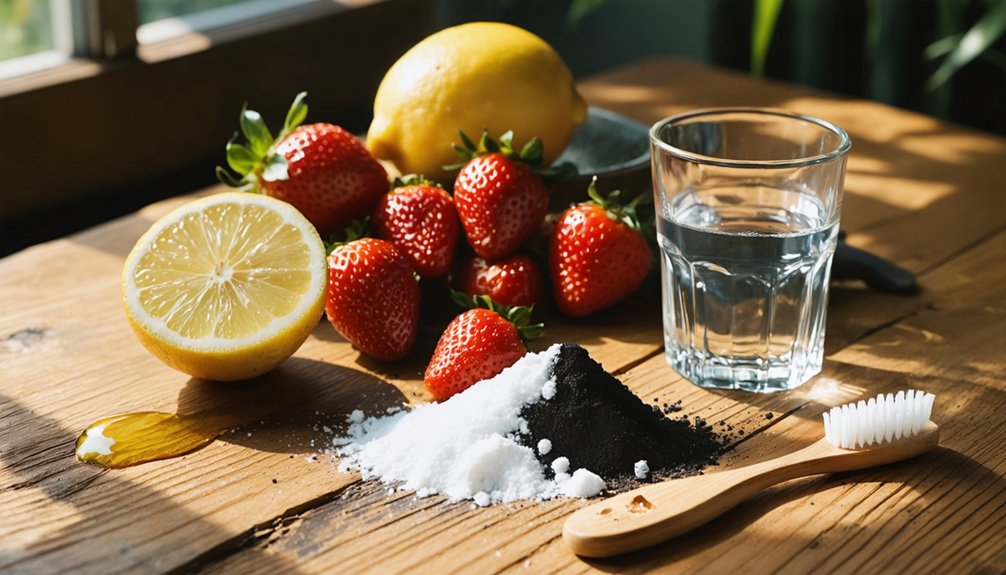
Home brushing routines handle surface-level staining effectively, but natural remedies offer a complementary layer of treatment that works with your mouth’s chemistry. These targeted options let you take deliberate control over pigment removal between professional visits.
- Coconut oil pulling — Swish one tablespoon for 10–15 minutes to bind chromogens and lift embedded pigments.
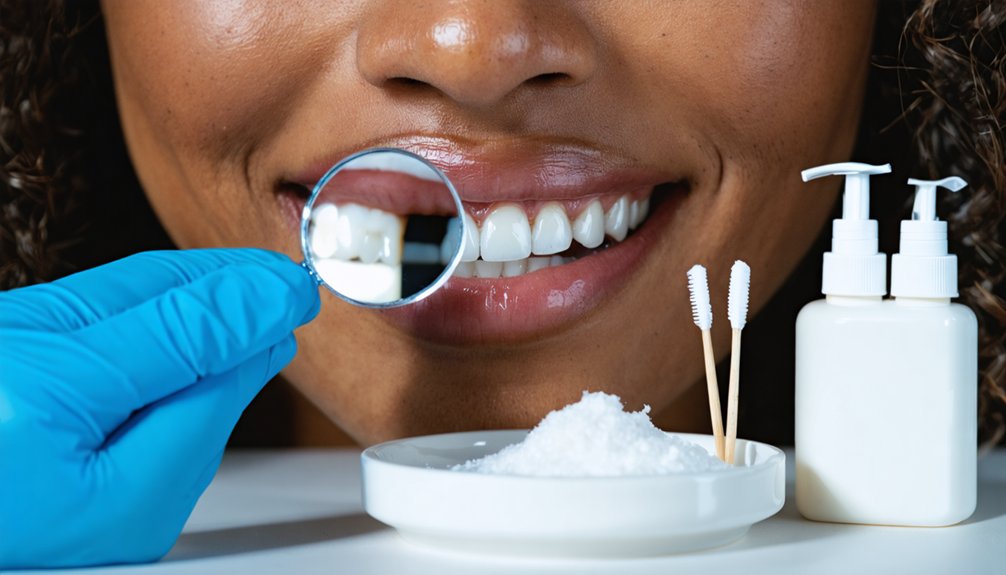
- Baking soda paste — Brush gently for 2 minutes using a water-mixed paste to neutralize acids and polish enamel.
- Herbal mouth rinses — Use antibacterial botanical formulas containing peppermint or clove to disrupt stain-causing biofilm.
- Activated charcoal — Dip a wet toothbrush into powder and brush carefully for 2 minutes to adsorb surface discoloration.
When to Stop Home Treatments and See a Dentist
Natural remedies work well for surface-level pigment removal, but they’ve clear limits—and recognizing those limits protects your enamel from irreversible damage. If discoloration persists after two weeks of consistent home treatment, you’ve crossed into territory that requires professional intervention.
Sensitivity, gum irritation, or visible enamel thinning are signals you shouldn’t ignore—continuing home treatments under these conditions accelerates damage rather than reversing it.
Stain prevention only works long-term when your dental health foundation is sound. Deep intrinsic staining, pitting, or structural compromise demands clinical tools—laser whitening, professional-grade bleaching agents, or restorative procedures—that no baking soda paste can replicate.
Schedule a dental evaluation immediately if discomfort accompanies discoloration. Your dentist identifies what you can’t see and designs a precision protocol that home remedies simply aren’t equipped to deliver.
Frequently Asked Questions
Can Professional Whitening Treatments Fully Reverse Severe Wine Staining on Teeth?
Professional whitening treatments can’t always fully reverse severe wine staining on your dental enamel, but they’ll deliver significant stain removal. You’ll achieve the best results by combining in-office procedures with consistent daily maintenance and preventative care.
How Long Does Wine Staining Take to Become Permanent Without Treatment?
Time waits for no one—neither do wine stains. Without dental hygiene intervention, stains can permanently set within 24–48 hours. You’ll want to prioritize stain prevention immediately, as pigments bond deeply to enamel, making reversal increasingly difficult.
Does Drinking Red Wine Versus White Wine Cause Different Levels of Staining?
Yes, red wine stains your teeth more aggressively than white wine. Red wine’s dark chromogens and tannins bind directly to enamel, while white wine’s acidity erodes enamel, making it more vulnerable to future staining.
Are Whitening Strips Safe to Use if You Have Dental Crowns or Veneers?
Whitening strips won’t penetrate your crowns or veneers—they’ll stay their original shade while natural teeth brighten, creating visible mismatches. For dental crown hygiene and veneer discoloration prevention, you’d want professional treatments tailored precisely to your restorations.
Can Certain Medications Make Teeth More Vulnerable to Wine Stain Absorption?
Yes, certain medications can heighten tooth sensitivity and amplify medication effects on enamel porosity, making your teeth more vulnerable to wine stain absorption. Antihistamines, antidepressants, and diuretics reduce saliva flow, diminishing your natural defense against pigment penetration.
References
- https://aedit.com/aedition/how-to-treat-prevent-wine-stained-teeth
- https://www.redman.com.au/how-to-remove-red-wine-stains/
- https://www.dentaly.org/us/teeth-whitening/wine-stain-teeth/
- https://www.instagram.com/reel/CtelBCggU6a/
- https://vinepair.com/wine-blog/rid-purple-wine-stained-teeth/
- https://crest.com/en-us/oral-care-tips/how-to-prevent-and-get-rid-of-red-wine-teeth-stains
- https://www.youtube.com/watch?v=OLMu8rHRAKA
- https://www.rd.com/article/red-wine-stains-teeth/
- https://www.mainedentalclinic.com/blog/wine-stain-teeth-and-other-first-world-problems/
- https://www.mydentaloffice.com/natural-whitening-remedies-for-coffee-and-wine/