You can whiten sensitive teeth safely because modern formulas combine low-abrasion particles, low-peroxide concentrations, and desensitizing agents like potassium nitrate and hydroxyapatite. These ingredients protect enamel, calm nerve activity, and seal exposed dentine tubules instead of aggravating them. Remineralizing compounds like calcium phosphate actively restore mineral loss during whitening cycles, strengthening your enamel rather than depleting it. There’s considerably more to understand about how each ingredient works and which formula suits your specific needs.
Key Takeaways
- Low-peroxide formulas whiten teeth gradually without chemically aggressing enamel, reducing nerve irritation and minimising sensitivity episodes during treatment.
- Low-abrasion particles remove surface stains effectively without creating micro-fractures in enamel or exposing sensitive dentine tubules.
- Desensitising agents like potassium nitrate calm nerve activity over time, building long-term protection against sensitivity triggers.
- Remineralising ingredients such as hydroxyapatite and calcium phosphate repair micro-damage, restore enamel density, and reinforce structural integrity during whitening.
- Gradual whitening cycles over three to four weeks allow enamel and nerve endings to adapt, significantly reducing discomfort.
Why Sensitive Teeth React Badly to Standard Whitening Toothpaste
Standard whitening toothpastes often contain high-abrasion particles and elevated peroxide concentrations that aggressively strip surface stains—but these same ingredients irritate sensitive teeth.
When abrasive toothpaste texture scours enamel repeatedly, it creates micro-fractures that expose dentine tubules, allowing thermal and chemical stimuli to reach nerve endings directly.
High peroxide levels compound this damage by penetrating weakened enamel and triggering acute pain responses.
You’ll also find that strong flavor preferences toward mint-intensive formulas can mask early sensitivity signals, delaying your recognition of ongoing enamel erosion.
Clinical data links elevated peroxide content to increased gum irritation and prolonged nerve hypersensitivity.
Understanding these mechanisms gives you precise control over your product choices, helping you avoid ingredients that worsen your condition before whitening treatment even begins.
How Desensitizing Agents in Whitening Toothpaste Block Pain
When you use a whitening toothpaste formulated with potassium nitrate, the compound penetrates the tooth and calms nerve activity, reducing your sensitivity response over time.
Strontium chloride works differently by forming a physical shield over exposed nerve endings, blocking temperature changes before they trigger pain.
Keeping peroxide concentrations low in these formulas guarantees you get effective whitening without the harsh nerve irritation that stronger bleaching agents cause.
Potassium Nitrate Blocks Nerves
Desensitizing agents in whitening toothpaste work by interrupting the nerve signals responsible for tooth pain. Potassium nitrate penetrates the enamel and surrounds the nerve endings within your tooth’s pulp, suppressing their ability to fire. This direct nerve response reduction means sensitivity triggers like heat, cold, and sweet foods no longer produce sharp pain signals.
When you use potassium nitrate consistently, the compound builds up around the nerve over time, creating sustained protection rather than temporary relief. Clinical studies confirm this cumulative effect delivers long-term desensitization.
You’re fundamentally conditioning your tooth’s nerve to remain calm under stimuli that would otherwise cause discomfort. This controlled, gradual approach makes potassium nitrate one of the most clinically validated active ingredients in sensitivity-focused whitening toothpaste formulations.
Strontium Chloride Shields Endings
Strontium chloride works alongside potassium nitrate as a second clinically recognized desensitizing agent, though it operates through a distinct protective mechanism. Rather than chemically suppressing nerve response, strontium chloride physically forms a protective barrier over exposed dentine tubules.
This barrier blocks the fluid movement that transmits sensitive triggers—heat, cold, and pressure—directly to nerve endings. When you use a whitening toothpaste containing strontium chloride, you’re reinforcing your teeth’s natural defense against external stimuli that would otherwise produce sharp pain signals.
The compound’s ability to coat and seal exposed surfaces makes it particularly effective for individuals whose enamel has thinned over time. Combined with low-abrasion whitening agents, strontium chloride lets you pursue brighter teeth without compromising your daily comfort or increasing sensitivity vulnerability.
Low Peroxide Prevents Harshness
High peroxide concentrations drive much of the discomfort associated with conventional whitening treatments, which is why sensitive-formula toothpastes deliberately use low-concentration peroxide instead. When you reduce peroxide levels, you limit the chemical aggression that penetrates enamel and irritates exposed dentine tubules.
This controlled approach still delivers a measurable color shift over time without triggering acute nerve responses.
You also protect yourself from enamel damage that high-strength bleaching agents typically cause. Lower peroxide levels mean oxidation occurs gradually, allowing your tooth structure to remain stable throughout the treatment cycle.
Clinical data confirms that this measured exposure markedly reduces sensitivity episodes compared to intensive bleaching methods.
Why Low-Abrasion Formulas Are Gentler on Enamel
When you choose a low-abrasion whitening toothpaste, you’re protecting your enamel from the micro-fractures that standard abrasive formulas can cause. Enamel preservation depends on minimizing physical wear during each brushing session. Micro fracture prevention keeps dentine tubules sealed, reducing sensitivity triggers considerably.
Low-abrasion formulas deliver these precise advantages:
- Surface stain removal occurs without stripping the enamel’s protective layer
- Reduced abrasion values prevent microscopic cracks from forming along tooth surfaces
- Flattened enamel surfaces remain intact, maintaining your natural defense barrier
- Gradual discoloration clearance protects structural integrity throughout the whitening process
- Lower sensitivity risk results from minimizing physical trauma to exposed dentine
You’re maintaining control over your enamel’s long-term health by selecting formulas engineered for precision rather than aggressive abrasion.
How Whitening Toothpaste Seals and Protects Sensitive Tubules
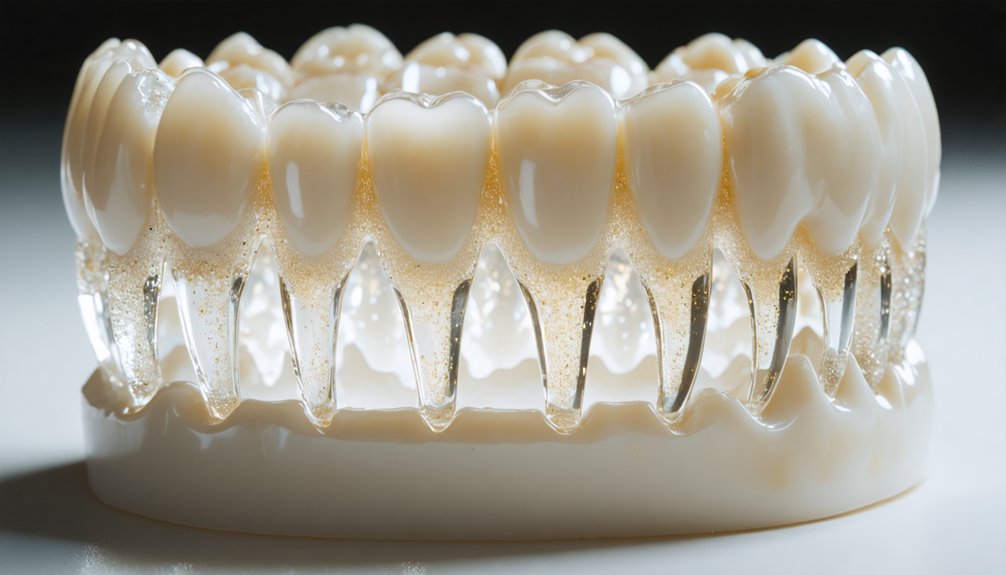
Sealing sensitive dentine tubules is how whitening toothpaste addresses the root cause of discomfort rather than simply masking pain signals. When tubules remain exposed, temperature changes and sweet stimuli trigger fluid movement that activates nerve endings directly.
Exposed dentine tubules don’t just cause pain — they leave your nerves vulnerable to every temperature change and sweet bite.
Whitening formulas counter this through chemical bonding agents like arginine and hydroxyapatite nanoparticles, which form stable plugs within open tubules. These compounds physically block external stimuli from reaching the pulp, delivering measurable relief.
Pro-Argin technology reinforces this process by creating a durable surface layer that withstands daily wear. Enamel reinforcement compounds, particularly calcium phosphate and fluoride, work alongside tubule-sealing agents to fortify the surrounding tooth structure.
You’re not simply managing symptoms — you’re actively restoring a protective barrier that controls sensitivity at its source.
Which Ingredients Rebuild Tooth Strength While Whitening
When you choose a whitening toothpaste with fluoride, you’re actively strengthening enamel against future sensitivity and decay.
Calcium phosphate compounds work alongside fluoride to replenish lost minerals, repairing the structural damage that leaves dentine exposed.
Together, these remineralizing agents restore your tooth’s natural integrity while the whitening process progresses.
Fluoride Strengthens Enamel
Fluoride strengthens enamel by integrating into the tooth’s crystalline structure, forming fluorapatite, which resists acid attacks more effectively than natural hydroxyapatite. It actively reverses early enamel erosion before tooth discoloration becomes visible or structural damage progresses further.
Key benefits fluoride delivers during whitening:
- Remineralizes weakened enamel zones to restore density and surface hardness
- Blocks dentine tubules by reinforcing the enamel layer above exposed areas
- Reduces acid solubility, making teeth more resistant to dietary and bacterial acids
- Supports whitening agents by stabilizing enamel integrity throughout the treatment cycle
- Prevents future sensitivity by fortifying the protective barrier against thermal triggers
Clinical data confirms that fluoride-based formulations provide 24/7 sensitivity relief, making them a precise, controlled choice for whitening sensitive teeth safely.
Calcium Phosphate Repairs Minerals
Calcium phosphate compounds actively replenish the mineral content your enamel loses during whitening treatments, rebuilding structural density at the microscopic level. These compounds bind directly to weakened tooth surfaces, restoring lost calcium and phosphate ions that acid erosion and bleaching agents deplete.
You’re reinforcing your enamel’s defensive capacity while simultaneously achieving natural whitening results. Toothpaste compatibility matters here—calcium phosphate integrates effectively within low-abrasion formulas without compromising other active ingredients.
This dual-action approach lets you control sensitivity risks while maintaining structural integrity throughout your whitening cycle. Fortified enamel resists thermal changes, external irritants, and further mineral loss more efficiently than untreated surfaces.
Remineralizing Agents Restore Structure
Rebuilding tooth strength while whitening requires ingredients that actively restore mineral density rather than simply reducing surface discoloration. You need remineralizing agents that target structural vulnerabilities before sensitivity worsens.
Key ingredients that restore tooth structure include:
- Fluoride strengthens enamel preservation by bonding to weakened mineral sites.
- Calcium phosphate compounds replenish lost minerals, fortifying dentine against external irritants.
- Hydroxyapatite nanoparticles seal micro-damage, supporting micro fracture prevention at the surface level.
- Remineralizing agents repair acid erosion effects that expose sensitive dentine layers.
- Fortified enamel resists temperature shifts, cavities, and tartar buildup more effectively than untreated surfaces.
These ingredients work systematically to rebuild what whitening processes or daily acid exposure strips away, giving you a structurally sound, resilient tooth surface that withstands sensitivity triggers.
Why Gradual Whitening Causes Less Discomfort Than Bleaching
When comparing gradual whitening to intensive bleaching, the difference in discomfort comes down to how your teeth adapt to active ingredients over time.
Gradual whitening uses low-concentration formulas applied over 3 to 4 weeks, allowing your enamel and nerve endings to adjust without triggering acute sensitivity episodes.
Intensive bleaching introduces high peroxide levels rapidly, overwhelming your tooth’s defenses and amplifying sensitivity triggers that provoke sharp nerve responses.
By contrast, shorter daily applications of gentle whitening agents let you control the pace of treatment, reducing the risk of sudden pain onset.
Taking scheduled breaks during the whitening cycle further manages developing discomfort.
This measured approach prioritizes enamel integrity while delivering consistent results, making gradual whitening the clinically sound choice for sensitive teeth.
What Clinical Studies Confirm About Sensitivity-Safe Whitening
Clinical studies confirm that sensitivity-safe whitening toothpaste delivers measurable relief without compromising enamel integrity. Research validates specific formulations that protect your teeth while effectively removing surface stains. You’re backed by evidence when choosing these products.
Key findings include:
- The ADA Seal of Acceptance verifies daily-use safety for whitening toothpaste formulas
- Fluoride and potassium nitrate combinations achieve 24/7 sensitivity relief in clinical trials
- Low-abrasion formulas prevent enamel erosion while clearing discoloration effectively
- Hydroxyapatite and calcium phosphate compounds repair micro-damage and strengthen tooth structure
- Remineralizing agents support bacterial prevention by fortifying enamel against acid-producing microbes
Low-concentration peroxide formulations show significantly reduced gum irritation compared to high-strength alternatives. Proper application—once or twice daily for six weeks—maximizes results while keeping sensitivity risks controlled.
How to Pick the Best Whitening Toothpaste for Sensitive Teeth
Armed with the clinical evidence supporting sensitivity-safe formulas, you can now apply that knowledge to select a product that fits your specific needs. Prioritize formulas containing potassium nitrate or arginine, as both block nerve responses effectively. Confirm the product carries the ADA Seal of Acceptance to verify clinical safety.
Choose a dental gel or toothpaste with hydroxyapatite or calcium phosphate compounds for enamel repair, particularly if acid erosion has weakened your tooth structure. Verify that abrasion values are low to prevent micro-fractures that expose dentine tubules. Avoid high-peroxide formulations, which increase sensitivity and gum irritation risks.
Check that fluoride is listed as an active ingredient to reinforce enamel integrity long-term. Apply your chosen product twice daily, following the six-week usage guideline for best results.
Frequently Asked Questions
Can Children With Sensitive Teeth Safely Use Whitening Toothpaste Daily?
Over 40% of children experience sensitivity. You shouldn’t let children with sensitive teeth use whitening toothpaste daily—children’s safety demands caution, as daily use risks enamel harm; consult your dentist before proceeding.
Does Whitening Toothpaste for Sensitive Teeth Work on Dental Veneers?
Whitening toothpaste won’t alter veneer durability or change their fixed shade, as veneers resist active ingredients. You’ll only affect surrounding natural teeth, creating tooth color matching inconsistencies. Consult your dentist before proceeding.
How Long Does Whitening Toothpaste Take to Show Visible Results?
You’ll typically see visible results within three to four weeks of consistent use. Low-concentration formulas balance whitening effectiveness while managing tooth sensitivity, letting you gradually achieve a brighter smile without experiencing discomfort from aggressive bleaching treatments.
Can Sensitive Whitening Toothpaste Be Used Alongside Professional Dental Treatments?
Yes, you can use sensitive toothpaste ingredients alongside professional treatments. Whitening toothpaste safety data confirms fluoride and potassium nitrate formulas complement dental procedures, helping you manage sensitivity while maintaining enamel integrity throughout your combined treatment plan.
Is Whitening Toothpaste for Sensitive Teeth Safe During Pregnancy?
You’re protecting your smile and your baby, so consult your dentist before use. Pregnancy safety depends on reviewing toothpaste ingredients like fluoride and peroxide concentrations, ensuring they’re appropriate for your specific prenatal health needs.
References
- https://www.cda-adc.ca/EN/oral_health/seal/products/product_page.asp?product=235
- https://opalescence.com/products/sensitivity-relief-whitening-toothpaste
- https://www.colgate.com/en-sa/products/toothpaste/colgate-sensitive-pro-relief-whitening
- https://www.sensodyne.com/en-us/products/sensodyne-sensitivity-and-gum-whitening-toothpaste/
- https://www.1mg.com/otc/sensodyne-whitening-sensitive-toothpaste-for-strong-teeth-healthy-gums-otc332028
- https://www.sensodyne.com/en-us/products/sensodyne-extra-whitening-toothpaste/
- https://www.colgate.com/en-us/products/toothpaste/sv-whitening
- https://clubwhitesmile.com/why-use-whitening-toothpaste-for-sensitive-teeth/
- https://www.colgate.com/en-ca/products/toothpaste/colgate-total-plus-sensitive-plus-whitening
- https://crest.com/en-us/oral-care-tips/new-sensitivity-toothpaste-for-whitening-therapy/