For enamel-safe whitening, your best options include dentist-supervised peroxide treatments, custom bleaching trays, and nano-hydroxyapatite toothpastes that remineralize while brightening. You should avoid DIY methods like activated charcoal, lemon juice, and undiluted apple cider vinegar — they strip enamel rather than whiten it. After any whitening treatment, your enamel is temporarily softened, making post-treatment care critical. The right combination of professional methods, protective products, and daily habits makes all the difference.
Key Takeaways
- Professional whitening treatments use controlled peroxide concentrations and laser technology, delivering superior results while preserving enamel under clinical supervision.
- Nano-hydroxyapatite toothpaste simultaneously whitens teeth and remineralizes enamel, making it ideal for daily enamel-safe home whitening.
- Avoid acidic foods, coffee, and citrus for 48 hours post-whitening, as enamel remains temporarily softened and vulnerable to erosion.
- Diluted hydrogen peroxide (1.5–3%) used as mouthwash provides effective low-risk whitening without the gum irritation of stronger concentrations.
- Rinsing immediately with water after staining or acidic drinks minimizes enamel damage and helps preserve whitening results long-term.
Professional Teeth Whitening Methods That Actually Deliver Results
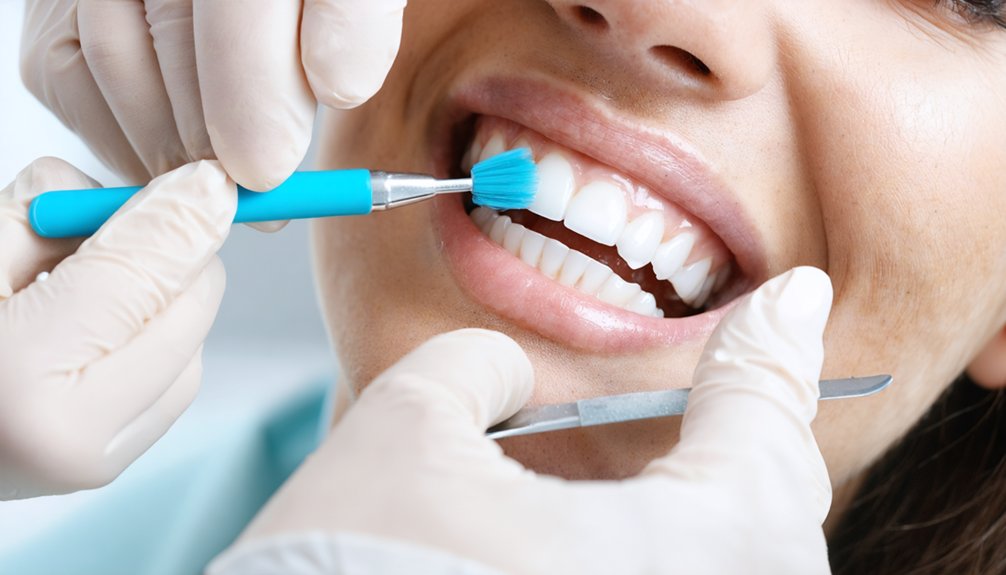
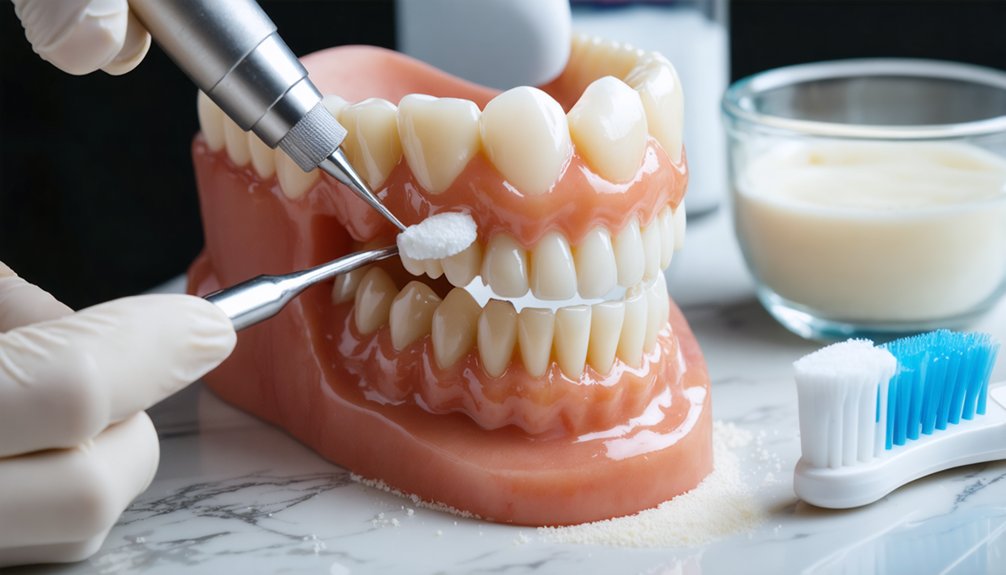
When it comes to achieving measurable whitening results, professional and dentist-supervised methods consistently outperform over-the-counter alternatives. Dentists use controlled peroxide concentrations alongside laser technology to accelerate the bleaching process while monitoring enamel integrity in real time. This precision reduces your risk of demineralization and excessive sensitivity.
Custom bleaching trays, fitted specifically to your dental anatomy, protect your gums while maximizing agent contact with tooth surfaces. Ill-fitting store-bought strips can’t replicate this level of accuracy.
Before beginning any whitening protocol, schedule a professional cleaning and pre-whitening consultation to establish a structural baseline.
These supervised approaches let you target specific outcomes without compromising enamel. When you prioritize clinical oversight, you retain full control over both the process and the long-term results.
Home Whitening Products That Protect Your Enamel
When whitening at home, you don’t have to compromise enamel health to achieve results. Nano hydroxyapatite toothpaste lets you whiten daily while actively remineralizing enamel.
Peroxide-free formulas reduce the risk of sensitivity and gum irritation. Choosing toothpaste labeled “enamel-safe” guarantees you’re removing surface stains with mild abrasives that won’t erode your tooth structure over time.
Gentle Daily Whitening Agents
Choosing the right daily whitening agents lets you brighten your smile without sacrificing enamel integrity. Each product you select directly controls your risk of enamel erosion and irritation to sensitive gums.
Prioritize these four evidence-backed agents:
- Nano hydroxyapatite toothpaste — remineralizes enamel daily while gently lifting surface stains.
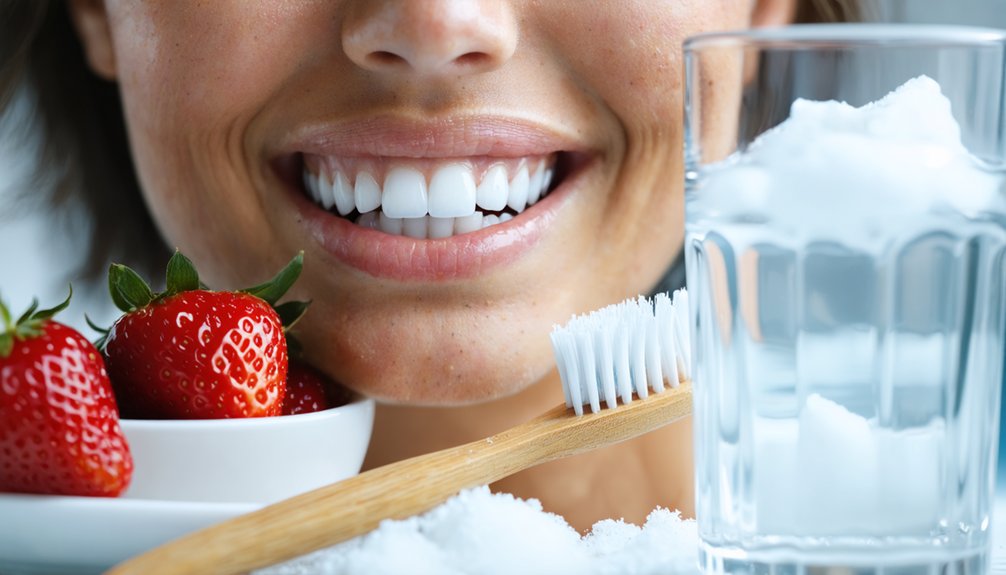
- Baking soda — use only 1–2 times per week as a mild abrasive to remove deposits without eroding enamel.
- Diluted hydrogen peroxide (1.5–3%) — functions effectively as a mouthwash when properly diluted to control concentration exposure.
- Enamel-safe whitening toothpaste — contains mild, regulated abrasives that target stains without compromising enamel structure.
Selecting peroxide-free or sensitivity-reducing formulas gives you precise control over daily whitening without triggering sensitivity or long-term structural damage.
Peroxide-Free Whitening Options
Peroxide-free whitening products let you reduce surface staining daily without triggering the sensitivity or enamel demineralization that peroxide-based formulas carry. These formulas rely on mild mechanical and chemical action rather than oxidative bleaching, making them safer for consistent use.
You’ll find plant-based ingredients like activated bamboo and papain enzyme effectively breaking down extrinsic stains without compromising structural enamel integrity. Herbal extracts, including neem and green tea polyphenols, support bacterial reduction while contributing mild brightening effects backed by clinical evidence.
Nano-hydroxyapatite formulas simultaneously whiten and remineralize, filling microfractures that cause dullness. When you’re selecting a peroxide-free product, prioritize formulas labeled enamel-safe with verified low-abrasion RDA scores. These options give you measurable stain control without the recovery period that stronger whitening agents demand.
Enamel-Safe Toothpaste Choices
Enamel-safe toothpastes protect your teeth by combining mild abrasives with active remineralizing agents rather than relying on oxidative bleaching. You’ll prevent enamel erosion and tooth sensitivity by selecting formulas built on verified ingredients and controlled abrasivity.
Prioritize these four criteria when choosing your toothpaste:
- Nano-hydroxyapatite content — actively remineralizes enamel while gently lifting surface stains
- Low RDA score — confirms abrasive levels remain beneath the enamel erosion threshold
- Sensitivity-reducing agents — potassium nitrate or stannous fluoride block dentinal tubules, directly reducing tooth sensitivity
- “Enamel-safe” ADA labeling — verifies third-party testing for stain removal without structural compromise
You’re selecting a daily tool, not a shortcut.
Consistent use of a clinically sound formula delivers measurable brightness while preserving enamel integrity long-term.
Natural Foods and Remedies That Brighten Teeth Gently
While professional treatments deliver the most dramatic results, several natural foods and remedies can gently brighten teeth without compromising enamel integrity.
You can incorporate crunchy produce like apples, carrots, and celery, which mechanically scrub surface stains while stimulating protective saliva production.
Strawberries deliver malic acid, a natural extract that lifts stains without harsh chemicals.
Dairy products supply calcium that actively reinforces enamel against erosion and discoloration.
Oil pulling with coconut oil represents one of the more evidence-supported herbal remedies, reducing plaque accumulation when practiced consistently for 15–20 minutes daily.
Green tea’s polyphenols further inhibit bacterial buildup while supporting enamel health.
You should rinse with water after consuming staining foods to limit residue bonding.
These strategies work most effectively when combined with proven professional or clinical-grade whitening protocols.
Daily Habits That Stop New Teeth Whitening Stains From Forming
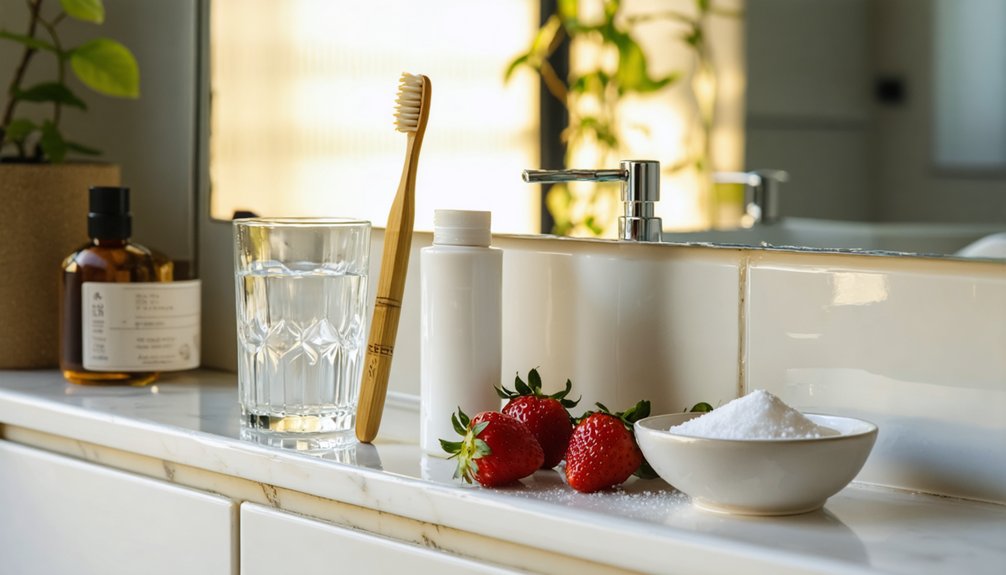
Protecting your whitening results long-term requires more than occasional treatments—it demands consistent daily habits that prevent new stains from forming in the first place. Stain prevention hinges on deliberate lifestyle modifications executed daily.
- Use a straw when drinking coffee, tea, or dark beverages to eliminate direct contact with enamel.
- Rinse with water immediately after consuming acidic or pigment-rich foods to neutralize pH and dislodge residue.
- Avoid slow sipping of dark liquids throughout the day, which prolongs staining exposure considerably.
- Cut sugar intake to reduce bacterial plaque accumulation that accelerates yellowing.
These four interventions interrupt stain formation at the source.
Consistency matters—sporadic compliance undermines whitening investments and accelerates discoloration between professional or at-home treatment cycles.
How to Rebuild Enamel Between Whitening Sessions
Between whitening sessions, you must prioritize aggressive remineralization to counteract enamel demineralization caused by peroxide-based treatments.
Nano hydroxyapatite toothpaste is your most effective daily tool, as it directly rebuilds enamel mineral structure while gently reducing surface discoloration.
You should also rinse with water after consuming acidic or staining substances and wait 30–60 minutes before brushing to prevent acids from penetrating already-weakened enamel.
Remineralization Between Sessions
Whitening sessions create windows of vulnerability in your enamel, making aggressive remineralization between treatments essential rather than optional. Deploy these enamel strengthening remineralization techniques systematically:
- Apply nano-hydroxyapatite toothpaste daily — it rebuilds enamel’s crystalline structure at the microscopic level, directly countering whitening-induced demineralization.
- Use fluoride rinses post-session — fluoride integrates into softened enamel, reinforcing mineral density before exposure worsens.
- Consume calcium-rich dairy — cheese, yogurt, and milk deliver bioavailable calcium that actively restores enamel integrity between treatments.
- Wait 30–60 minutes before brushing after acidic consumption — brushing prematurely drives acids deeper into temporarily weakened enamel.
You’re not just maintaining results — you’re protecting structural integrity. Without deliberate remineralization, repeated whitening sessions accelerate enamel thinning rather than producing lasting brightness.
Protecting Enamel After Whitening
Every whitening session temporarily softens enamel, leaving it vulnerable to erosion, staining, and mineral loss if you don’t intervene strategically. Acid erosion accelerates post-whitening because enamel’s crystalline structure is already compromised. You need to act immediately after each session.
Brush gently at a 45° angle using ultra-soft bristles and nano-hydroxyapatite toothpaste to remineralize while cleaning.
Avoid acidic foods, coffee, and citrus for at least 48 hours post-treatment to prevent enamel erosion from compounding existing vulnerability. If you consume acidic drinks, rinse immediately with water rather than brushing, since brushing drives acids deeper into softened enamel.
Incorporate calcium-rich foods like cheese and yogurt to rebuild mineral density. These targeted interventions close the window of vulnerability before your next whitening session.
DIY Whitening Ingredients Dentists Warn Against
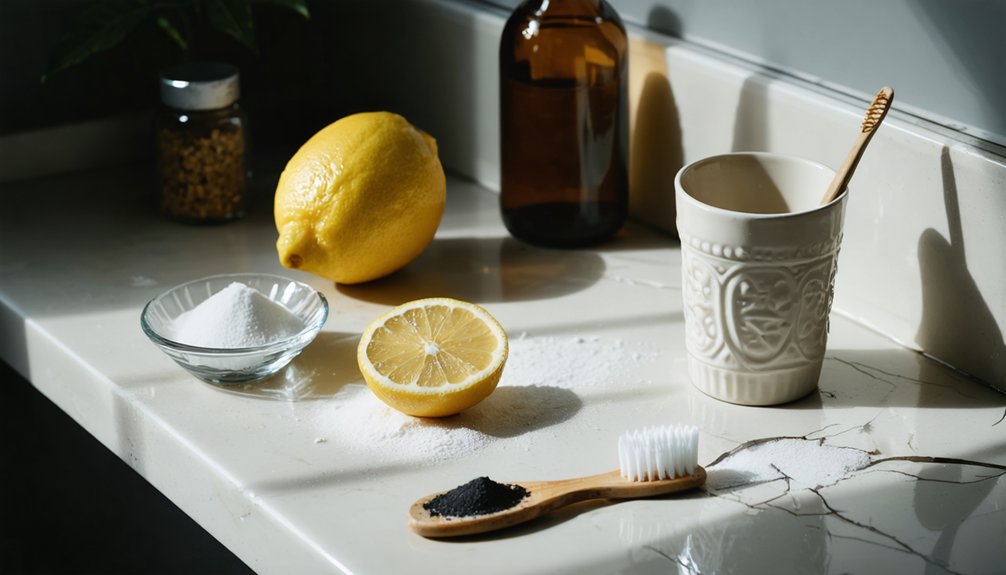
Several DIY whitening ingredients that seem effective can actually cause irreversible enamel damage. Homemade remedies and DIY experiments often rely on ingredients that strip protective enamel layers rather than target surface stains. Dentists consistently flag these four offenders:
Many DIY whitening ingredients don’t brighten teeth — they destroy the enamel protecting them.
- Undiluted hydrogen peroxide — burns gum tissue and erodes enamel at uncontrolled concentrations
- Apple cider vinegar — contains acetic acid that permanently demineralizes enamel with repeated use
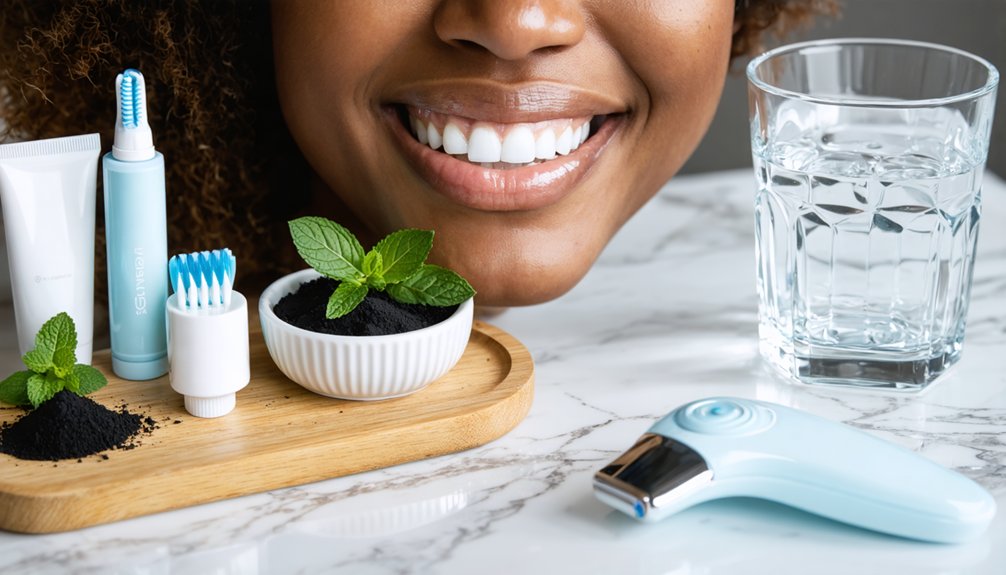
- Activated charcoal — aggressively abrasive, accelerating dentin exposure over time
- Lemon or citrus juice — highly acidic, dissolving enamel with every application
You’re not gaining whiteness with these methods — you’re trading it for long-term discoloration and structural compromise. Controlled, evidence-based products protect your results without sacrificing enamel integrity.
Frequently Asked Questions
Can Teeth Whitening Treatments Worsen Existing Dental Restorations or Crowns?
Yes, whitening treatments don’t alter crowns or restorations, creating shade mismatches. You’ll face dental material compatibility issues and restoration durability concerns, so consult your dentist before treatment to protect your existing dental work effectively.
At What Age Is Teeth Whitening Considered Safe for Teenagers?
You’ll wait an eternity if you’re under 14! Teenage safety demands caution—whitening age starts at 14–16, but you should always consult your dentist first, as developing enamel’s still vulnerable to irreversible damage.
Does Teeth Whitening Affect People With Braces or Orthodontic Appliances?
Whitening with braces creates uneven teeth discoloration, leaving untreated spots once removed. Orthodontic challenges make uniform treatment impossible. You’ll achieve safer, consistent results by waiting until your orthodontist completes your treatment before starting any whitening protocol.
How Long Do Professional Whitening Results Typically Last Before Fading?
Professional whitening results persist for six to twelve months. You’ll extend longevity by limiting staining substances, avoiding unproven DIY whitening shortcuts, and supplementing with evidence-backed natural remedies like hydroxyapatite toothpaste to maintain control over your enamel’s brightness.
Can Pregnancy Affect the Safety of Using Whitening Products at Home?
You shouldn’t use whitening products during pregnancy. Instead, you’ll find home remedies like hydroxyapatite toothpaste and natural alternatives such as crunchy vegetables safer choices, as they gently maintain enamel health without exposing you to potentially harmful chemical agents.
References
- https://www.youtube.com/watch?v=d98KAyxTGwo
- https://www.healthpartners.com/blog/safe-teeth-whitening/
- https://www.medicalnewstoday.com/articles/322421
- https://www.healthline.com/nutrition/whiten-teeth-naturally
- https://www.insmyledental.com/how-to-whiten-teeth-without-damaging-enamel/
- https://dentalsmiles.com.au/teeth-whitening-maintain-naturally-protect-your-enamel/
- https://www.youtube.com/watch?v=916lv0RKSEs