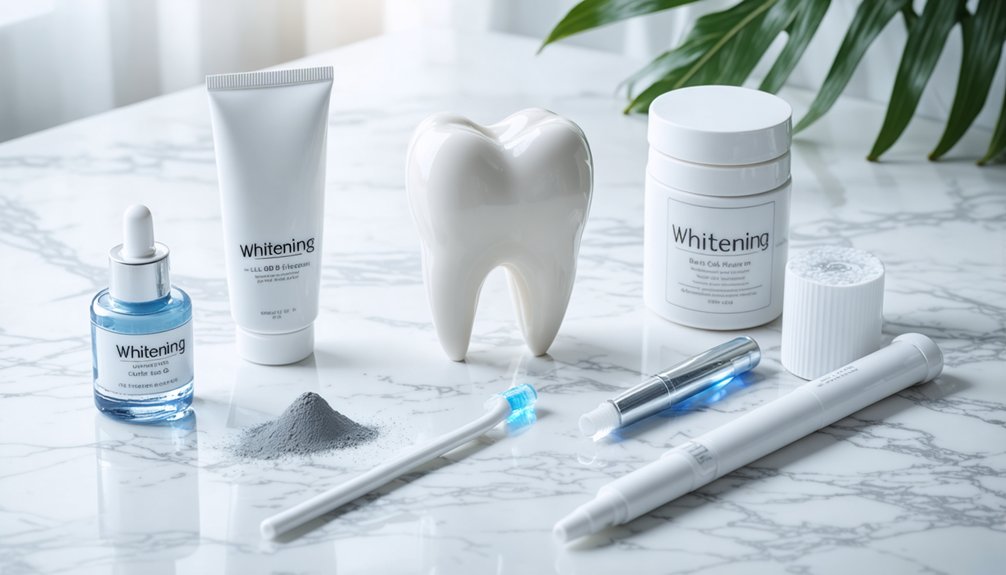
Your best enamel-friendly whitening options include hydrogen peroxide strips (3–10% concentration), low-abrasion whitening toothpastes with RDA values below 70, at-home LED kits using 3–6% peroxide gels, professional in-office treatments with supervised enamel protection protocols, and remineralizing products containing nano-hydroxyapatite. Each approach balances stain removal with structural preservation differently. Matching the right method to your sensitivity level and whitening goals makes all the difference—and the details ahead will help you choose precisely.
Key Takeaways
- Enamel-safe whitening strips with 3–10% hydrogen peroxide effectively lift stains while minimizing sensitivity and preserving tooth structure.
- Whitening toothpastes with low RDA values below 70 gently remove stains daily without abrading enamel.
- At-home LED kits use lower peroxide concentrations with light activation, reducing enamel interaction while brightening teeth.
- Professional in-office treatments offer precise peroxide control with protective protocols, making them the safest whitening option available.
- Remineralizing products containing nano-hydroxyapatite restore enamel density while lifting surface discoloration naturally and effectively.
Enamel-Safe Whitening Strips That Actually Deliver Results
Whitening strips have evolved considerably, and today’s enamel-safe formulas deliver real results without compromising tooth structure. You’ll find hydrogen peroxide concentrations ranging from 3–10%, which effectively lift stains while minimizing enamel interaction.
Crest 3D White Luxe balances stain removal with low sensitivity reduction risk, making it a reliable controlled option.
If you prefer natural ingredients, Lumineux Whitening Strips incorporate coconut oil and sage oil, eliminating harsh bleaching agents entirely. Peroxide-free formulas further reduce intensity while still addressing surface discoloration.
Choosing strips with lower concentrations—around 5.25% versus the standard 6.5%—directly reduces pain signals during treatment. You maintain precise control over your whitening process by selecting concentration levels matched to your enamel’s specific tolerance and your desired outcome.
Whitening Toothpastes Gentle Enough for Sensitive Enamel
For sensitive enamel, whitening toothpastes offer a gentler daily alternative to strip-based treatments.
You’ll want to prioritize toothpaste ingredients that actively protect while they whiten. Colgate Optic White Advanced combines stain removal with cavity protection, while Sensodyne Clinical White delivers up to two shades of improvement within two weeks.
The best whitening toothpastes don’t just brighten—they actively shield enamel while delivering visible results.
If you’re avoiding fluoride, Boka’s nano-hydroxyapatite formula remineralizes enamel directly at the structural level.
Sensitivity formulas typically incorporate potassium nitrate, which blocks pain signals, alongside fluoride to strengthen enamel against daily wear.
You should also check a product’s RDA value—anything below 70 indicates low abrasivity, meaning it won’t mechanically degrade enamel during brushing.
Selecting toothpastes with these targeted compounds gives you consistent whitening progress without compromising enamel integrity over time.
At-Home LED Kits With Low Sensitivity Risk
When daily toothpaste isn’t delivering the whitening results you’re after, at-home LED kits offer a meaningful step up without the sensitivity risks associated with professional-grade treatments.
The LED benefits here are measurable—light activation accelerates the whitening gel’s oxidation process, allowing you to use lower-concentration formulas while still achieving visible results. Options like the Snow Diamond LED Kit demonstrate brightening after a single session.
Gel types matter considerably in managing sensitivity. Peroxide-based gels at reduced concentrations, typically between 3–6%, minimize enamel interaction while lifting stains effectively.
Peroxide-free alternatives eliminate bleaching intensity altogether, targeting surface discoloration without chemical penetration. Custom-fitted trays, when available, guarantee precise gel distribution, reducing unnecessary gum and enamel exposure.
Always follow application guidelines strictly to protect enamel integrity throughout your whitening protocol.
When Professional Whitening Protects Enamel Better
Despite the convenience of at-home options, professional in-office whitening treatments often protect enamel more effectively than their over-the-counter counterparts.
When you choose clinical supervision, you’re gaining access to professional techniques that precisely control peroxide concentration, application time, and protective barriers—variables you simply can’t manage at home.
Dentists apply enamel protection protocols before and during high-concentration peroxide treatments, shielding vulnerable tissue from unnecessary exposure.
Laser-activated systems deliver targeted whitening with controlled enamel interaction, minimizing collateral damage.
Custom-fitted trays guarantee gel stays exactly where intended, preventing uneven absorption.
If you’re dealing with existing sensitivity or enamel erosion, professional treatment isn’t just preferable—it’s the smarter clinical choice.
You’re not surrendering control; you’re exercising it by selecting the most evidence-supported, enamel-conscious approach available.
Remineralizing Approaches That Whiten Without Weakening Enamel
Remineralizing approaches offer a compelling alternative if you’re prioritizing enamel integrity alongside cosmetic improvement. Rather than relying solely on peroxide-based bleaching, you can incorporate products that actively repair enamel while lifting surface discoloration.
Nano-hydroxyapatite, a key compound in several modern formulations, deposits directly into micro-damaged enamel, restoring structural density and brightness simultaneously.
Natural ingredients like coconut oil and sage oil, found in peroxide-free strips, reduce surface stains without compromising enamel health. Oil pulling further supports this approach by reducing bacterial load and surface debris.
You’ll also benefit from applying remineralizing agents before and after any whitening treatment, allowing enamel to recover efficiently. Choosing pH-neutral products guarantees your enamel environment stays stable, maximizing both protective and cosmetic outcomes.
Frequently Asked Questions
How Long Does Teeth Whitening Typically Last Before Needing Retreatment?
Forsooth, your whitening frequency typically lasts six to twelve months before you’ll need treatment maintenance. You can extend results by avoiding staining foods and scheduling touch-ups based on your enamel’s individual remineralization response.
Can Whitening Products Safely Be Used During Pregnancy or Breastfeeding?
You shouldn’t use whitening products during pregnancy or breastfeeding due to safety concerns around peroxide absorption. Instead, you’d benefit from natural alternatives like oil pulling or nano-hydroxyapatite toothpaste, which effectively maintain brightness without chemical exposure risks.
Does Teeth Whitening Work Effectively on Dental Crowns or Veneers?
whitening won’t change your crowns longevity or alter veneers maintenance—these restorations resist peroxide entirely. You’ll need replacement or professional consultation to match their shade to newly whitened natural teeth.
At What Age Is It Safe to Begin Whitening Treatments for Teens?
You shouldn’t start whitening treatments until age 14-16, when permanent teeth fully develop. Monitor teeth sensitivity closely, as the safe whitening age varies individually. Always consult your dentist before beginning any teen whitening regimen.
Can Certain Medications Negatively Interact With Whitening Product Ingredients?
Like ancient alchemists warned, yes, certain medications can trigger medication interactions with whitening ingredients. You’ll want to consult your dentist, as ingredient sensitivities may arise with tetracycline antibiotics, blood thinners, or photosensitizing drugs before treatment.
References
- https://www.bestiepaws.com/lounge/best-enamel-toothpaste-to-whiten-teeth/
- https://www.forbes.com/sites/forbes-personal-shopper/article/best-teeth-whitening-kit/
- https://toothfairystale.com/vetted/best-enamel-safe-teeth-whitening/
- https://tribecadentalstudio.com/dont-wince-just-whiten-finding-your-perfect-sensitive-teeth-solution/
- https://teethcare360.co.uk/peroxide-free-whitening-strips/
- https://www.amazon.com/Best-Sellers-Teeth-Whitening-Products/zgbs/hpc/3778441
- https://www.health.com/beauty/best-whitening-products-sensitive-teeth
- https://lustrodental.com/whitening-methods/
- https://www.alibaba.com/product-insights/best-teeth-whitening-toothpaste-2026-expert-tested-top-5-picks.html
- https://www.gentledental.com/resources/articles/teeth-whitening-products