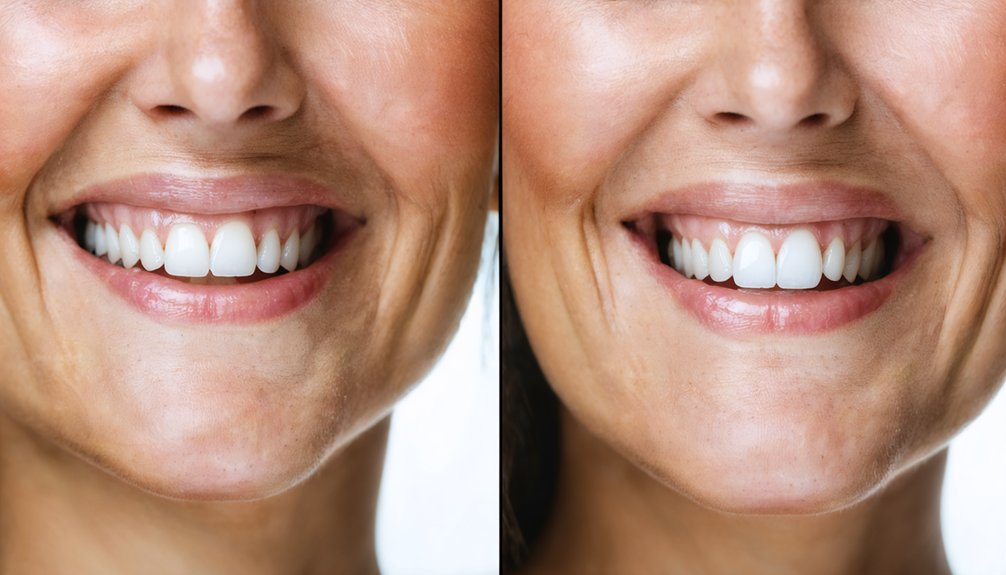
Brightening aging teeth requires a tailored approach because your enamel’s thinner, more porous surface absorbs stains faster and reacts more sensitively to standard treatments. You’ll get the best results using lower-concentration hydrogen peroxide gels (4-6%), custom whitening trays, and shorter sessions to minimize chemical exposure. Pair these with fluoride-based toothpastes, remineralizing pastes, and dietary adjustments like limiting coffee and rinsing immediately after. The strategies ahead break down exactly how to make it work safely.
Key Takeaways
- Custom whitening trays with low-concentration gels (4-6% hydrogen peroxide) provide safe, effective brightening for thinned aging enamel.
- Shorter whitening sessions of 10-30 minutes minimize chemical exposure while reducing sensitivity risks in aging teeth.
- Nightly remineralizing pastes repair enamel damage, maintaining brightness and strengthening porous surfaces prone to staining.
- Desensitizing protocols using potassium nitrate pastes enhance enamel strength before and during professional whitening treatments.
- Limiting pigment-rich beverages like coffee and red wine, combined with immediate rinsing, prevents deeper stain absorption.
How Aging Changes Teeth and Why Stains Set Deeper
As you age, your enamel gradually thins from decades of mechanical wear and acid exposure, exposing the naturally yellow dentin layer beneath. This shift in tooth structure means chromogens from coffee, tea, and wine penetrate more deeply into porous surfaces.
Unlike younger enamel, thinned enamel can’t resist stain absorption as effectively, making discoloration appear more intense and stubborn. Enamel thinning also reduces light reflectivity, dulling your smile’s overall brightness beyond surface staining alone.
Additionally, dentin naturally darkens with age as secondary dentin deposits accumulate internally. You’re not simply dealing with surface stains — you’re managing structural changes that require targeted intervention.
Understanding this distinction helps you select whitening strategies that address both superficial discoloration and the underlying physiological shifts driving it.
Professional Whitening Options Designed for Sensitive Aging Teeth
Because aging teeth carry structurally compromised enamel, standard whitening protocols often deliver more harm than brightness. You need approaches calibrated to your enamel’s current condition, not generic drugstore solutions.
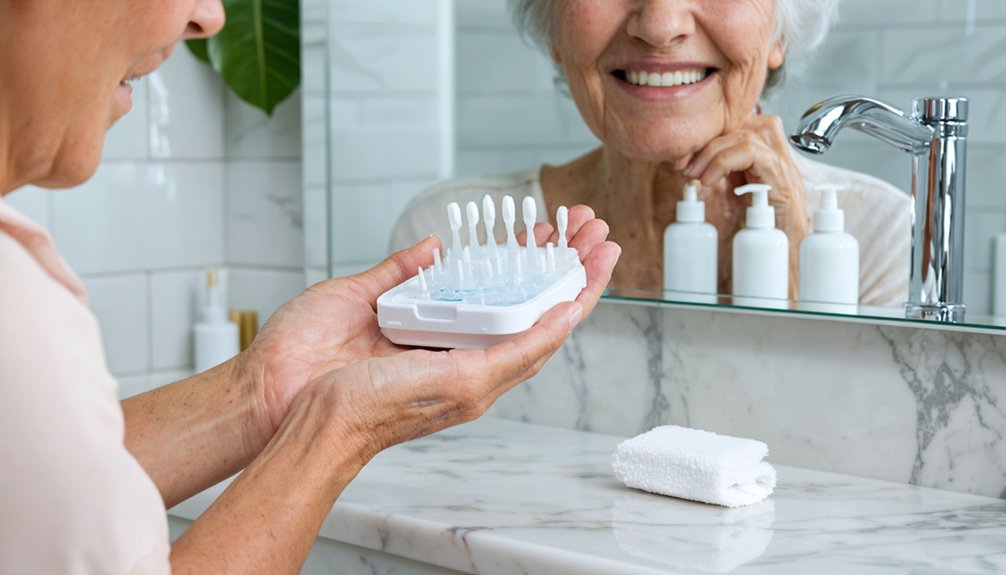
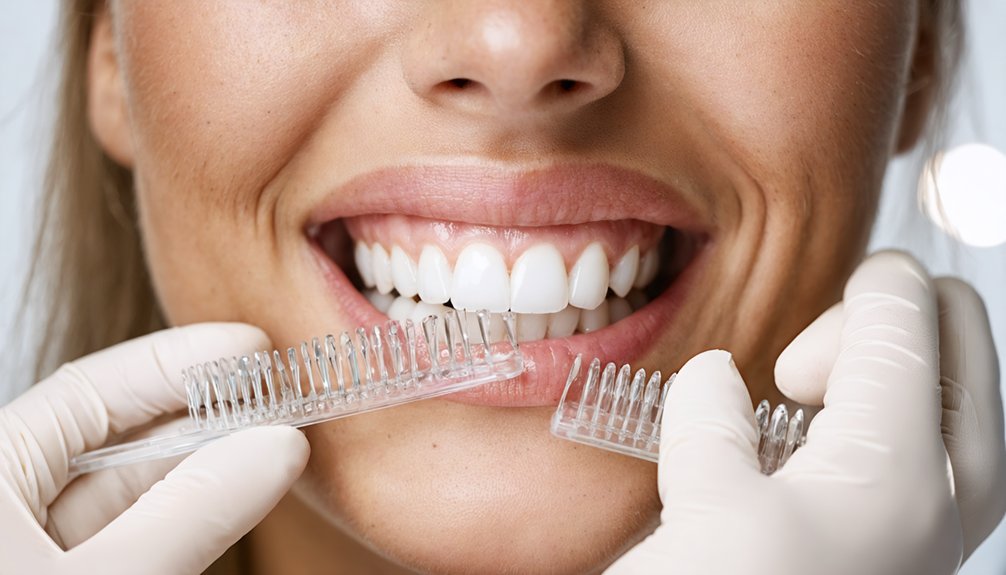
Custom whitening trays, molded precisely by your dentist, eliminate gel leakage and guarantee consistent contact across tooth surfaces. This precision prevents uneven results and reduces unnecessary gum exposure.
Dentist-molded trays eliminate leakage, ensuring precise gel contact and protecting gums from unnecessary chemical exposure.
Pair your trays with lower-concentration gels—4-6% hydrogen peroxide suits aged enamel far better than standard 10% formulas.
Shorter sessions, typically 10-30 minutes, prevent prolonged chemical exposure that weakens already fragile enamel.
Integrate desensitizing protocols before beginning treatment: potassium nitrate pastes and professional fluoride varnishes strengthen enamel and block sensitivity pathways.
Following bleaching, prescription-strength remineralizing gels restore lost minerals, protecting structural integrity and sustaining your results longer.
At-Home Whitening Routines That Protect Thinning Enamel
Maintaining brightness at home requires selecting methods gentle enough for thinning enamel without sacrificing effectiveness. For home whitening, prioritize diluted hydrogen peroxide rinses at proper concentrations, swishing for 60 seconds once daily to lift surface stains without chemical aggression.
Baking soda applied gently twice weekly provides mild mechanical abrasion, removing discoloration while preserving enamel integrity.
You’ll want to choose fluoride-based whitening toothpastes with low abrasiveness ratings, supporting both brightness and enamel protection simultaneously. Limit strongly pigmented beverages like coffee and red wine, and rinse immediately after consumption. Dietary adjustments compound your whitening efforts considerably.
Incorporating remineralizing pastes nightly repairs microstructural enamel damage accumulated between sessions, ensuring your maintenance routine strengthens rather than depletes aging tooth structure progressively.
Natural Stain Remedies Ranked for Aging Teeth
When selecting natural stain remedies for aging teeth, you’ll want to prioritize options that balance efficacy with enamel safety. Ranking these methods helps you allocate effort strategically.
Baking Soda Benefits place it near the top. Its mild abrasiveness lifts surface stains effectively without harsh chemicals. Limit application to twice weekly, brushing gently for 60 seconds to protect thinning enamel from unnecessary wear.
Oil Pulling Effectiveness ranks as a complementary approach. Swishing coconut oil daily reduces surface staining gradually while supporting gum tissue health without abrasive risk.
Strawberry-baking soda combinations offer moderate results through malic acid’s stain-breaking properties but require careful, infrequent use.
Activated charcoal ranks lowest due to contested efficacy and significant abrasion risk, making it unsuitable for structurally compromised aging enamel.
Daily Habits That Prevent Stains From Returning on Aging Teeth
Remedies slow existing discoloration, but daily behavioral habits determine whether stains return. Stain prevention requires deliberate dietary adjustments and consistent oral hygiene.
Whitening treatments fade without habit changes — what you eat and how you clean determines whether brightness lasts.
Limit coffee, black tea, and red wine, and rinse with water immediately after consuming them. Use a straw to minimize direct contact with enamel. Eliminate tobacco entirely, as nicotine creates stubborn, deep-set pigmentation resistant to most whitening protocols.
Brush gently twice daily for two full minutes using a soft-bristled brush angled toward the gumline. Floss at least twice daily to remove plaque accumulation between teeth.
Chew sugarless gum to stimulate saliva flow, which naturally neutralizes acids and clears surface debris. These compounding behaviors protect your investment in whitening treatments and maintain visible brightness between professional touch-up cycles.
Frequently Asked Questions
Can Whitening Treatments Interact Negatively With Common Medications Older Adults Take?
Ironically, yes—your quest for brightness can create unwanted side effects. Medication interactions with blood thinners or antihistamines may worsen sensitivity. You’ll want to consult your dentist before whitening to maintain safe, controlled, aesthetic results.
How Does Menopause or Hormonal Changes Affect Tooth Whitening Results in Women?
Hormonal fluctuations during menopause increase your oral sensitivity, making whitening treatments more uncomfortable and less predictable. You’ll achieve better results by using lower peroxide concentrations, shorter application sessions, and desensitizing pastes to maintain control over your whitening outcomes.
Are Dental Implants, Crowns, or Veneers Safe to Whiten Alongside Natural Teeth?
Like mixing oil and water, whitening options don’t uniformly affect dental materials—implants, crowns, and veneers won’t respond to bleaching agents. You’ll need professional color-matching consultations to guarantee your restorations harmonize with your naturally whitened teeth.
How Long Does Professional Whitening Typically Last for Adults Over Sixty Years?
Professional whitening typically lasts three to six months for you. Since you’re over sixty, you’ll need higher whitening frequency due to faster restaining. Supplement your results with targeted home remedies to maintain brightness effectively between sessions.
Does Systemic Health Conditions Like Diabetes Affect How Aging Teeth Respond to Whitening?
Yes, diabetes impact your whitening efficacy considerably. You’ll notice slower healing, heightened sensitivity, and uneven results due to compromised circulation. Consult your dentist to tailor protocols that account for your systemic health before beginning any whitening treatment.
References
- https://www.cbsnews.com/news/flashing-a-smile-ways-to-brighten-your-teeth/
- https://www.aarp.org/health/conditions-treatments/teeth-whitening/
- https://brighton.ultimawhite.co.uk/brighten-your-smile-after-50-whitening-methods/
- https://www.aguafriadental.com/blog/10-effective-ways-to-whiten-your-yellow-aging-teeth/
- https://www.health.harvard.edu/diseases-and-conditions/the-aging-mouth-and-how-to-keep-it-younger
- https://www.webmd.com/oral-health/teeth-whitening-and-bleaching
- https://www.adc-fl.com/blog/10-top-whitening-secrets-to-make-your-smile-brighter
- https://www.cdhp.org/is-it-harder-to-whiten-teeth-as-you-age/
- https://www.teethwhitening.london/blog/whitening-in-your-40s-brightening-the-dentin-not-just-enamel
- https://www.ada.org/resources/ada-library/oral-health-topics/whitening