To brighten sensitive enamel, you’ll need targeted methods that lift stains without compromising enamel integrity. Try coconut oil pulling, diluted hydrogen peroxide rinses, or a baking soda paste used sparingly. Swap staining beverages for tooth-friendly alternatives, choose low-peroxide whitening strips, and brush with a soft-bristled toothbrush using gentle circular motions. Time your brushing correctly and space treatments months apart. Each method works precisely when applied with consistency, and the details make all the difference.
Key Takeaways
- Coconut oil pulling daily for 15–20 minutes lifts surface stains without harsh chemicals, but requires consistent use for noticeable results.
- Baking soda paste used two to three times weekly gently polishes stains while minimizing enamel erosion and sensitivity.
- Whitening strips with 6%–10% peroxide concentrations, spaced months apart, safely brighten sensitive enamel without causing excessive irritation.
- Stannous fluoride toothpaste applied nightly without rinsing occludes dentinal tubules, fortifying enamel while reducing sensitivity over time.
- Reducing stain-causing beverages and using straws minimizes enamel discoloration while protecting against compounding sensitivity issues.
Use Coconut Oil Pulling to Lift Surface Stains Gently
Coconut oil pulling offers a chemical-free method to lift surface stains without aggravating sensitive enamel. You’ll leverage coconut oil benefits by swishing one tablespoon daily, allowing it to melt briefly before beginning.
Precise oil pulling techniques require 15 to 20 minutes of consistent movement after brushing, ensuring the oil reaches interdental spaces and along the gumline. Spit the oil out completely once finished, and resist rinsing immediately with water to preserve its residual antimicrobial effect.
You’re replacing harsh chemical whitening agents with a gentler alternative that respects enamel integrity. Consistency defines your results here — sporadic sessions won’t deliver measurable brightening.
Commit to a structured daily routine, track your progress with photographs, and adjust frequency based on your enamel’s sensitivity response.
How Baking Soda Paste Brightens Teeth Without Damaging Enamel
Baking soda’s mild abrasiveness gently polishes surface stains without stripping enamel when you apply it correctly.
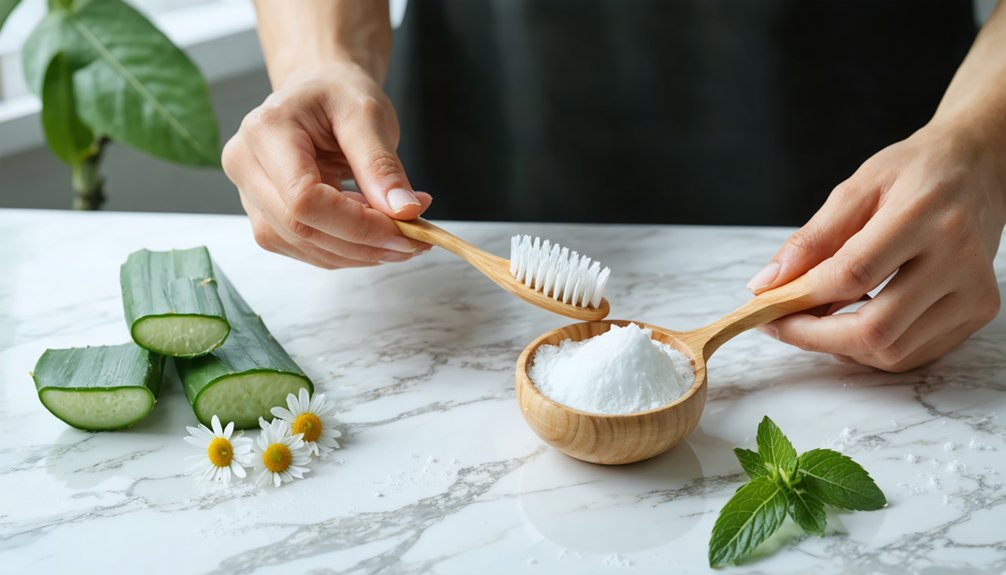
Mix one teaspoon of baking soda with two teaspoons of water, brush lightly with the paste, and rinse thoroughly afterward.
Limit use to a few times per week, since daily application risks enamel erosion and increased sensitivity over time.
Baking Soda Paste Benefits
When used correctly, a simple baking soda paste can brighten teeth without compromising enamel integrity. Its mild abrasiveness lifts surface stains mechanically rather than chemically, reducing the risk of enamel erosion when you apply it with controlled, gentle pressure.
To protect enamel health, mix one teaspoon of baking soda with two teaspoons of water, forming a consistent paste. Brush with it a few times per week — not daily — and rinse thoroughly afterward. This frequency gives you visible brightening results while preventing cumulative abrasive damage.
You’re choosing a method that keeps you in control of intensity and timing. Unlike aggressive whitening agents, baking soda lets you calibrate usage to your sensitivity threshold, delivering gradual, measurable improvement without sacrificing structural enamel integrity.
Safe Application Frequency
Frequency determines whether baking soda brightens or erodes — use it two to three times per week, never daily. Overuse strips the enamel protection your teeth depend on, leaving them vulnerable and reactive. Treat this natural whitening method as a precision tool, not a daily habit.
- Schedule sessions on alternating days — Monday, Wednesday, Friday — never consecutive.
- Brush gently for two minutes using small circular motions, applying minimal pressure throughout.
- Rinse thoroughly with plain water immediately after to clear all residue from the surface.
- Track your cycle by marking application days on a calendar to prevent accidental overuse.
Controlled repetition preserves your results. Discipline in frequency is what separates effective brightening from irreversible enamel damage.
How to Use Hydrogen Peroxide Mouthwash Without Irritating Sensitive Teeth
Hydrogen peroxide mouthwash can effectively brighten sensitive enamel when you use it at the right concentration. To maximize hydrogen benefits without triggering irritation, dilute a standard 3% drugstore solution to 1.5% by mixing equal parts peroxide and water. This precise dilution delivers measurable whitening action while minimizing gum sensitivity.
Your mouthwash techniques matter as much as the solution itself. Swish the diluted mixture briefly before brushing, then rinse thoroughly with plain water afterward.
Never exceed the frequency specified on product instructions, as overuse compounds sensitivity and undermines enamel integrity.
Avoid high-concentration formulas entirely if you have existing sensitivity concerns. Pairing hydrogen peroxide mouthwash with a potassium nitrate toothpaste creates a controlled protocol that brightens enamel while maintaining a protective barrier against discomfort.
Diet Swaps That Prevent New Stains From Forming on Your Teeth
Your diet plays a direct role in how quickly new stains accumulate on sensitive enamel, making strategic food and drink swaps one of the most effective preventive tools available.
You’ll want to cut back on deeply pigmented culprits like coffee, tea, and red wine, which bond to enamel surfaces and accelerate discoloration.
When you can’t eliminate these beverages entirely, drinking them through a straw and rinsing with water immediately afterward greatly reduces their staining impact.
Stain-Causing Foods To Avoid
Certain foods and beverages accelerate enamel staining faster than most whitening treatments can reverse, so identifying and reducing them is essential to preserving brightness.
Stain-causing beverages, acidic fruits, and dark sauces compound discoloration when consumed frequently without protective rinsing.
- Coffee blends and tea types deposit chromogens directly onto enamel surfaces, deepening yellow tones over time.
- Wine alternatives like grape juice carry identical staining acids, making them equally damaging despite their casual reputation.
- Colored condiments such as soy sauce and tomato-based dark sauces coat enamel with pigment-heavy residue.
- Smoking habits and sugary snacks introduce both tar staining and dietary acids that erode enamel while embedding discoloration.
Rinsing immediately after exposure limits cumulative damage considerably.
Protective Drink Swapping Strategies
Swapping stain-heavy beverages for tooth-friendly alternatives is one of the most efficient preventive strategies you can apply without any whitening product at all.
When you drink coffee, tea, or red wine, use a straw to redirect liquid away from your front enamel surfaces. This simple mechanical adjustment considerably reduces chromogen contact.
For ideal stain prevention, replace acidic sodas with still or sparkling water during non-meal periods. Green tea causes less discoloration than black tea and offers antioxidant benefits, making it a precise drink alternative worth integrating.
After consuming any pigment-rich beverage, rinse immediately with plain water to interrupt the staining cycle before it sets.
Prioritizing these drink alternatives positions you to maintain brightness actively rather than correcting damage reactively.
Pick the Right Whitening Strips for Sensitive Enamel
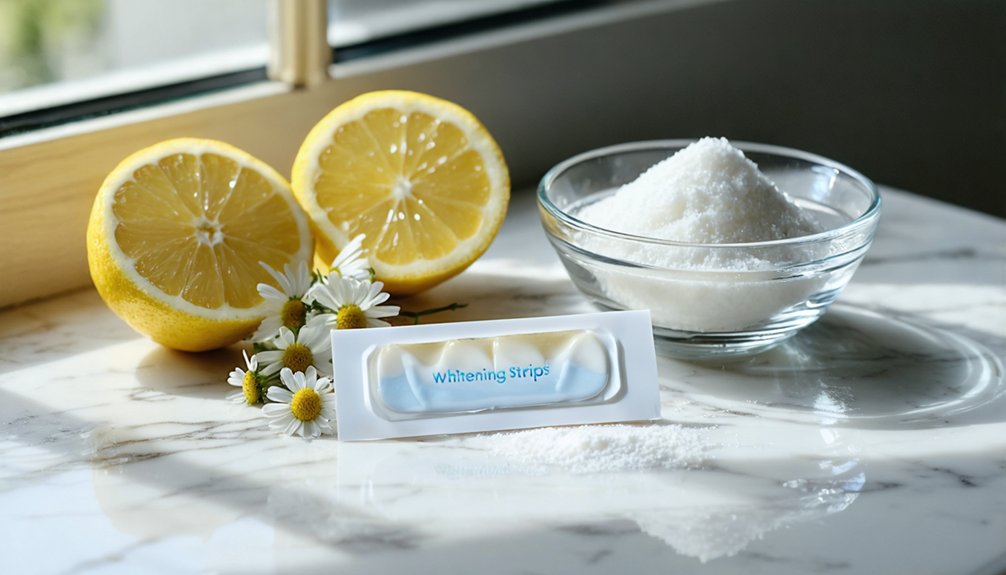
Choosing the right whitening strips matters greatly when your enamel is already prone to sensitivity. Whitening strip effectiveness depends entirely on selecting formulas designed for sensitive enamel care, not maximum bleaching power.
- Select strips with 6% to 10% peroxide concentrations — lower percentages reduce irritation while still delivering visible brightening results.
- Look for the ADA seal of approval — it confirms the product meets established safety and efficacy standards you can trust.
- Space treatments several months apart — frequent applications compromise enamel integrity and amplify discomfort unnecessarily.
- Never exceed the recommended wear time — leaving strips on longer than directed accelerates sensitivity without improving outcomes.
You control the results by choosing precision over intensity every single time.
Pick a Sensitive Toothpaste With Potassium Nitrate or Stannous Fluoride
Sensitive toothpaste works only when it contains the right active compounds — specifically potassium nitrate or stannous fluoride. Both compounds target sensitivity reduction through distinct mechanisms — potassium nitrate calms nerve signaling inside the tooth, while stannous fluoride occludes exposed dentinal tubules and fortifies enamel simultaneously.
Your toothpaste selection determines how effectively you manage discomfort during and after brightening treatments.
Apply a pea-sized amount to sensitive zones each night, then spit without rinsing. This maximizes compound contact time and accelerates barrier formation. Use the same formula twice daily to build consistent protection rather than relying on it reactively.
Before selecting a product, verify ADA approval and confirm the active ingredient concentration aligns with your sensitivity level. Precision in selection translates directly into control over your results.
Brush Smarter, Not Harder, With a Soft-Bristled Toothbrush
The toothbrush you use directly determines how much mechanical stress your enamel absorbs during every cleaning session.
Ideal brushing techniques combine toothbrush care with deliberate movement to maximize plaque removal without sacrificing enamel protection.
Follow these four precision habits to refine your oral hygiene and advance sensitivity management:
- Select a soft-bristled toothbrush — hard bristles fracture surface enamel progressively with each stroke.
- Use small circular motions at the gumline — controlled arcs outperform aggressive scrubbing for dental health.
- Apply fluoride use strategically — brush twice daily with fluoride toothpaste to reinforce weakened enamel zones.
- Pair brushing with mouthwash benefits — rinsing after brushing habits concludes your routine with antibacterial reinforcement.
Replace your toothbrush the moment bristles splay — visible splaying signals excessive force and compromised cleaning precision.
Time Your Brushing Right to Protect Softened Enamel
Brushing technique matters, but so does when you brush. After eating or drinking, your enamel temporarily softens due to acid exposure. Brushing during this window accelerates erosion, undermining enamel strength before it has a chance to remineralize. Wait at least 30 minutes before reaching for your toothbrush.
This timing principle becomes especially critical after consuming acidic beverages or staining foods. Your brushing techniques mean little if you’re applying them at the wrong moment. Rinse with water immediately after eating to neutralize acids and reduce surface staining, but hold off on brushing.
Maintain a consistent twice-daily schedule — morning and night — spaced appropriately from meals. Controlling when you brush gives your enamel the recovery window it needs to stay structurally sound and receptive to brightening efforts.
Protect Your Teeth in the Days After Whitening
After whitening, your enamel enters a vulnerable recovery phase that demands deliberate dietary and behavioral adjustments.
Applying these enamel care tips immediately post-treatment strengthens your results and minimizes sensitivity risks tied to whitening product safety.
- Avoid hot and cold foods — temperature extremes aggravate freshly treated enamel, triggering sharp, localized discomfort.
- Drink only plain water — fruit juices and acidic sodas compromise enamel before it fully stabilizes.
- Consume room-temperature foods — soft, neutral-temperature meals reduce thermal and chemical stress on exposed surfaces.
- Apply a desensitizing gel — coat tooth surfaces before rinsing to build a protective barrier against post-treatment sensitivity.
You’re managing a controlled recovery window.
Every choice you make in these initial days directly determines how well your brightened enamel holds.
Space Out Whitening Treatments to Protect Your Enamel
You should space out whitening treatments by several months to give your enamel adequate time to recover between sessions.
Never use whitening products more frequently than the packaging instructs, as repeated exposure compounds sensitivity and accelerates enamel wear.
Track your progress with before-and-after photos so you can make precise adjustments to your brightening plan without over-treating.
Treatment Frequency Guidelines
Whitening treatments can erode sensitive enamel when applied too frequently, so spacing them out by several months gives your enamel time to remineralize and recover.
Controlling treatment intervals protects against compounding enamel sensitivity.
- Select strips containing 6%–10% peroxide — lower concentrations reduce the risk of irritation between sessions.
- Follow packaging instructions precisely — never extend application time beyond what’s specified, regardless of desired results.
- Space full whitening cycles several months apart — this interval allows enamel to rebuild its mineral structure completely.
- Monitor sensitivity levels between treatments — if discomfort persists, extend your recovery period before restarting.
Tracking your treatment intervals with before-and-after photos keeps your brightening plan measurable and deliberate, ensuring you maintain both aesthetic results and structural enamel integrity.
Enamel Recovery Periods
You’ll accelerate recovery by incorporating enamel strengthening foods like dairy products, leafy greens, and almonds, which deliver calcium and phosphorus directly to your diet.
Space whitening treatments several months apart to allow complete structural recovery before reintroducing peroxide exposure.
Compressing treatment timelines overrides this repair cycle, increasing sensitivity and long-term enamel degradation.
Deliberate spacing isn’t passive waiting — it’s an active, strategic phase of your brightening protocol.
Monitoring Whitening Progress
Tracking your whitening progress systematically prevents overtreatment and gives you clear data to refine your protocol. Consistent enamel health monitoring lets you detect sensitivity shifts before they escalate into damage.
- Photograph your teeth in identical lighting weekly to objectively assess whitening product effectiveness against a reliable baseline.
- Log sensitivity levels on a 1–10 scale after each treatment session to identify patterns and thresholds.
- Space treatments several months apart, using enzyme-based strips for touch-ups rather than peroxide formulas between cycles.
- Schedule dental checkups regularly to get professional confirmation that your enamel integrity remains intact throughout the process.
You control the outcome by reading the data your mouth provides. Adjust your protocol immediately when sensitivity spikes or discoloration plateaus despite consistent effort.
Frequently Asked Questions
Can Sensitive Enamel Ever Fully Recover After Whitening Damage Occurs?
Your enamel can’t fully regenerate, but you’re able to support enamel restoration through remineralization. Adjusting whitening techniques, using fluoride, and choosing sensitive toothpaste helps you rebuild protective barriers and manage lasting sensitivity effectively.
Are There Any Foods That Naturally Whiten Teeth Without Causing Sensitivity?
You’ll find that crunchy fruits and vegetables like apples and celery support natural whitening by scrubbing surface stains mechanically. They also stimulate saliva production, actively neutralizing acids and reinforcing enamel health without triggering sensitivity.
How Does Fluoride Toothpaste Specifically Strengthen Enamel Between Whitening Treatments?
Fluoride benefits your teeth by remineralizing weakened spots, delivering precise enamel repair after each whitening session. You’re actively restoring calcium and phosphate bonds, fortifying enamel’s crystalline structure, and maintaining controlled resilience between treatments with twice-daily fluoride toothpaste use.
Can Children With Sensitive Teeth Safely Use Any Enamel Brightening Methods?
You’re protecting, you’re prioritizing, you’re making the right call — children’s dental care demands caution. Safe whitening options don’t apply here; consult a pediatric dentist before introducing any enamel brightening methods for sensitive young teeth.
Does Drinking More Water Daily Visibly Improve Tooth Brightness Over Time?
Drinking 8 daily glasses delivers measurable hydration benefits—you’ll rinse away stain-causing particles, neutralize enamel-eroding acids, and reinforce your oral hygiene routine, producing a progressively cleaner, brighter smile you can strategically maintain and control.
References
- https://syossetdentalcare.com/whiten-sensitive-teeth-safely/
- https://www.healthline.com/nutrition/whiten-teeth-naturally
- https://bluemountainsdental.com.au/how-can-you-improve-tooth-colour-at-home-if-you-have-sensitive-teeth/
- https://www.dentaly.org/en/oral-health/enamel-repair-remineralization/
- https://www.champaigndentalgroup.org/about-us/blog-articles/how-to-whiten-enamel
- https://deandentalsolutions.com/how-to-whiten-your-sensitive-teeth-safely/
- https://gtdental.ca/blog-10-foods-and-drinks-that-brighten-tooth-enamel-3050
- https://www.medicalnewstoday.com/articles/322421
- https://www.briggsfamilydental.com/blog/teeth-whitening-for-sensitive-teeth/
- https://www.forbes.com/sites/forbes-personal-shopper/article/best-whitening-product-for-sensitive-teeth/