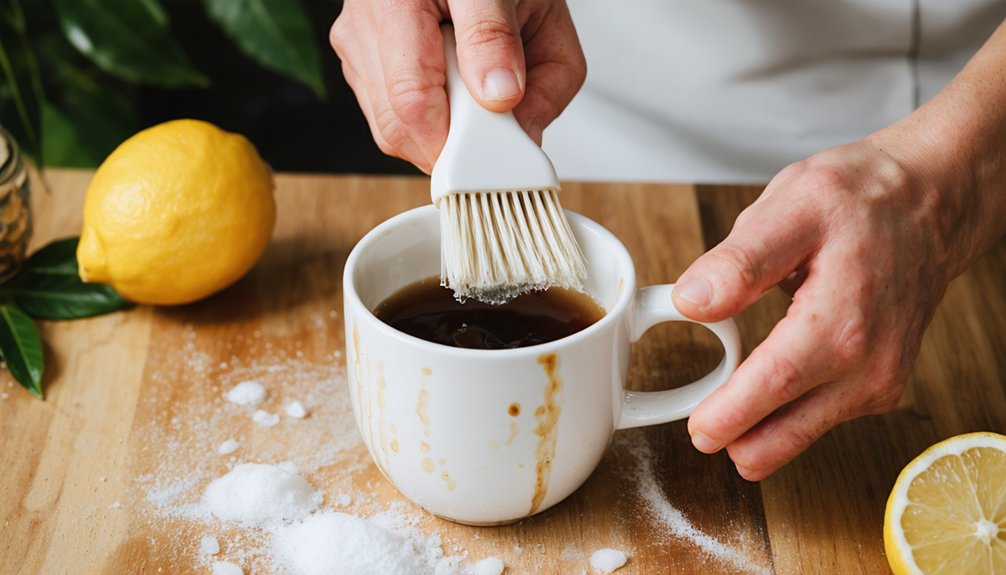
You can remove tea stains by acting fast and choosing the right method for the surface. Blot fresh spills immediately with a clean cloth, then rinse with cold water. For natural solutions, white vinegar soaks and baking soda paste work consistently well. Stubborn, set-in stains respond better to chemical treatments like OxiClean. The best approach depends on the surface and how long the stain has had to set — and each situation has its own most effective solution.
Key Takeaways
- Blot fresh spills immediately with a clean microfiber cloth, avoiding rubbing to prevent the stain from spreading or embedding deeper.
- Apply baking soda paste or soak in white vinegar for 30 minutes, then rinse thoroughly for effective natural removal.
- Use chemical removers like OxiClean for stubborn stains by soaking garments in cold water and waiting five minutes.
- For cups and mugs, combine vinegar with salt or baking soda paste, scrub gently, and rinse clean.
- Prevent future stains by rinsing surfaces immediately after use and maintaining a regular weekly cleaning routine.
How to Remove Tea Stains Before They Set
When tea spills, act within the first few minutes—it’s the single most effective thing you can do. Fresh tannins haven’t bonded to fibers yet, making stain prevention straightforward if you move fast.
Blot the spill immediately with a clean microfiber cloth—don’t rub, as that spreads the tea aroma compounds deeper into fabric.
Blot fresh tea spills immediately—rubbing only drives stain-causing compounds deeper into fabric fibers.
For clothing, turn the garment inside out and rinse with cold water to push the stain back through the fibers rather than further in.
On carpets, sprinkle salt generously over the wet stain, then pour club soda over it to lift residue before it sets.
Once you’ve controlled the spill, treat the area with your chosen cleaner and launder or rinse as normal.
Which Natural Remedies Actually Remove Tea Stains?
Once the immediate spill is under control, two natural remedies stand out as genuinely effective: white vinegar and baking soda. Unlike unverified herbal remedies or natural extracts with inconsistent results, these two deliver reliable, repeatable outcomes.
Here’s how to use each method correctly:
1. White vinegar: Apply it directly to the wet stain, let it soak for 30 minutes, then rinse thoroughly.
For cups, mix it with hot water and soak halfway.
2. Baking soda: Apply a thick layer immediately while the stain’s still wet.
Let it sit overnight to absorb the tea color fully.
3. Combined approach: Use a soft brush after the vinegar and baking soda reaction to lift stubborn residue without damaging fabric or ceramic surfaces.
When to Use Chemical Removers on Stubborn Tea Stains
Natural remedies don’t always cut it—if baking soda and vinegar have failed after a full treatment cycle, it’s time to bring in chemical removers. Stain removal chemicals like OxiClean work by oxidizing tannin molecules, breaking bonds that natural acids can’t dissolve.
Soak your garment in OxiClean with cold water, or apply a gel spray remover directly, waiting five minutes before washing. For ceramic teaware, mix Vanish powder with warm water and scrub thoroughly. On carpets, Dr. Beckmann Carpet Stain Remover targets deep fiber penetration effectively.
Timing matters—older, dried stains require a 30-minute cold water soak before chemical treatment begins. Combining chemical intervention with smart stain prevention techniques, like acting within minutes of a spill, keeps stubborn stains from becoming permanent problems you can’t control.
How to Get Tea Stains Out of Cups and Mugs
To tackle tea stains inside cups and mugs, you’ve got two reliable methods at your disposal.
Mix baking soda with warm water to form a paste, apply it directly to the stain, and scrub with a sponge. Let it sit overnight if the stain is stubborn.
Alternatively, fill the mug halfway with a mixture of distilled white vinegar and hot water. Allow it to soak for 30 minutes, then rinse thoroughly.
Baking Soda Paste Method
Baking soda paste is one of the simplest and most effective ways to lift tea stains from cups and mugs. It’s mildly abrasive, non-toxic, and won’t affect tea flavor when rinsed thoroughly. Follow these steps for consistent results:
- Mix baking soda with warm water until it forms a thick paste you can spread easily.
- Apply the paste directly onto the stained interior and scrub using a dedicated sponge in circular motions.
- Let it sit overnight if stains are stubborn, then rinse completely with hot water.
For stain prevention, rinse your cups immediately after use. Dried tannins bond harder to ceramic surfaces, making removal more difficult. Acting fast keeps your mugs clean with minimal effort.
Vinegar Soaking Technique
White vinegar’s acidity breaks down tannin residues effectively, making it a reliable option for stubborn cup and mug stains. Pour distilled white vinegar directly onto the stain, then let it soak for 30 minutes. This dwell time allows the acid to penetrate and dissolve the stain color left behind by tea flavor compounds.
For deeper staining, fill the cup halfway with a hot water and vinegar mixture, letting it sit until the discoloration lifts. You can also combine vinegar with salt to create a mild abrasive solution, then scrub the interior with a sponge for more controlled results.
After soaking, rinse the cup thoroughly with clean water. Repeat the process if residual staining remains before considering a stronger cleaning method.
How to Remove Tea Stains From Carpet and Upholstery
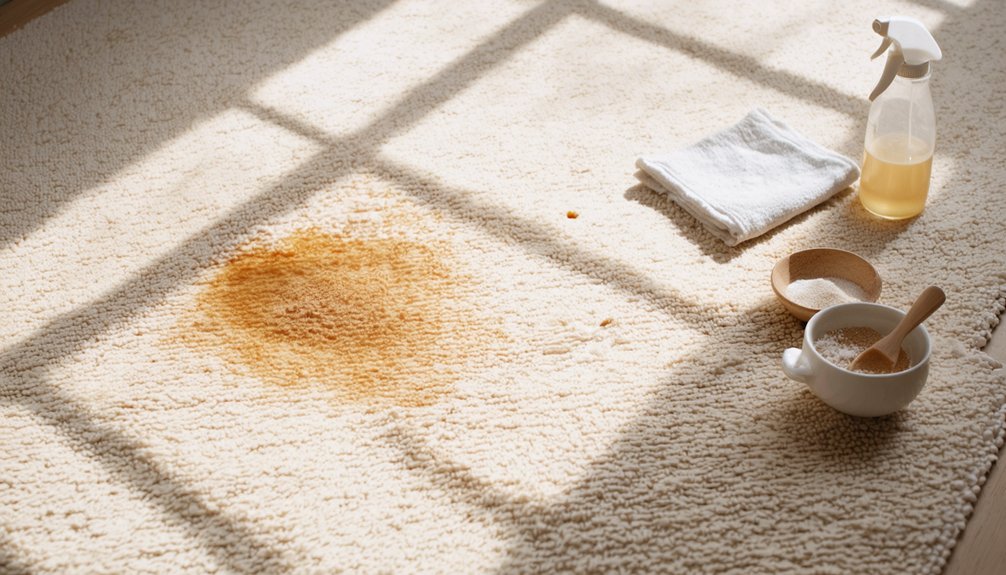
When tea spills on carpet or upholstery, act immediately — blotting the stain with a clean microfiber cloth before it dries makes removal considerably easier. Don’t scrub; you’ll spread the stain deeper into the fibers.
Follow these targeted steps:
Follow these targeted steps to tackle tea stains effectively and restore your carpet or upholstery to its original condition.
- Salt and club soda: Spread salt generously over the wet stain, then pour club soda directly over it to lift the tea residue.
- Soap-vinegar solution: Mix dish soap, white vinegar, and water, then press the solution gently into the stain without scrubbing.
- Borax paste: Combine borax and water into a paste, apply it carefully into carpet fibers, and allow it to sit before blotting clean.
Cold water dabbing between treatments prevents the stain from setting further into upholstery fabric.
How to Stop Tea Stains From Coming Back
Preventing tea stains from returning starts with rinsing cups, mugs, and teaware immediately after use before residue has a chance to bond with the surface.
You’ll also want to establish a weekly cleaning routine using baking soda paste or a vinegar solution to stop gradual buildup from darkening over time.
For extra protection, applying a ceramic sealant or fabric stain-resistant spray creates a barrier that makes future spills far easier to wipe away.
Regular Cleaning Prevents Buildup
Stopping tea stains from coming back is far easier than removing them once they’ve set. Build consistent cleaning habits now, and stain prevention becomes automatic rather than reactive.
- Rinse immediately. After every use, rinse cups and mugs with hot water before residue bonds to the surface.
- Scrub weekly. Use a baking soda paste or vinegar solution on teaware once a week to dissolve minor buildup before it darkens.
- Don’t let it sit. Never leave tea-stained cups overnight without rinsing—dried tannins require significantly more effort to remove.
You control how quickly stains accumulate. A 30-second rinse after each cup eliminates the need for deep cleaning sessions entirely.
Discipline in small habits removes the problem before it starts.
Protective Coatings Resist Stains
Regular cleaning handles residue after it forms, but protective coatings take prevention a step further by reducing how much stain-causing tannin bonds to your teaware in the first place.
For effective tea stain prevention, apply a food-safe wax or ceramic sealant to mugs and teapots after deep cleaning. These stain resistant coatings create a barrier that limits tannin absorption into porous surfaces.
Reapply the coating every few months, particularly after heavy scrubbing that strips surface protection.
For fabric and upholstery, fabric protector sprays like Scotchgard repel liquid before it penetrates fibers, giving you more response time when spills occur.
Always apply coatings to completely clean, dry surfaces to maximize adhesion and effectiveness.
Consistent reapplication keeps protection active and your surfaces easier to maintain long-term.
Frequently Asked Questions
Can Tea Stains Permanently Damage Delicate or Antique Fabric Fibers?
Yes, tea stains can permanently damage delicate fibers if you don’t act fast. For fabric preservation, blot spills immediately and soak in cold water. Prioritize stain prevention by avoiding harsh chemicals that’ll compromise antique textile integrity.
Are Tea Stains From Herbal Teas Harder to Remove Than Regular Tea?
Herbal teas don’t always stain harder—it depends on pigment concentration. You’ll find their fabric fibers respond well to vinegar soaks. For ceramic durability, apply baking soda paste. Consistent stain removal methods work effectively across all tea varieties.
Does Water Temperature Affect How Deeply Tea Stains Set Into Surfaces?
Yes, water temperature directly impacts stain penetration. Hot water opens surface pores, accelerating water absorption and driving tea deeper into fibers. You’ll want to rinse fresh spills with cold water immediately to minimize deeper setting.
Can Repeated Tea Staining Weaken the Structural Integrity of Ceramic Mugs?
Tea stains look harmless, yet you might worry they’re destructive. Repeated staining won’t compromise ceramic integrity or mug durability — it’s surface-level discoloration. You can scrub confidently using baking soda paste without fearing structural damage.
Are Certain Tea Varieties More Likely to Cause Permanent Staining Damage?
Yes, darker teas like black and oolong contain higher tannins, making permanent staining more likely. You’ll want to understand each tea leaf composition and apply staining prevention techniques immediately, like rinsing cups promptly after use.
References
- https://www.persil.com/uk/laundry/laundry-tips/stains/how-to-remove-tea-stains.html
- https://www.thespruce.com/how-to-remove-tea-stains-1901022
- https://www.reddit.com/r/tea/comments/bbpux4/tips_for_getting_rid_of_tea_stains_in_cups/
- https://www.goodhousekeeping.com/uk/house-and-home/household-advice/a686566/the-secret-to-getting-rid-of-tea-stains/
- https://www.youtube.com/watch?v=KVcSSzJ5yMA
- https://the-rugs.com/blogs/how-to-guides-for-home-owners/how-to-remove-tea-stains-from-carpet
- https://blog.englishteastore.com/2012/09/11/removing-unwanted-tea-stains/
- https://www.tea-and-coffee.com/blog/how-to-remove-tea-stains-from-cups
- https://www.reddit.com/r/tea/comments/1hoxfy4/how_do_you_clean_tea_stains/