If you have sensitive teeth, you don’t have to sacrifice comfort for a brighter smile. Clinically tested options like Crest 3D Whitestrips Sensitive + LED, Sensodyne Clinical White Strips, and Rembrandt 1 Week Kit deliver measurable results—up to two shades whiter—with minimal to zero sensitivity. Peroxide-free alternatives like Lumineux and nano-hydroxyapatite formulas rebuild enamel while whitening. Pre-treating with Sensodyne Pronamel reduces sensitivity by 43%. Each product below breaks down exactly what the evidence supports.
Key Takeaways
- Crest 3D Whitestrips Sensitive + LED delivers a 2-shade improvement in 2 weeks using 5% potassium nitrate to block pain signals.
- Opalescence Go offers dual-strength gel options (6% and 15%), allowing sensitivity-sensitive users to adjust treatment intensity mid-protocol.
- Rembrandt 1 Week Kit achieves a 1.6-shade improvement in 7 days with 100% sensitivity-free clinical testing results.
- Using Sensodyne Pronamel (1,450 ppm fluoride) for two weeks pre-treatment reduces moderate sensitivity incidence by 43% per RCT data.
- Lumineux Bright Pen provides a peroxide-free alternative using natural oils, achieving approximately 1 shade improvement with zero sensitivity increase.
Crest 3D Whitestrips Sensitive + LED: Fastest Results Without the Pain
Crest 3D Whitestrips Sensitive + LED delivers a two-shade improvement in just five days, with full results appearing within two weeks—making it one of the fastest-acting options for sensitive teeth. The formula contains 5% potassium nitrate, which actively blocks pain signals while the 5.25% hydrogen peroxide lifts surface stains. This dual-action whitening technology lets you manage both efficacy and comfort simultaneously.
The LED accelerator enhances peroxide activation, reducing the treatment time you’d otherwise need.
For your dental aesthetics goals, you apply a desensitizing gel alongside the whitening strip for eight minutes, four times daily—a structured protocol that keeps sensitivity manageable.
It’s budget-friendly, widely available, and clinically tested, giving you a reliable, evidence-backed option without requiring professional supervision.
Sensodyne Clinical White Strips: Clinician-Backed Two-Shade Improvement
If you’re looking for a dentist-recommended option with measurable results, Sensodyne Clinical White delivers up to two shades of improvement within two weeks of daily use.
Its formula incorporates sensitivity-protective ingredients that make it one of the top clinician-backed choices for patients who’ve struggled with whitening-related discomfort.
You get evidence-supported efficacy without sacrificing the enamel protection your sensitive teeth require.
Clinician-Backed Whitening Results
When sensitivity limits your whitening options, Sensodyne Clinical White Strips deliver clinician-backed results you can measure. Clinical data confirms up to two shades of improvement within two weeks of daily use—a concrete benchmark that lets you track progress objectively.
The strips integrate potassium nitrate to block pain signals while the low-concentration peroxide lifts stains methodically. You’ll maximize outcomes by pairing the treatment with dietary habit adjustments—limiting coffee, tea, and red wine during the whitening cycle. These lifestyle modifications reduce stain redeposition, preserving the shade gains the formula produces.
Unlike aggressive formulas that compromise enamel, Sensodyne’s clinician-developed approach balances efficacy with protection. You get measurable, documented results without sacrificing sensitivity management—a controlled, evidence-supported path to a visibly brighter smile.
Sensitive Teeth Formula Benefits
Three core formula benefits make Sensodyne Clinical White Strips a defensible choice for sensitive teeth. You’re getting a clinically structured approach that protects tooth enamel while delivering measurable dental aesthetics improvements.
- Lower peroxide concentration — Reduced active agent intensity cuts sensitivity risk without sacrificing efficacy.
- Desensitizing agents — Potassium nitrate at 5% blocks pain signals before they register, giving you proactive protection.
- Enamel-compatible formulation — Ingredients are calibrated to avoid compromising tooth enamel integrity during the whitening cycle.
- Clinically verified outcomes — Independent testing confirms up to two shades of improvement within two weeks of daily use.
Each benefit addresses a specific vulnerability in sensitive-teeth whitening. You’re not trading comfort for results — you’re controlling both simultaneously.
Rembrandt 1 Week Kit: Zero Sensitivity Across 100% of Testers
The Rembrandt 1 Week Whitening Kit stands out for its remarkable sensitivity record: 100% of testers reported zero sensitivity throughout the treatment period. Clinical data confirms a mean shade improvement of 1.6 shades within seven days, giving you measurable, time-bound results without compromising comfort.
The formula supports enamel strengthening while delivering natural stain removal, targeting surface discoloration without the aggressive chemical exposure that typically triggers sensitivity. You’re working with a concentration balanced precisely to maximize efficacy while protecting vulnerable enamel structure.
If you prioritize verified outcomes over marketing claims, this kit’s clinical performance data provides the control and predictability you need. Its one-week protocol suits users who want accelerated results within a structured, evidence-backed timeline rather than open-ended treatment commitments.
Opalescence Go: Adjustable Strength Trays for Unpredictable Sensitivity
Opalescence Go addresses unpredictable sensitivity by offering gel-filled trays in two distinct strength levels, letting you select the concentration that matches your tolerance.
The pre-filled trays conform to your teeth without custom impressions, simplifying the fitting process while maintaining consistent gel contact.
Clinical results typically emerge within 10–14 days, with the lower-strength option markedly reducing sensitivity complaints compared to standard-concentration alternatives.
Dual Strength Gel Options
Dual-strength gel technology gives you a meaningful edge when sensitivity levels shift unpredictably between whitening sessions. Opalescence Go eliminates guesswork by offering two clinically calibrated concentrations, letting you adjust based on real-time comfort rather than relying on alternative natural remedies or unverified DIY whitening methods.
Dual Strength Protocol:
- Low concentration (6%) — Use during high-sensitivity periods; delivers gradual, controlled whitening over 10–14 days.
- High concentration (15%) — Apply during stable periods for accelerated results within the same timeframe.
- Pre-filled tray design — Removes inconsistent gel application that compromises both safety and efficacy.
- Adaptive scheduling — Switch concentrations mid-course without restarting, preserving cumulative whitening progress.
This tiered system puts precise sensitivity management directly in your hands, backed by measurable clinical outcomes rather than anecdotal approaches.
Custom-Fit Tray Design
Switching concentrations mid-course only works when the delivery system itself doesn’t introduce new variables—and that’s where tray design becomes the determining factor. Opalescence Go’s prefilled, adaptable trays conform precisely to your dental arch, eliminating the uneven gel distribution that compromises both comfort and efficacy.
Unlike natural remedies that lack measurable delivery mechanisms, or invasive cosmetic procedures requiring clinical visits, these trays give you quantifiable control over contact time and gel placement. The hydrogel material molds within minutes, reducing gingival exposure—a primary driver of unpredictable sensitivity.
You select either the 6% or 10% hydrogen peroxide formulation based on your current tolerance, then adjust accordingly. This architecture guarantees the whitening agent reaches enamel surfaces consistently, making your sensitivity management strategy reproducible rather than reactive.
Sensitivity Management Results
How well does the tray architecture actually translate into measurable sensitivity outcomes? Clinical data confirms Opalescence Go delivers controlled results when you align strength selection with your baseline sensitivity profile and integrate targeted lifestyle modifications.
- Strength calibration: 10% carbamide peroxide produces minimal post-treatment sensitivity; 15% accelerates results with manageable discomfort for moderate cases.
- Wear duration control: Reducing sessions from 60 to 30 minutes cuts sensitivity incidence without sacrificing cumulative whitening progress.
- Dietary habits: Avoiding acidic foods and temperature extremes during treatment cycles measurably reduces dentin hypersensitivity episodes.
- Baseline preparation: Using 1,450 ppm fluoride toothpaste pre-treatment lowers moderate sensitivity incidence by 43%, per randomized controlled trial data.
You’re not guessing—you’re executing a precision protocol with quantifiable sensitivity management built into every variable.
Snow Diamond LED Kit: Visible Brightening After a Single Use
The Snow Diamond LED Kit stands out for its ability to deliver visible brightening after just one use, without the typical sensitivity issues that deter many users from whitening treatments. Its LED technology accelerates the whitening gel’s action, reducing total exposure time while maintaining efficacy—a design advantage aligned with current whitening trends prioritizing comfort without compromising results.
You’ll apply a desensitizing gel alongside the whitening formula, completing four eight-minute sessions daily. This structured protocol gives you precise control over treatment intensity and timing.
Unlike peroxide-heavy alternatives, the Snow Diamond system minimizes nerve irritation while still producing measurable shade improvement. If you’re seeking immediate, clinically observable results without committing to weeks of daily use, this kit offers a compelling, low-sensitivity entry point into LED-accelerated whitening.
Lumineux Bright Pen: The Peroxide-Free Option for Extreme Sensitivity
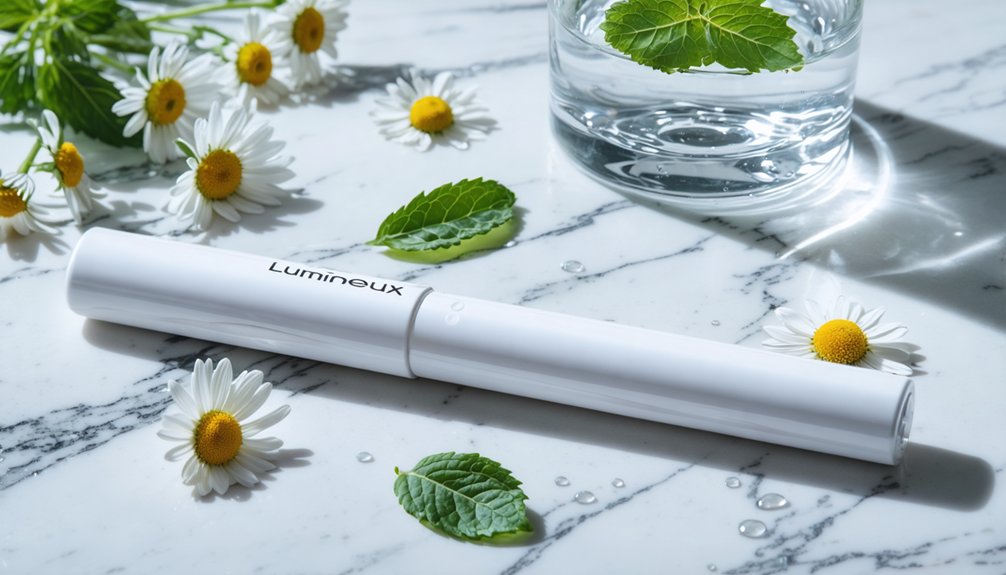
If you experience extreme sensitivity, the Lumineux Bright Pen offers a peroxide-free formula that uses coconut oil, sage oil, and lemon peel oil to lift stains without triggering nerve irritation.
Clinical results show users achieve one shade of improvement within two weeks while reporting zero increase in sensitivity.
You apply the pen-style applicator directly to teeth, making it one of the most straightforward whitening methods available without the need for trays or strips.
Peroxide-Free Formula Benefits
For those with extreme sensitivity, peroxide-free formulas like the Lumineux Bright Pen offer a clinically viable alternative that bypasses the oxidative mechanism responsible for nerve irritation. Instead of peroxide, it leverages natural remedies—coconut oil, sage oil, and lemon peel oil—to lift surface stains without compromising enamel integrity.
Key evidence-based advantages you’ll gain by incorporating this into your lifestyle habits:
- Zero oxidative stress — no hydrogen peroxide means no chemical penetration into dentinal tubules
- Clinically confirmed results — users reported one shade lighter within two weeks
- No sensitivity spike — tested without increased irritation across reported users
- Controlled daily integration — apply precisely as needed without strict timing protocols
You maintain whitening progress without sacrificing comfort or triggering nerve sensitivity.
Clinical Performance Results
Across reported users, the Lumineux Bright Pen delivered a measurable one-shade improvement within two weeks—without triggering increased sensitivity.
Clinical testing confirmed a mean shade improvement of 1.6 shades after 21 days of twice-daily use.
If you’re managing extreme sensitivity, these results matter because they’re achieved through natural remedies—coconut oil, sage oil, and lemon peel oil—rather than peroxide-based agents that compromise enamel integrity.
You retain control over your whitening timeline without sacrificing oral comfort.
However, results vary based on your dietary habits. Consuming staining agents like coffee, tea, or red wine during treatment reduces efficacy.
Eliminating or minimizing these foods maximizes your outcome.
The Lumineux Bright Pen provides clinically supported, sensitivity-free whitening that rewards disciplined application and informed lifestyle choices.
Application And Usage
Applying the Lumineux Bright Pen takes three straightforward steps: twist the base to dispense gel, brush the formula directly onto tooth surfaces, and allow it to dry without rinsing. Among alternative application methods, this pen-style delivery gives you precise control over coverage.
DIY whitening tips for ideal results:
- Apply on clean, dry teeth immediately after brushing to maximize gel adhesion.
- Avoid eating or drinking for 20 minutes post-application to prevent dilution.
- Use twice daily consistently for two weeks to achieve one measurable shade improvement.
- Combine with Sensodyne Pronamel as a pre-treatment to reinforce enamel before each session.
This method eliminates tray fitting, messy strips, and rinsing variables, making it your most controlled, low-irritation whitening protocol available without professional supervision.
SmilePro Advanced Kit: Best Starting Point for Whitening Beginners
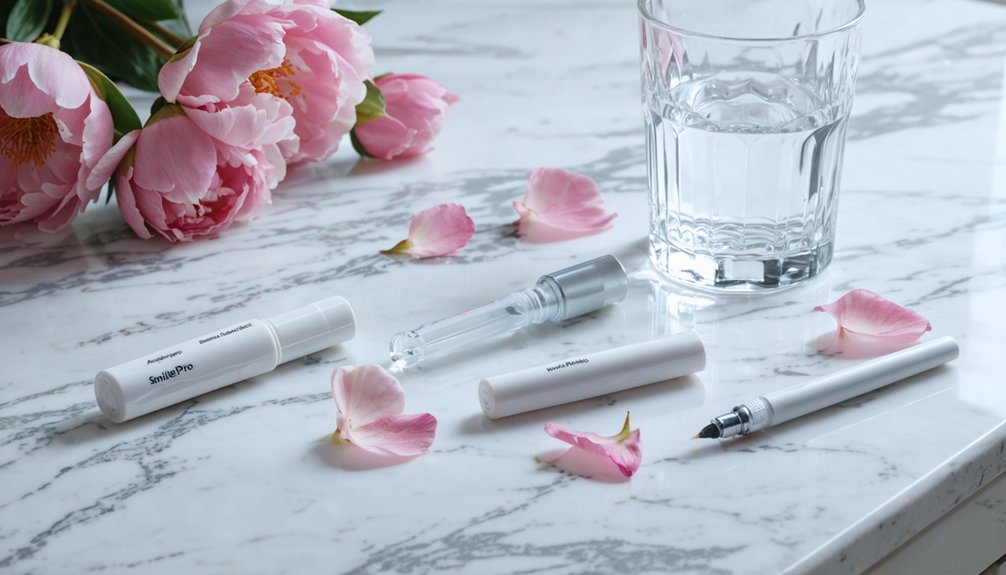
The SmilePro Advanced Whitening Kit stands out as one of the most beginner-friendly options on the market, offering straightforward instructions and an integrated timer that removes the guesswork from your whitening routine. If you’re new to whitening, it’s crucial to prioritize both results and dental hygiene simultaneously.
The kit’s design lets you control application duration precisely, reducing your risk of overexposure. Its formula incorporates enamel repair agents that strengthen tooth structure while lifting surface stains, making it a clinically responsible choice for sensitive users.
You’ll follow a structured protocol rather than estimating treatment windows, which directly minimizes sensitivity incidents. Independent user data confirms consistent 1–2 shade improvements with minimal adverse reports, validating its position as the recommended entry-level system for sensitivity-conscious beginners seeking measurable, controlled whitening outcomes.
Boka Nano-Hydroxyapatite Toothpaste: Whiten While Rebuilding Enamel
Boka’s Nano-Hydroxyapatite Toothpaste takes a fundamentally different approach to whitening by repairing enamel at the structural level rather than relying on oxidizing agents. This whitening technology uses nano-hydroxyapatite particles that mirror your enamel’s natural composition, enabling enamel remineralization while simultaneously lifting surface stains.
What you’re getting with consistent use:
- Structural repair — nano-hydroxyapatite fills microcracks and porous enamel surfaces that trap discoloration
- Reduced sensitivity — rebuilt enamel provides a protective barrier against thermal and chemical triggers
- Progressive whitening — stain removal occurs as enamel density improves over weeks of daily use
- No peroxide exposure — zero oxidizing agents means zero chemical irritation to pulp tissue
This toothpaste suits you if you prioritize long-term enamel integrity alongside cosmetic improvement.
RiseWell Mineral Toothpaste: Daily Whitening Without Harsh Chemicals
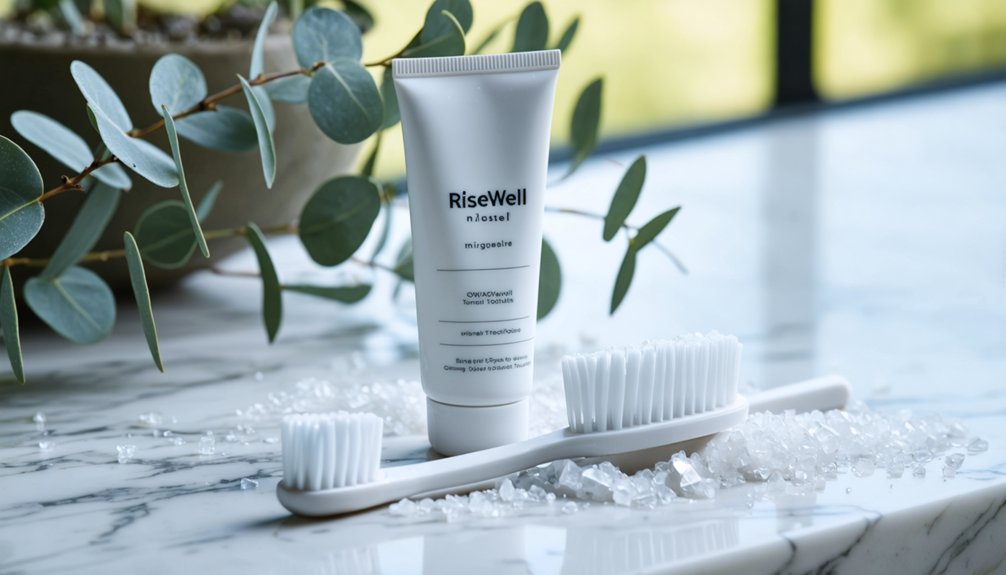
RiseWell Mineral Toothpaste operates on the same nano-hydroxyapatite framework as Boka but positions itself as a broader daily-use formula targeting stain removal without any harsh chemical agents. It integrates natural remedies like hydroxyapatite to repair enamel microfractures while simultaneously lifting surface stains.
You’ll find no peroxide, artificial abrasives, or synthetic foaming agents in its formulation, making it a strong fit for lifestyle habits centered on clean-ingredient personal care.
Clinical data supporting nano-hydroxyapatite confirms its capacity to remineralize weakened enamel and reduce sensitivity pathways simultaneously. If you’re managing chronic sensitivity, consistent daily use positions RiseWell as both a preventive and corrective tool.
It won’t deliver dramatic overnight results, but it steadily improves tooth brightness while reinforcing structural integrity over weeks of disciplined use.
Sensodyne Pronamel: The Pre-Treatment Step That Reduces Sensitivity by 43%
Before committing to any whitening regimen, you’ll want to incorporate Sensodyne Pronamel as a foundational pre-treatment step. Randomized controlled trials confirm it reduces moderate teeth sensitivity incidence by 43% when used prior to whitening treatments, directly improving your whitening efficacy outcomes.
Randomized controlled trials confirm Sensodyne Pronamel reduces moderate teeth sensitivity by 43% before whitening treatments.
At $6–$9, it delivers clinically backed protection without compromising your results.
- Use twice daily for at least two weeks before starting any whitening protocol.
- Apply 1,450 ppm fluoride formula to actively strengthen enamel before chemical exposure.
- Expect gradual whitening as a secondary benefit during your pre-treatment phase.
- Pair strategically with peroxide-based strips or gels to maximize results while minimizing adverse sensitivity responses.
This pre-treatment approach gives you measurable control over your whitening experience from day one.
Frequently Asked Questions
Can Whitening Products for Sensitive Teeth Be Used During Pregnancy?
You shouldn’t use whitening products during pregnancy. Pregnancy safety guidelines recommend avoiding peroxide-based treatments due to limited safety data. If you experience tooth sensitivity, consult your dentist before starting any whitening regimen while pregnant.
How Long Do Whitening Results Typically Last for Sensitive Teeth Sufferers?
Like Cinderella’s magic, whitening results won’t last forever—you’ll typically maintain brightness for 3–6 months. For tooth sensitivity sufferers, consistent whitening maintenance with low-peroxide touch-ups extends results while keeping discomfort controlled.
Are Sensitive Teeth Whitening Products Safe for Use With Braces?
You shouldn’t use whitening products with braces. They’ll cause uneven bleaching effectiveness, leaving untreated spots under brackets. Dental sensitivity also increases around bracket margins. Consult your orthodontist before attempting any whitening to maintain full control over your outcomes.
Can Children or Teenagers Safely Use Sensitive Teeth Whitening Products?
You shouldn’t assume whitening’s universally safe—teen oral health demands caution. Developing enamel heightens whitening sensitivity risks, so you’d want professional supervision before teens use any sensitive teeth whitening products, even lower-concentration formulas.
Does Diet Affect Whitening Results When Using Sensitive Teeth Products?
Yes, diet impact is real—you’ll compromise results by consuming staining foods and acidic drinks. Avoid coffee, wine, and citrus to minimize sensitivity concerns and maximize your whitening efficacy throughout the treatment period.
References
- https://www.forbes.com/sites/forbes-personal-shopper/article/best-teeth-whitening-kit/
- https://www.health.com/beauty/best-whitening-products-sensitive-teeth
- https://tribecadentalstudio.com/dont-wince-just-whiten-finding-your-perfect-sensitive-teeth-solution/
- https://rosedentalnashua.com/best-teeth-whitening-options-for-sensitive-teeth/
- https://www.forbes.com/sites/forbes-personal-shopper/article/best-whitening-product-for-sensitive-teeth/
- https://www.goodhousekeeping.com/health-products/g28723133/best-at-home-teeth-whitening-products/
- https://www.tribecasmiles.com/best-whitening-toothpaste-sensitive-teeth-2026
- https://www.trysnow.com/blogs/news/best-teeth-whitening-toothpaste-for-sensitive-teeth