For coffee stains, you’ll get the best results from professional oxy-based enzyme treatments that oxidize tannin molecules and break their bond with carpet fibers at a molecular level. These outperform standard cleaners, which only lift surface residue. Apply the solution beyond the stain’s edges, let it dwell for up to five minutes, then blot inward with clean rags. There’s a precise method that makes the entire process far more effective.
Key Takeaways
- Oxy-based professional formulas oxidize tannin molecules, dissolving the bond between coffee and carpet fibers for effective stain removal.
- Apply professional spray solutions generously beyond stain edges, allowing 30 seconds to 5 minutes dwell time before blotting.
- Hydrogen peroxide effectively targets stubborn coffee residue on white carpets without damaging fibers.
- Wet-dry vacuums accelerate professional-level moisture extraction, preventing stain reabsorption after treatment.
- Repeat professional treatments are often necessary for set-in stains; persistence ensures complete stain elimination.
What Actually Removes Coffee Stains From Carpet
Coffee stains set quickly because the tannins in coffee bond to carpet fibers, so the cleaning agent you choose needs to break that bond rather than just mask it.
Oxy-based formulas oxidize tannin molecules directly, dissolving the bond at the fiber level.
For DIY options, combine ½ teaspoon of dish soap, one tablespoon of white vinegar, and two cups of cool water — the surfactant lifts oils while the acid neutralizes tannins.
Effective stain prevention starts with acting immediately.
Blot first, apply solution second, and never scrub.
For carpet maintenance on set-in stains, rehydrate the area with warm water before applying your chosen cleaner.
Hydrogen peroxide works specifically on white carpets for stubborn residue.
The Tools and Solutions You Need on Hand
Before you treat a coffee stain, having the right tools and solutions within reach determines how effectively you can act. Stain prevention starts with preparation—keep paper towels, clean rags, and a wet dry vacuum accessible at all times.
For solutions, stock a spray bottle filled with either a professional oxy formula or a DIY mix of ½ teaspoon dish soap, one tablespoon white vinegar, and two cups of cool water.
Consistent carpet maintenance also requires hydrogen peroxide for stubborn set-in stains, rubbing alcohol for targeted application, and undiluted white vinegar for residue removal.
White paper towels in half-inch thick pads support overnight moisture absorption.
With these tools staged and ready, you eliminate reaction delays that allow coffee to penetrate deeper into carpet fibers.
The Complete Coffee Stain Removal Process
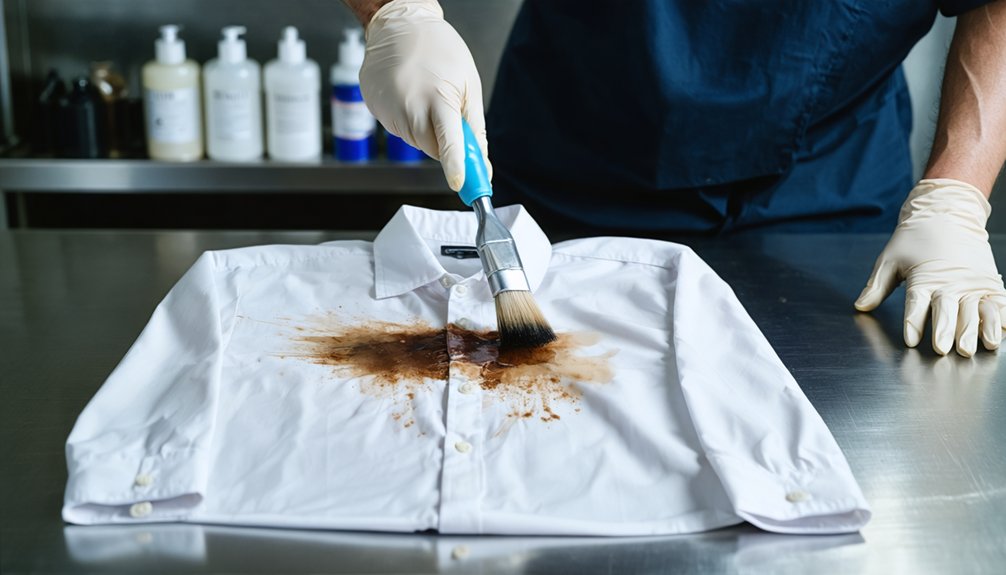
When a coffee spill happens, your first move is to blot—not scrub—using paper towels or a clean rag, pressing down firmly to pull as much liquid out of the carpet fibers as possible. Scrubbing drives the stain deeper, compromising your carpet maintenance long-term.
Next, apply your chosen cleaning solution generously over the stained area and two inches beyond its edges. Let it dwell 30 seconds for light soiling or up to five minutes for heavy saturation.
Blot again, working inward to contain the spread.
Rinse with cold water, blot dry, then weigh down white paper towels overnight to extract residual moisture. Once dry, vacuum to restore texture.
Consistent stain prevention depends on executing each step precisely—skipping any stage risks permanent fiber damage.
How to Treat Old and Set-In Coffee Stains
Old and set-in coffee stains demand a different approach than fresh spills. Aging stains bond deeply with carpet fibers, requiring stain rehydration before any cleaning agent can penetrate effectively.
Apply a small amount of warm water directly to the dried stain, allowing it to loosen the embedded residue.
Once rehydrated, apply your chosen cleaning solution—hydrogen peroxide and water works well on white carpets, while a dish soap and vinegar mixture suits colored fibers.
Blot firmly using a clean cloth, working from the outer edges inward. Don’t scrub; you’ll drive the stain deeper.
Repeat the application and blotting process multiple times until the stain lifts completely.
Stubborn set-in stains rarely respond to a single treatment, so persistence and precision are essential.
The Right Way to Dry and Restore Your Carpet
After blotting away the cleaning solution, you’ll want to rinse the treated area with a small amount of cold water to remove any residual soap or vinegar. Blot the rinsed area with a clean cloth to extract excess moisture, applying firm, controlled pressure.
For colorfast fabrics, verify no dye transfer occurs during blotting by checking your cloth between passes. If pet stain concerns are present, confirm odor elimination before proceeding to drying.
Place a half-inch thick pad of white paper towels over the treated area and weigh it down overnight to absorb remaining moisture.
Once fully dry, vacuum the area thoroughly to restore the carpet’s texture and lift compressed fibers back to their original position.
Frequently Asked Questions
Can Coffee Stains Permanently Damage Carpet Fibers Over Time?
Yes, coffee stains can cause fiber damage and stain permanency if you ignore them. You’ll weaken fibers, set discoloration deeper, and compromise carpet integrity—so act fast, blot thoroughly, and treat immediately with appropriate cleaning solutions.
Are Professional Carpet Cleaning Services Worth Hiring for Coffee Stains?
You don’t always need professionals—DIY solutions like oxy cleaners and vinegar mixtures effectively tackle coffee stains. However, if your carpet lacks stain resistance or the stain’s set in deeply, hiring professionals delivers superior extraction results.
Does Coffee With Cream or Sugar Stain Differently Than Black Coffee?
Yes, cream stains introduce fat-based residues requiring degreasing agents, while sugar stains create sticky residues that attract dirt faster. You’ll need to treat both with enzyme-based or oxy cleaners, applying them more aggressively than black coffee.
Can Coffee Stains Cause Mold Growth if Not Treated Immediately?
Left untreated, you’re practically rolling out a welcome mat for mold. Coffee stain longevity dramatically elevates mold risk. You must blot immediately, extract moisture completely, and air dry your carpet to maintain full control.
Will Coffee Stain Removal Methods Work on Area Rugs Too?
Yes, coffee stain removal methods work on area rugs, but you’ll need to account for varying stain absorption rates and area rug durability. Blot promptly, apply your chosen solution, and extract moisture carefully to prevent fiber damage.
References
- https://www.bissell.com/en-us/blog/how-to-get-coffee-stains-out-of-carpet/
- https://www.carpetone.com/about/stains/stain-removal/how-to-get-coffee-stains-out-of-carpet
- https://www.facebook.com/groups/MyHobbyIsQuilting/posts/723386854846774/
- https://food52.com/story/24508-how-to-get-rid-of-coffee-stains
- https://www.reddit.com/r/BehindTheClosetDoor/comments/12sxpgd/the_nicest_clothes_are_owned_by_coffee_drinkers/
- https://www.youtube.com/watch?v=7lmFJXZD7uw
- https://www.ageberry.com/the-best-commercial-coffee-stain-removers/