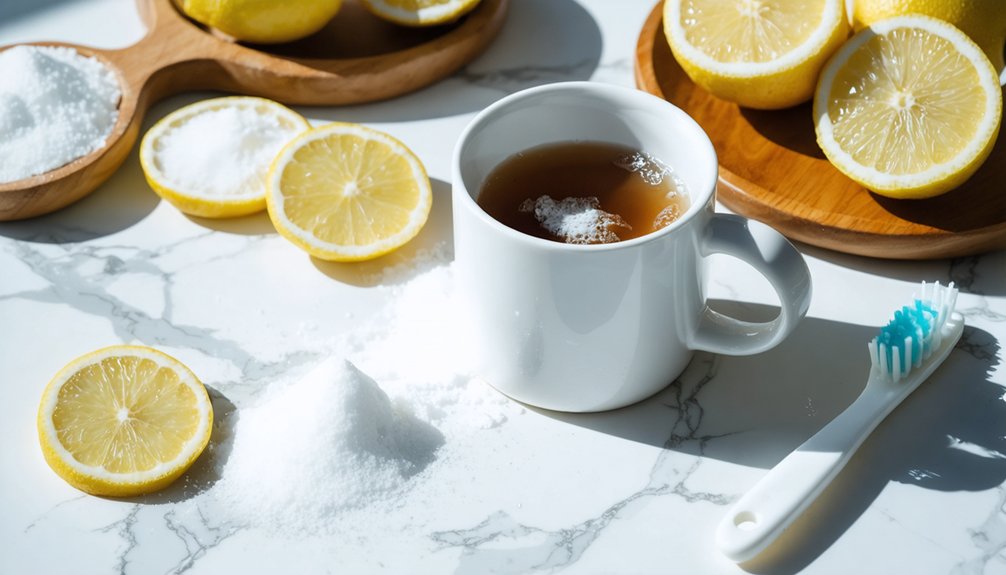
Tea stains your teeth fast because tannins bind to enamel within minutes. You can fight this by rinsing your mouth with water immediately after drinking, brushing twice daily with whitening toothpaste, and using a sonic electric toothbrush. Natural options like baking soda paste, strawberries, and coconut oil pulling offer gradual results. For stubborn stains, hydrogen peroxide-based treatments or professional bleaching deliver the most clinically validated outcomes. There’s much more to uncover about which methods work fastest.
Key Takeaways
- Rinse your mouth with water immediately after drinking tea to disrupt tannin adhesion and prevent stains from embedding into enamel.
- Apply a baking soda paste twice weekly as a mild abrasive to effectively lift surface tea stains from teeth.
- Use whitening strips containing hydrogen peroxide on dry teeth daily, with visible results appearing within days.
- Drink tea through a straw and add milk to significantly minimize enamel contact and reduce staining potential.
- Persistent brown or gray stains after home treatments signal deeper enamel penetration, requiring professional chemical or laser bleaching.
Why Tea Stains Your Teeth So Easily
Tea’s tannins bind readily to tooth enamel, creating stubborn discoloration that worsens with repeated exposure.
Understanding tea composition reveals why this happens: tannins are polyphenolic compounds that carry a strong positive charge, attracting them to your negatively charged enamel surface. Once attached, they oxidize and darken, embedding deeper with each cup you consume.
Tannins carry a positive charge, magnetically drawn to your enamel’s negative surface—where they oxidize, darken, and dig deeper with every sip.
Compounding this problem is enamel erosion. Tea’s acidic pH softens your enamel temporarily, making its microscopic pores more receptive to stain absorption.
Your enamel doesn’t regenerate, so repeated acid exposure progressively weakens its surface integrity. Black tea causes the most significant staining due to its high tannin concentration, followed by green and white varieties.
You’re fundamentally creating ideal staining conditions every time you drink without taking protective measures.
Daily Habits That Stop Tea Stains Before They Start
Since tannins bind to enamel within minutes of exposure, your window for prevention is narrow but highly effective. Rinsing your mouth with water immediately after drinking tea disrupts tannin adhesion before it sets. That single habit forms the foundation of consistent tea stain prevention.
Your daily oral hygiene routine does the remaining work. Brush twice daily using whitening toothpaste, and don’t skip flossing—plaque between teeth accelerates discoloration.
Consider upgrading to a sonic electric toothbrush, which clinical evidence supports for measurably reducing tea stains.
Two additional tactics give you structural control: drink tea through a straw to minimize enamel contact, and add milk to your cup to reduce staining potential.
These aren’t suggestions—they’re precision strategies that eliminate the problem before it compounds.
Smart Tea Habits That Protect Your Smile Long-Term
Your daily tea-drinking habits directly determine how quickly stains accumulate on your enamel over time.
Drinking tea through a straw minimizes direct contact between tannins and tooth surfaces, while adding milk to your cup reduces its overall staining potential.
Rinsing your mouth with water immediately after each cup further prevents tannins from settling into porous enamel before brushing.
Daily Tea Drinking Habits
While tea stains are treatable, preventing them from forming in the first place is the smarter long-term strategy. Your daily tea consumption habits directly influence how quickly discoloration develops.
Rinse your mouth with water immediately after drinking tea to disrupt stain-forming compounds before they bond to enamel. Use a straw to minimize direct contact between tea and tooth surfaces. Adding milk to your tea reduces its staining potential by binding tannins before they reach your teeth.
Pair these habits with consistent oral hygiene — brushing twice daily and flossing — to eliminate plaque that accelerates stain accumulation. A sonic electric toothbrush offers clinically proven advantages for reducing tea-related discoloration.
These preventative measures reduce your dependence on intensive whitening treatments over time.
Long-Term Stain Prevention
Maintaining a stain-free smile long-term requires building consistent habits rather than relying on periodic whitening interventions.
You’ll achieve superior stain prevention by integrating behavioral strategies directly into your tea-drinking routine. Use a straw to minimize direct contact between tea and enamel surfaces. Adding milk to your tea reduces its staining potential on porous tooth surfaces. Rinse your mouth with water immediately after drinking to prevent chromogen compounds from settling.
Supplement these habits with proven whitening techniques, including sonic electric toothbrushes, which are clinically demonstrated to reduce tea discoloration considerably.
Consistent daily brushing with whitening toothpaste maintains surface clarity between deeper treatments. These proactive measures reduce your dependence on intensive professional interventions, keeping your whitening regimen efficient, controlled, and cost-effective over time.
Baking Soda Paste Tricks That Remove Tea Stains
Baking soda paste cuts through tea stains using mild abrasive action to lift surface discoloration without bleaching agents. This effective paste combines natural ingredients you already control, delivering measurable stain removal with minimal risk.
Apply it twice weekly to maintain results without compromising enamel integrity.
You can enhance your whitening routine by mixing baking soda with salt, creating gentle abrasives that target surface stains systematically. For stronger action, combine baking soda with lemon juice, activating citric acid alongside the abrasive compounds.
Both formulations integrate seamlessly into your existing oral hygiene protocol.
Consistency determines your outcome. Two applications weekly produce visible improvements within several weeks.
Unlike commercial products, these pastes give you direct ingredient control, precise application, and a cost-effective position within your broader stain management strategy.
Turmeric, Strawberry, and Other Natural Stain Removers

Three natural compounds—turmeric, strawberries, and coconut oil—offer distinct biochemical mechanisms for removing tea stains beyond what abrasive pastes alone can achieve.
Turmeric benefits stem from curcumin’s antioxidant properties, which actively neutralize stain-causing compounds embedded in enamel. Apply a small turmeric paste directly to affected teeth for two minutes, then rinse thoroughly.
Strawberry exfoliation works differently—malic acid and vitamin C chemically break down surface discoloration while gently eroding stain layers. Rub a halved strawberry across your teeth for one minute twice weekly for measurable results.
Coconut oil pulling complements both treatments by eliminating bacteria responsible for stain adhesion. Swish one tablespoon for ten minutes before brushing.
You’ll notice gradual surface discoloration reduction without exposing your enamel to harsh synthetic chemicals.
Does Coconut Oil Pulling Remove Tea Stains?
Coconut oil pulling, already introduced as a complementary stain-removal technique, warrants closer examination regarding its specific effectiveness against tea discoloration. You swish coconut oil in your mouth for 10–20 minutes, allowing it to bind with plaque and bacteria responsible for surface stains. This mechanical action gradually reduces tea discoloration without introducing harsh chemicals to your oral environment.
Swishing coconut oil for 10–20 minutes binds plaque and bacteria, gradually reducing tea stains without harsh chemicals.
However, you should understand its limitations. Coconut oil pulling addresses surface-level staining rather than deeper discoloration.
It’s most effective when you incorporate it consistently into your daily routine alongside brushing and flossing. The stain removal process is gradual, requiring weeks of regular practice before noticeable results emerge.
For stubborn tea stains, coconut oil pulling works best as a preventative maintenance strategy rather than a primary whitening intervention.
Best At-Home Whitening Kits for Tea Drinkers
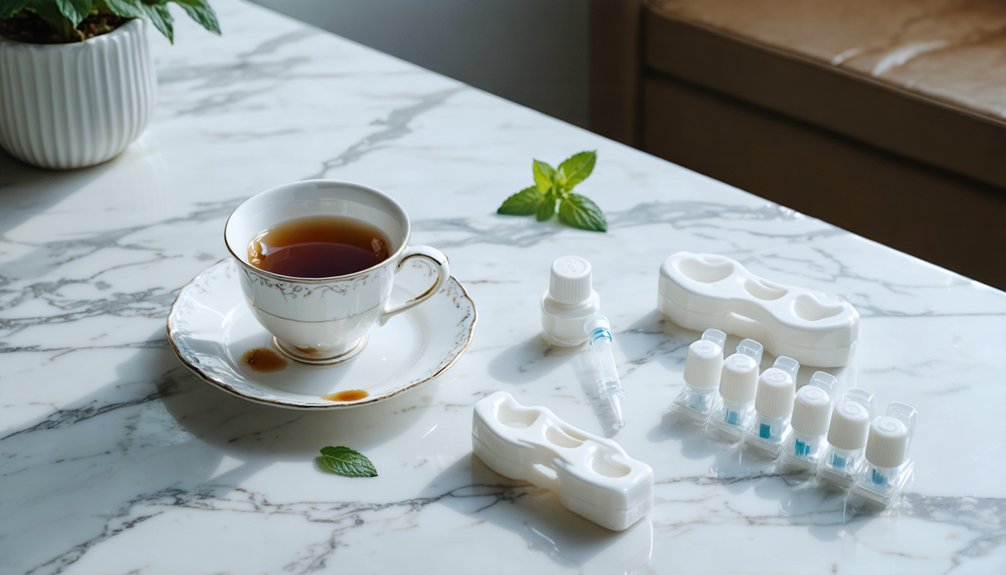
While coconut oil pulling offers gradual, surface-level stain reduction, at-home whitening kits deliver more measurable results for committed tea drinkers.
You’ll want to prioritize kits containing hydrogen peroxide or carbamide peroxide — the best whitening ingredients clinically validated for breaking down stubborn chromogens from tannins.
For effective application techniques, apply strips directly to dry teeth, ensuring full contact across all surfaces. Avoid eating or drinking immediately after treatment to maximize absorption.
Most kits produce noticeable results within days, with consistent use over 28-day periods yielding ideal outcomes.
Use kits as directed to prevent enamel sensitivity. When used responsibly, hydrogen peroxide-based treatments outperform abrasive alternatives, giving you precise control over your whitening progression without requiring professional intervention for moderate tea-induced discoloration.
When Tea Stains Require Professional Treatment
When home remedies and whitening kits fail to reduce discoloration after consistent use, your tea stains have likely penetrated beyond the enamel’s surface layer, signaling the need for professional intervention.
A dentist can apply chemical or laser bleaching treatments that deliver faster, more dramatic results than anything you’ll achieve at home.
If you’re experiencing tooth sensitivity alongside persistent staining, you should consult a specialist who can assess your condition and tailor a safe, effective whitening protocol.
Stubborn Stain Warning Signs
Recognizing when tea stains exceed the capacity of home remedies is critical to preserving long-term dental health. Apply stain identification techniques by examining discoloration depth under natural lighting. Surface-level yellowing responds reliably to home treatments, while brown or gray undertones signal deeper enamel penetration requiring professional intervention.
Early detection methods include monitoring stain progression over 28 days of consistent home treatment. If whitening strips, baking soda applications, or hydrogen peroxide rinses produce no measurable improvement, intrinsic staining has likely occurred.
Additional warning signs include uneven discoloration patterns, staining concentrated along gum lines, or sensitivity accompanying discoloration.
These indicators confirm that chemical or laser bleaching at a dentist’s office represents your most effective intervention. Delaying professional consultation accelerates stain permanence and complicates treatment outcomes.
Professional Treatment Benefits
Once home remedies fail to reverse stubborn tea stains, professional whitening treatments deliver results that simply aren’t achievable through self-administered methods.
Your dentist’s arsenal includes chemical and laser bleaching protocols that penetrate deeper enamel layers, targeting discoloration that surface-level treatments can’t reach.
Whitening effectiveness increases substantially under professional supervision because specialists calibrate concentration levels precisely to your enamel’s condition.
Unlike standardized home kits, your treatment options expand to include personalized applications that account for sensitivity concerns and stain severity.
Professional treatments also compress timelines considerably, producing dramatic improvements where weeks of home treatment produced minimal change.
If you’ve documented persistent discoloration despite consistent home efforts, scheduling a dentist consultation represents the most clinically sound next step toward measurable, lasting results.
How Long Each Whitening Method Takes to Work

Understanding how long each whitening method takes helps you set realistic expectations and choose the right approach for your needs. Whitening duration varies considerably across methods, directly impacting method effectiveness and your timeline for results.
Daily preventive habits—rinsing with water, using whitening toothpaste, and brushing with baking soda paste—require consistent two-to-four week application before visible improvements appear.
Consistent daily habits take two to four weeks before delivering any visible whitening results.
Coconut oil pulling and natural paste treatments produce gradual surface-level changes over several weeks. At-home hydrogen peroxide strips deliver noticeable results within days, with best outcomes achieved after a 28-day protocol.
Professional chemical or laser bleaching produces the most dramatic results fastest, often within a single session.
Your urgency determines your method. Match your timeline to your commitment level, and you’ll achieve measurable, controlled outcomes.
Frequently Asked Questions
Can Tea Staining Affect Dental Implants or Veneers Differently Than Natural Teeth?
Yes, tea staining affects dental implants and veneers differently than natural teeth. You’ll find that these materials resist deeper penetration, but maintaining consistent dental hygiene and stain prevention routines guarantees their longevity and appearance remain ideal.
Does the Temperature of Tea Influence How Deeply Stains Penetrate Tooth Enamel?
Your enamel’s “thermal receptivity” intensifies with hotter tea—you’re accelerating enamel absorption as heat expands pores, allowing temperature effects to drive chromogens deeper. You’ll minimize penetration greatly by letting tea cool before drinking.
Are Certain Tea Varieties Less Likely to Cause Significant Staining Than Others?
Yes, you’ll find green tea stains less than black tea due to lower tannin concentration. Herbal infusions cause minimal discoloration, while chai blends, containing black tea, carry higher staining risk requiring proactive preventative strategies.
Can Medications or Health Conditions Worsen Tea Staining on Teeth?
Yes, they can. Certain medication effects — like dry mouth from antihistamines — reduce saliva’s natural cleaning action, worsening tea stains. Health conditions affecting enamel integrity similarly accelerate discoloration, so you’ll want proactive whitening strategies implemented consistently.
Does Tooth Enamel Thickness Affect How Visible Tea Stains Appear on Teeth?
Yes, your enamel density directly influences staining severity. Thinner enamel exposes the darker dentin beneath, making tea stains appear more pronounced. You’ll notice discoloration intensifies as enamel wears, amplifying the visual impact of tea-related staining.
References
- https://pickerspocket.com/blogs/news/terrific-hacks-bid-farewell-to-tea-stains
- https://blog.englishteastore.com/2012/09/11/removing-unwanted-tea-stains/
- https://www.reddit.com/r/tea/comments/yehnb5/tips_on_removing_tea_stains_from_cupsmugs/
- https://www.goodhousekeeping.com/uk/house-and-home/household-advice/a686566/the-secret-to-getting-rid-of-tea-stains/
- https://blog.davidstea.com/en/tea-hack-how-to-get-rid-of-tea-stains/
- https://www.youtube.com/watch?v=S1ltc0YS_TI
- https://clubwhitesmile.com/home-remedies-for-tea-stained-teeth/
- https://www.youtube.com/watch?v=jgS0JpUq3k0
- https://www.teasmade.uk/tea-stains/
- https://www.amazing-green-tea.com/tea-staining.html