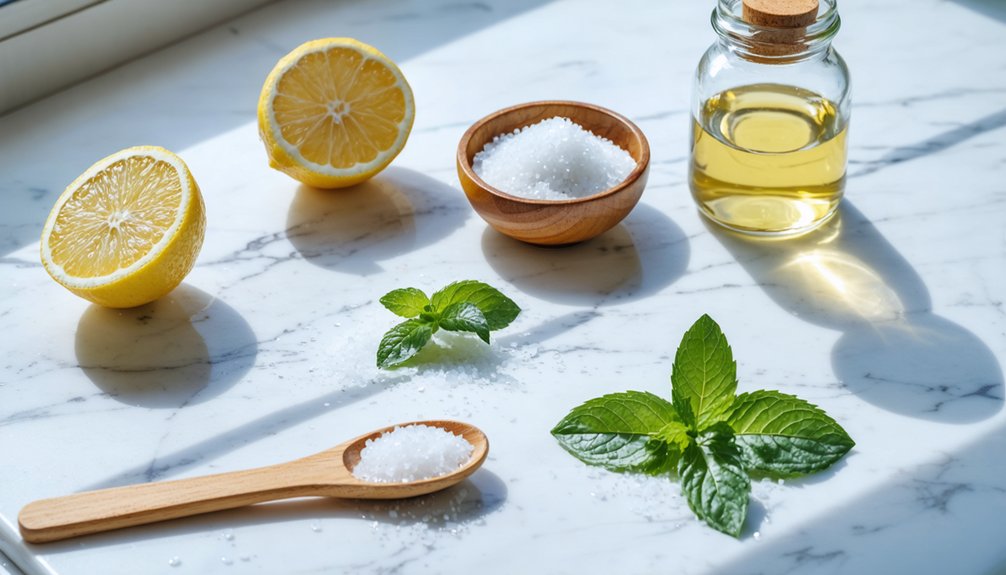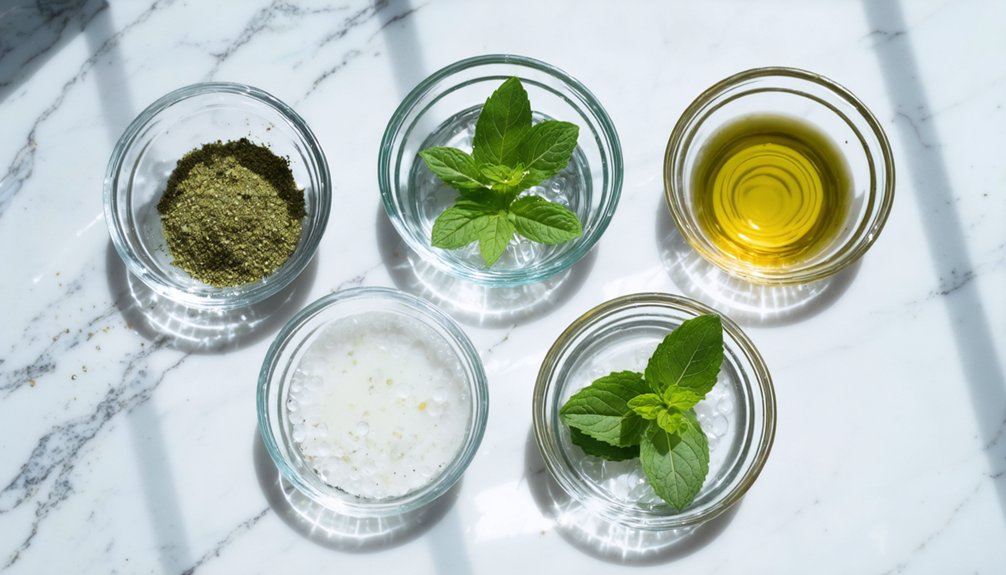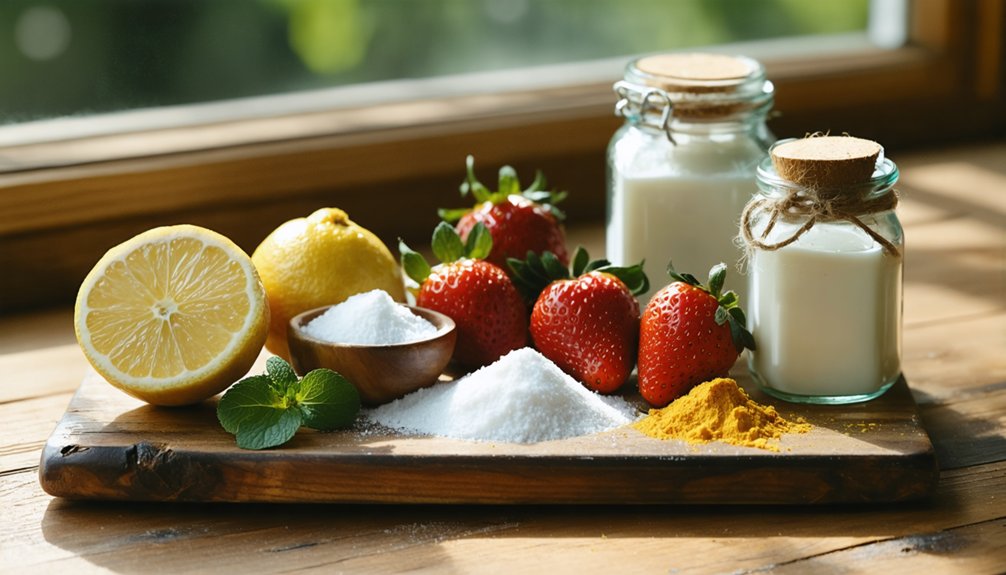
You can whiten your teeth naturally using remedies like coconut oil pulling, baking soda paste, strawberry scrubs, activated charcoal, hydrogen peroxide rinses, and apple cider vinegar. Each method targets stains differently, but frequency and concentration matter enormously. Overuse of any remedy risks enamel erosion and increased sensitivity. Genetics, aging, and diet all influence how well these methods work for you. The details on each remedy will help you apply them safely and effectively.
Key Takeaways
- Oil pulling with coconut oil for 15–20 minutes daily reduces harmful bacteria and gradually whitens teeth through consistent practice.
- Brushing with a baking soda and water paste removes surface stains mildly without damaging enamel when used a few times weekly.
- A strawberry and baking soda scrub uses malic acid to lift discoloration; apply twice weekly for safe, effective results.
- Hydrogen peroxide (1.5% solution) whitens teeth through oxidation; swish for 30–60 seconds after meals, avoiding swallowing.
- Apple cider vinegar dissolves surface stains effectively but must be diluted and limited to twice weekly to protect enamel.
Why Teeth Yellow Over Time
Teeth yellow over time due to a combination of intrinsic and extrinsic factors that gradually compromise their natural brightness.
Your tooth enamel thins as the aging process advances, exposing the naturally yellow dentin beneath. Dietary factors compound this deterioration — staining foods like coffee, tea, and red wine penetrate enamel surfaces, creating persistent discoloration. Acidic beverages erode enamel further, accelerating stain absorption.
As enamel thins with age, yellow dentin becomes exposed — while coffee, tea, and acidic drinks accelerate staining.
Smoking habits deposit tar and nicotine, producing stubborn yellowish-brown discoloration that resists standard cleaning.
Poor oral hygiene allows plaque accumulation, which hardens into tartar and deepens staining.
Genetics influence your enamel’s natural thickness and translucency, determining your baseline susceptibility to discoloration.
Understanding these contributing factors helps you make targeted, evidence-based decisions about which remedies will most effectively address your specific yellowing causes.
Pull Oil With Coconut Oil to Whiten Teeth
Oil pulling, an ancient Ayurvedic practice, involves swishing a tablespoon of coconut, sesame, or sunflower oil in your mouth for 15–20 minutes daily to reduce surface stains and bacteria.
You should perform this technique twice daily for noticeable whitening results, allowing the solid coconut oil to melt naturally in your mouth before swishing.
Always spit the oil out completely, rinse thoroughly with water, and avoid swallowing, as the oil accumulates oral bacteria during the process.
Oil Pulling Benefits
Among the oldest oral care practices, oil pulling involves swishing one tablespoon of coconut oil in your mouth for 15–20 minutes daily. Coconut oil remains solid at room temperature but melts quickly once inside your mouth.
After swishing, spit the oil out, rinse thoroughly with water, and avoid swallowing it, as it collects bacteria and debris.
For measurable whitening results, you’ll need to perform oil pulling twice daily. While evidence supporting dramatic whitening remains limited, the practice does contribute to broader oral health by reducing harmful bacteria.
Consider it a supplementary tool rather than a primary whitening solution. Consistency matters here — irregular practice won’t deliver results.
Pair this method with sound oral hygiene habits to maximize its potential benefit to your teeth.
Recommended Oils Used
Three oils stand out as the most practical choices for oil pulling: coconut, sesame, and sunflower. Each supports mouth health through oil extraction, drawing bacteria and debris from oral tissues. Avoid substituting essential oils, as they’re too concentrated and potentially toxic when swished.
- Coconut oil solidifies at room temperature but melts quickly in your mouth; its lauric acid offers antimicrobial properties.
- Sesame oil is the traditionally documented choice in Ayurvedic practice, carrying well-established historical use.
- Sunflower oil serves as a neutral, accessible alternative if you’re sensitive to the others.
Choose cold-pressed, unrefined versions for maximum purity. You’re controlling what enters your oral environment, so quality matters.
Select one oil, commit consistently, and monitor your results carefully.
Proper Technique Explained
When performing oil pulling with coconut oil, you’ll want to measure roughly one tablespoon before placing it in your mouth. Since coconut oil solidifies at room temperature, it’ll melt quickly once inside.
Your swishing methods should involve gentle, deliberate movement — push and pull the oil between your teeth without aggressive force, which can cause jaw fatigue.
Maintain this motion for 15–20 minutes consistently. These technique tips are critical: never swallow the oil, as it accumulates bacteria and toxins during the process.
Once finished, spit the oil into a trash receptacle — not the sink, as it can solidify and clog pipes. Rinse thoroughly with water afterward.
For whitening results, practice this twice daily with disciplined regularity.
Brush Away Stains With a Baking Soda Paste
Baking soda’s mild abrasive properties make it an effective, evidence-backed option for removing surface stains, and you’ll find it listed as an active ingredient in many commercial whitening toothpastes.
To use it, mix one teaspoon of baking soda with two teaspoons of water to form a paste, then brush your teeth in circular motions for two minutes before rinsing thoroughly with warm water.
Limit application to once daily or a few times per week, and maintain consistent oral hygiene practices to avoid disrupting your mouth’s natural pH balance.
Baking Soda Paste Benefits
Brush away surface stains with a simple baking soda paste—an ingredient you’ll find in many commercial whitening toothpastes for good reason. Baking soda’s mild abrasiveness supports stain removal without aggressively compromising teeth health when used correctly.
Maintain disciplined oral hygiene practices by following these evidence-backed guidelines:
- Prepare: Mix 1 teaspoon baking soda with 2 teaspoons water, creating a paste that delivers controlled whitening effects.
- Apply: Brush using circular motions for 2 minutes, allowing baking soda’s gentle abrasion to lift surface discoloration.
- Limit frequency: Use baking soda once daily or a few times weekly—overuse risks enamel sensitivity.
Consistent oral hygiene remains essential. Baking soda won’t replace professional care, but disciplined, moderate application gives you measurable control over surface stain accumulation.
Application Tips And Frequency
Knowing *how* to apply baking soda paste matters as much as knowing *why* it works.
Mix one teaspoon of baking soda with two teaspoons of water until a consistent paste forms. Using circular motions, brush for two minutes, then rinse thoroughly with warm water.
Limit use to once daily or a few times per week — overuse accelerates enamel erosion and heightens teeth sensitivity. Don’t fall for whitening myths suggesting more frequent application produces faster results; it doesn’t. It compounds damage instead.
Monitor your gums and enamel carefully. If sensitivity increases, reduce frequency immediately. You’re controlling a chemical abrasive, not simply brushing.
Pair consistent application with sound overall oral hygiene practices to protect long-term dental health while managing surface stains effectively.
Scrub Surface Stains With Strawberry and Baking Soda
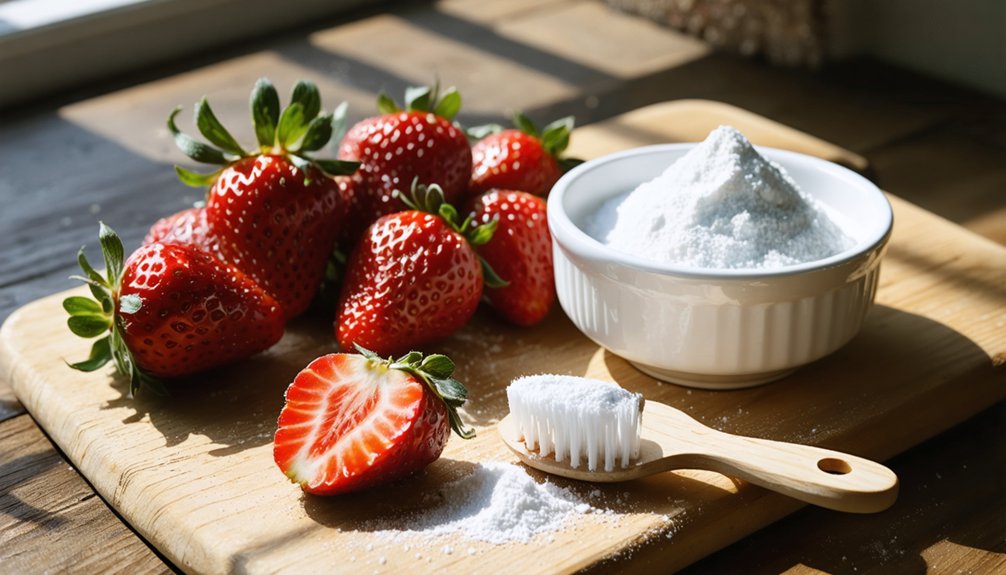
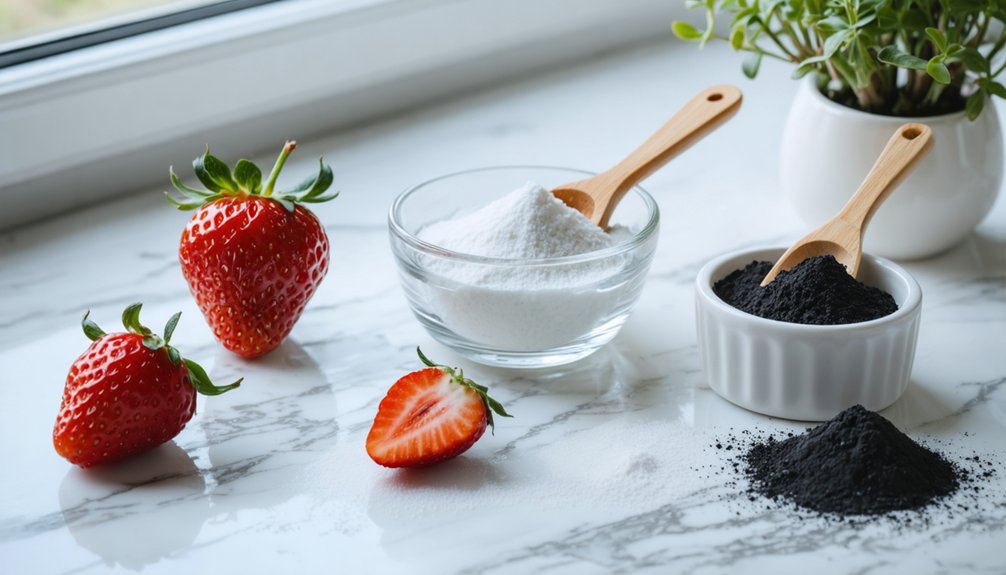
Mashing a ripe strawberry with half a teaspoon of baking soda creates a gentle, natural paste you can use to scrub surface stains from your teeth.
Strawberry benefits come from malic acid, which helps lift discoloration, while baking soda effectiveness lies in its mild abrasive action against staining particles.
Follow this controlled protocol:
Follow this controlled protocol to ensure safe, effective whitening without compromising your enamel or overall dental health.
- Apply the paste directly to your teeth and let it sit for five minutes before rinsing.
- Brush thoroughly afterward to remove all residue.
- Limit use to twice weekly to prevent enamel wear.
Don’t exceed the recommended frequency. Despite their natural origins, malic acid and baking soda can erode enamel with overuse.
Precision in application and strict adherence to this schedule keeps whitening efforts effective without compromising your dental health.
Use Activated Charcoal to Remove Deep Stains Naturally
Activated charcoal’s porous structure binds to surface compounds, making it effective at lifting deep stains that gentler abrasives can’t reach. Its stain removal capability stems from adsorption, pulling discoloring agents away from enamel on contact.
To apply, dip a wet toothbrush into powdered activated charcoal and brush gently for two to three minutes, then rinse thoroughly.
Alternatively, mix one teaspoon of powder with water to form a thick paste and apply it for one to two minutes.
Despite its charcoal benefits, frequency matters critically — limit use to once weekly at most. Overuse causes enamel abrasion, permanently weakening your teeth’s protective layer.
You’re controlling the process, so precision and restraint determine whether results are beneficial or damaging.
Rinse With Hydrogen Peroxide for Faster Teeth Whitening
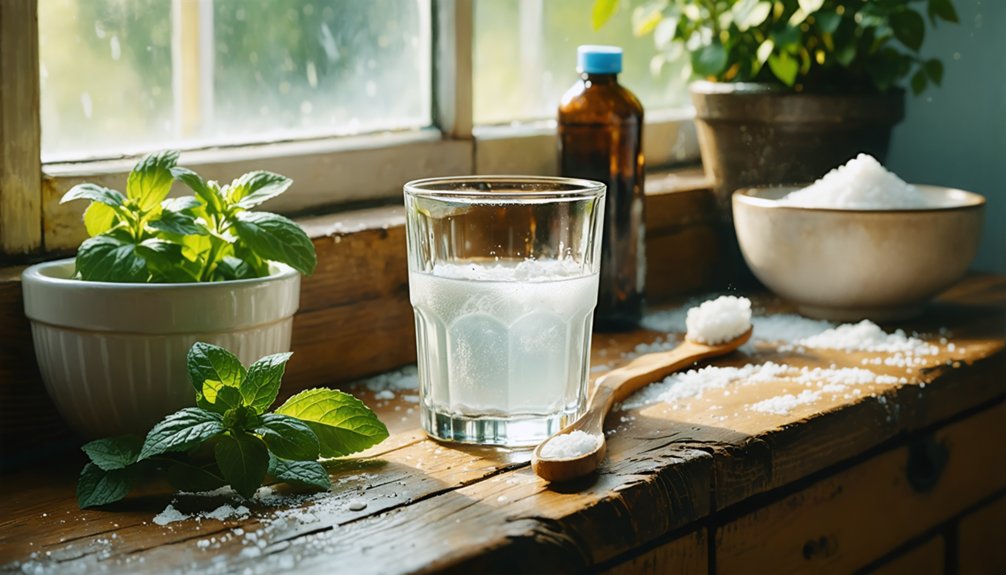
While activated charcoal works mechanically through abrasion, hydrogen peroxide whitens through oxidation — a chemical process that breaks down stain molecules within enamel rather than scrubbing them off the surface. Among whitening techniques, this one delivers measurable results when applied correctly.
Control peroxide concentration carefully:
- Use a 1.5% solution; dilute 3% hydrogen peroxide with equal parts water to achieve this.
- Swish for 30–60 seconds once daily after meals, then spit and rinse thoroughly.
- Never swallow; overuse accelerates enamel degradation and increases sensitivity risk.
For enhanced results, combine hydrogen peroxide with baking soda to form a paste, brushing gently for one to two minutes.
Frequency matters — daily use remains the ceiling. Exceeding recommended concentration or duration shifts this remedy from beneficial to damaging.
Rinse With Apple Cider Vinegar Without Damaging Enamel
Apple cider vinegar’s acidity dissolves surface stains, but it also erodes enamel if you use it incorrectly. Its acidity effects are significant enough to weaken tooth structure with repeated exposure, so moderation isn’t optional — it’s essential for enamel protection.
Dilute one to two tablespoons of ACV in one cup of water before swishing. Alternatively, mix one teaspoon with two teaspoons of water for a smaller concentration. Swish for one to two minutes, then rinse thoroughly with plain water and brush afterward to neutralize residual acidity.
Limit use to once or twice per week. Never apply undiluted ACV directly to your teeth. Overuse strips enamel permanently, reversing any whitening benefit you’ve gained.
Frequently Asked Questions
Can Natural Remedies Replace Professional Teeth Whitening Treatments Entirely?
Natural remedies can’t fully replace professional treatments. DIY Whitening methods offer limited Ingredient Efficacy for deep stains. You’ll achieve surface brightening, but for significant discoloration, you should consult a dentist for clinically proven, stronger whitening solutions.
Are These Natural Whitening Methods Safe for Children and Teenagers?
These methods are a double-edged sword for children’s dental health. You shouldn’t use them on kids without consulting a dentist first, as safe ingredients for adults can damage developing enamel in teenagers.
How Long Before Natural Remedies Show Noticeable Whitening Results?
You’ll typically notice whitening timeline results within 2-4 weeks of consistent use. Remedy effectiveness varies—baking soda and hydrogen peroxide show faster results, while oil pulling takes longer. Don’t expect dramatic changes; natural methods offer gradual improvement.
Can These Remedies Worsen Existing Tooth Sensitivity or Dental Conditions?
Yes, these remedies can worsen tooth sensitivity and existing dental conditions. You should avoid acidic options like ACV and hydrogen peroxide on sensitive teeth. Activated charcoal’s abrasiveness can erode enamel. Always consult your dentist beforehand.
Should I Consult a Dentist Before Starting Any Natural Whitening Remedy?
Yes, you should. Can you afford to risk your dental health? Before trying home remedies, consult your dentist—they’ll assess your enamel, identify contraindications, and guarantee you’re protecting, not damaging, your smile effectively.
References
- https://www.healthline.com/nutrition/whiten-teeth-naturally
- https://www.berkeleyhillsdentist.com/brighten-your-smile-naturally-berkeley-home-remedies-for-teeth-whitening/
- https://mypenndentist.org/dental-tips/2024/02/29/safe-ways-to-whiten-teeth-naturally/
- https://mytoothhq.com/6-simple-ways-to-naturally-whiten-your-teeth-at-home/
- https://www.mydentaloffice.com/10-home-remedies-for-whiter-teeth-that-actually-work/
- https://www.pleasantfamilydentistry.com/blog/6-natural-ways-to-whiten-your-teeth
- https://www.cdhp.org/how-can-i-get-perfect-teeth-naturally/
- https://www.timesnownews.com/lifestyle/teeth-whitening-home-remedies-7-natural-ways-to-brighten-your-smile-article-100518744
- https://www.mynorthcliffedental.com/7-easy-natural-remedies-for-whiter-teeth-at-home/
- https://mynorthcliffedental.com/7-easy-natural-remedies-for-whiter-teeth-at-home/