For mild fluoride stains, you can use whitening toothpastes containing hydrogen peroxide or sodium hexametaphosphate to break down discoloration quickly at home. Baking soda mixed with 3% hydrogen peroxide also works as an effective DIY paste. Moderate stains often need professional cleaning or microabrasion, while severe cases require veneers. Matching your treatment to your fluorosis severity is what determines real results—and there’s a lot more to unpack about getting that right.
Key Takeaways
- Whitening toothpastes with hydrogen peroxide or high cleaning silica quickly remove surface fluoride stains through chemical and mechanical action.
- Mix baking soda with 3% hydrogen peroxide to create an effective at-home whitening paste for gradual stain reduction.
- Professional dental cleaning with ultrasonic scalers removes stannous fluoride stains faster than any home remedy.
- Oil pulling with coconut oil for 20 minutes lifts surface stains and reduces bacteria causing discoloration.
- Mild fluorosis responds well to standard teeth whitening treatments, while moderate-to-severe cases may require microabrasion or veneers.
What Causes Fluoride Stains in the First Place?
Fluoride stains develop when excessive fluoride disrupts enamel formation during tooth development, a condition known as dental fluorosis. You’re dealing with a structural defect, not just surface discoloration.
During enamel mineralization, fluoride toxicity interferes with ameloblast function, causing porous, hypomineralized enamel that appears as white spots, yellow patches, or brown streaks depending on severity.
You’ll notice mild fluorosis presents as faint white lines, while severe cases produce pitted, brown-stained enamel. Enamel hypersensitivity often accompanies moderate to severe fluorosis because compromised enamel structure exposes underlying dentin to temperature and pressure changes.
Primary causes include excessive fluoride ingestion from swallowed toothpaste, fluoridated water, supplements, or dietary sources during childhood tooth development, typically before age eight when permanent teeth are still forming beneath the gumline.
Mild White Spots or Deep Brown Stains: How Bad Is Your Fluorosis?
Evaluating your fluorosis severity determines which whitening solutions will actually work for your situation. Fluorosis presents across a spectrum, and your treatment options shift dramatically depending on where your case falls.
Not all fluorosis is the same — and your treatment only works when it matches your actual severity level.
Mild fluorosis produces faint white spots or streaky patches across enamel. At this level, teeth whitening treatments and improved dental hygiene practices effectively restore your smile’s appearance.
Moderate fluorosis creates pronounced white or light brown discoloration covering larger enamel surfaces. Enamel microabrasion combined with consistent stain prevention strategies delivers measurable results here.
Severe fluorosis generates deep brown pitting and widespread structural damage. Standard whitening won’t penetrate these stains adequately. You’ll need enamel microabrasion or veneers to achieve meaningful correction.
Identifying your severity level first prevents wasted effort on solutions that won’t match your actual condition.
Which Whitening Toothpastes Remove Fluoride Stains Most Effectively?
When choosing a whitening toothpaste for fluoride stains, you’ll find three formulations stand out: stannous fluoride, high cleaning silica, and hydrogen peroxide-based options.
Stabilized stannous fluoride toothpastes prevent new stain formation while providing measurable whitening benefits, making them a strong first-line choice.
High cleaning silica formulas mechanically scrub away surface stains during brushing.
Hydrogen peroxide formulas chemically disrupt carbon bonds responsible for deep discoloration.
Stannous Fluoride Toothpaste Benefits
Several key ingredients in stannous fluoride toothpastes work together to combat fluoride stains effectively. Stabilized stannous fluoride formulations prevent new stain formation while delivering targeted whitening action.
High cleaning silica mechanically removes surface stains during brushing, giving you immediate polishing benefits.
Sodium hexametaphosphate chemically disrupts existing stains and creates a protective barrier against future discoloration.
You’ll also benefit from how stannous fluoride manages enamel porosity by strengthening tooth structure, reducing the microscopic openings where chromogens penetrate and settle. This controlled fluoride absorption process reinforces enamel mineral density, making surfaces more resistant to staining compounds.
Zinc citrate further prevents plaque from calcifying into tartar, which typically attracts additional staining agents.
Together, these active ingredients give you precise, multi-mechanism control over both existing fluoride stains and future discoloration.
High Cleaning Silica Toothpastes
Beyond the multi-ingredient approach of stannous fluoride formulas, high cleaning silica toothpastes offer a more mechanically focused solution for removing fluoride stains. These formulations use finely structured silica particles to physically abrade surface discoloration during brushing, giving you direct mechanical control over your oral aesthetics.
Unlike chemical-dependent whitening systems, high cleaning silica works immediately upon contact, polishing stained enamel with each brushing cycle. When you integrate this toothpaste into your daily dental hygiene routine, you’re leveraging consistent abrasive action to break down stubborn surface deposits before they deepen.
You should confirm the toothpaste carries an accepted abrasivity rating to avoid enamel erosion. Selecting a clinically validated high cleaning silica formula ensures you’re maximizing stain removal efficiency without compromising your enamel’s structural integrity.
Hydrogen Peroxide Whitening Formulas
Hydrogen peroxide whitening toothpastes tackle fluoride stains through a fundamentally different mechanism than abrasive silica formulas — they disrupt the carbon bonds responsible for tooth discoloration at the chemical level. When you use a two-step hydrogen peroxide system, the oxidizing agent penetrates enamel and breaks down stain compounds that mechanical scrubbing can’t reach.
This chemical action works alongside dental remineralization processes, strengthening enamel while simultaneously lifting discoloration. You’ll want to select formulations with stabilized hydrogen peroxide concentrations between 1–3%, ensuring effective whitening without compromising enamel integrity.
Consistent use also supports comprehensive fluoride absorption by maintaining cleaner enamel surfaces that respond more efficiently to fluoride treatments. For severe fluoride staining, combining hydrogen peroxide toothpaste with professional cleaning delivers measurably faster, more thorough results.
How Baking Soda and Hydrogen Peroxide Target Fluoride Stains at Home
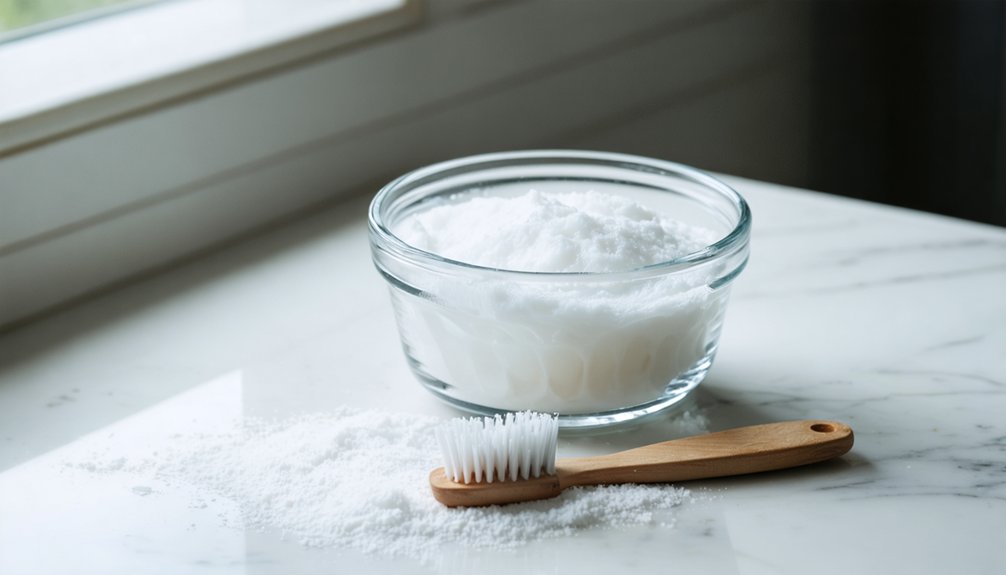
When tackling fluoride stains at home, you can use baking soda’s mild abrasive properties to mechanically polish surface discoloration from your enamel.
Hydrogen peroxide complements this action by acting as a low-concentration bleaching agent that disrupts the carbon bonds responsible for staining.
Mixing both ingredients into a paste and brushing for one to two minutes twice daily gives you a practical, cost-effective approach to reducing fluoride stain buildup.
Baking Soda Stain Removal
Two common household ingredients—baking soda and hydrogen peroxide—work together to target fluoride stains through complementary mechanisms. Baking soda‘s mild abrasive properties physically polish surface stains during brushing, making it one of the most practical oral health tips you can implement immediately. Its alkaline pH also neutralizes acid that accelerates stain formation.
For effective teeth whitening results, mix baking soda into a paste and brush gently for one to two minutes, twice daily. Avoid aggressive scrubbing, as excessive pressure erodes enamel over time. You’ll notice gradual improvement within weeks of consistent application.
This approach targets surface-level fluoride discoloration mechanically, without harsh chemicals. However, baking soda alone won’t penetrate deeper stains—that’s where hydrogen peroxide’s bleaching action becomes essential in the combined treatment method.
Hydrogen Peroxide Whitening Effects
While baking soda handles surface-level polishing, adding hydrogen peroxide to your routine targets stains at a chemical level. At low concentrations, it disrupts carbon bonds within stain molecules, breaking them down from within. During tooth brushing, this chemical action works alongside mechanical scrubbing for compounded results.
- Mix baking soda with hydrogen peroxide and brush for 1–2 minutes twice daily
- Use low-concentration hydrogen peroxide (3%) to avoid enamel sensitivity
- Explore flavor combinations in commercial peroxide gels to improve compliance
- Apply hydrogen peroxide as a pre-brush rinse before your standard tooth brushing routine
- Avoid rinsing immediately after use to extend whitening contact time
This two-step chemical and mechanical approach gives you direct control over fluoride stain reduction without requiring professional intervention.
Does Oil Pulling Actually Reduce Fluoride Stain Discoloration?
Oil pulling with coconut or sesame oil has gained attention as a home remedy for reducing fluoride stain discoloration, and the practice does show some practical merit. You swish one tablespoon of oil for 20 minutes, allowing it to mechanically lift surface stains while reducing bacterial buildup that accelerates discoloration.
For those exploring fluoride alternatives or managing aesthetic considerations around staining, oil pulling offers a low-risk supplementary approach. It won’t reverse severe fluorosis or deep enamel staining, but consistent daily practice gradually diminishes surface-level discoloration over several weeks.
You should spit the oil into a trash can rather than the sink to prevent plumbing issues. Combine this method with proper brushing and dietary adjustments for measurably better results.
When Professional Dental Cleaning Is the Faster Fix
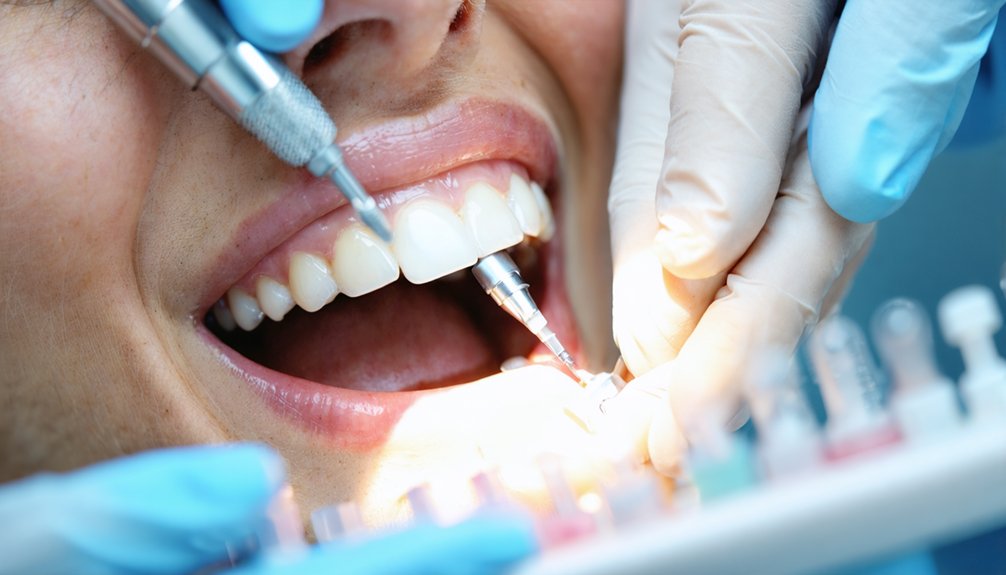
Professional dental cleaning removes most stannous fluoride stains faster than any home remedy you’ll try. When stains resist brushing and dietary adjustments, a hygienist’s tools deliver immediate, measurable results you can’t replicate at home.
- Ultrasonic scalers break apart calcified stain deposits beneath the gumline.
- Polishing paste mechanically strips surface stains in a single appointment.
- Severe stannous fluoride stains may require additional whitening after cleaning.
- Eco friendly practices like reduced-chemical cleanings minimize enamel irritation post-treatment.
- Dietary adjustments following cleaning extend your results by limiting coffee and soda.
You control how long results last. Combine professional cleaning with consistent brushing, flossing, and smart dietary choices. Don’t let stains rebuild what your hygienist just eliminated.
When to Consider Enamel Microabrasion or Veneers Instead
Dental cleaning resolves most stannous fluoride stains, but it won’t fix everything. When stains penetrate beyond the surface or fluorosis has disrupted your enamel’s pH balance, you’ll need more aggressive intervention.
Enamel microabrasion mechanically files away severe brown fluoride stains embedded in compromised enamel. It’s precise, controlled, and effective for moderate-to-severe cases where standard cleaning fails.
Enamel microabrasion files away stubborn fluoride stains standard cleaning can’t touch — precise, controlled, and effective.
However, if enamel erosion is already significant, microabrasion removes additional structure, making this option unsuitable for heavily degraded teeth.
That’s where veneers become your strongest solution. Porcelain veneers cap the tooth entirely, concealing severe discoloration without touching weakened enamel underneath. They’re permanent, durable, and eliminate the stain problem completely.
Consult your dentist to assess enamel integrity before choosing between these two targeted treatments.
How to Prevent Fluoride Stains Before They Return
Once you’ve addressed existing fluoride stains, preventing their return requires adjusting both your product choices and daily habits. You’ll need a targeted strategy combining smart oral hygiene, dietary choices, and select supplements to maintain results long-term.
- Brush twice daily with stabilized stannous fluoride toothpaste containing sodium hexametaphosphate to chemically block new stain formation.
- Drink staining beverages like coffee and soda through a straw to minimize direct tooth contact.
- Incorporate dietary supplements such as calcium and vitamin D to reinforce enamel integrity.
- Use herbal remedies like sage and salt toothpaste to prevent surface discoloration naturally.
- Limit fluoride-rich mouth rinses if overexposure contributed to your original staining.
Consistency across these habits determines whether your whitening results hold or deteriorate over time.
What to Do If Nothing Removes Your Fluoride Stains Completely
When home remedies and over-the-counter products fail to fully eliminate fluoride stains, you’ll need to escalate to professional dental interventions. Your dentist can assess stain severity and recommend targeted stain removal procedures aligned with your dental hygiene goals.
For mild to moderate fluorosis, professional teeth whitening disrupts deep discoloration effectively. If brown staining has penetrated enamel layers, enamel microabrasion mechanically files away the compromised surface.
Persistent, severe cases warrant veneers—porcelain restorations that permanently conceal discoloration beneath a durable, natural-looking surface.
Don’t delay scheduling a consultation. Untreated fluoride stains won’t self-correct, and postponing intervention risks further aesthetic deterioration. Your dentist will establish a precise treatment protocol, giving you complete control over your smile’s outcome.
Frequently Asked Questions
Can Fluoride Mouth Rinse Help Prevent Stains From Coffee Daily?
Yes, you can use fluoride mouth rinse daily to prevent coffee stains. It strengthens enamel, ensuring fluoride safety while blocking discoloration. Follow these stain prevention tips: rinse after coffee and maintain consistent twice-daily brushing.
Does Drinking Fluoridated Water Contribute to Tooth Staining Over Time?
Drinking fluoridated water doesn’t typically cause staining; instead, it supports your dental enamel through steady fluoride absorption. You’re strengthening teeth naturally, though excessive fluoride intake over time can contribute to fluorosis-related discoloration in developing teeth.
How Does Zinc Citrate in Toothpaste Reduce Fluoride Stain Attraction?
Like Teflon coating a pan, zinc citrate coats your teeth, blocking fluoride residue from triggering stain formation. It prevents plaque from calcifying into tartar, reducing your teeth’s attraction to discoloration and keeping surfaces cleaner longer.
Can Dietary Changes With Crunchy Vegetables Naturally Cleanse Fluoride Stains?
Yes, you can incorporate crunchy vegetables like apples, carrots, and celery into your natural detox routine. They’ll mechanically cleanse fluoride stains, supporting dietary detox while actively scrubbing tooth surfaces and reducing discoloration buildup effectively.
Does Using a Straw Prevent Fluoride Stains From Beverages Effectively?
Studies show straws reduce beverage contact with teeth by 90%. You’ll enhance your dental hygiene markedly—using a straw for stain prevention keeps fluoride-containing drinks from directly touching enamel, effectively minimizing discoloration risk.
References
- https://machesneydentalstudioil.com/how-fluoride-prevents-tooth-discoloration-a-guide-for-machesney-park-residents/
- https://www.medicalnewstoday.com/articles/322421
- https://www.healthline.com/nutrition/whiten-teeth-naturally
- https://www.dentalcare.com/en-us/stannous-fluoride/oral-health/anti-stain-and-whitening
- https://www.jacksonavedental.com/post/how-to-remove-stannous-fluoride-stains-from-teeth
- https://clubwhitesmile.com/how-to-remove-fluoride-stains-from-teeth/
- https://www.hazendentistry.com/blog/3-ways-you-can-treat-fluoride-stains-on-your-teeth.php