To minimize teeth whitening risks, you’ll want to consult a dentist before starting any treatment. Always follow the manufacturer’s instructions on at-home products, since overuse damages enamel and worsens sensitivity. Use desensitizing toothpaste containing potassium nitrate or stannous fluoride to manage discomfort. Keep whitening gel off your gums by ensuring a proper tray fit. Finally, avoid stain-causing foods for at least 48 hours post-whitening. Each of these strategies deserves a closer look to protect your smile effectively.
Key Takeaways
- Consult a dentist before whitening to identify contraindications, ensure proper bleaching concentrations, and receive treatment tailored to your dental profile.
- Strictly follow manufacturer instructions on at-home whitening products, avoiding excessive frequency or duration to protect enamel and reduce sensitivity.
- Use desensitizing toothpaste containing potassium nitrate or stannous fluoride to manage sensitivity and strengthen enamel during whitening treatment.
- Apply whitening gel precisely to teeth only, using petroleum jelly along the gumline to prevent irritation from gel seepage.
- Avoid dark beverages, acidic foods, and staining sauces for at least 48 hours post-whitening while enamel remineralizes.
Get a Dentist Involved Before You Start Whitening
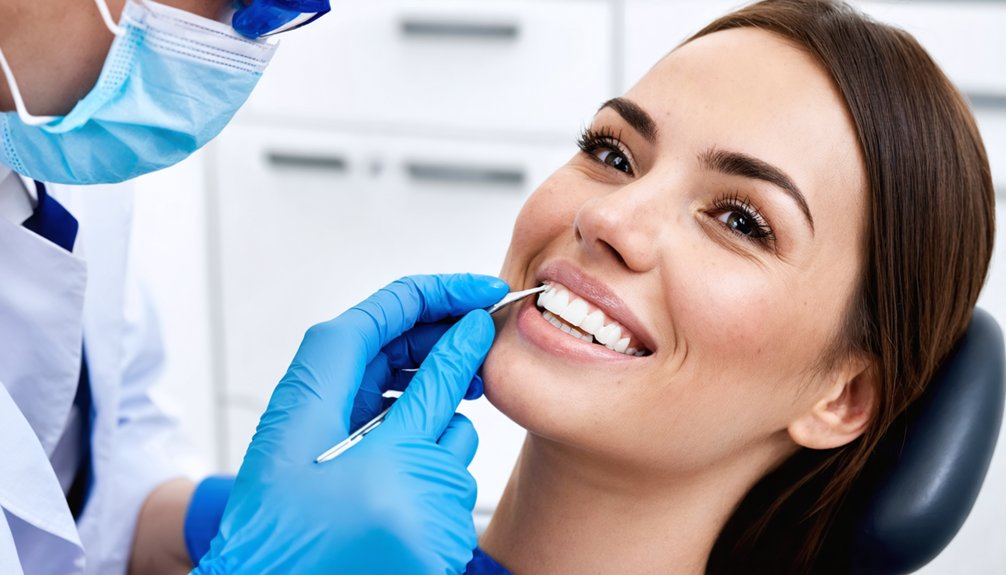
Before trying any whitening treatment, consulting a dentist is the single most effective step you can take to minimize risks. Professional supervision ensures you’re using the right bleaching concentration for your enamel condition and sensitivity level.
Consulting a dentist before whitening is the single most effective step you can take to minimize risks.
Dentists identify contraindications—like existing restorations, gum disease, or enamel erosion—that over-the-counter products can’t account for.
Personalized care means your dentist tailors the treatment method, whether in-office bleaching or custom-fitted tray therapy, to your specific dental profile. This precision eliminates guesswork and reduces the likelihood of adverse effects like excessive sensitivity or gingival irritation.
You maintain greater control over outcomes when a qualified professional monitors your progress. Don’t skip this step—it’s the foundation for a safer, more effective whitening experience.
Don’t Skip the Instructions on At-Home Whitening Products
When using over-the-counter whitening products, following the manufacturer’s instructions isn’t optional—it’s essential. DIY methods carry real risks when misused, and exceeding the recommended frequency or exposure time can worsen tooth sensitivity and damage enamel.
Ingredient safety depends on using the correct concentrations. Hydrogen peroxide and carbamide peroxide are clinically safe—but only at appropriate levels and durations. Using higher concentrations than directed doesn’t accelerate results; it accelerates harm.
You control the outcome by respecting the guidelines. Limit whitening sessions strictly to what the label specifies, and don’t assume more product means better results.
If you experience persistent sensitivity or irritation, stop immediately and consult a dentist. Precision in following instructions is what separates effective whitening from preventable damage.
Use Desensitizing Toothpaste to Control Whitening Sensitivity
Tooth sensitivity is the most common side effect of teeth whitening, but it’s manageable with the right approach. Effective sensitivity management starts with smart toothpaste selection and consistent application.
Tooth sensitivity from whitening is common, but manageable — it all starts with choosing the right toothpaste.
Follow these steps to reduce discomfort:
- Switch to desensitizing toothpaste containing potassium nitrate or stannous fluoride before and during whitening.
- Apply toothpaste directly to sensitive areas and leave it on for several minutes post-brushing.
- Use fluoride treatments to strengthen enamel and reduce nerve exposure.
- Avoid hot or cold foods during your whitening period to prevent triggering discomfort.
If sensitivity persists beyond your whitening sessions, consult your dentist immediately.
Don’t allow unmanaged sensitivity to force you into abandoning your whitening goals prematurely.
Keep the Whitening Gel Off Your Gums
Gingival irritation is a frequent but preventable side effect of teeth whitening that occurs when bleaching agents make direct contact with your gum tissue. Prioritizing gum protection during gel application considerably reduces your risk of inflammation and discomfort.
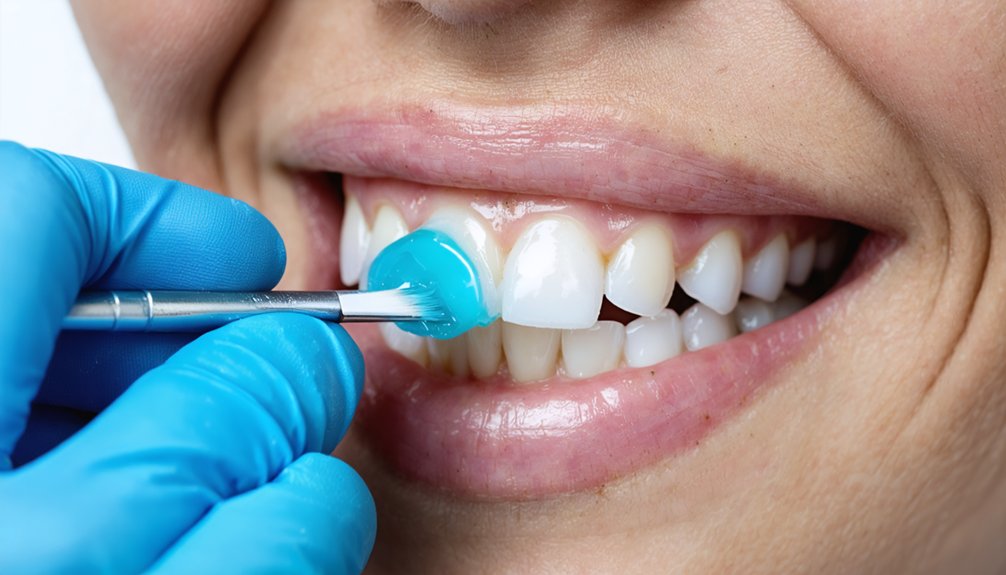
Apply the whitening gel precisely to your tooth surfaces only, avoiding contact with surrounding gum tissue. If you’re using a tray-based system, ensure it fits correctly—ill-fitting trays allow gel to seep onto gums, causing chemical burns and irritation.
Before treatment, apply a thin layer of petroleum jelly along your gumline as a protective barrier. After each session, rinse your mouth thoroughly to eliminate residual bleaching agents.
If irritation persists, consult your dentist immediately to reassess your whitening approach.
Avoid Stain-Causing Foods Right After Teeth Whitening
After teeth whitening, your enamel becomes temporarily more porous, making it considerably more susceptible to staining. Dietary restrictions during this window are critical for stain prevention. Follow these four guidelines immediately post-whitening:
- Avoid dark beverages — coffee, tea, and red wine penetrate porous enamel rapidly.
- Skip acidic foods — oranges, strawberries, and vinegar-based items weaken enamel further.
- Eliminate dark sauces and berries — tomato sauce, soy sauce, and blueberries deposit pigment aggressively.
- Maintain restrictions for 48 hours — enamel remains vulnerable until it fully remineralizes.
You’ve invested time and money into whitening—don’t compromise results through poor dietary choices.
Controlling what you consume post-treatment directly determines how long your results last.
Frequently Asked Questions
Which Maintenance Products Are Safest for Long-Term Teeth Whitening Upkeep?
Use ADA-approved whitening toothpaste and mouthwashes daily, but don’t overuse them to protect enamel. Complement with natural remedies and schedule professional consultations to guarantee you’re maintaining long-term whitening results safely and effectively.
How Often Can Whitening Toothpaste Be Used Without Damaging Enamel?
You shouldn’t use whitening toothpaste more than once or twice daily, as the label indicates. Exceeding this frequency risks enamel erosion and triggers dental sensitivity, compromising your long-term oral health and undermining your whitening results.
Does the ADA Seal of Acceptance Guarantee a Product’s Whitening Safety?
Ironically, it doesn’t guarantee perfection, but the ADA Seal of Acceptance does confirm safety standards through ingredient transparency. You’ll still benefit from professional supervision to make certain the product truly aligns with your individual whitening needs.
Can Mouthwashes Effectively Maintain Whitening Results Between Whitening Sessions?
You can use whitening mouthwashes to effectively maintain results between sessions. They’ll help remove surface stains, but you’ll also need to control your dietary habits and manage tooth sensitivity to maximize your whitening outcomes.
What Prolonged Risks Come From Overusing Whitening Toothpaste on Gums?
Over 30% of users experience adverse effects from overuse. If you overuse whitening toothpaste, you’ll risk gum irritation and enamel erosion, weakening your teeth’s protective layer and causing persistent sensitivity—don’t exceed the label’s recommended daily usage frequency.
References
- https://www.goodrx.com/conditions/dental-care/is-teeth-whitening-safe
- https://www.ada.org/resources/ada-library/oral-health-topics/whitening
- https://health.clevelandclinic.org/is-teeth-whitening-safe
- https://pmc.ncbi.nlm.nih.gov/articles/PMC4058574/
- https://www.healthpartners.com/blog/safe-teeth-whitening/
- https://news.llu.edu/patient-care/7-dentist-approved-tips-safely-whiten-your-teeth
- https://www.aarp.org/health/conditions-treatments/teeth-whitening/
- https://dentalservicepros.com/teeth-whitening-common-side-effects-and-tips-to-minimize-risks/
- https://www.health.com/condition/oral-health/how-to-keep-whitening-toothpastes-from-hurting-your-teeth