Unapproved teeth whitening kits expose you to hydrogen peroxide concentrations as high as 53%—vastly exceeding the UK’s 0.1% home-use legal limit. These illegal products can chemically burn your gums, permanently erode enamel, and compromise crowns or restorations. Without professional oversight, you’re also risking unpredictable results from poorly fitted trays and undisclosed ingredients. Understanding exactly how these products damage your teeth, and what safer alternatives exist, is essential before you make any whitening decisions.
Key Takeaways
- Unapproved whitening kits often contain hydrogen peroxide levels up to 53%, far exceeding legal limits, risking severe chemical burns and gingival damage.
- High peroxide concentrations can permanently erode enamel, exposing dentin and causing irreversible pain, sensitivity, and structural vulnerabilities.
- Unverified whitening products can chemically react with crowns and restorations, causing structural damage, uneven whitening, and costly repairs.
- Poorly fitted DIY trays increase gum contact, causing chemical burns, uneven bleaching, and unpredictable results without professional concentration control.
- Professional oversight ensures calibrated peroxide levels, pre-treatment screening, and monitored application, significantly reducing risks of irreversible dental damage.
What Makes Illegal Whitening Kits So Dangerous?
Illegal whitening kits pose serious risks largely because they contain hydrogen peroxide at concentrations far beyond what’s legally permitted for home use. UK regulations cap home-use products at 0.1% hydrogen peroxide, yet BBC investigations uncovered illegal kits containing up to 53%.
Which? testing found 21 of 36 online whiteners exceeded legal home-use limits, with 11 surpassing even the 6% professional-use ceiling.
These concentrations can cause chemical burns, gingival damage, and irreversible enamel erosion. Many unregulated products don’t disclose their exact ingredients, undermining consumer awareness and leaving you exposed to unknown chemical risks.
Cosmetic safety depends on accurate labeling, proper formulation, and verified sourcing. When you bypass regulated channels, you’re not just risking ineffective results — you’re risking permanent dental damage.
How Far Over the Legal Limit Do Online Whitening Products Go?
In the UK, you’re legally limited to whitening products containing no more than 0.1% hydrogen peroxide for home use, with dentist-applied treatments capped at 6%.
However, Which? testing found that 21 of 36 online whiteners exceeded the home-use limit, and 11 of those contained more than 6% — surpassing even the professional-use ceiling.
When you use products this far above legal thresholds, you’re exposing your teeth and gums to chemical burn risk, enamel erosion, and potentially irreversible tissue damage.
Legal Peroxide Limits Explained
When shopping for teeth whitening products in the UK, you’re steering a tightly regulated landscape — one that many online sellers openly violate. UK law caps home-use kits at 0.1% hydrogen peroxide, while only licensed dentists can legally apply concentrations up to 6%. These limits exist to protect you from chemical burns, enamel damage, and soft tissue injury.
Yet cosmetic trends and DIY solutions have driven a flood of non-compliant products onto the market. BBC investigations uncovered products containing 53% hydrogen peroxide — over 500 times the legal home-use limit.
Which? testing confirmed 11 of 36 online whiteners exceeded even the professional-use ceiling.
Understanding these thresholds isn’t optional — it’s your first line of defense against products that can cause irreversible dental damage.
Illegal Products Exceed Limits
Knowing the legal thresholds is one thing — seeing how dramatically illegal products breach them is another. BBC investigations uncovered whitening products sold online containing hydrogen peroxide levels as high as 53% — over 500 times the 0.1% home-use legal limit.
Which? testing reinforced this cosmetic safety crisis, finding 21 of 36 online whiteners exceeded legal home-use concentrations, with 11 surpassing even the 6% professional ceiling.
These aren’t minor infractions. You’re looking at products that can chemically burn gum tissue, erode enamel, and cause irreversible damage — often without disclosing their ingredients.
Consumer awareness is your first line of defense. When a product’s peroxide concentration goes undisclosed or unverified, you’re absorbing unknown chemical exposure with measurable, lasting consequences.
Risks Of Excess Peroxide
Excess peroxide doesn’t just bend safety thresholds — it breaks them catastrophically. When you apply a product containing 53% hydrogen peroxide — levels BBC investigators actually found on sale — you’re exposing your gums and enamel to concentrations 530 times above the UK’s legal home-use limit. That’s not a marginal overage; it’s a chemical hazard.
Marketing tactics routinely obscure these dangers. Sellers use vague brightness claims and before-and-after imagery to bypass your scrutiny, burying or omitting concentration disclosures entirely. Consumer awareness is your primary defense.
Before applying anything to your teeth, verify the peroxide percentage, confirm the seller’s legitimacy, and recognize that chemical burns, enamel erosion, and irreversible gingival damage aren’t rare worst-case outcomes — they’re documented consequences of exactly these products.
The Chemical Burns and Gum Damage Unlicensed Whitening Causes
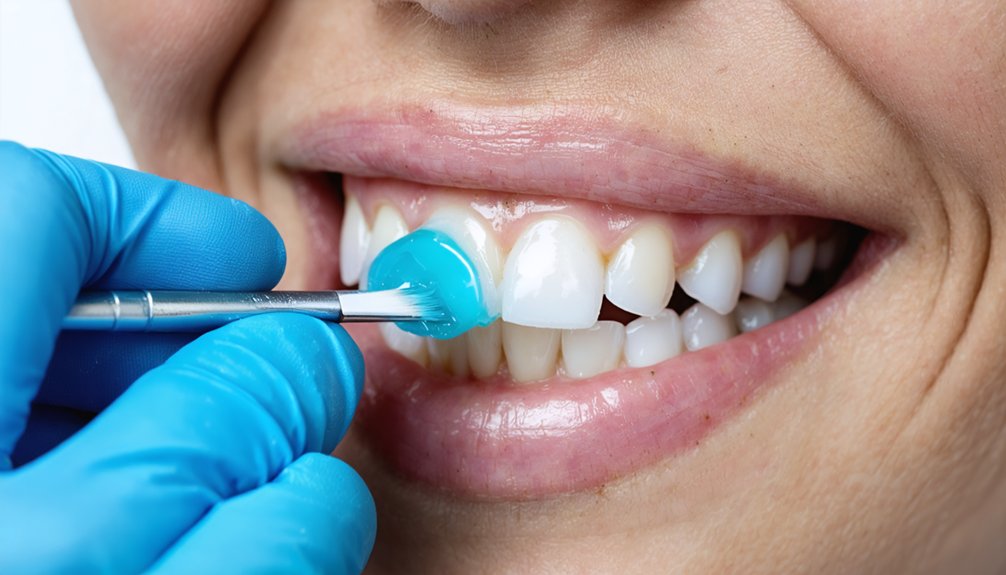
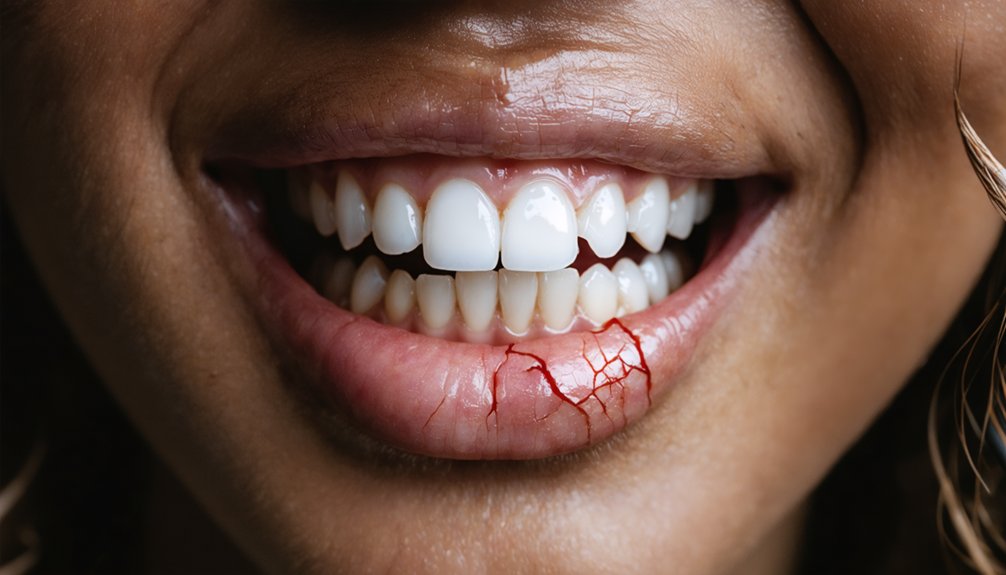
Unlicensed whitening products carry a serious risk of chemical burns and gingival damage, particularly when hydrogen peroxide concentrations far exceed legal limits. When you apply high-peroxide gels without professional oversight, you’re exposing soft tissue to corrosive agents that can burn your gums and irritate tooth-root surfaces.
BBC investigations documented treatments administered in car parks and on doorsteps — environments with zero safety controls. These settings eliminate any meaningful protection for your gum health and tissue safety.
Without proper instructions, you risk direct, prolonged gel contact with vulnerable tissue. Severe exposure can cause irreversible damage, not just temporary irritation.
Unlicensed products frequently omit ingredient disclosures, meaning you can’t assess what you’re applying. Choosing unverified products removes your ability to make an informed, controlled decision about your own oral health.
Does At-Home Whitening Permanently Damage Your Enamel?
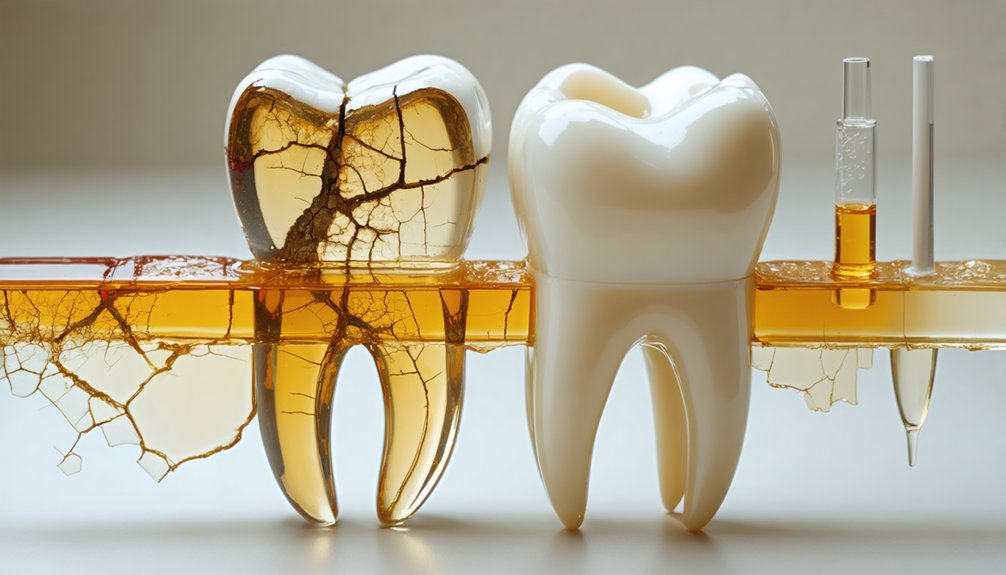
When you use unregulated at-home whitening kits, you risk permanently stripping away enamel — your teeth’s irreplaceable protective outer layer.
Research published in the British Dental Journal found that sodium chlorite, when combined with acid, can substantially reduce tooth hardness and increase susceptibility to surface abrasions.
Once enamel erodes, you can’t regenerate it, leaving deeper tooth layers exposed to pain, sensitivity, and long-term structural damage.
Enamel Erosion Risks
One of the most serious structural risks tied to unapproved whitening kits is permanent enamel erosion. When peroxide concentrations exceed safe thresholds, they alter tooth microstructure and compromise enamel’s protective integrity.
Research published in the British Dental Journal confirmed that sodium chlorite, combined with acid, significantly reduces tooth hardness, leaving surfaces vulnerable to abrasion and sensitivity. Once enamel erodes, it exposes deeper dentin layers, accelerating pain and long-term damage.
Unlike bone, enamel can’t regenerate on its own, making tooth remineralization strategies and enamel strengthening interventions critical after any chemical exposure. Fluoride treatments and professional-grade remineralizing agents can help, but they can’t fully reverse structural loss.
Your safest approach is preventing erosion entirely by avoiding unverified products and consulting a licensed dentist before starting any whitening regimen.
Protecting Tooth Structure
Whether at-home whitening permanently damages your enamel depends largely on the product you use and how you use it. Approved whitening techniques, used correctly, carry minimal structural risk. However, unregulated kits can contain acids or peroxide concentrations high enough to reduce enamel hardness and increase surface vulnerability over time.
Protecting tooth structure starts with your dental hygiene habits and product choices. You should verify that any whitening product carries a recognized safety approval, like the ADA Seal of Acceptance, before use. Avoid products that omit ingredient disclosures — unknown chemical exposure is a serious structural risk.
If you have existing restorations, cavities, or sensitivity, consult a licensed dentist first. Unsupervised use of high-concentration formulas can cause irreversible enamel loss, exposing deeper tooth layers to ongoing damage.
How Unapproved Kits Worsen Sensitivity and Destroy Dental Restorations
Unapproved whitening kits can considerably worsen tooth sensitivity, particularly if you have untreated cavities or existing dental disease. When bleaching agents seep into compromised teeth, they amplify pain and accelerate structural deterioration. Tooth sensitivity following whitening often signals chemical overexposure or product misuse — both preventable with professional oversight.
Restoration damage presents an equally serious concern. Unapproved kits react chemically with crowns, sealants, and ceramic restorations, producing visible color mismatches and compromising the restoration’s integrity. Unlike natural enamel, restorations don’t whiten uniformly, leaving your smile patchy and uneven.
Poorly fitted trays intensify these risks by increasing direct gum contact and uneven bleaching exposure. Choosing unverified products means surrendering control over outcomes that can be painful, costly, and difficult to reverse.
Why Professional Oversight Is the Only Safe Path to Whiter Teeth
Given the documented risks of chemical burns, enamel erosion, and restoration damage, professional oversight isn’t merely preferable — it’s the only approach that meaningfully controls these outcomes.
DIY whitening persists partly because dental myths frame professional care as unnecessary or overpriced. The evidence contradicts that.
A licensed dentist provides what no kit can:
- Concentration control — legal, calibrated peroxide levels matched to your enamel condition
- Pre-treatment screening — identifying cavities, restorations, or sensitivity that make unsupervised bleaching dangerous
- Monitored application — eliminating gum contact, uneven exposure, and chemical overreach
The ADA explicitly advises against removing the dentist from the whitening process. You can’t undo enamel loss or reverse tissue burns.
Professional oversight isn’t a luxury — it’s damage prevention.
Frequently Asked Questions
Can Unapproved Whitening Kits Affect Children’s Teeth Differently Than Adults’?
Yes, unapproved whitening kits pose greater risks to children’s enamel, as it’s still developing. You’re exposing immature tooth structures to harmful chemicals, raising serious developmental concerns that can cause irreversible long-term damage.
Are There Legal Consequences for Selling Illegal Whitening Kits Online?
Yes, you’re exposed to serious legal liabilities if you sell illegal whitening kits online. Regulatory enforcement targets sellers exceeding the 0.1% peroxide legal limit, with penalties including prosecution, product seizure, and substantial fines for non-compliance.
How Can You Identify Whether an Online Whitening Product Is Legitimate?
Like a shield against harm, product authenticity starts with certification verification — check for the ADA Seal, confirm peroxide levels don’t exceed 0.1%, and avoid unverified sellers lacking transparent ingredient disclosure.
Do Whitening Kits Interact Dangerously With Prescription Medications or Treatments?
Current evidence doesn’t confirm direct medication interactions, but treatment risks remain real. If you’re on prescription drugs or dental treatments, you should consult your dentist, as whitening agents can worsen existing conditions and compromise restorations.
Can Damaged Enamel From Illegal Whitening Kits Ever Be Restored?
Enamel can’t regenerate — once it’s gone, it’s gone. With 11 of 36 tested products exceeding professional limits, you risk permanent enamel repair failure and chronic tooth sensitivity that no treatment can fully reverse.
References
- https://health.clevelandclinic.org/is-teeth-whitening-safe
- https://valerysweenydds.com/the-hidden-dangers-of-over-the-counter-teeth-whitening-kits/
- https://www.bbc.com/news/articles/c20z7xx6nr4o
- https://www.bda.org/media-centre/dentists-and-which-warn-of-risks-from-buying-teeth-whitening-products-online/
- https://www.centraldentalnorwood.com/blog/2021/05/02/over-the-counter-teeth-whitening-products/
- https://www.bbc.co.uk/news/health-57226565
- https://www.nature.com/articles/s41415-019-0188-8
- https://www.brownejacobson.com/insights/rise-in-illegal-teeth-whitening-kits-serious-risk-to-dental-health
- https://thames-dental.co.uk/dangers-unregulated-teeth-whitening-products/
- https://adanews.ada.org/huddles/hazards-of-unlicensed-tooth-whitening/