You can make a DIY strawberry whitening paste by mashing one ripe strawberry with half a teaspoon of baking soda and applying it to your teeth for five minutes. The malic acid loosens surface stains while baking soda provides mild abrasion, but neither ingredient bleaches teeth internally. Repeated use risks irreversible enamel erosion, so you shouldn’t exceed once weekly. If you want to use this method safely and effectively, there’s more you should know first.
Key Takeaways
- Mash one ripe strawberry, mix with ½ teaspoon baking soda, apply evenly with a soft toothbrush, and leave on for five minutes.
- Malic acid in strawberries loosens surface stains while baking soda provides mild abrasion, offering superficial cleaning rather than deep whitening.
- After treatment, brush thoroughly with regular toothpaste and floss immediately to remove seeds and neutralize residual acidity.
- Limit use to once weekly and discontinue immediately if tooth sensitivity increases, as repeated acid exposure erodes enamel irreversibly.
- Avoid adding lemon juice, vinegar, or hydrogen peroxide, as these increase enamel erosion risk without improving whitening results.
What Is DIY Strawberry Teeth Whitening?
DIY strawberry teeth whitening is a home remedy that combines one mashed ripe strawberry with roughly half a teaspoon of baking soda to form a paste you apply directly to your teeth. You leave it on for approximately five minutes, then brush with regular toothpaste and rinse thoroughly.
Among alternative natural remedies, it’s one of the more widely circulated options, largely because it’s low-cost and requires minimal preparation.
The malic acid in strawberries may loosen surface stains, while baking soda provides mild abrasion. However, this method doesn’t replicate what professional cosmetic dentistry options deliver. It produces superficial cleaning rather than true internal whitening.
Before committing to regular use, you should understand both its limited effectiveness and its potential to erode enamel with repeated application.
What Ingredients Do You Need?
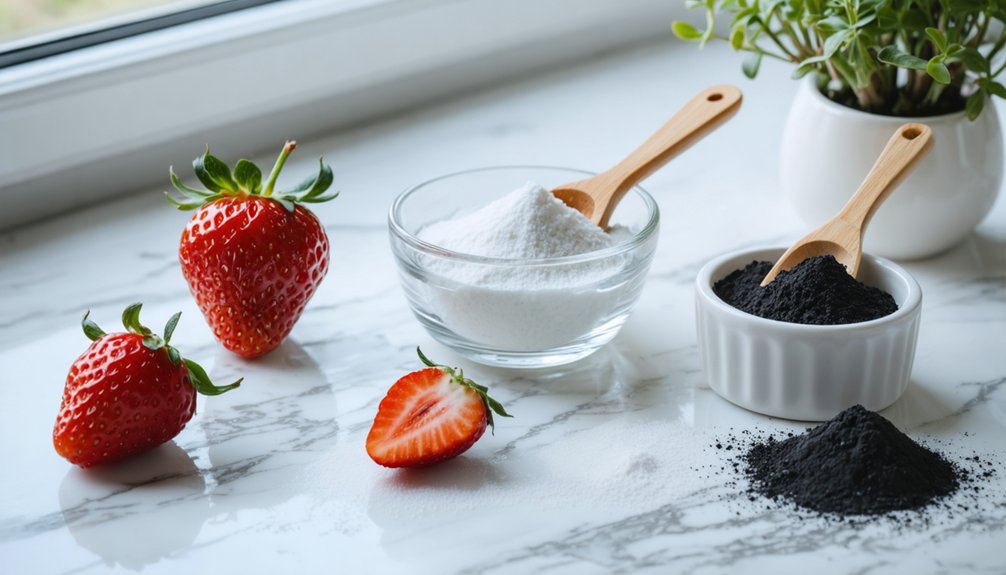
The ingredient list for this remedy is short: one ripe strawberry and approximately half a teaspoon of baking soda. Resist substituting alternative fruit options or natural flavor combinations, as other fruits haven’t been studied for this application and may carry different acid levels that increase enamel risk.
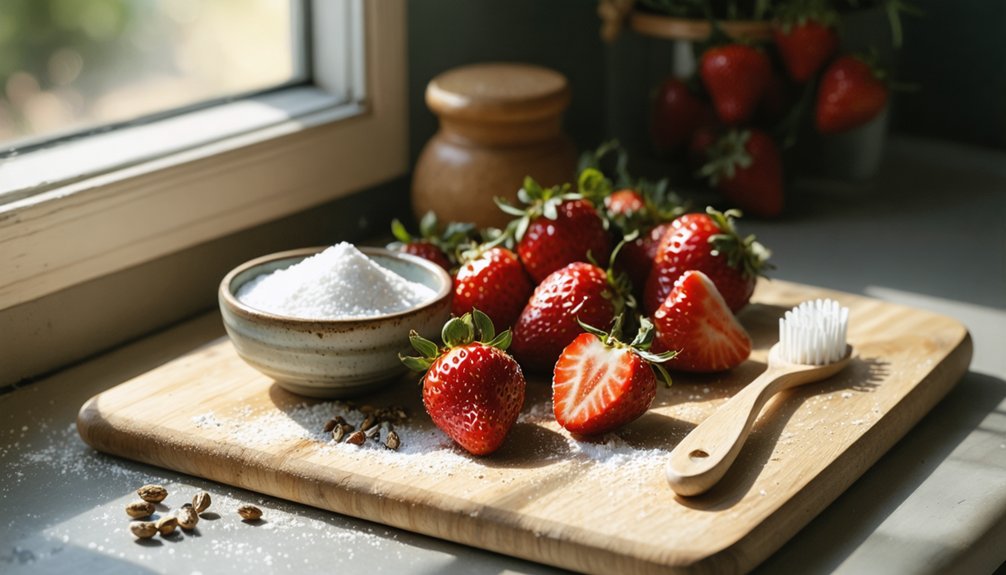
Gather these four items before starting:
- One ripe strawberry – fully ripened for easier mashing
- ½ teaspoon baking soda – acts as a mild abrasive
- A soft-bristled toothbrush – limits unnecessary enamel friction
- Dental floss – removes seeds and residue after treatment
Keep the formula simple. Adding hydrogen peroxide or other agents changes the risk profile entirely.
You’re working with acidic material, so controlling every variable from the start matters.
How Do You Do the Strawberry Whitening Treatment?
Once your ingredients are assembled, follow each step in sequence to minimize acid exposure and reduce the risk of residue retention.
Follow each step in sequence to minimize acid exposure and reduce the risk of residue retention.
Mash one ripe strawberry into a smooth paste, then combine it with ½ teaspoon of baking soda.
Apply the mixture evenly across your teeth using a soft toothbrush and leave it on for no longer than five minutes. Longer contact increases enamel erosion risk.
After the five minutes, brush thoroughly with regular toothpaste and rinse completely.
Floss immediately to clear seeds from crevices.
Worth myth debunking here: ingredient alternatives like lemon juice are sometimes suggested, but their higher acidity makes them more damaging.
Stick to the baking soda formulation and limit use to once every seven days to protect your enamel.
Does Strawberry Whitening Actually Work?
Following the steps correctly reduces acid exposure, but it doesn’t answer the more important question: does this method actually whiten your teeth?
Myth debunking starts with understanding ingredient effectiveness:
- Malic acid in strawberries loosens surface stains but doesn’t penetrate enamel.
- Baking soda removes superficial buildup through mild abrasion, not chemical bleaching.
- Professional agents like hydrogen peroxide and carbamide peroxide actually break down internal stain molecules—strawberries don’t.
- Any brightness you notice reflects temporary plaque removal, not structural color change.
Research confirms this method produces superficial cleaning, not true whitening. You’re not changing your tooth color—you’re briefly clearing surface debris.
If you want verified results, professional whitening treatments remain the only evidence-backed option worth your investment.
Is Strawberry Whitening Safe for Your Enamel?
Even if this method offers minimal whitening, that doesn’t make it risk-free—strawberries are acidic, and repeated exposure can erode your enamel over time. Enamel erosion is irreversible, meaning once that protective layer wears down, you can’t restore it naturally.
Acid damage accumulates with frequency, so using this treatment too often compounds the risk considerably.
To protect yourself, limit applications to once every seven days at most. Don’t leave the mixture on your teeth longer than five minutes, since prolonged acid contact accelerates erosion. Rinse thoroughly afterward and brush with regular toothpaste to neutralize residual acidity.
If you already have sensitive teeth or weakened enamel, skip this method entirely. Consult your dentist before proceeding—your long-term enamel integrity outweighs any temporary brightening effect this treatment might deliver.
How Does It Compare to Professional Whitening?
When you use the strawberry-and-baking-soda method, you’re achieving surface stain removal, not the deep whitening that professional treatments deliver.
Professional agents like hydrogen peroxide and carbamide peroxide penetrate the enamel and break down stain molecules internally, which is a mechanism malic acid simply can’t replicate.
If you’re expecting results comparable to a clinical whitening procedure, the evidence doesn’t support that outcome.
Surface Versus Deep Whitening
Although the strawberry-and-baking-soda mixture can lift surface debris, it doesn’t whiten teeth the way professional treatments do. Natural remedies like this one target surface stains only — they don’t penetrate enamel or break down internal discoloration.
Here’s how the two approaches differ:
- Strawberry method removes plaque and surface stains through mild abrasion and malic acid.
- Professional whitening uses hydrogen peroxide or carbamide peroxide to reach stain molecules inside the tooth.
- Visible results from the strawberry method reflect temporary cleaning, not structural color change.
- Long-term whitening requires agents that chemically alter pigmentation beneath the enamel surface.
If you want controlled, measurable results, understand that this DIY method has a strict ceiling — it cleans, it doesn’t truly whiten.
Professional Agents Work Better
Research makes the gap clear: professional whitening agents outperform the strawberry method because they’re designed to penetrate enamel and break down stain molecules internally. Hydrogen peroxide and carbamide peroxide don’t just clean the surface—they work beneath it, targeting discoloration at its source.
Home remedies using natural ingredients like strawberries and baking soda can’t replicate that mechanism. Malic acid loosens surface buildup, and baking soda provides mild abrasion, but neither compound reaches the internal structure of your teeth. You’re achieving superficial cleaning, not structural whitening.
If you want measurable, lasting results, you need clinically validated agents. The strawberry method may refresh your smile temporarily, but it won’t close the gap that professional treatments are specifically formulated to address.
Know what you’re choosing and what it can actually deliver.
How Often Can You Use Strawberry Whitening?
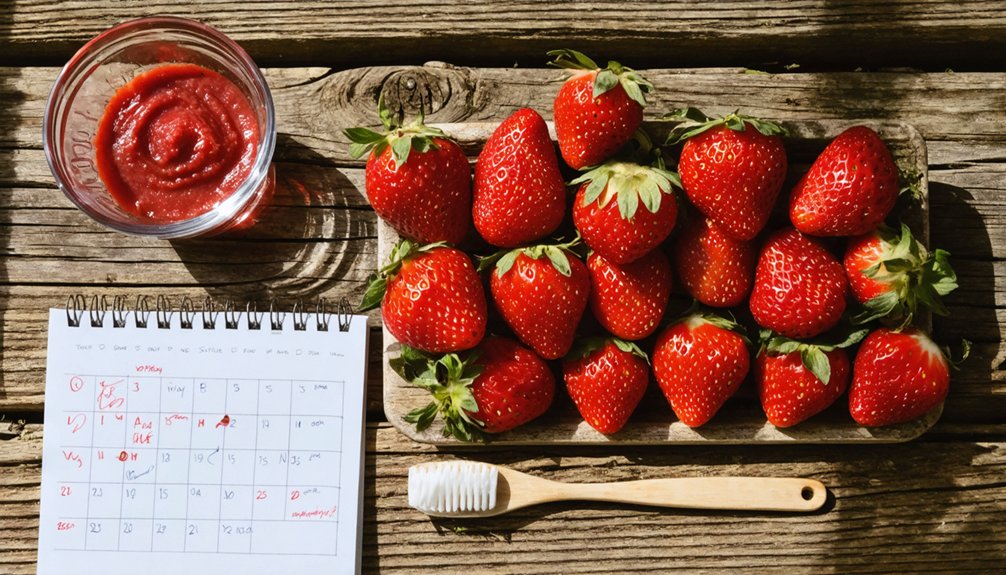
Because strawberries are acidic, you should limit this method to once every seven days to reduce your risk of enamel erosion.
Applying the mixture more frequently exposes your enamel to repeated acid contact, which can gradually weaken the tooth surface over time.
If you notice increased sensitivity or visible surface changes, stop use immediately and consult your dentist.
Safe Usage Frequency
While the strawberry-and-baking-soda method may seem harmless, its acidic content makes frequency a genuine concern. Malic acid erodes enamel with repeated exposure, so controlling how often you apply it directly protects your teeth long-term.
Follow these evidence-based frequency guidelines:
- Limit use to once every seven days — this reduces cumulative acid exposure.
- Never exceed 5 minutes of contact time — prolonged exposure accelerates enamel breakdown.
- Always brush with regular toothpaste afterward — this helps neutralize residual acidity.
- Floss immediately after — removing seeds and residue prevents debris from sitting against enamel.
Myth debunking matters here: ingredient variations like added lemon juice or vinegar don’t enhance results — they amplify erosion risk.
Treat this as an occasional surface-cleaning tool, not a routine whitening protocol.
Enamel Risk Warning
Strawberry’s natural malic acid doesn’t distinguish between surface stains and tooth enamel — it breaks both down with repeated exposure.
Enamel erosion becomes a measurable risk when you apply acidic mixtures too frequently or leave them on too long.
Unlike professional whitening agents, malic acid offers no protective mechanism for the enamel underneath.
Acid damage compounds over time, meaning what seems like a harmless weekly habit can silently thin the enamel layer you can’t regenerate.
You control how much risk you absorb. Limit applications strictly to once every seven days, never exceed five minutes of contact time, and always brush with regular toothpaste immediately after to neutralize residual acidity.
Treat this method as a controlled intervention, not a routine.
When To Stop
Once the enamel risk warning sinks in, the logical follow-up question is how often you can safely use this method — and the answer is more restrictive than most DIY guides admit. To protect enamel and avoid long term effects, apply strict limits:
- Use it once every seven days maximum — no exceptions for “mild” sessions.
- Stop immediately if sensitivity increases — pain signals enamel compromise.
- Discontinue after four weeks and evaluate results honestly before continuing.
- Switch to alternative remedies — professional-grade whitening strips or dentist-supervised treatments — if you need consistent results.
Overuse doesn’t accelerate whitening; it accelerates erosion. You’re managing a surface stain hack with real biological consequences.
Treat the frequency limit as non-negotiable, not a suggestion.
Frequently Asked Questions
Can Children Safely Try the Strawberry and Baking Soda Whitening Method?
You shouldn’t let children try this method. The acidity poses child safety concerns, risking enamel erosion on developing teeth. While ingredient toxicity is low, consult a pediatric dentist before attempting any DIY whitening on children.
Does the Ripeness of the Strawberry Affect the Whitening Results?
Strawberry ripeness makes a world of difference—riper fruit contains more malic acid, potentially boosting whitening efficacy slightly. However, you shouldn’t expect dramatic results, as surface stain removal remains the method’s only clinically supported benefit.
Can You Freeze Strawberries in Advance for Later Whitening Treatments?
You can use freezing effects for strawberry preservation, but thawed strawberries release excess water, altering the paste’s consistency. This dilution may reduce malic acid concentration, potentially weakening any surface stain-removal benefit you’re targeting.
Should You Avoid Eating or Drinking Immediately After the Treatment?
Your enamel’s a fragile shield—don’t compromise it. After treatment, you’ll want to respect diet restrictions and wait at least 30 minutes before eating or drinking to prevent acid vulnerability from compounding further erosion risks.
Can This Method Be Used on Dental Veneers or Crowns?
You shouldn’t use this method on veneers or crowns. The acidity can compromise veneer durability, and it won’t aid crown staining prevention since artificial surfaces don’t respond to malic acid or abrasive treatments like natural enamel does.
References
- https://www.mainstreetsmiles.com/strawberries-and-other-natural-oral-care-solutions
- https://fallsparkdentistry.com/greenville-dentist-provides-teeth-whitening-diy-remedies-cant-beat/
- https://www.southtampasmiles.com/can-strawberries-whiten-your-teeth/
- https://www.reddit.com/r/TheGirlSurvivalGuide/comments/1i9g4v/instant_results_with_strawberry_tooth_whitening/
- https://www.korwhitening.com/diy-teeth-whitening-with-strawberries-good-or-bad-idea/
- https://www.youtube.com/watch?v=YJg5vnz_9So
- https://www.youtube.com/watch?v=eF0YZjI9El8
- https://www.smilebrilliant.com/articles/whiten-teeth-with-strawberries/
- https://thecomfortdentistry.com/how-to-whitening-your-teeth-with-strawberries.html