Whitening strips can work on smoker’s teeth, but tar and nicotine fight back against the peroxide gel. You’ll get better results by waiting 30 to 60 minutes after smoking, brushing thoroughly beforehand, and drying your teeth before applying strips. Press them firmly to eliminate air pockets and minimize talking during wear. Repeat full cycles every 2 to 3 months with monthly touch-ups. The details behind each step make a measurable difference in your outcomes.
Key Takeaways
- Wait 30–60 minutes after smoking before applying strips, and rinse thoroughly to remove tar that interferes with gel adhesion.
- Brush and floss before application, then dry teeth with a clean towel to maximize strip adhesion and effectiveness.
- Press strips firmly from the center outward, eliminating air pockets to ensure uniform gel contact across all teeth.
- Avoid dark foods and beverages for 24 hours post-treatment, as smokers face a faster restaining cycle than non-smokers.
- Repeat full whitening cycles every 2–3 months and schedule professional cleanings every 3–4 months to manage stubborn tobacco stains.
Why Smoker’s Teeth Are Harder to Whiten With Strips
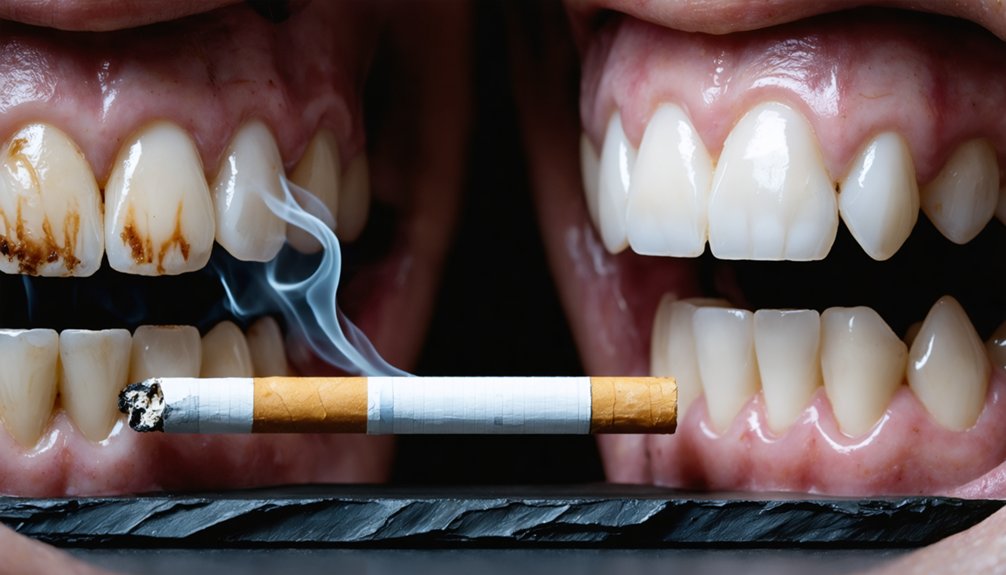
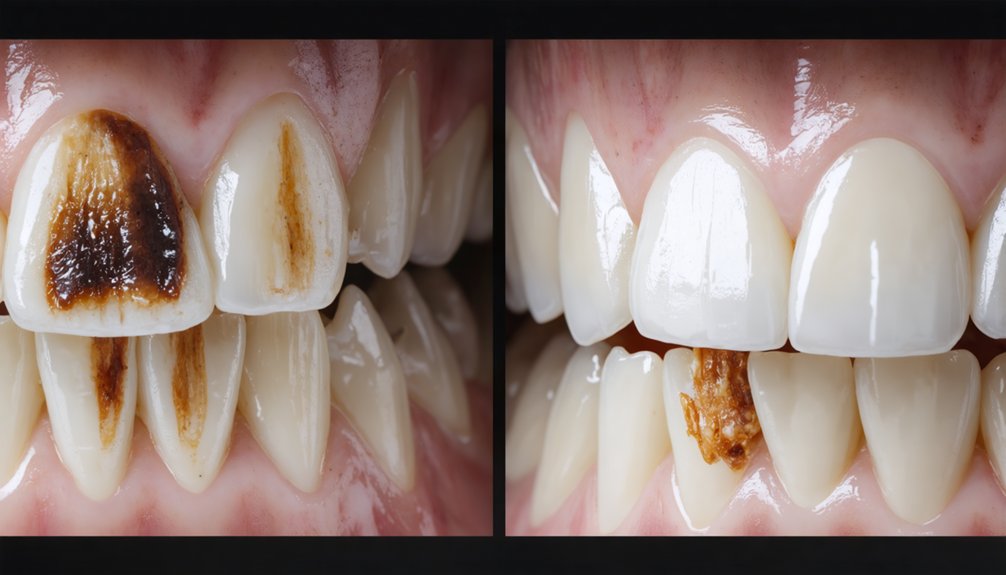
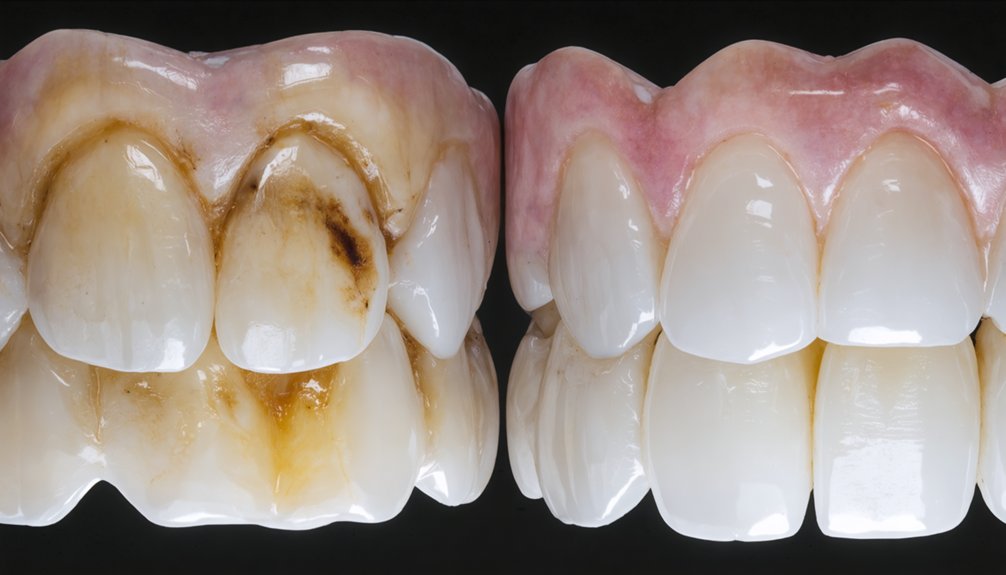
Tobacco smoke deposits tar and nicotine directly onto enamel, creating deep, layered stains that penetrate beyond the surface where whitening gel can effectively reach.
Your smoker’s habits compound this problem because repeated exposure continuously redeposits chromogens onto already compromised enamel, outpacing what strips can reverse.
Whitening challenges intensify because tar molecules bond chemically to enamel protein structures, making them resistant to peroxide-based gels designed primarily for surface-level oxidation.
You’re also dealing with a faster restaining cycle — tobacco reintroduces discoloration between treatment sessions, reducing cumulative results.
Additionally, smoking reduces saliva production over time, diminishing your mouth’s natural remineralization capacity.
This weakens enamel, making it more porous and paradoxically more susceptible to absorbing future stains despite active whitening treatment.
How Soon After Smoking Can You Apply Whitening Strips?
After smoking, you should wait at least 30 to 60 minutes before applying whitening strips to allow residual tar and chemical compounds to dissipate from your enamel surface.
Smoking impact on your teeth extends beyond visible staining—it leaves a chemical film that actively interferes with gel adhesion and reduces whitening efficacy.
To optimize your whitening timeline, rinse your mouth thoroughly with water immediately after smoking to remove surface residues.
Then brush your teeth 30 to 60 minutes before strip application to eliminate remaining plaque and tar deposits.
Dry your teeth meticulously before pressing the strips firmly against the enamel surface.
Skipping this waiting period compromises gel contact and diminishes results.
Controlling these preparatory steps guarantees each treatment cycle delivers consistent, measurable whitening outcomes.
Prep Your Teeth the Right Way Before Applying Strips
Proper preparation directly determines how effectively whitening gel bonds to your enamel surface. Start by brushing with fluoride toothpaste 30 to 60 minutes before applying whitening products to clear plaque and surface debris.
Floss thoroughly to remove interproximal buildup that blocks gel contact. Rinse completely, eliminating all toothpaste residue, then dry your teeth meticulously with a clean towel to reduce saliva interference.
Don’t rush this step. Waiting the full 30 to 60 minutes after rinsing lets your enamel normalize, reducing teeth sensitivity and improving strip adhesion.
If you’re already managing sensitivity, apply desensitizing toothpaste during this preparation window before switching to your whitening products. Controlling each preparatory step maximizes gel penetration and protects enamel integrity throughout the treatment cycle.
How to Apply Whitening Strips for Maximum Contact
Once you’re ready to apply, align the strips so the longer portion covers your front teeth and the shorter portion wraps behind them. Then press each strip firmly against the enamel to guarantee the whitening gel adheres uniformly across the tooth surface.
You’ll want to keep talking to a minimum during the 30-minute wear period, as excessive movement stimulates saliva production, which can loosen the strips and dilute the gel.
Consistent contact between the gel and enamel is the primary driver of effective stain reduction, so any disruption during wear directly compromises your results.
Proper Strip Alignment Technique
Achieving maximum whitening gel contact begins with two critical alignment steps that directly affect how evenly the peroxide compound saturates your enamel.
First, position the longer strip section across your front-facing tooth surfaces, pressing firmly to eliminate air pockets that prevent uniform gel adhesion.
Second, fold the shorter section behind each tooth, securing it snugly against the lingual surface.
Precise strip positioning guarantees the active compound maintains consistent contact across the entire enamel surface rather than pooling unevenly.
Use your fingertip to smooth each strip from the center outward, eliminating gaps along the gumline.
These alignment tips matter most for smokers, whose tar-stained enamel requires uninterrupted gel exposure to achieve measurable color improvement.
Compromised contact directly reduces treatment efficacy and extends the overall whitening timeline.
Pressing Strips Firmly Down
Pressing each strip firmly against your tooth surface drives the whitening gel into direct contact with enamel, maximizing peroxide penetration and reducing treatment gaps.
Use your fingertip to apply consistent, even pressure across the entire strip surface, working from the center outward to eliminate air pockets that compromise whitening gel effectiveness.
Proper strip adhesion techniques require you to smooth each edge carefully, ensuring the gel layer maintains uniform contact without lifting or folding. Pay particular attention to curved tooth surfaces where strips naturally resist conforming.
Once positioned, press firmly for several seconds before releasing. Inadequate pressure creates uneven whitening patterns and reduces treatment efficiency.
Controlling this step precisely determines whether you achieve consistent, clinically meaningful results across all visible tooth surfaces.
Minimizing Saliva During Wear
Saliva remains your greatest obstacle to consistent strip contact during the wear period, as excess moisture dilutes the peroxide gel and disrupts adhesion before it fully penetrates enamel.
Implementing targeted saliva reduction techniques maximizes treatment efficacy. Minimize talking throughout the 30-minute session, since jaw movement stimulates salivary glands and accelerates gel displacement.
Breathe steadily through your nose rather than your mouth to reduce mucosal drying reflexes that trigger saliva production.
Among reliable strip adhesion strategies, drying your teeth thoroughly immediately before application creates a moisture-free surface that sustains gel-to-enamel contact.
If excess saliva accumulates, gently blot without disturbing the strips. Controlled, deliberate behavior during wear time directly determines how effectively the peroxide compound penetrates stained enamel layers deposited by tobacco use.
Does Smoking Change How Long Strips Need to Stay On?
Although smoking stains teeth more aggressively than most lifestyle habits, it doesn’t change the recommended wear time for whitening strips.
Strip effectiveness depends on controlled chemical exposure, not extended contact time. Exceeding the manufacturer’s specified whitening duration won’t accelerate results for smokers—it’ll increase sensitivity and risk enamel damage.
Your strips are formulated to deliver a precise concentration of peroxide within a defined timeframe. Leaving them on longer disrupts that balance.
If you’re a heavy smoker, you’ll achieve better outcomes by completing full treatment cycles consistently, using touch-up kits every few months, and pairing strips with whitening toothpaste daily.
Control the variables you can. Stick strictly to the recommended wear time and repeat treatments strategically rather than attempting to compensate through prolonged single applications.
How to Handle Sensitivity When You Smoke and Whiten
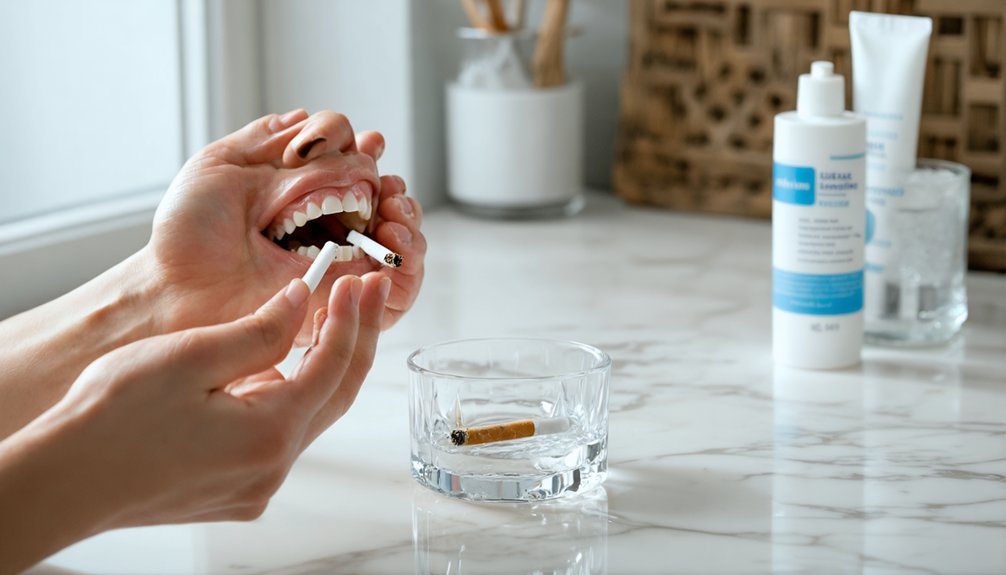
Sticking to the recommended wear time protects your enamel, but it won’t eliminate the heightened sensitivity that often comes with combining smoking and whitening treatments.
Smoking impact on enamel includes compromised mineral density, which amplifies your nerve response during chemical whitening. Effective sensitivity management starts two weeks before treatment—use desensitizing toothpaste consistently, and continue it throughout your entire whitening cycle.
After each strip session, avoid thermally extreme foods and beverages to prevent compounding irritation. If sensitivity persists between sessions, take a structured break and allow your enamel to remineralize before reapplying.
Don’t exceed recommended wear times; additional exposure won’t accelerate results but will intensify discomfort. You control the outcome by following the protocol precisely and responding to sensitivity signals before they escalate.
What to Avoid Eating and Drinking After Strip Removal
After removing your whitening strips, you’ll want to avoid coffee, tea, cola, and other dark beverages for at least 24 hours, as your enamel remains especially porous and vulnerable to restaining during this window.
Foods with strong pigmentation—such as berries, tomato sauce, and soy sauce—carry the same risk and should be temporarily eliminated from your diet.
When avoiding staining drinks entirely isn’t practical, drink them through a straw to minimize direct contact with your freshly treated enamel.
Staining Beverages To Avoid
Once you remove your whitening strips, your enamel enters a heightened vulnerability window where staining compounds absorb more readily into the tooth surface.
For the first 24 hours, eliminate staining beverages entirely — coffee, cola, tea, and red wine all contain chromogens and tannins that bind aggressively to freshly treated enamel.
Smoking compounds this risk further, making dietary discipline non-negotiable during this period.
If you can’t avoid dark liquids, drink them through a straw to minimize direct enamel contact.
Water and milk serve as practical whitening alternatives that hydrate without introducing pigment.
Rinse immediately after any unavoidable exposure to reduce absorption time.
Controlling what contacts your teeth post-treatment directly determines how long your results last — the discipline you apply now protects the outcome you worked to achieve.
Foods That Cause Discoloration
Freshly treated enamel absorbs chromogens and tannins with far greater efficiency than untreated surfaces, making your food choices in the hours following strip removal critically consequential.
Among the primary discoloration causes are deeply pigmented foods: beets, berries, tomato-based sauces, soy sauce, and curry. These contain concentrated pigments that penetrate vulnerable enamel immediately post-treatment.
Acidic foods compound the problem by temporarily softening enamel, increasing its susceptibility to staining agents. You’ll also want to avoid chocolate and balsamic vinegar during the initial 24-hour window.
Prioritize white or colorless foods — chicken, rice, cauliflower, and plain yogurt — during this critical period.
Controlling your food choices systematically during recovery directly determines how effectively your whitening results hold over time.
Smart Drinking Habits Post-Treatment
Beverages pose an equally significant staining risk as food during the critical post-treatment window, and understanding which ones to avoid directly protects your whitening results.
For the first 24 hours after strip removal, eliminate coffee, tea, cola, and red wine from your intake. These contain chromogens and tannins that bond aggressively to freshly treated enamel.
Making smart beverage choices means defaulting to water and clear liquids during this window. When you must consume dark liquids, use a straw to minimize direct enamel contact.
Implement effective rinsing techniques by swishing water thoroughly for 30 seconds immediately after any beverage consumption. This neutralizes residual compounds before they penetrate enamel.
You control the longevity of your results through deliberate, consistent beverage management post-treatment.
Habits That Prevent Tobacco and Coffee Stains Between Treatments
Although whitening strips can dramatically brighten your smile, maintaining those results between treatments requires deliberate behavioral changes.
Explore tobacco alternatives like nicotine patches or lozenges to reduce direct stain exposure on enamel. Consider coffee substitutes such as herbal teas or lighter roasts consumed through a straw, minimizing pigment contact with treated teeth.
Rinse your mouth with water immediately after consuming staining substances to neutralize residue before it bonds to enamel. Avoid smoking for at least 48 hours post-treatment when your teeth remain most chemically vulnerable.
Reduce overall frequency of dark beverage consumption, and when indulgence occurs, act quickly to limit exposure duration.
These consistent behavioral adjustments compound over time, preserving your whitening investment and extending visible results between strip cycles.
How Often Should Smokers Repeat the Whitening Cycle?
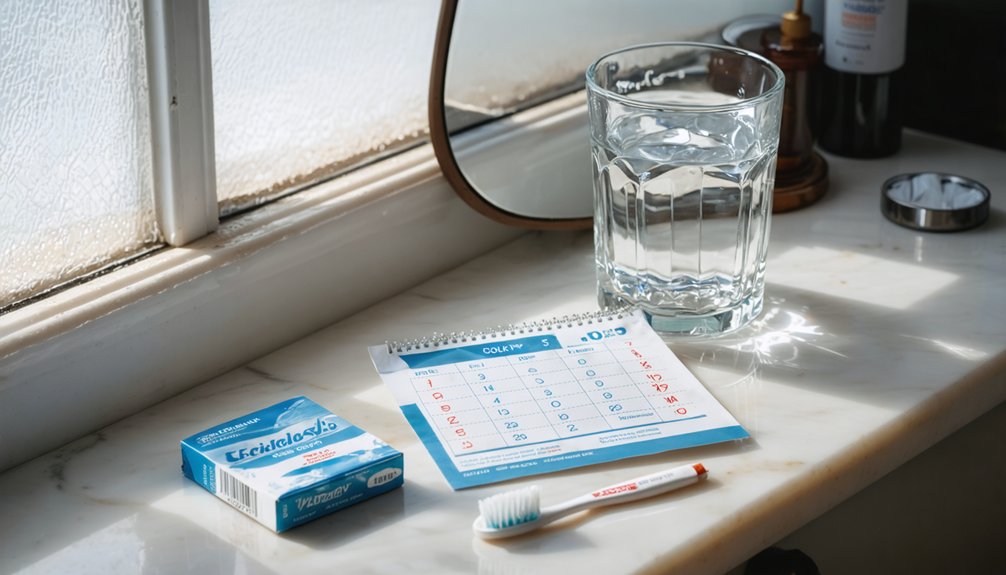
If you smoke, you should repeat the full whitening cycle every few months and use a touch-up kit between cycles to counteract accelerated staining.
You’ll also need to schedule professional cleanings every 3 to 4 months rather than the standard 6-month interval, since tobacco residue compromises both enamel brightness and gum health at a faster rate.
Aligning your touch-up kit use with your cleaning appointments helps you maintain consistent results without over-exposing your enamel to the whitening agents.
Recommended Cycle Frequency
Because smoking continuously reintroduces tar and nicotine deposits onto enamel, you’ll need to repeat your whitening cycle more frequently than non-smokers.
Adjusting your whitening frequency guarantees you maintain visible results despite accelerated staining.
Follow these maintenance tips to stay consistent:
- Repeat full whitening cycles every 2 to 3 months rather than the standard 6-month interval
- Use touch-up kits monthly between full cycles to counteract fresh nicotine deposits
- Schedule professional dental cleanings every 3 to 4 months to remove stubborn tar buildup
- Track your results after each cycle to identify whether your frequency needs adjusting
- Follow product instructions exactly without skipping treatment days to sustain consistent outcomes
Structured repetition gives you measurable control over discoloration progression and preserves the whitening investment you’ve already made.
Touch-Up Kit Timing
Knowing how often to run a full whitening cycle is only part of the equation—touch-up kits fill the gaps between those cycles to prevent nicotine and tar deposits from accumulating unchecked.
As a smoker, you’ll need a higher touch-up frequency than non-smokers. Plan to use a touch-up kit every four to six weeks between full cycles to counteract accelerated staining.
Among essential maintenance tips: monitor your shade consistently, and initiate touch-ups at the first sign of yellowing rather than waiting for significant discoloration.
Don’t delay—nicotine bonds quickly to enamel, making early intervention far more effective than reactive treatment.
Pair your touch-up schedule with whitening toothpaste used twice daily to extend results and reduce how aggressively each subsequent touch-up session must work.
Professional Cleaning Intervals
While touch-up kits manage short-term maintenance, professional cleanings form the structural backbone of any long-term whitening strategy for smokers. Smoking accelerates tartar buildup and deep staining that strips alone can’t fully address. To protect whitening effectiveness, you must schedule cleanings strategically.
- Schedule professional cleaning every 3 to 4 months instead of the standard 6-month interval.
- Remove calcified deposits that block whitening gel from reaching enamel uniformly.
- Identify early enamel erosion before beginning another strip cycle.
- Confirm gum health, since irritated tissue compromises safe strip application.
- Use each cleaning appointment to reassess whether your current whitening protocol remains appropriate.
Aligning professional cleaning intervals with your whitening cycles gives you measurable control over long-term outcomes and prevents compounding stain accumulation between treatments.
How to Tell If Your Strips Are Actually Working
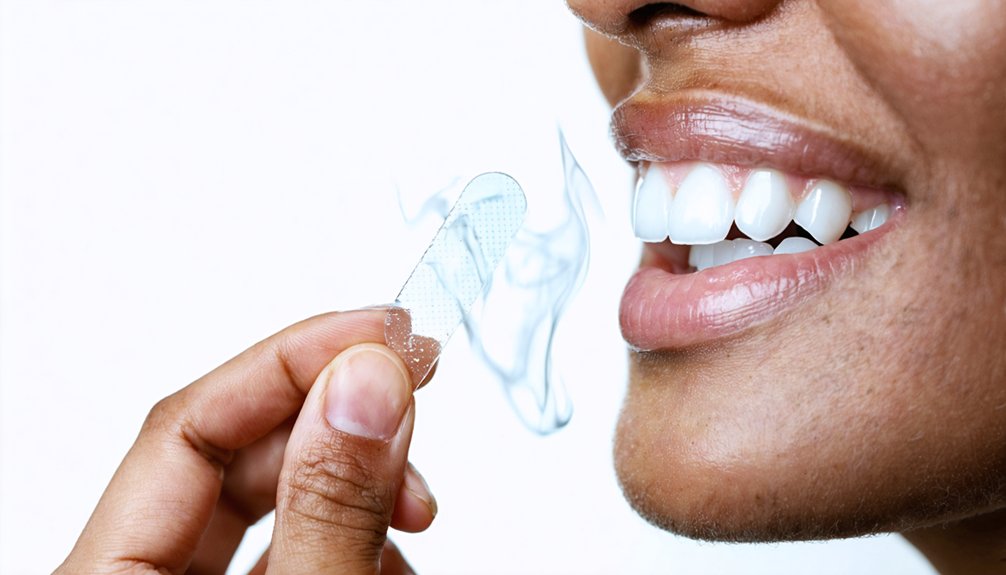
Many users question whether whitening strips are delivering measurable results, and a few reliable indicators can help you assess progress objectively.
To evaluate strips effectiveness accurately, photograph your teeth under consistent lighting before starting treatment and every five days thereafter. Visual results typically emerge within seven to ten days of daily use, presenting as a lighter shade along the enamel surface, particularly on central incisors.
Compare your teeth against a standardized shade guide available at most pharmacies. If no discernible change appears after fourteen days of correct application, your staining may require professional-grade intervention.
Inconsistent results often indicate improper strip contact, insufficient wear time, or continued exposure to staining agents like tobacco and coffee immediately following treatment.
Frequently Asked Questions
Can Whitening Strips Damage Dental Work Like Crowns or Veneers?
Whitening strip ingredients don’t alter crowns or veneers, but they won’t whiten them either. You should verify dental work compatibility with your dentist before starting treatment to avoid uneven color results between natural teeth and restorations.
Are Whitening Strips Safe to Use With Braces or Retainers?
Studies show 60% of orthodontic patients attempt whitening. Whitening strips aren’t recommended for braces compatibility, as they’ll create uneven results. You should consult your orthodontist about whitening safety before applying strips over any orthodontic hardware or retainers.
Do Whitening Strips Expire, and Does Expiration Affect Their Effectiveness?
Yes, whitening strips do expire. You’ll notice expiration signs like weakened gel consistency and reduced potency. Effectiveness factors decline considerably past the expiration date, so you shouldn’t use outdated strips—they won’t deliver reliable whitening results.
Can Whitening Strips Cause Gum Recession if Used Too Frequently?
Like acid eroding stone, overuse can harm you—yes, excessive usage frequency damages gum health. You’ll risk recession if you don’t follow recommended intervals. Take breaks between cycles to let your gums recover fully.
Are Certain Whitening Strip Brands More Effective for Heavy Smokers?
No single brand’s clinically proven superior for heavy smokers. You’ll benefit most from checking brand comparisons and user reviews, then selecting high-concentration peroxide strips and repeating treatment cycles consistently per product instructions to maintain effective results.
References
- https://www.lighthousedentalcentre.com/blog/read-these-6-tips-before-using-teeth-whitening-strips
- https://walkindentalclinic.ca/teeth-whitening-for-smokers/
- https://www.youtube.com/watch?v=ZMWuVXfAVQ0
- https://drhealthandbeauty.com/teeth-whitening-for-smokers/
- https://www.healthline.com/health/how-to-remove-nicotine-stains-from-teeth
- https://advanced-whitening.co.uk/teeth-whitening-strips-for-smokers-coffee-drinkers-do-they-really-work/
- https://www.youtube.com/watch?v=nsGnJXQfYeg
- https://crest.com/en-us/oral-care-tips/teeth-stains/how-to-remove-nicotine-stains-from-teeth
- https://www.youtube.com/watch?v=sEfTNZ0hODU
- https://www.onugechina.com/industry-news/how-to-solve-smoke-and-tea-stains-with-whitening-strips.html