You can safely whiten sensitive stained teeth by matching the right method to your enamel’s current condition. Switch to a potassium nitrate desensitizing toothpaste two weeks before treatment, avoid acidic foods, and choose lower-concentration peroxide products specifically designed for sensitive teeth. Professional treatments offer custom trays and fluoride protection for faster, controlled results. Natural options like baking soda paste work gently on surface stains. Everything you need to manage the process safely is ahead.
Key Takeaways
- Use desensitizing toothpaste with potassium nitrate two weeks before whitening to reduce sensitivity and strengthen enamel protection.
- Choose OTC whitening strips labeled for sensitive teeth, as they contain lower peroxide concentrations to minimize discomfort.
- Baking soda paste used once or twice weekly gently removes surface stains without chemical aggression on enamel.
- Reduce gel application time to 30-60 minutes and skip sessions if sensitivity persists during professional treatment.
- Avoid acidic foods, temperature extremes, and stain-causing drinks for 48 hours post-treatment to support enamel stabilization.
Why Sensitive Teeth React Badly to Whitening
Whitening agents like hydrogen peroxide penetrate the porous enamel surface and reach the dentin layer beneath, where microscopic tubules connect directly to the tooth’s nerve.
When peroxide reaches these tubules, it triggers a temporary inflammatory response, causing the sharp, shooting discomfort you likely recognize. Understanding sensitivity causes helps you make smarter treatment decisions rather than abandoning whitening altogether.
One of the most persistent whitening myths is that sensitivity signals permanent damage. It doesn’t. Your teeth react because the chemical process temporarily disrupts fluid movement within dentinal tubules, stimulating nerve endings.
Pre-existing enamel erosion, gum recession, or untreated cavities amplify this reaction greatly. You’re not powerless here—identifying your specific sensitivity triggers before starting treatment lets you select concentrations, application durations, and protective agents that keep discomfort manageable throughout the entire process.
Professional Whitening Treatments That Work for Sensitive Teeth
Professional treatments give you the most controlled whitening environment available, which matters greatly when sensitivity is a concern. Your dentist applies 35–40% hydrogen peroxide gels that work faster than anything you’d use at home, reducing total exposure time considerably.
Before treatment begins, they’ll apply fluoride varnish or desensitizing agents to strengthen your protective barrier.
Custom trays distribute gel evenly across your teeth, lowering the risk of uneven contact and gum irritation that triggers sensitivity spikes. LED devices accelerate the gel’s action, which means shorter sessions without sacrificing results.
Your dentist controls every variable — concentration, timing, and post-treatment care — so you’re not guessing. If sensitivity appears, they adjust immediately. That level of precision is what separates professional whitening from every other available option.
Best Over-the-Counter Products for Sensitive Stained Teeth
Over-the-counter options have expanded considerably, giving you several effective choices that won’t aggravate sensitive teeth. For sensitivity management, select strips specifically labeled for sensitive teeth, as they contain lower peroxide concentrations that minimize discomfort while still delivering results.
Follow application instructions precisely—reducing exposure time initially helps your teeth adapt gradually.
Among product recommendations, look for gels and strips containing potassium nitrate or strontium chloride, both clinically recognized for reducing nerve sensitivity. Whitening toothpastes formulated with milder abrasives protect enamel while addressing surface stains effectively.
Affordable OTC gels offer flexibility, but strict adherence to manufacturer guidelines remains non-negotiable. Cutting corners on instructions increases your sensitivity risk unnecessarily.
Combining a low-concentration peroxide strip with a potassium nitrate toothpaste gives you the most controlled, systematic approach to whitening sensitive teeth.
How to Prepare Your Teeth Two Weeks Before Whitening
Two weeks before starting any whitening treatment, you should switch to a desensitizing toothpaste containing potassium nitrate to begin building your teeth’s tolerance to peroxide exposure.
Cut acidic foods and drinks—like citrus, vinegar-based products, and carbonated beverages—from your diet to prevent enamel erosion that increases sensitivity risk.
You’ll also want to schedule a professional fluoride varnish application with your dentist to reinforce your enamel’s protective barrier before treatment begins.
Switch To Desensitizing Toothpaste
Switching to a desensitizing toothpaste containing potassium nitrate at least two weeks before whitening greatly reduces sensitivity risk during treatment. The desensitizing benefits come from potassium nitrate’s ability to calm exposed nerve endings within the dentin tubules, building a protective buffer before peroxide exposure begins.
You’ll want to replace your regular toothpaste entirely during this preparation phase rather than alternating between products.
Several reliable toothpaste brands deliver consistent results, including Sensodyne Pronamel, Colgate Sensitive Pro-Relief, and ARM & HAMMER Sensitive. Use these twice daily with a soft-bristled toothbrush, applying gentle circular strokes to maximize active ingredient absorption.
Avoid rinsing immediately after brushing to allow potassium nitrate to penetrate enamel surfaces effectively. This two-week commitment directly strengthens your teeth’s tolerance before whitening begins.
Avoid Enamel-Eroding Foods
Alongside your desensitizing toothpaste routine, your diet plays an equally significant role in enamel integrity during the two-week preparation phase.
Acidic foods and beverages—citrus fruits, vinegar-based dressings, carbonated drinks, and coffee—actively erode enamel, compromising its structural defense before whitening agents even contact your teeth. Your dietary choices directly determine how resilient your enamel health remains throughout treatment.
Eliminating these erosive substances reduces surface vulnerability, minimizes sensitivity risk, and maximizes whitening effectiveness. Replace acidic options with enamel-neutral alternatives: water, dairy products, leafy greens, and lean proteins.
If you consume acidic items, wait 30 minutes before brushing to avoid abrading softened enamel. Controlling your diet during this preparatory window establishes the strongest possible foundation for a successful, low-sensitivity whitening experience.
Apply Professional Fluoride Varnish
Scheduling a professional fluoride varnish application with your dentist during the two-week preparation phase greatly strengthens enamel’s defensive barrier before whitening treatment begins.
This fluoride application bonds directly to enamel surfaces, remineralizing microscopic weak spots that would otherwise amplify sensitivity during peroxide exposure. Your dentist applies the varnish in minutes, and it continues reinforcing enamel integrity over subsequent days.
The varnish benefits extend beyond sensitivity prevention — you’re actively fortifying the structural foundation that whitening agents will contact. A stronger enamel barrier means peroxide penetrates more uniformly while causing less nerve irritation.
After your appointment, avoid eating or drinking for at least 30 minutes to allow complete adhesion. Combining this step with desensitizing toothpaste maximizes your enamel’s protective capacity before treatment begins.
Natural Whitening Methods That Won’t Aggravate Sensitivity
If you’re looking to whiten at home without triggering sensitivity, two natural methods stand out as both effective and gentle.
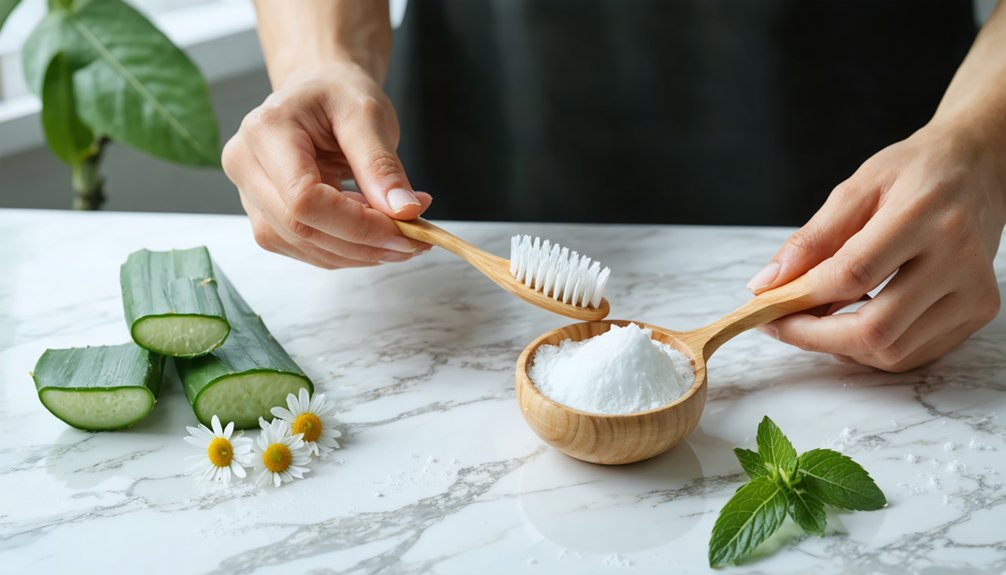
You can mix baking soda with water in a 1:2 ratio to create a mild abrasive paste, but limit its use to once or twice weekly to protect your enamel from wear.
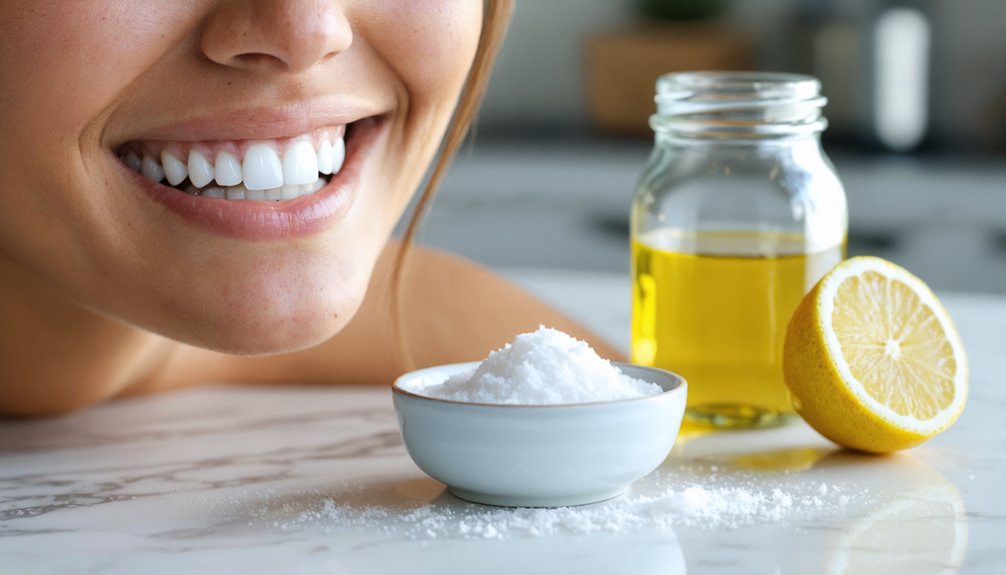
Additionally, swishing 15ml of coconut oil for 15–20 minutes—a practice known as oil pulling—offers a low-risk, non-abrasive approach that won’t compromise sensitive teeth.
Baking Soda Paste Benefits
Baking soda paste stands out as one of the safest natural whitening options for sensitive teeth, primarily because its mild abrasive action lifts surface stains without the chemical aggression of peroxide-based products.
You maintain enamel protection by controlling both concentration and frequency. Mix baking soda with water at a 1:2 ratio for ideal consistency.
Follow these application protocols precisely:
- Apply the paste no more than once or twice weekly to prevent cumulative enamel wear.
- Brush gently using circular motions for two minutes, avoiding excess pressure.
- Rinse thoroughly with water immediately after application to neutralize residual alkalinity.
This method delivers measurable stain removal while keeping sensitivity risks minimal.
Strict adherence to frequency limits guarantees you preserve enamel integrity throughout your whitening process.
Oil Pulling Effectiveness
Beyond baking soda’s abrasive stain removal, oil pulling offers a complementary approach that works through an entirely different mechanism—one that’s particularly gentle on sensitive teeth.
Rather than abrading enamel, oil pulling works by emulsifying surface bacteria and lipid-soluble stain compounds through mechanical swishing action.
To execute this correctly, swish 15ml of coconut oil vigorously through your teeth for 15-20 minutes before brushing. The lauric acid in coconut oil demonstrates antimicrobial properties while simultaneously loosening superficial staining without triggering sensitivity responses.
You won’t experience the thermal or chemical irritation associated with peroxide-based methods.
Consistency drives results here—daily morning sessions before eating or drinking yield the most measurable improvement.
Because oil pulling doesn’t chemically penetrate enamel, it’s a sustainable long-term practice you can maintain indefinitely.
Foods, Habits, and Products That Damage Enamel During Whitening
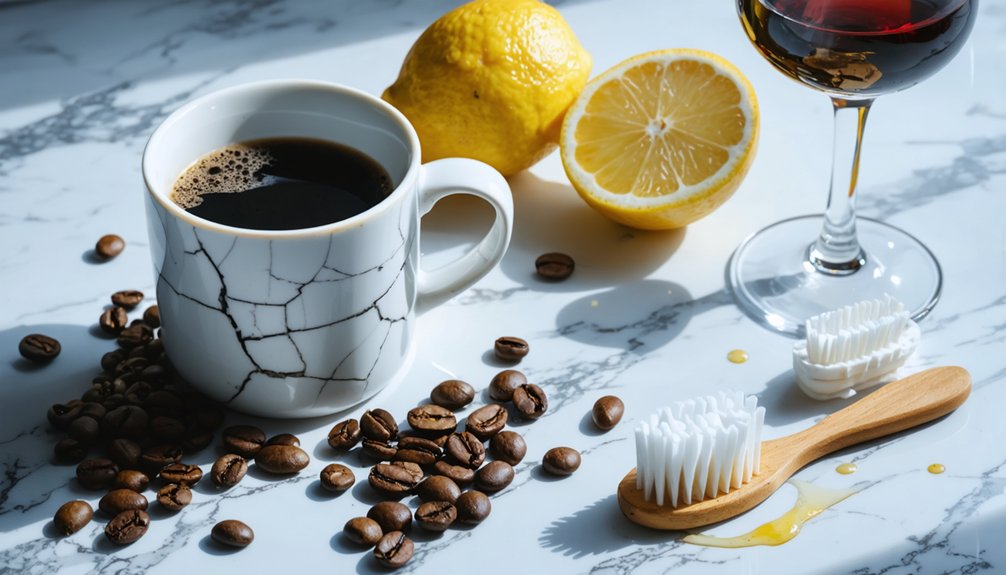
During whitening treatments, certain foods, habits, and products can compromise enamel integrity and heighten sensitivity. Controlling your environment is essential for supporting enamel restoration and maintaining appropriate whitening frequency.
Avoid these three primary enamel threats:
- Acidic foods and drinks — citrus fruits, vinegar-based foods, coffee, tea, wine, and dark sodas erode enamel and intensify post-treatment sensitivity.
- Aggressive brushing habits — using hard-bristled toothbrushes or abrasive toothpastes accelerates enamel wear, undermining treatment results.
- Overusing whitening products — exceeding recommended whitening frequency with high-concentration peroxide gels damages enamel structure progressively.
You should also eliminate acidic DIY treatments like lemon juice or apple cider vinegar immediately. These substances counteract professional protocols and delay enamel restoration.
Strict dietary and behavioral discipline directly determines your treatment’s safety and long-term effectiveness.
How to Adjust If Sensitivity Flares Mid-Treatment
Even with strict dietary and behavioral discipline, sensitivity can flare mid-treatment and require immediate protocol adjustments.
When discomfort spikes, reduce gel application time to 30–60 minutes instead of overnight exposure. Skip a session entirely if sensitivity persists between applications—your enamel needs recovery time.
Apply potassium nitrate desensitizing gel directly inside your trays daily to reinforce sensitivity management at the tissue level. Continue using desensitizing toothpaste throughout every remaining session without exception.
Apply potassium nitrate gel inside your trays daily and use desensitizing toothpaste every session without exception.
If sharp or prolonged pain occurs, stop treatment immediately and consult your dentist before resuming.
These treatment adjustments aren’t setbacks—they’re strategic recalibrations that protect enamel integrity while preserving your whitening progress.
Controlled pacing produces better long-term results than pushing through discomfort and risking irreversible sensitivity or structural enamel compromise.
Post-Treatment Care That Prevents Sensitivity From Returning
Once your final whitening session ends, your post-treatment protocol determines whether sensitivity stays dormant or resurfaces.
Disciplined sensitivity management immediately following treatment protects your results and your comfort.
Execute these three non-negotiable steps:
- Continue desensitizing toothpaste containing potassium nitrate for a minimum of one week post-treatment to maintain nerve-blocking protection.
- Avoid temperature extremes — eliminate hot and cold foods and beverages for 48 hours to prevent sensitivity flare-ups during enamel recovery.
- Eliminate stain-causing consumables like coffee, tea, and wine while your enamel stabilizes.
Expect sensitivity to resolve within 24-72 hours after your final session.
Long term maintenance requires a soft-bristled brush, consistent oral hygiene, and periodic desensitizing toothpaste cycles before future whitening treatments.
Frequently Asked Questions
Can Whitening Treatments Permanently Damage Nerves in Highly Sensitive Teeth?
Like a storm that passes, whitening won’t permanently damage nerves. You can manage sensitivity through natural remedies and proper sensitivity management strategies, ensuring treatments stay safe when you follow recommended concentrations and application guidelines carefully.
Is Teeth Whitening Safe During Pregnancy or While Breastfeeding?
You shouldn’t pursue whitening safety during pregnancy or breastfeeding due to pregnancy concerns around peroxide absorption risks. Dentists actively recommend postponing all whitening treatments until after you’ve finished breastfeeding to eliminate any potential chemical exposure.
How Long Should Someone Wait Before Whitening Recently Filled Teeth?
You should wait at least two weeks before starting whitening timing after new fillings. Peroxide won’t bond to filling materials, so rushing risks uneven results and sensitivity. Consult your dentist to confirm your specific timeline.
Can Whitening Treatments Affect Dental Crowns, Veneers, or Bonding Materials?
Over 60% of restorations resist whitening agents entirely. Your whitening options won’t alter dental materials like crowns, veneers, or bonding—they’ll remain their original shade while your natural teeth brighten, potentially creating noticeable color mismatches you’ll need to address.
Does Teeth Whitening Effectiveness Differ Based on the Original Stain Cause?
Yes, stain types directly impact your results. Extrinsic stains respond well to most whitening methods, while intrinsic stains require stronger professional treatments. You’ll achieve better outcomes when you match your chosen method to your stain’s origin.
References
- https://www.ada.org/resources/ada-library/oral-health-topics/whitening
- https://www.medicalnewstoday.com/articles/322421
- https://www.goodrx.com/conditions/dental-care/is-teeth-whitening-safe
- https://pgh.dental/best-teeth-whitening-options/
- https://pmc.ncbi.nlm.nih.gov/articles/PMC4058574/
- https://www.dentalcareofmidfl.com/six-simple-ways-whiten-teeth-naturally/
- https://www.nextleveldentalstudio.com/post/6-natural-ways-to-safely-try-teeth-whitening-for-sensitive-teeth
- https://supremiadentistry.com/the-5-best-ways-to-whiten-sensitive-teeth/
- https://townsvilledental.clinic/whitening-sensitive-teeth/
- https://deefordentist.com/whitening-methods-for-sensitive-teeth/