Activated charcoal can lift surface stains from your teeth, but you’ve got to use it carefully to avoid permanently wearing down your enamel. Your main options include brushing with charcoal powder, mixing it with baking soda or coconut oil into a paste, or swishing a charcoal-water blend. You should limit each method to once or twice weekly. Keep exploring to find out exactly how to apply each technique safely and effectively.
Key Takeaways
- Brush teeth with activated charcoal powder using gentle circular motions, letting it sit for 2-3 minutes before rinsing thoroughly.
- Mix activated charcoal with baking soda and water to create a paste, allowing it to sit for 5-10 minutes.
- Combine activated charcoal with coconut oil for a gentler paste; dab onto teeth and rinse after 2-3 minutes.
- Swish a diluted charcoal-water mixture around your mouth for two minutes to help lift surface stains.
- Limit all charcoal whitening methods to 1-2 times weekly to protect enamel and maintain oral health.
How to Brush Your Teeth With Activated Charcoal
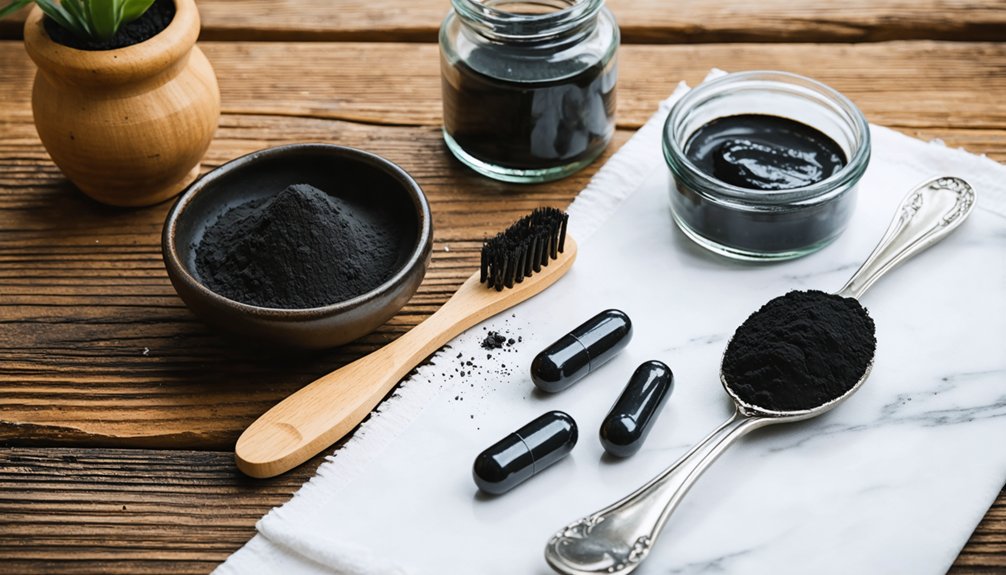
Brushing your teeth with activated charcoal starts with the right preparation — purchase charcoal tablets from a health food store or pharmacy, then grind one to two tablets into a fine powder.
Dip a clean, wet toothbrush directly into the powder, then brush in small, gentle circles across all tooth surfaces. Allow the charcoal to sit for two to three minutes, letting it bind to surface stains.
Enamel safety depends entirely on your technique — avoid aggressive rubbing, as excessive abrasion weakens enamel over time. If you experience tooth sensitivity, apply the charcoal with a finger or cotton swab instead.
Afterward, spit thoroughly and rinse multiple times until no black residue remains, then follow with regular toothpaste. Use this method only occasionally for safe, controlled results.
Activated Charcoal and Baking Soda Paste for Deeper Stains
When surface stains prove stubborn, combining activated charcoal with baking soda creates a more aggressive whitening paste. This blend enhances stain removal techniques but demands careful application to protect your enamel.
Follow these steps precisely:
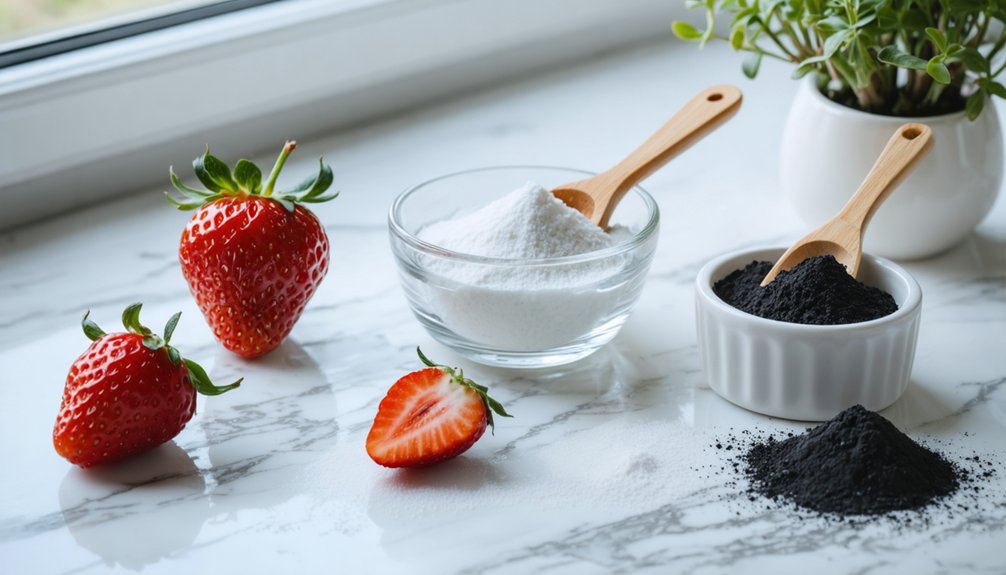
- Mix activated charcoal powder with baking soda, adding just enough water to form a thick paste.
- Apply gently using small, circular motions, covering all tooth surfaces evenly.
- Allow the paste to sit for 5 to 10 minutes, letting it bind deeply to stains.
- Rinse thoroughly multiple times, then brush with regular toothpaste to clear all residue.
Charcoal safety is non-negotiable here—limit this method to occasional use only. Avoid aggressive scrubbing, and never incorporate acidic additives, which accelerate enamel breakdown over time.
Charcoal and Coconut Oil Whitening Paste
Combining activated charcoal with coconut oil produces a travel-friendly whitening blend that’s gentler on teeth than more abrasive pastes. These natural ingredients work together—charcoal adsorbs surface stains while coconut oil provides a smoother, less gritty consistency that reduces enamel friction.
To prepare, mix activated charcoal powder with enough coconut oil to form a spreadable paste. Apply it by dabbing gently onto teeth rather than scrubbing, and let it sit for two to three minutes before rinsing thoroughly.
Safety precautions remain essential here. You should limit use to once or twice weekly, as even gentler formulas carry abrasion risks with overuse. Rinse multiple times to clear all residue, then follow with regular toothpaste to ensure your teeth are completely clean.
The Activated Charcoal Water Swish Method
For those who want a less abrasive alternative to brushing with charcoal, the water swish method offers a simpler approach. Dilute activated charcoal powder with water, then swish it throughout your mouth for two minutes. This method reduces direct enamel contact while still targeting surface stains.
Follow these steps carefully:
- Mix a small amount of charcoal powder with water until fully diluted.
- Swish the mixture thoroughly, reaching all tooth surfaces.
- Spit completely and rinse multiple times to clear all residue.
- Monitor mouth pH changes and watch for early tartar buildup signs.
Limit this method to one or two times weekly. Overuse may disrupt your mouth’s natural balance, potentially accelerating tartar buildup and compromising enamel integrity over time.
How Often Should You Use Activated Charcoal Teeth Whitening?
Although activated charcoal can brighten your smile, how often you use it matters just as much as how you apply it. Use standard charcoal methods one to two times per week to minimize enamel abrasion.
Activated charcoal can brighten your smile, but frequency matters — limit use to once or twice per week.
If your mixture includes acidic ingredients like vinegar, limit applications to once weekly, as acids accelerate enamel breakdown.
Before committing long-term, weigh cost considerations carefully. Repeated purchasing of activated charcoal tablets adds up, and overuse can create dental expenses that far exceed what you’d spend on alternative whitening methods, such as professional trays or whitening strips.
For blends containing baking soda, restrict use to a one-week period only, brushing twice daily for one to two minutes.
Always prioritize enamel preservation over speed of results.
Frequently Asked Questions
Can Activated Charcoal Whitening Damage Existing Dental Crowns or Veneers?
Yes, activated charcoal can compromise dental crown safety and veneer durability. It’s abrasive nature may scratch surfaces and dull their finish. You should consult your dentist before using charcoal whitening if you’ve got existing restorations.
Is Activated Charcoal Teeth Whitening Safe During Pregnancy or Breastfeeding?
Like a ship steering through stormy waters, you should tread carefully — avoid activated charcoal whitening due to limited pregnancy safety research and uncertain breastfeeding considerations. You’re protecting two lives, so consult your doctor before proceeding.
Can Children or Teenagers Safely Use Activated Charcoal for Teeth Whitening?
You shouldn’t let children use activated charcoal for teeth whitening, as children safety is a serious concern. Teenager use also isn’t recommended, since developing enamel is more vulnerable to abrasion and potential long-term damage.
Does Activated Charcoal Interfere With Any Medications Taken Orally?
Yes, activated charcoal can interfere with medication interactions by binding to oral drugs in your digestive effects pathway, reducing their absorption. You should consult your doctor before using charcoal if you’re taking any medications.
Can Activated Charcoal Whitening Worsen Existing Gum Disease or Irritation?
Yes, activated charcoal can worsen gum sensitivity and negatively affect your oral health impact if gum disease exists. You’ll want to avoid abrasive application near inflamed gums and consult your dentist before proceeding with any charcoal whitening method.
References
- https://www.healthline.com/nutrition/whiten-teeth-naturally
- https://www.medicalnewstoday.com/articles/322421
- https://www.youtube.com/watch?v=6VxphLA7LD8
- https://www.grandedentistry.com/top-homemade-remedies-for-teeth-whitening/
- https://www.123dentist.com/blog/whitening-teeth-activated-charcoal/
- https://www.youtube.com/watch?v=HElv_3ufsqg
- https://blog.1stfamilydental.com/teeth-whitening-with-activated-charcoal-diy/
- https://www.youtube.com/watch?v=HfPOXvF68iM
- https://wellnessmama.com/beauty/whiten-teeth-naturally/
- https://www.youtube.com/watch?v=4IJPJnnyO6w