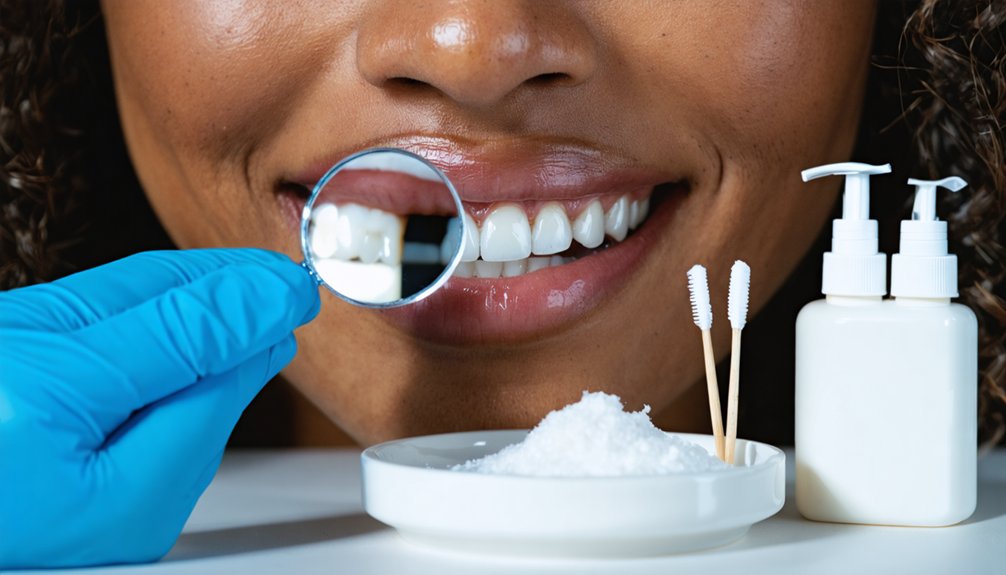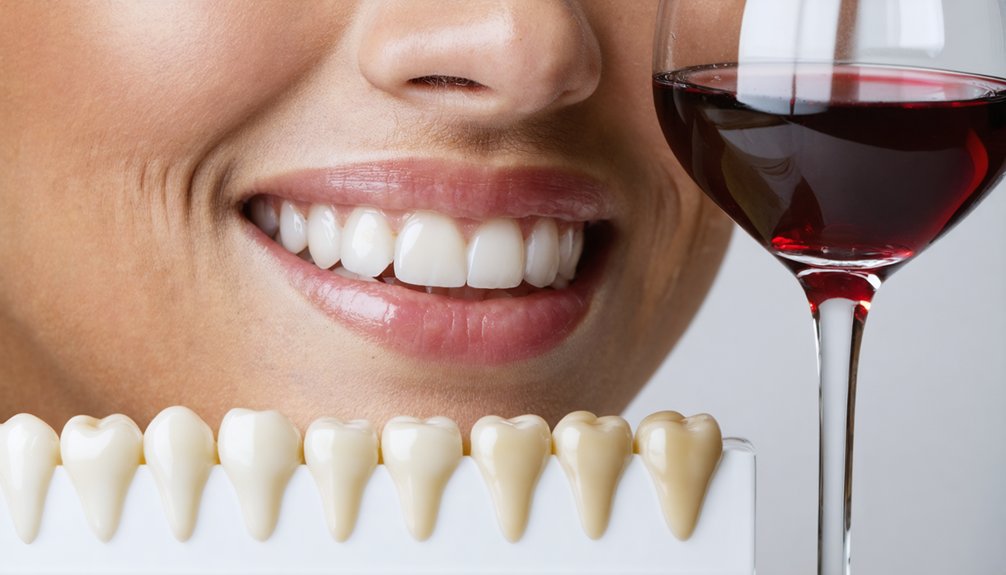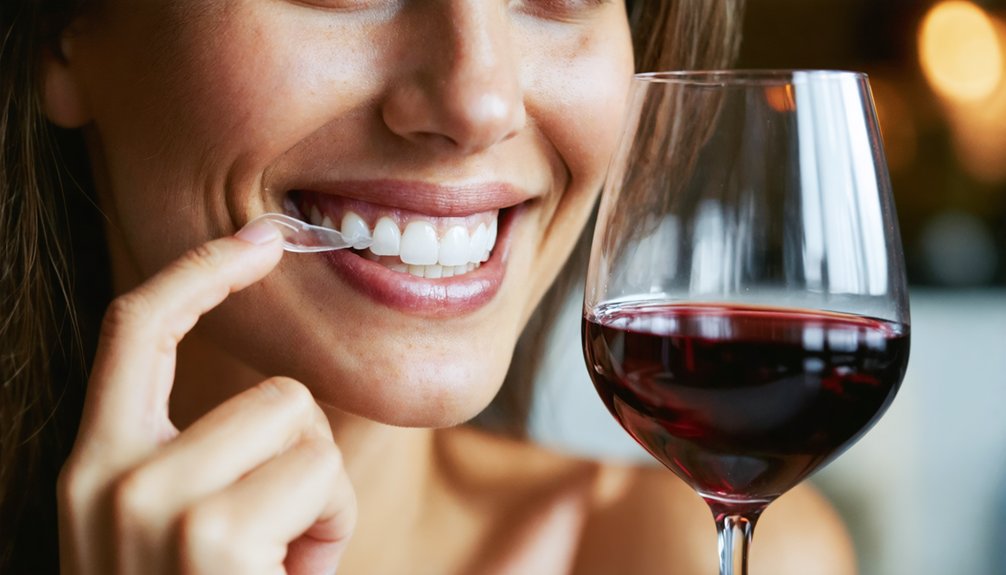
Whitening strips can reduce wine stains on your teeth, but their effectiveness depends on how deeply the pigments have penetrated your enamel. Red wine’s chromogens and tannins bind aggressively to enamel, and its acidity allows pigments to infiltrate beyond the surface. Strips with 6%–10% hydrogen peroxide oxidize surface and shallow stains effectively over two weeks, but they won’t reverse deeper discoloration. The right product selection, timing, and daily habits determine how much improvement you’ll actually achieve.
Key Takeaways
- Wine’s acidity and tannins embed pigments deep into enamel, making surface-only whitening strips less effective on severe stains.
- Whitening strips with 6%–10% hydrogen peroxide work best on surface and shallow wine stains with consistent daily use.
- Apply strips for 30 minutes daily over two weeks, brushing teeth beforehand to maximize gel contact and stain removal.
- Wait several hours after drinking wine before applying strips to minimize acid interference and protect softened enamel.
- For deep or stubborn wine stains, professional laser whitening and remineralization treatments deliver results strips cannot achieve.
Why Wine Stains Are Hard for Whitening Strips to Remove
Wine stains are notoriously stubborn because chromogens in red wine bind directly to enamel proteins, creating surface discoloration that resists standard whitening treatments. Tannins compound this by adhering aggressively to tooth surfaces, embedding pigments deeper into the enamel matrix.
Wine acidity accelerates the problem considerably. When you consume acidic wine, your enamel softens temporarily, allowing chromogens to penetrate beyond the surface layer where whitening strips struggle to reach effectively. Enamel softness creates a vulnerable window during which pigments set more deeply than strips’ hydrogen peroxide gel can address.
Strips work primarily on surface-level discoloration. Once staining compounds infiltrate softened enamel, you’re dealing with subsurface pigmentation requiring stronger intervention. Understanding this mechanism helps you make informed decisions about whether strips alone will deliver your desired results.
Do Whitening Strips Actually Remove Wine Stains?
Whitening strips use hydrogen peroxide or carbamide peroxide gel to oxidize chromogens embedded in your enamel, breaking apart the chemical bonds responsible for discoloration.
When you apply them consistently—30 minutes daily over two weeks—you can achieve measurable reduction in surface wine stains.
Their effectiveness, however, depends on stain depth, as tannin-driven pigments that have penetrated softened enamel respond less predictably than superficial discoloration.
How Whitening Strips Work
When you apply whitening strips to your teeth, the active ingredient—typically hydrogen peroxide or carbamide peroxide—penetrates the enamel and breaks apart the chromogen molecules responsible for wine discoloration. The peroxide oxidizes the pigmented compounds that tannins and acids have driven into enamel layers, neutralizing their color at a molecular level.
Unlike natural remedies, which work superficially, whitening strips deliver controlled concentrations of bleaching agents directly to stained surfaces. Dietary influences—particularly habitual red wine consumption—determine how deeply pigments have embedded, which affects how many treatment cycles you’ll need.
Strips rated at higher peroxide concentrations work faster but increase sensitivity risk. For wine-stained enamel specifically, consistent two-week applications following manufacturer guidelines produce measurable results by targeting both surface discoloration and sub-enamel pigmentation simultaneously.
Effectiveness On Wine Stains
How effectively do whitening strips actually remove wine stains? It depends on the stain’s depth. Wine chemistry involves chromogens, tannins, and acids that penetrate softened enamel, creating stains that surface-level peroxide may not fully reverse.
Whitening strips contain hydrogen peroxide or carbamide peroxide, which oxidizes pigment molecules embedded in enamel’s outer layers. For fresh or moderate wine stains, strips deliver measurable improvement over a two-week application cycle.
However, if enamel erosion has allowed pigments to infiltrate deeper dentin layers, strips work less effectively and may increase sensitivity. You’ll see better outcomes when you combine strip use with consistent daily brushing and professional cleanings.
Strips address surface and shallow stains reliably, but they don’t reverse structural enamel damage caused by repeated wine acid exposure.
How to Choose the Right Whitening Strips for Wine Stains
Choosing the right whitening strips for wine stains requires evaluating a few key product attributes before committing to a regimen. Prioritize strips formulated for sensitive teeth, as wine’s acidity already compromises enamel integrity.
Verify ingredient safety by reviewing active components — hydrogen peroxide concentrations between 6% and 10% deliver effective color contrast improvement without excessive enamel degradation. Avoid strips containing harsh additives or unlisted abrasives that accelerate erosion.
Select ADA-approved products to guarantee standardized efficacy and safety benchmarks. Confirm the strip’s adhesion quality; poorly adhering strips distribute gel unevenly, reducing treatment consistency.
If you consume wine regularly, choose strips designed for maintenance use rather than intensive whitening cycles. Match strip selection to your staining severity and sensitivity threshold for best and controlled results.
How to Apply Whitening Strips Correctly
To apply whitening strips correctly, align each strip flush against your gum line and press it firmly against your teeth to maximize gel contact.
Apply them for 30 minutes daily over a two-week period.
Brush your teeth beforehand to guarantee the surface is clean and receptive to the whitening gel.
Limit use strictly to the manufacturer’s recommended frequency to avoid enamel damage.
Strip Placement Techniques
Applying whitening strips correctly determines how effectively they lift wine stains from enamel.
Before placement, brush your teeth to clear debris from the oral cavity, ensuring the whitening gel contacts the enamel directly.
Peel the strip from its backing and align the gel side flush against your teeth, starting at the gumline without overlapping soft tissue.
Press firmly to eliminate air pockets that reduce gel contact.
Fold the excess strip behind your teeth to secure positioning.
Maintain the strip placement for the full 30-minute duration without eating, drinking, or excessive talking.
After removal, rinse thoroughly to clear residual gel from the oral cavity.
Precise placement on each tooth surface maximizes peroxide penetration and accelerates visible stain removal from wine-compromised enamel.
Timing and Frequency Tips
Correct strip placement sets the foundation, but timing and frequency determine whether the whitening process delivers lasting results without damaging enamel. Your timing strategy should account for recent consumption — wait several hours after drinking wine or coffee before applying strips. This reduces acid interference with the whitening gel’s efficacy.
Apply strips for 30 minutes daily across a two-week period. Select formulations designed for sensitive enamel if wine exposure has already compromised your tooth surface.
Frequency adjustment becomes necessary when sensitivity develops — reduce applications to every other day rather than discontinuing treatment entirely.
Avoid overuse beyond manufacturer guidelines, as excessive peroxide contact accelerates enamel degradation.
Brush teeth before each session to ensure clean contact surfaces, maximizing gel penetration and stain removal efficiency throughout the treatment cycle.
When to Use Whitening Strips for Best Results
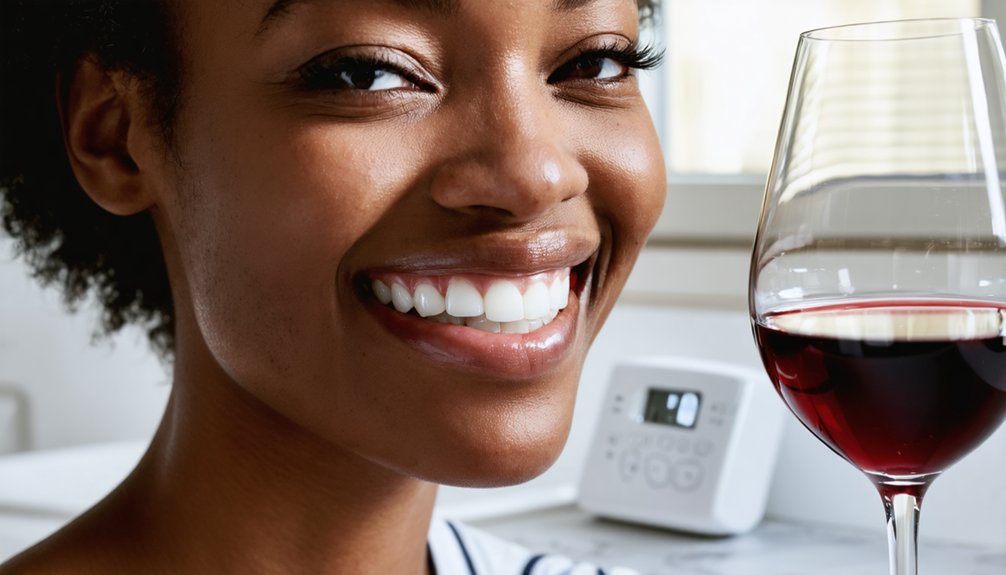
Timing your whitening strip applications correctly determines how effectively the gel penetrates wine-stained enamel. Apply strips in the late afternoon, several hours after your last coffee or wine consumption. This window maximizes color retention by allowing enamel to stabilize before gel contact. Brush thoroughly beforehand to clear surface debris and optimize adhesion.
Maintain a consistent 30-minute daily application across two weeks for measurable stain prevention and visible brightening. Don’t apply strips immediately after acidic beverages — softened enamel absorbs the peroxide gel unevenly, increasing sensitivity risk.
Select strips formulated for sensitive teeth if you consume wine regularly. Follow package instructions precisely and avoid extending treatment duration beyond recommendations, as overuse degrades enamel integrity rather than improving it.
Daily Habits That Protect Your Results Between Strips
Whitening strips deliver results only if your daily habits reinforce what the gel initiates. Brush twice daily using silica-based whitening toothpaste, and floss once daily to eliminate wine particles lodged between teeth. Hydration awareness matters—water consumption after each glass of wine flushes chromogens and tannins before they penetrate softened enamel. Rinse immediately post-consumption rather than waiting.
Build an oral barrier through consistent saliva stimulation by chewing xylitol gum after meals, which actively neutralizes acid and clears residual pigments. Avoid brushing within 30 minutes of wine consumption to prevent enamel abrasion while acid exposure remains elevated. Schedule professional cleanings every six months to remove tartar that traps staining compounds.
These deliberate, repeatable actions preserve strip-induced whitening between application cycles.
Professional Treatments That Go Further Than Strips
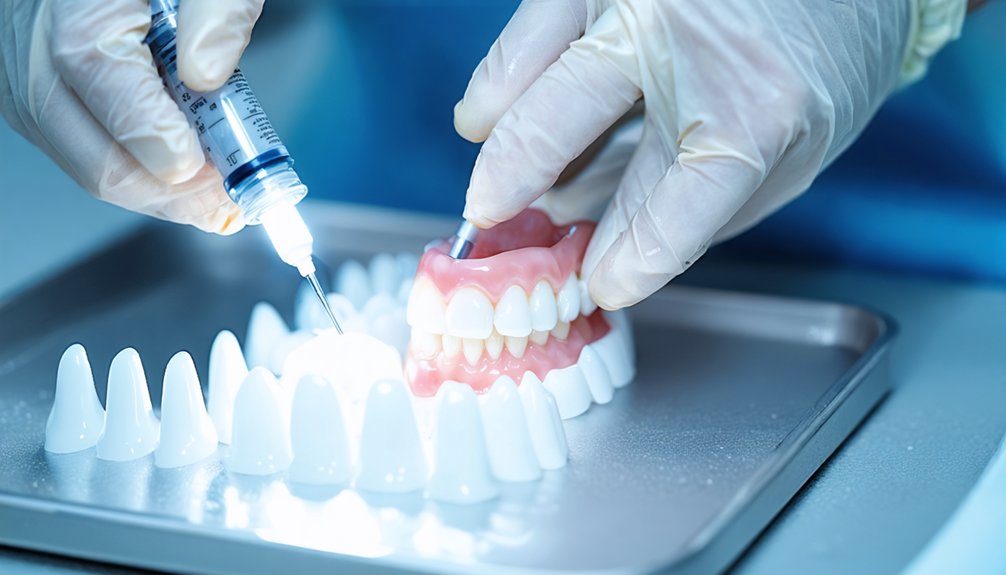
When strips plateau, professional treatments deliver measurable results that over-the-counter products can’t replicate. Your dentist can administer laser therapy, which activates concentrated bleaching agents to break down deep chromogen bonds that tannins have embedded into enamel over time. This precision targeting removes discoloration layers strips simply can’t reach.
Pair laser therapy with enamel remineralization protocols using fluoride treatments or custom KöR and Opalescence tray systems monthly. These rebuild mineral density that wine acidity has compromised, reducing pigment penetration vulnerability long-term.
Professional cleanings every six months remove calcified tartar harboring stubborn stain compounds.
You maintain control by scheduling treatments strategically rather than reacting to visible damage. Proactive professional intervention preserves structural integrity while sustaining whiteness that daily wine consumption consistently threatens.
Frequently Asked Questions
Can Whitening Strips Remove Stains Caused by Drinking White Wine First?
Yes, whitening strips can address stains from drinking white wine first, but you’ve increased your risk. White wine’s acidity erodes enamel, worsening red wine pigment penetration and elevating tooth sensitivity, so select strips formulated for sensitive teeth.
Should You Chew Xylitol Gum Before or After Using Whitening Strips?
Like a clean canvas before painting, chew xylitol chewing gum after using whitening strips. It stimulates saliva, bolstering your oral health by neutralizing acids and washing away residual compounds without interfering with the whitening gel’s efficacy.
Can You Use Whitening Strips and Baking Soda Paste in the Same Week?
Yes, you can use both in the same week. Limit baking soda paste to twice weekly and follow strip instructions to maintain dental health and effective stain prevention without compromising enamel integrity.
Does Using a Straw While Drinking Wine Improve Whitening Strip Effectiveness?
Yes, using a straw limits wine contact with your enamel, reducing staining compounds that whitening strips must counteract. Apply this strategy alongside alternative beverages and consistent dental hygiene to maximize your strips’ effectiveness and maintain control over discoloration.
How Does Smoking Affect Whitening Strip Results on Wine-Stained Teeth?
Why sabotage your progress? Smoking compounds wine-stained enamel by adding yellow and brown discoloration, directly undermining whitening strip results. Combined with alcohol consumption, it accelerates dental health decline, making your strips’ whitening gel markedly less effective.
References
- https://thepsdentalstudio.com/how-to-remove-coffee-and-wine-stains-from-teeth/
- https://crest.com/en-us/oral-care-tips/how-to-prevent-and-get-rid-of-red-wine-teeth-stains
- https://www.goldenmiledental.ca/how-to-prevent-red-wine-stains-on-teeth/
- https://www.trysnow.com/blogs/news/daily-whitening-routine-for-coffee-and-red-wine-drinkers
- https://elizabethlwakimdds.com/blog/how-to-remove-red-wine-stains-from-teeth-safe-dentist-approved-tips/
- https://clubwhitesmile.com/whitening-kits-for-wine-stained-teeth/