Enzyme-based gels containing bromelain and ficin are your most effective natural options for teeth whitening. These enzymes break down organic pigments through proteolytic activity, delivering whitening results comparable to carbamide peroxide. Unlike peroxide formulas, they won’t alter your enamel’s surface structure and can actually increase surface hardness. Clinical evidence supports both their safety and efficacy for regular use. Keep going to understand exactly how these gels work and how to use them correctly.
Key Takeaways
- Bromelain and ficin enzyme gels deliver whitening comparable to carbamide peroxide, making them the most effective natural gel options available.
- Bromelain is the only non-cytotoxic whitening agent tested, causing no harm to cells or enamel surface structure.
- Enzyme-based gels actively increase enamel surface hardness, protecting teeth rather than degrading them during whitening.
- Herbal alternatives like turmeric, banana peel, and strawberry mixtures show no measurable whitening benefit in clinical studies.
- Proper gel application, including pre-brushing and correct tray loading, ensures uniform distribution and maximizes whitening effectiveness.
What Makes a Natural Whitening Gel Actually Work?
When choosing a natural whitening gel, the active ingredient determines whether the product actually delivers results. You need to understand the chemical reactions involved before selecting any formula.
Effective gels either oxidize organic pigments within enamel or enzymatically break down stain compounds through proteolytic activity.
Bromelain and ficin are clinically supported enzyme-based agents that deliver whitening efficacy comparable to carbamide peroxide. Unlike peroxide alternatives, bromelain is non-cytotoxic and causes no surface alterations.
These enzymes also contribute to enamel protection by increasing surface hardness rather than degrading it.
You should verify that any product carries the ADA Seal of Acceptance, confirming independent safety and effectiveness testing.
Active ingredient transparency and clinical evidence aren’t optional—they’re the baseline standard for any gel worth your consideration.
Bromelain and Ficin: The Natural Gels That Deliver Real Results
Bromelain and ficin stand out as the most clinically credible natural enzyme options currently available for peroxide-free whitening. Both enzymes demonstrate whitening efficacy comparable to carbamide peroxide while producing greater color shifts than papain-based alternatives.
What sets bromelain apart is its non-cytotoxic profile—a distinction no other tested whitening agent, including hydrogen peroxide and PAP, can claim.
When you choose a product built on sound gel formulation principles, you’re selecting an active ingredient that increases enamel surface hardness rather than compromising it. Enzyme stability within the gel matrix determines how effectively bromelain or ficin performs at the point of application.
These agents cause no measurable surface alterations, making them scientifically defensible choices for sustained, safe use in your whitening protocol.
Are Natural Whitening Gels Safe for Daily Use?
Safety is a legitimate concern when you’re considering any whitening protocol for daily use, and the evidence around natural enzyme gels offers meaningful reassurance. Bromelain stands out among natural ingredients as the only non-cytotoxic whitening agent tested against hydrogen peroxide and PAP.
Unlike peroxide-based formulas, bromelain and ficin gels don’t alter enamel surface structure, which supports their suitability for regular application. PAP similarly causes no surface alterations, reinforcing its OTC viability.
Daily safety improves further because these enzymes actively increase enamel surface hardness, functioning as protective agents rather than erosive ones. You won’t find that profile with aggressive bleaching agents, which risk tooth erosion and microstructural changes.
Choosing enzyme-based gels gives you measurable whitening outcomes without compromising your enamel’s integrity over time.
Why Popular Natural Alternatives Don’t Replace Whitening Gel
Enzyme-based gels earn their credibility through documented efficacy, and that standard exposes a sharp contrast with the natural alternatives many people reach for first. Herbal remedies like turmeric and banana peel show no measurable whitening benefit in clinical studies.
Herbal remedies like turmeric and banana peel show no measurable whitening benefit in clinical studies.
Activated charcoal lacks sufficient safety and efficacy data for essential teeth. Strawberry and baking soda mixtures produce no documented color improvement.
Oil pulling carries adverse event risks without any whitening payoff. Alternative treatments built on tradition rather than evidence don’t give you the outcome control you’re seeking.
Abrasive mixtures like charcoal and salt can strip enamel, exposing yellow dentin beneath. If you want verifiable results, enzyme-based or peroxide-based gels remain the only options supported by clinical data.
How to Apply Natural Whitening Gel Correctly
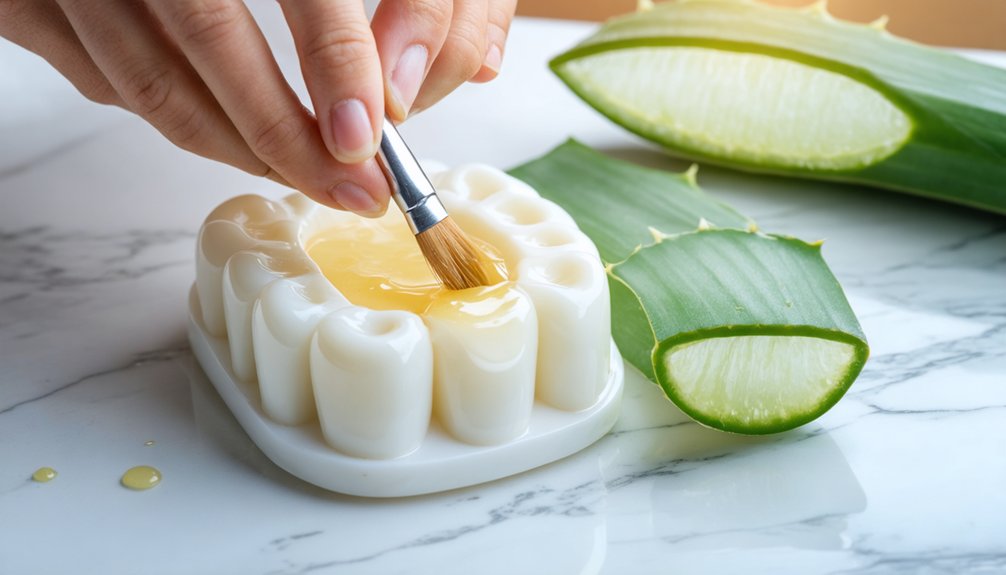
Applying natural whitening gel correctly determines how well it works and whether it stays off your gums. Before applying, brush your teeth thoroughly to remove plaque and guarantee uniform gel distribution across enamel surfaces.
Load the tray with a measured amount, avoiding overfilling, since excess gel contacts gingival tissue and causes irritation.
Gel consistency considerations matter during application. Thicker formulations stay in place better, while thinner gels risk migrating onto soft tissue.
If a tray isn’t available, alternative application methods include direct brush-on techniques using a fine applicator, which give you greater control over placement.
Follow the timing instructions precisely and apply consistently.
After each session, avoid coffee, tea, and red wine to protect your results and extend the whitening effect.
Frequently Asked Questions
Can Natural Whitening Gels Whiten Crowns or Dental Restorations Effectively?
Dental decisions demand clarity: natural gels can’t change your crown’s color. Ingredient effectiveness applies only to natural enamel. You’re wasting dental safety resources on restorations—consult your dentist about replacement options matching your newly whitened teeth.
How Long Do Natural Enzyme Gel Whitening Results Typically Last?
You’ll find natural enzyme gel results typically last one to three years. Maintaining pH balance and verifying ingredient safety helps extend your outcomes, with consistent oral hygiene and dietary habits reinforcing long-term whitening effectiveness.
Are Natural Whitening Gels Approved or Recognized by the American Dental Association?
You won’t find natural enzyme gels like bromelain or ficin currently holding ADA Seal recognition. Regulation standards require rigorous efficacy verification, so you should confirm any product’s independent testing status before committing to a whitening regimen.
Can Children or Teenagers Safely Use Natural Enzyme Whitening Gels?
Before you decide, consider this: pediatric safety data on natural enzyme whitening gels remains limited. You should consult a dentist before using bromelain or ficin products, as teen oral health needs professional guidance during developmental stages.
Do Natural Whitening Gels Work on Non-Vital or Dead Teeth?
Natural enzyme gels aren’t designed for non-vital teeth. You’ll face whitening compatibility limitations, as dead teeth require internal bleaching. Monitor teeth sensitivity carefully, since non-vital bleaching carries a 1% cervical resorption risk requiring professional oversight.
References
- https://health.clevelandclinic.org/is-teeth-whitening-safe
- https://pmc.ncbi.nlm.nih.gov/articles/PMC6787621/
- https://www.417dentist.com/teeth-whitening-gel-science-effectiveness/
- https://pmc.ncbi.nlm.nih.gov/articles/PMC9645194/
- https://pmc.ncbi.nlm.nih.gov/articles/PMC9915942/
- https://www.ada.org/resources/ada-library/oral-health-topics/whitening
- https://www.todaysrdh.com/study-shows-natural-tooth-whiteners-as-effective-as-peroxide-whiteners/