Aging causes your teeth to yellow through both extrinsic surface stains from coffee, tea, and tobacco and intrinsic discoloration as enamel thins and reveals darker dentin beneath. Peroxide-based whitening products penetrate enamel to target both stain types, delivering noticeable results within two weeks. Matching the right product to your specific stain type is critical for effective outcomes. The sections ahead break down exactly what works, why, and when you’ll need professional-level intervention.
Key Takeaways
- Aging teeth yellow due to enamel thinning and surface stains from coffee, tea, wine, and tobacco that resist routine brushing.
- Identifying your stain type matters: extrinsic stains respond to OTC toothpastes, while intrinsic stains require peroxide-based strips or trays.
- Hydrogen peroxide and carbamide peroxide are the most clinically supported whitening ingredients, delivering measurable results within two weeks.
- Aging enamel is more porous and sensitive, so lower peroxide concentrations and desensitizing toothpastes help minimize discomfort during treatment.
- Severe or resistant stains benefit most from professional whitening, which offers stronger concentrations, faster results, and longer-lasting outcomes.
Why Teeth Yellow and Dull With Age
Teeth naturally yellow and dull over time through two distinct processes: extrinsic staining and intrinsic discoloration.
Extrinsic stains accumulate on enamel surfaces from coffee, tea, wine, and tobacco. Even with consistent oral hygiene, these pigments embed into surface layers and resist routine brushing.
Intrinsic discoloration occurs deeper within the tooth structure. As you age, enamel thins and becomes more translucent, revealing the naturally yellow dentin beneath. This internal shift isn’t reversible through oral hygiene alone—it requires targeted whitening agents that penetrate enamel.
Your dental health history also matters. Past trauma, certain medications, and fluorosis can cause staining that originates within the tooth itself.
Understanding which type of discoloration you’re dealing with directly determines which whitening approach will actually work for you.
How Does Teeth Whitening Actually Work on Aging Teeth?
Once you understand what’s causing your discoloration, you can match the right whitening mechanism to it. Most effective whitening products use hydrogen peroxide or carbamide peroxide, which penetrate enamel and act on deeper stains within the dentin. This makes them suitable for both extrinsic and intrinsic staining that accumulates with age.
Matching the right whitening mechanism to your discoloration type is what separates effective treatment from wasted effort.
Surface-level products like whitening toothpastes work only on external discoloration.
For deeper, age-related staining, peroxide-based strips or trays produce measurable results within approximately two weeks.
Pairing whitening with consistent dental flossing removes plaque that can block agent contact with enamel surfaces.
Fluoride treatments help maintain enamel integrity during the whitening process, reducing sensitivity risk.
Concentration, contact time, and stain etiology all determine how effectively a product performs on aging teeth.
Stain Types That Determine Which Product Will Work for You
The type of stain affecting your teeth directly determines which whitening product will actually work for you.
Extrinsic stains, such as surface discoloration from coffee or tobacco, respond well to OTC toothpastes and rinses.
While intrinsic stains embedded in dentin typically require peroxide-based treatments to produce meaningful results.
Matching the product to the stain type isn’t just a matter of preference—it’s what separates effective treatment from wasted effort.
Extrinsic Versus Intrinsic Stains
Whether a whitening product will work for you depends largely on what type of stain you’re dealing with. Stains fall into two categories, and misidentifying yours wastes time and money.
Extrinsic stains sit on the enamel surface, typically from coffee, tea, or tobacco. Intrinsic stains originate within the dentin and require deeper-acting treatment.
Here’s how stain type determines your product selection:
- Toothpastes and rinses address extrinsic stains only.
- Peroxide-based strips and gels penetrate enamel to treat intrinsic discoloration.
- Tooth sensitivity often signals that peroxide is reaching deeper stain layers.
- Regular dental flossing removes surface debris that can mask your true stain type.
Knowing your stain type lets you select a product that’s actually matched to your clinical need.
Matching Products To Stains
Knowing your stain type is only useful if you can act on that information by selecting a product formulated to address it. For extrinsic stains caused by coffee or surface buildup, consistent oral hygiene combined with whitening toothpastes or rinses may suffice.
However, if you’re dealing with intrinsic discoloration embedded in dentin, you’ll need a peroxide-based product—either whitening strips or gel trays—to penetrate enamel effectively. Non-peroxide alternatives lack sufficient clinical evidence for deeper staining.
Professional treatment remains the strongest option when OTC products fall short, and some dental insurance plans may partially cover whitening under specific diagnostic conditions.
Matching the correct product to your stain etiology avoids wasted time, unnecessary exposure, and poor outcomes. Precision in selection directly determines whether you’ll see measurable results.
Which Whitening Ingredients Actually Work?
When choosing a whitening product, you’ll find that hydrogen peroxide and carbamide peroxide are the most clinically supported active ingredients.
Hydrogen peroxide is identified as the strongest among commonly tested OTC options.
Non-peroxide alternatives generally produce inferior results, and charcoal-based products lack evidence for meaningful whitening performance.
Concentration also matters—the higher the peroxide level and the longer the contact time, the more effectively the agent penetrates enamel and acts on deeper dentin stains.
Peroxide-Based Ingredients Dominate
Among the active ingredients found in whitening products, hydrogen peroxide and carbamide peroxide have the strongest clinical backing. Both penetrate enamel and act on deeper dentin stains, making them more effective than surface-only alternatives. Supporting your dental hygiene routine with these agents gives you measurable control over discoloration outcomes.
Here’s what the evidence confirms about peroxide-based ingredients:
- Hydrogen peroxide ranks highest in comparative OTC ingredient testing.
- Carbamide peroxide breaks down into hydrogen peroxide upon contact with teeth.
- Both agents address intrinsic staining that toothpastes and rinses can’t reach.
- Enamel strength remains intact when you follow manufacturer concentration guidelines.
Non-peroxide alternatives consistently show weaker results. If you want reliable whitening outcomes, peroxide-based formulations remain your most evidence-supported option.
Non-Peroxide Alternatives Fall Short
While peroxide-based ingredients have strong clinical backing, non-peroxide alternatives haven’t demonstrated comparable whitening performance.
If you’re considering charcoal-based products or other home remedies marketed as natural whiteners, the evidence doesn’t support their superiority. Clinical reviews consistently show these options produce weaker results than peroxide formulations.
Dietary influences, such as coffee, tea, and red wine, contribute to extrinsic staining that some non-peroxide toothpastes claim to address. While mild surface stain reduction is possible, these products won’t penetrate enamel or affect deeper discoloration.
You’re largely managing appearances rather than achieving true bleaching.
If you want measurable, controlled results, non-peroxide alternatives won’t reliably deliver them. Your best strategy remains choosing clinically validated peroxide-based products matched to your specific stain type and severity.
Concentration Affects Whitening Results
Concentration plays a direct role in how effectively a whitening product removes stains. Higher peroxide concentrations penetrate enamel more efficiently, targeting deeper intrinsic discoloration. Your enamel thickness and dietary habits both influence how quickly results appear.
Thinner enamel absorbs agents faster, while heavy staining from dietary habits demands higher concentrations for meaningful change. To understand what concentration delivers, consider these factors:
- Higher hydrogen peroxide concentrations produce faster, more visible whitening
- Lower concentrations require longer contact time to achieve comparable results
- Enamel thickness affects absorption rate and treatment response
- Dietary habits determine stain depth, influencing the concentration you’ll need
Matching concentration to your specific stain severity gives you precise control over your whitening outcome.
Which Whitening Format Works Best on Older Teeth?
Older teeth tend to accumulate both extrinsic and intrinsic staining over time, which means surface-level formats like whitening toothpastes and rinses often won’t produce meaningful results on their own. These options support dental hygiene but don’t penetrate tooth enamel deeply enough to address discoloration that’s built up over decades.
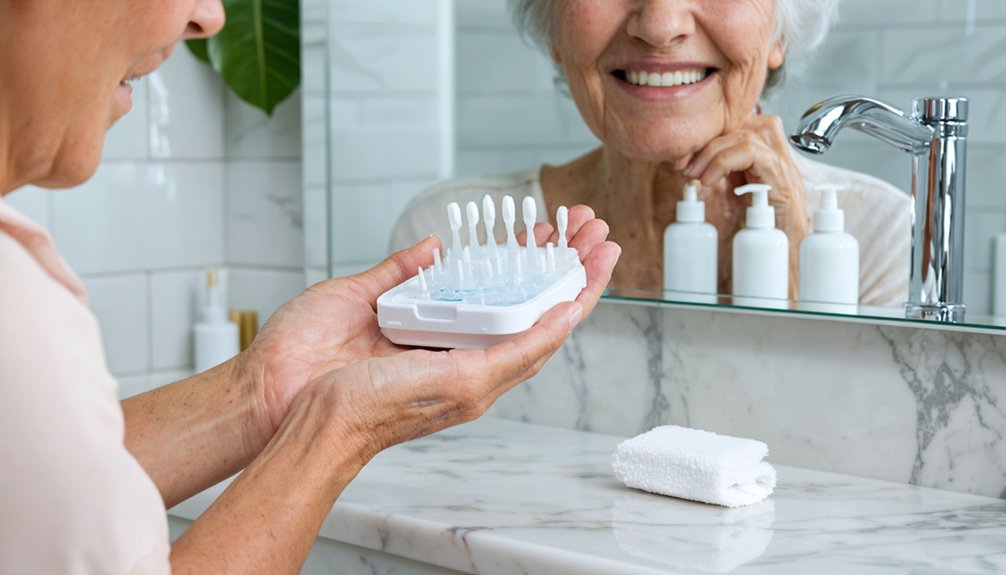
Peroxide-based strips and gel-filled trays are your most effective OTC options. Strips are the only OTC format consistently shown to produce actual bleaching, while gel trays can deliver visible results within days. Both formats rely on hydrogen or carbamide peroxide to reach deeper stain layers.
If your staining is severe or intrinsic, professional treatment will outperform any OTC product in both speed and outcome. Match the format to your stain type for the most precise result.
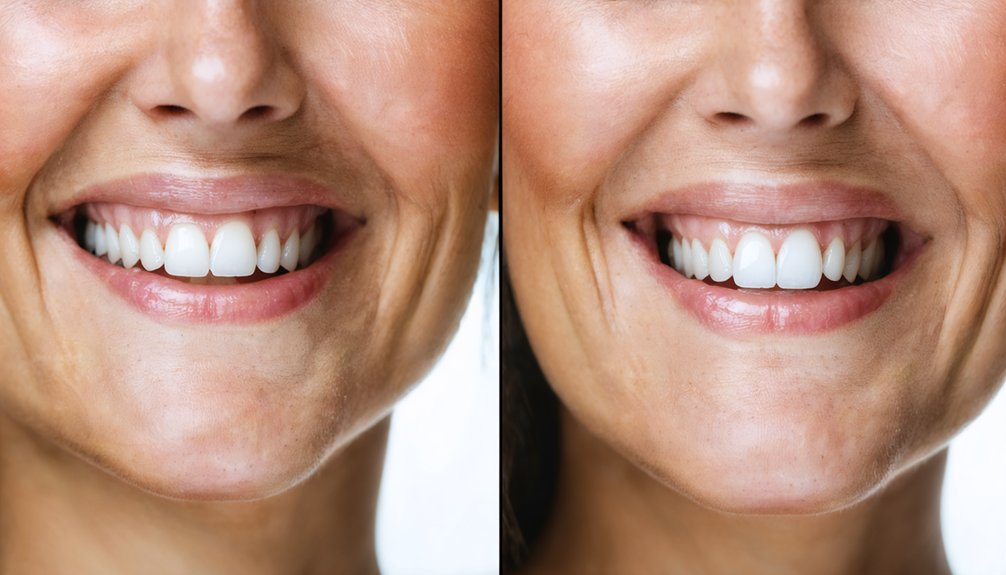
What Shade Change Can You Realistically Expect?
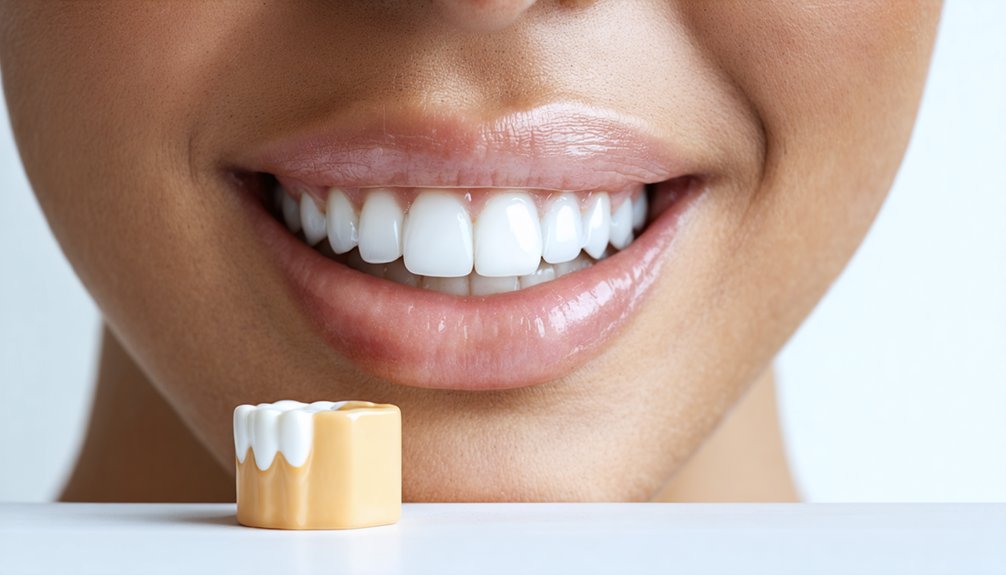
Teeth whitening can lighten your teeth by a few shades, but the degree of change depends on the product you use, the concentration of the active ingredient, and the type of staining you’re treating. Since dental insurance rarely covers cosmetic whitening, knowing what to expect helps you invest wisely.
Key factors that determine your shade outcome:
- Product type – Strips and gels typically deliver the most measurable bleaching.
- Peroxide concentration – Higher levels penetrate tooth enamel more effectively, targeting deeper dentin stains.
- Stain etiology – Extrinsic stains respond faster than intrinsic discoloration.
- Treatment duration – Most strip and gel protocols produce visible results within two weeks.
Professional treatments produce faster, more dramatic changes, while OTC options offer moderate, evidence-supported improvement.
Whitening Side Effects on Aging Teeth and How to Reduce Them
As you age, your enamel thins and your teeth become more porous, which increases sensitivity when exposed to peroxide-based whitening agents. Enamel erosion accelerates this vulnerability, particularly if your dental diet includes frequent acidic foods or beverages that weaken enamel before treatment begins.
To reduce side effects, use lower-concentration peroxide products and limit application frequency. Desensitizing toothpastes containing potassium nitrate or fluoride used before and after whitening can meaningfully reduce discomfort. Avoid whitening on days when sensitivity is already elevated.
Gingival inflammation is another documented side effect; custom-fitted trays minimize peroxide contact with soft tissue. If sensitivity persists, extend rest periods between sessions.
Dental supervision allows you to match product concentration to your enamel’s current condition, reducing unnecessary exposure and improving outcomes.
When to Choose Professional Whitening Over OTC Products
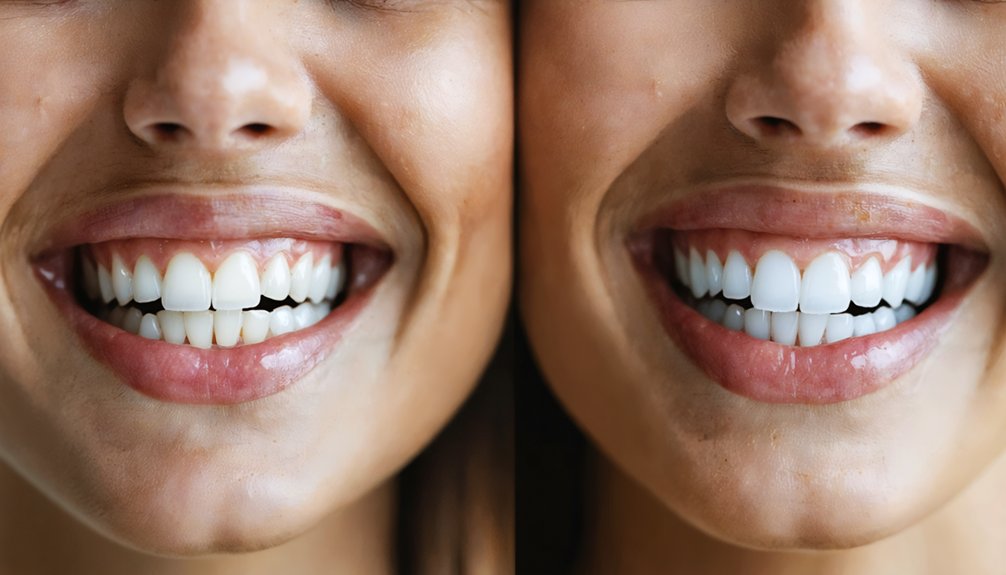
Professional whitening outperforms OTC options in both speed and strength, making it the better choice when staining is severe, intrinsic, or resistant to surface-level treatment. Since dental insurance rarely covers cosmetic procedures, weigh the clinical need against cost before deciding.
Professional whitening outpaces OTC options in speed and strength — worth the cost when staining is severe or resistant.
Choose professional whitening when:
- Stains are intrinsic, originating from medications, trauma, or aging dentin.
- OTC strips or gels haven’t produced measurable results after consistent use.
- You have restorations requiring color-matched treatment planning.
- You need faster, more controlled outcomes with supervised peroxide concentrations.
Your dentist can diagnose the stain etiology, select the appropriate concentration, and reduce unnecessary exposure. OTC products remain effective for mild extrinsic staining, but professional intervention gives you greater precision, stronger agents, and clinically verified results when the situation demands it.
How Long Do Teeth Whitening Results Last on Aging Teeth?
Whitening results on aging teeth tend to last anywhere from a few months to over six months, depending on the product you use, how severe your staining is, and how well you maintain the results afterward. Strips with higher peroxide concentrations often sustain results longest.
However, aging affects both tooth enamel thickness and dental pH levels, which can accelerate stain reabsorption and reduce how long whitening holds. Thinner enamel exposes more dentin, making teeth more susceptible to discoloration returning quickly.
You can extend results by limiting staining foods and beverages, maintaining consistent oral hygiene, and scheduling periodic touch-up treatments. Tracking your results and adjusting your maintenance routine gives you greater control over how long your whitening outcome remains effective.
Frequently Asked Questions
Can Teeth Whitening Products Damage Dental Crowns, Veneers, or Implants?
Whitening products won’t damage crowns, veneers, or implants, but they won’t whiten them either. You’ll notice dental crown discoloration and veneer stain resistance remain unchanged, creating uneven shading between your restorations and newly whitened natural teeth.
Is Teeth Whitening Safe if You Have Gum Recession or Exposed Roots?
Just as receding gums expose vulnerable roots, whitening products can intensify gum sensitivity in those same areas. You’ll want to consult your dentist first, since exposed roots lack enamel protection and face higher irritation risks.
How Soon After a Dental Cleaning Can You Start Whitening Treatments?
You can typically start whitening treatments 24–48 hours after a dental cleaning. This timing helps minimize dental sensitivity, allowing your gums to settle while optimizing whitening duration and ensuring your treatment’s safe, effective outcome.
Can Certain Medications Cause Staining That Whitening Products Cannot Reverse?
Some medications leave lasting “color contributions” on your teeth. Drug-induced staining and medication discoloration, like tetracycline’s intrinsic effects, can resist standard whitening treatments. You’ll likely need professional evaluation, as OTC products won’t effectively reverse these deeper, chemically embedded stains.
Should You Whiten Teeth Before or After Getting Dental Restorations Done?
Whiten before getting restorations. Since whitening won’t change your restoration’s color, you’ll want your natural shade lightened first so new restorations can be matched accurately. Monitor tooth sensitivity during treatment before proceeding with restorative work.
References
- https://health.clevelandclinic.org/is-teeth-whitening-safe
- https://pmc.ncbi.nlm.nih.gov/articles/PMC4058574/
- https://pmc.ncbi.nlm.nih.gov/articles/PMC9915942/
- https://www.ada.org/resources/ada-library/oral-health-topics/whitening
- https://www.frontiersin.org/journals/dental-medicine/articles/10.3389/fdmed.2021.687507/full
- https://www.bu.edu/articles/2012/the-truth-about-teeth-whiteners/
- https://www.health.com/condition/oral-health/teeth-whitening-kits
- https://pmc.ncbi.nlm.nih.gov/articles/PMC11854843/
- https://pubmed.ncbi.nlm.nih.gov/17054282/?dopt=Abstract
- https://www.healthline.com/health/dental-and-oral-health/best-teeth-whitening