Enamel-safe teeth whitening matters because your enamel doesn’t regenerate once it’s gone. Without it, the yellow dentin underneath becomes exposed, making your teeth look darker — not brighter. Misusing whitening products accelerates this erosion, turning an effective treatment into a source of irreversible damage. You need formulas that whiten without compromising your enamel’s structural integrity. Stick around, and you’ll discover exactly how to protect your enamel while still achieving lasting, visible results.
Key Takeaways
- Enamel erosion exposes yellow dentin underneath, making teeth appear more yellow and causing permanent discoloration that whitening cannot reverse.
- Unsafe whitening products with acidic ingredients or high peroxide concentrations accelerate enamel softening, demineralization, and long-term structural damage.
- Lost enamel cannot be fully restored, as saliva’s remineralization ability is limited once significant enamel damage occurs.
- Enamel-safe formulations maintain neutral to slightly alkaline pH levels, preventing acid-driven erosion while effectively whitening teeth.
- Protecting enamel during whitening preserves long-term oral health, preventing sensitivity, decay, and irreversible compromise of tooth structure.
What Actually Makes a Whitening Product Enamel-Safe?
When choosing a whitening product, the formula’s concentration and pH balance matter more than its marketing claims.
Products with excessive hydrogen peroxide concentrations or low pH levels compromise enamel integrity by softening its crystalline structure and accelerating demineralization.
Enamel-safe formulations stay within clinically validated peroxide ranges—typically 3–10% hydrogen peroxide or equivalent carbamide peroxide concentrations—while maintaining a neutral to slightly alkaline pH.
This prevents acid-driven erosion during treatment.
You should also verify that a product carries ADA acceptance or equivalent clinical endorsement.
These markers confirm that independent testing validated both efficacy and structural safety.
Avoid products relying on abrasive agents or acidic “natural” ingredients.
They don’t preserve enamel—they degrade it.
Controlling which product enters your routine means controlling the long-term condition of your teeth.
How Enamel Erosion Quietly Makes Teeth Look More Yellow
When your enamel wears down, it exposes the dentin underneath—a naturally yellow layer that no amount of whitening can fully counteract.
This erosion compounds over time, meaning the more enamel you lose, the more yellow your teeth appear regardless of surface stain removal.
If you whiten without protecting your enamel, you’re accelerating the very process that makes your teeth look duller.
Enamel Loss Exposes Dentin
Though enamel appears colorless, it’s the layer that gives your teeth their bright, white appearance by concealing the naturally yellow dentin beneath it. When enamel erodes, that yellow core becomes increasingly visible, and no whitening treatment can reverse structural loss.
Unlike surface stains, exposed dentin reflects a deeper, permanent discoloration.
Your body does support tooth remineralization through saliva benefits—minerals like calcium and phosphate naturally reinforce enamel—but this process only works while sufficient enamel remains. Once it’s gone, saliva can’t rebuild what’s lost.
This is why protecting enamel isn’t just a cosmetic priority; it’s a structural one. Every layer you preserve directly controls how white, strong, and resilient your teeth remain over time.
Erosion Worsens Over Time
Enamel erosion doesn’t pause once it starts—it compounds. Each cycle of enamel wear removes a thin but permanent layer, bringing dentin exposure closer to the surface. Since enamel can’t regenerate, that progression is one-directional.
Early erosion may appear minor, but it accelerates as the remaining enamel thins and weakens further.
You’ll notice the visual consequences before you notice the structural ones. Dentin exposure deepens the yellow tone progressively, and no amount of whitening reverses that underlying shift.
Whitening targets stains within enamel—not the dentin beneath it. Once erosion advances, you’re no longer dealing with surface discoloration; you’re managing a structural deficit.
Controlling erosion early is what keeps whitening effective long-term. Delay only narrows your options.
Whitening Without Enamel Protection
How does whitening fail you even when you’re using it correctly? Without enamel protection, you’re exposing dentin—the naturally yellow layer beneath—as erosion thins your enamel over time. No whitening agent reverses that structural loss.
You can bleach stains effectively and still watch your dental aesthetics deteriorate because the underlying problem isn’t stain-based; it’s structural.
Unprotected whitening accelerates this cycle. Repeated bleaching without enamel-safe formulas softens the surface, increases demineralization risk, and speeds up the very yellowing you’re trying to correct. Your oral health and your appearance both suffer simultaneously.
You’re not just chasing a cosmetic goal—you’re managing a biological structure that doesn’t regenerate. Whitening without enamel protection doesn’t just underperform; it actively works against the results you’re trying to achieve.
How Whitening Misuse Turns a Safe Treatment Damaging
Whitening is clinically safe when used correctly, but misuse quickly shifts it from beneficial to harmful. Overusing peroxide-based products, ignoring recommended contact times, or applying treatments too frequently undermines enamel preservation and compromises tooth structure.
High-concentration formulas misused outside professional supervision can soften enamel, increase surface roughness, and accelerate demineralization. Acidic DIY alternatives compound the damage further.
Safe application depends on following manufacturer instructions precisely, respecting treatment intervals, and selecting clinically approved concentrations. When you exceed recommended guidelines, you’re not accelerating results—you’re degrading the very layer that makes whitening worthwhile.
Sensitivity that persists beyond normal ranges signals enamel stress, not progress.
You control the outcome. Misuse converts a well-researched, effective treatment into a direct source of irreversible enamel damage and long-term oral health consequences.
What Overuse Does to Sensitivity and Tooth Structure
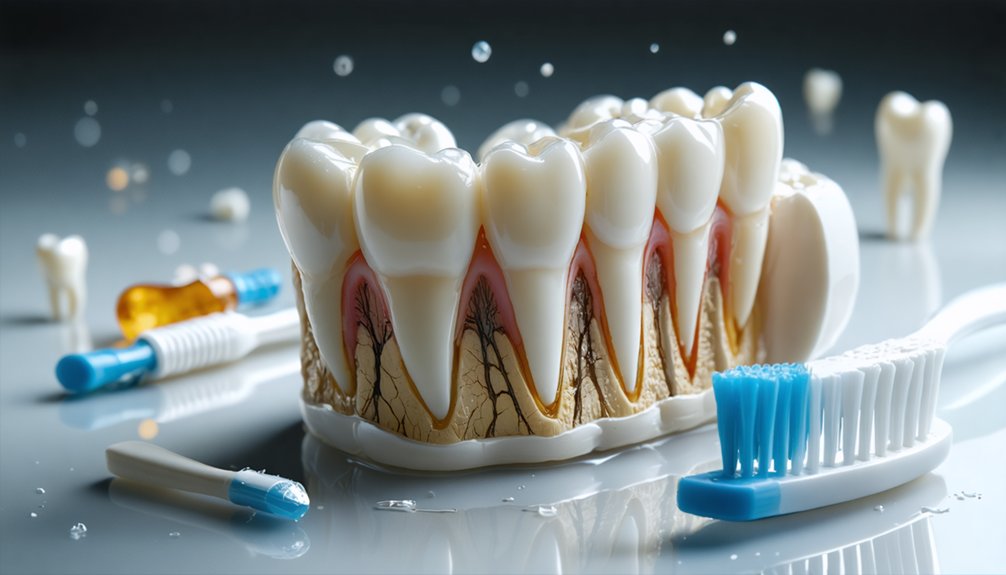
When you overuse whitening treatments, sensitivity stops being a temporary side effect and becomes a signal of structural compromise. Repeated or prolonged bleaching strips enamel of its protective mineral integrity, exposing the dentin layer beneath. That exposure amplifies sensitivity triggers — heat, cold, and pressure become genuinely painful rather than mildly uncomfortable.
Overuse turns sensitivity from a minor side effect into a warning that your enamel’s structural integrity is failing.
Enamel damage at this level isn’t cosmetic. You’re weakening the tooth’s primary defense against decay, demineralization, and staining. Ironically, compromised enamel allows yellow dentin to show through more prominently, reversing the results you pursued.
Laboratory findings confirm that high-concentration hydrogen peroxide causes surface softening and increased porosity when misused.
You control the outcome by respecting treatment schedules and concentrations. Overuse doesn’t accelerate results — it erodes the foundation that makes lasting whitening possible.
How to Choose an Enamel-Safe Whitening Product That Works
Choosing the right whitening product starts with understanding what clinical legitimacy looks like on a label. Look for ADA-accepted seals, clinically tested peroxide concentrations, and manufacturer instructions that specify treatment limits. These markers separate regulated products from unverified alternatives.
Avoid natural remedies like activated charcoal or lemon juice scrubs—they’re abrasive or acidic and can permanently erode enamel without delivering meaningful whitening results. DIY solutions may seem cost-effective, but they shift risk entirely onto you without clinical backing.
Prioritize dentist-recommended systems or schedule a professional consultation before starting. If you have existing sensitivity, choose formulas specifically designed for enamel protection.
You’re not just selecting a cosmetic product—you’re making a structural decision about long-term tooth health. Choose accordingly.
How Often to Whiten Without Compromising Enamel
Frequency matters as much as formulation when it comes to enamel-safe whitening. Most clinically approved systems recommend one whitening cycle every three to six months, depending on stain severity and product concentration.
Ignoring these frequency guidelines forces enamel through repeated chemical exposure before it can remineralize, increasing surface vulnerability and sensitivity risk.
You control the outcome by respecting safe intervals between treatments. Daily or weekly overuse—even with low-concentration products—compounds cumulative stress on enamel microstructure.
If sensitivity appears mid-cycle, shorten your sessions immediately rather than pushing through.
Touch-up treatments, when used sparingly, maintain results without the risks associated with full retreatment cycles.
Following your dentist’s recommended schedule keeps whitening effective, your enamel structurally sound, and your long-term results sustainable.
Frequently Asked Questions
Can Enamel-Safe Whitening Still Work on Deep or Severe Tooth Stains?
Yes, enamel-safe whitening can tackle deep stains through targeted chemical reactions that penetrate enamel effectively. You’ll benefit from advanced stain removal techniques, though severe discoloration may require professional-supervised treatments to achieve your desired, controlled results.
Is Enamel-Safe Whitening Suitable for Children or Teenagers?
Like a garden needing time to bloom, children’s dental health and teen oral care aren’t ready for whitening yet. You should consult a dentist first, as developing enamel demands extra protection before starting any whitening treatment.
Does Enamel-Safe Whitening Work Differently on Dental Crowns or Veneers?
Enamel-safe whitening won’t alter crowns or veneers due to dental material compatibility limitations. It only targets natural tooth stains. For surface stain removal on restorations, you’ll need professional polishing to maintain consistent, controlled color results.
Can Enamel-Safe Whitening Products Be Used During Pregnancy?
You should avoid whitening products during pregnancy, as pregnancy safety concerns outweigh whitening effectiveness benefits. Dentists recommend postponing treatment until after delivery, giving you full control over both your oral health and your baby’s wellbeing.
Does Drinking Water After Whitening Help Protect Enamel From Damage?
Drinking water after whitening does help protect your enamel. You’ll gain key hydration benefits by rinsing away residual agents, while supporting stain prevention by neutralizing acids before they compromise your enamel’s structural integrity.
References
- https://www.sensodyne.com/en-us/oral-health-tips/whitening-sensitive-teeth/the-importance-of-enamel-safe-whitening/
- https://pmc.ncbi.nlm.nih.gov/articles/PMC4058574/
- https://www.elevatedentalmo.com/is-teeth-whitening-safe-on-tooth-enamel/
- https://www.mouthhealthy.org/all-topics-a-z/teeth-whitening
- https://www.pronamel.us/healthy-living/healthy-strong-teeth/enamel-safe-teeth-whitening/
- https://www.double-white.com/blog/enamel-safety-teeth-whitening.html
- https://clearcreekdentistry.net/blog/enamel-safety-during-teeth-whitening/
- https://www.smiledentist.co.uk/blog/can-teeth-whitening-damage-enamel-long-term
- https://www.reflectionsdentalgroup.com/blog/is-teeth-whitening-safe-for-your-enamel-myths-and-facts/
- https://leedervilledental.com.au/does-teeth-whitening-damage-enamel/